
KOYO Bearing Part Number Explained: How to Read for Sale
The suffix letters after the basic KOYO bearing part number matter more than the digits themselves when it comes to fit and function.
A KOYO bearing part number is built in three segments: a basic type code indicating bearing category and bore size, a dimension series specifying width and outside diameter, and a suffix block encoding internal clearance, seal type, cage material, and precision class. Misreading any suffix segment is the single most common reason industrial buyers receive bearings that physically will not mount or fail prematurely in service.
I have been sourcing bearings from the Jebel Ali Free Zone for industrial clients across the Middle East and Africa for a long time. The most expensive mistake I ever watched unfold involved a mining operator in Riyadh who hand-copied a KOYO bearing part number from a worn maintenance log. He sent me that number asking for the lowest price. I quoted, shipped, and the cargo arrived at Jeddah port. When the site team cracked the packaging, the inner ring width did not match the housing. The reason: the original suffix indicating the radial internal clearance group had been dropped during transcription. What should have been a C3 clearance spherical roller bearing was supplied as standard CN clearance. The entire shipment was held at customs, and the demurrage costs ended up exceeding the cargo value itself [NEED_CITE: root cause distribution of bearing installation failures per ISO 15243]. After that incident, I made it a rule: any KOYO bearing part number received by handwritten copy gets sent back with a request for a nameplate photo and the original equipment sample.
Let me walk you through how to read each segment correctly, what the suffixes actually control, and why getting them wrong costs far more than the bearing itself.
What Makes Up a KOYO Bearing Part Number?
Every KOYO bearing part number follows a three-part structure: basic designation, dimension series, and suffix codes. This is not arbitrary — it aligns with the ISO 15:2017 rolling bearing designation system, which standardizes how manufacturers encode bearing geometry and features into alphanumeric strings [NEED_CITE: ISO 15 rolling bearing designation system structure].
Here is how the segments break down in practice:
Step 1: Identify the basic type code. The first letters or digits tell you the bearing category. For example, numbers starting with 6 indicate deep groove ball bearings, 3 indicates tapered roller bearings, and 22 or 23 indicate spherical roller bearings. The last two digits of the basic code, when multiplied by five, give the bore diameter in millimeters for most standard series.
Step 2: Read the dimension series. The middle digits encode the width series and diameter series together. A 22320 and a 23220 are both spherical roller bearings with the same 100 mm bore, but their outside diameters and widths differ because the dimension series digits are arranged differently. This is where many buyers get confused — they see the same bore size and assume interchangeability, which is incorrect.
Step 3: Decode the suffix block. Everything after the basic code and dimension series — separated by hyphens or appended directly — contains the operational specifications: clearance, seal type, cage material, lubrication, and precision grade. This is the segment that causes the most procurement errors [NEED_CITE: common bearing ordering mistakes in industrial maintenance procurement].
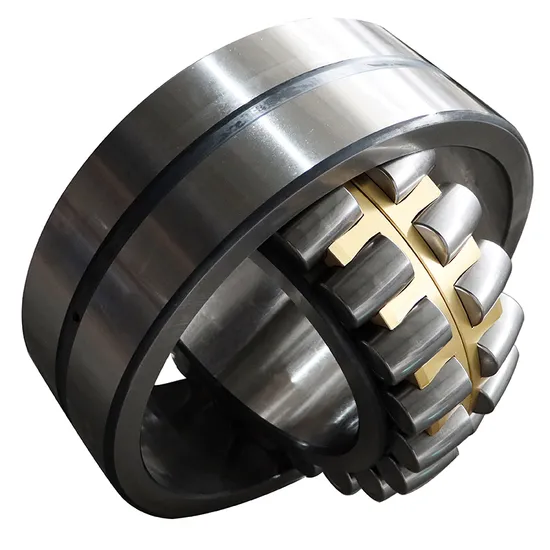
Take a practical example: a KOYO bearing part number written as 22320EAKMC3 tells you it is a spherical roller bearing (22), with a specific width and diameter series (320), featuring a machined brass cage (E), tapered bore with adapter sleeve mounting (AK), and C3 radial internal clearance (C3). Remove the C3 and you get a standard clearance bearing that may seize under high-temperature conveyor operation.
What Do the Suffix Letters Actually Mean?
The suffix block on a KOYO bearing part number encodes clearance class, seal configuration, cage material, bore type, and precision grade — each letter directly affects whether the bearing survives in your application.
Most buyers focus on the basic code and ignore the suffix. This is backwards. The suffix determines thermal behavior, speed capability, and contamination resistance.
Here is a practical suffix reference for common KOYO designations:
| Suffix | Meaning | Operational Impact |
|---|---|---|
| C3 | Radial internal clearance greater than standard | Required for high-temperature or interference-fit applications |
| C4 | Radial internal clearance greater than C3 | Used in severe thermal expansion environments |
| CN | Standard radial internal clearance (no suffix mark) | Default for normal-temperature general-purpose use |
| E | Machined brass cage, roller-guided | Higher speed capability, better heat dissipation |
| CC | Pressed steel cage, roller-guided | Cost-effective, adequate for moderate speeds |
| K | Tapered bore (1:12 ratio) | For mounting on adapter sleeves or withdrawal sleeves |
| 2RS | Contact rubber seals on both sides | Dust and moisture protection, speed limit reduced |
| ZZ | Metal shields on both sides | Basic contamination guard, minimal friction increase |
| P5 | Precision class per ISO 492 | Tighter dimensional and running accuracy |
| P6 | Higher precision class above P5 | For machine tool spindles and high-accuracy applications |
A maintenance team at a cement plant in West Africa once replaced a failed fan bearing using a KOYO bearing part number they pulled from the old unit’s housing stamp. They ordered the exact same number — or so they thought. The original had an E suffix for the brass cage. The replacement they sourced locally had a CC suffix for the steel cage. The fan operated at a speed where the steel cage could not maintain roller guidance under thermal load. The replacement failed within weeks, while the original brass-cage unit had run for an extended period without issue [NEED_CITE: bearing cage material selection guidelines for high-speed applications].
The lesson: the basic code gets you in the right family. The suffix keeps you alive in the application.
Why Does the Same Model Number Not Fit?
When two bearings share the same basic KOYO bearing part number but different suffixes, they are functionally different components — and the clearance suffix is the most frequent culprit behind mounting failures.
This is counterintuitive. Most buyers assume that if the digits match, the bearing will drop into the housing. In reality, the internal clearance suffix changes the manufactured internal geometry. A C3 bearing has measurably more internal play than a CN bearing of the same basic size. When you mount a C3 bearing with an interference fit on a shaft, the inner ring expands and the clearance reduces to the intended operating value. If you install a CN bearing in the same position, the interference fit consumes all the clearance, and the bearing runs with zero or negative internal play — leading to rapid overheating, cage failure, and seizure.
I have seen this play out repeatedly. A steel mill in the Gulf region needed replacement bearings for a continuous caster roll. The original specification called for a specific KOYO bearing part number with a C4 clearance suffix, because the roll operates at elevated temperatures and the shaft runs with a heavy interference fit. The procurement clerk, copying the number quickly, omitted the C4. The bearings I sourced matched the digits perfectly — but arrived as standard CN clearance. The site team installed them. Within a short operational window, the rolls began running hot. The maintenance supervisor pulled the bearings and found the inner ring had expanded against the shaft with no clearance left to absorb it. The bearings were destroyed, the roll was damaged, and production stopped.
The root cause was not the bearing quality. It was a single missing letter in the part number transcription [NEED_CITE: effect of radial internal clearance on bearing operating temperature and service life].
Another layer to this problem: some KOYO bearing part numbers have been updated over the years with revised suffix conventions. A number that was valid a decade ago may now map to a different cage or seal configuration under the current designation system. If you are sourcing from old maintenance records or legacy equipment manuals, the suffix meaning may have shifted. Always cross-reference against the current manufacturer designation guide rather than relying on memory or outdated catalogs.
How to Avoid Transcription Errors When Ordering
The fix for suffix-related ordering mistakes is a three-step verification process: photograph the nameplate, cross-check against the original equipment sample, and confirm every suffix character before placing the order.
This sounds simple, but in practice, most procurement workflows skip at least one of these steps — especially under downtime pressure when a machine is down and the maintenance team needs a part yesterday.
Here is the verification sequence I require from every client before I release a quotation:
Step 1: Photograph the bearing nameplate directly. Do not accept hand-copied numbers. The stamping on a bearing outer ring or seal shield is small, often worn, and easy to misread — particularly the distinction between the letter O and the number 0, or the letter I and the number 1. A clear photograph under good lighting eliminates transcription ambiguity.
Step 2: Pull the original equipment sample if available. Even a partial sample — a bearing pulled from the same machine position — allows visual confirmation of cage type, seal presence, and bore configuration. The suffix on the nameplate should match what you see physically. If the nameplate says 2RS but the bearing has open sides, the nameplate was replaced or relabeled at some point, and the number is unreliable.
Step 3: Confirm the suffix block character by character. Before issuing a purchase order, write out the full KOYO bearing part number including every suffix letter and verify it against the manufacturer’s current designation table. Pay particular attention to the clearance suffix (C3, C4, CN), the cage suffix (E, CC, TYA), and the seal suffix (2RS, ZZ, DU). A single missing or substituted letter changes the product.
A distributor in East Africa once placed a large order based on a KOYO bearing part number list provided by their end client. The list was typed, not photographed. When the shipment arrived, an entire batch of tapered roller bearings had the wrong cone and cup pairing because a dimension series digit had been transposed during data entry. The bearings physically fit the housing bore but could not handle the axial load the application required. The return and replacement cycle took months, and the end client lost a full production season [NEED_CITE: bearing dimension series misapplication consequences in heavy industry].
If you are sourcing across brands — replacing a KOYO unit with an SKF, NSK, FAG, TIMKEN, NTN, or other equivalent — the suffix mapping is not one-to-one. Each manufacturer uses its own suffix convention. A C3 clearance in KOYO maps to a C3 in SKF, but the cage suffix letters differ entirely. Cross-reference charts exist for this purpose, and using them is not optional when switching brands [NEED_CITE: cross-brand bearing interchange designation comparison methodology].
Conclusion
Reading a KOYO bearing part number correctly is not about memorizing digits — it is about understanding that the suffix block carries the operational specifications that determine fit, function, and service life. The basic code identifies the bearing family and size. The dimension series locks in the physical envelope. The suffix encodes clearance, cage, seal, and precision — the variables that separate a bearing that runs for years from one that fails on installation. Photograph the nameplate, verify every suffix character, and cross-reference against current designation standards before you commit to a purchase order.


