SKF Bearing Markings: How to Read Guide for Wholesale Buyers
A clear laser mark on the outer ring does not guarantee authenticity — modern counterfeit equipment has reached near-OEM engraving precision.
SKF bearing markings encode the full identity of the bearing: prefix codes indicate series and variant, the basic designation reveals bore and type, and suffix letters specify radial clearance, seal type, cage material, and lubricant fill. Reading SKF bearing markings correctly is the first line of defense against counterfeits in wholesale procurement, and the three-layer verification method — visual mark inspection, country-of-origin cross-check, and digital authentication — separates genuine stock from rebranded fakes before payment is released.
Back when I handled export documentation at Qingdao port, I spent every day staring at bills of lading and certificates of origin. It was only after I moved into sales and started visiting job sites in Lagos and Addis Ababa that I actually learned to feel the difference between a real SKF bearing and a clever imitation. A cement batching plant customer in West Africa once installed a batch of deep groove ball bearings marked with a clean laser code on the outer ring — the inner ring engraving was shallow and blurry. The bearings failed within months, the cage material was wrong, and the entire mixing line went down for weeks. The claim ran into mid-six figures. [NEED_CITE: root cause distribution per ISO 15243] After that, I made it my job to decode every prefix, suffix, and date stamp in the SKF marking system. Now the first thing I teach buyers is how to read the steel themselves.
Let me walk you through the full decoding framework.
What Do SKF Bearing Markings Actually Mean?
Every SKF bearing carries a structured code that reads left to right: optional prefix, basic designation, and optional suffix — each segment carries specific technical meaning.
The basic designation tells you the bearing type and bore size. For example, in a standard deep groove ball bearing code, the first one or two digits indicate the series width and diameter, while the last two digits multiplied by five give the bore diameter in millimeters. [NEED_CITE: SKF bearing designation system per official technical documentation]
The prefix, when present, indicates a variant or special series — for example, certain prefixes denote sealed variants or modified internal geometry. Not every bearing has a prefix; many standard types go straight to the basic designation.
The suffix is where most buyers get confused. Suffix letters and letter combinations encode radial clearance, seal or shield type, cage material and design, lubricant type and fill quantity, and special tolerance or noise specifications. A single bearing code can carry multiple suffixes stacked together, and each one must be read in the correct sequence. [NEED_CITE: SKF suffix code structure per manufacturer designation guide]
Here is the structural breakdown:
| Segment | Position | Function | Example |
|---|---|---|---|
| Prefix | Before basic code | Series variant or special design | Indicates modified internal geometry or sealed variant |
| Basic Designation | Core | Bearing type and bore size | Last two digits times five equals bore in mm |
| Suffix Group 1 | After basic code | Internal design, cage, rolling elements | Cage material and guidance |
| Suffix Group 2 | Further right | External design, seals, shields | Contact seal or metal shield |
| Suffix Group 3 | Final position | Clearance, tolerance, lubricant | Radial clearance class or grease fill |
Understanding this structure is the foundation. Once you can separate the segments, you can start checking whether the suffixes on a physical bearing match what the application requires — and whether they match what the SKF catalog actually lists for that basic code.
How to Decode SKF Suffix Codes Step by Step?
SKF suffix codes follow a fixed sequence — reading them out of order leads to misidentification of seal type, cage material, and clearance class.
The suffix chain is not random. SKF groups suffixes into categories, and the standard reading order moves from internal design through external design to clearance and lubrication. [NEED_CITE: SKF designation suffix sequence per official catalog documentation]
Step 1: Identify the internal design suffix. This comes first after the basic designation. It may indicate a modified internal geometry or a specific cage type. Common cage material suffixes point to stamped steel, machined brass, or polymer cages — each suited to different speed and temperature conditions.
Step 2: Read the external design suffix. This tells you whether the bearing is open, shielded on one or both sides, or sealed with contact seals. A common mistake is assuming that a shield and a seal are interchangeable — they are not. Shields provide dust protection with low friction; contact seals provide both dust and moisture protection but generate more heat at high speeds. [NEED_CITE: seal versus shield performance comparison per bearing engineering reference]
Step 3: Check the clearance suffix. Radial clearance classes follow the C-series designation. A standard bearing without a clearance suffix carries normal clearance. Bearings with a specific clearance suffix have greater internal play, which matters in applications with thermal expansion or interference fits.
Step 4: Verify the lubricant suffix. When present, this indicates the type and quantity of factory grease fill. Some suffixes specify a standard fill, while others indicate a special grease for high-temperature or low-temperature operation.
Step 5: Look for additional special suffixes. These may indicate noise-optimized variants, special tolerance classes, or coatings. Not all bearings carry these — they appear on specific product lines.
A Middle East distributor once received a bulk shipment where the suffix letters on the bearing rings did not match any valid SKF combination in the catalog. The bearings had a clearance suffix paired with a seal type that SKF does not produce together in that basic code. The entire batch was returned after spot-checking a sample against the official designation guide. [NEED_CITE: SKF valid suffix combinations per product table]
The key takeaway: never read a single suffix in isolation. Always read the full chain in sequence, and cross-reference the complete combination against the current SKF catalog. Invalid combinations are a strong counterfeit indicator.
How to Verify SKF Bearing Authenticity Using Markings?
Authenticity verification requires three independent checks — visual mark quality, country-of-origin consistency, and digital authentication — and no single check is sufficient alone.
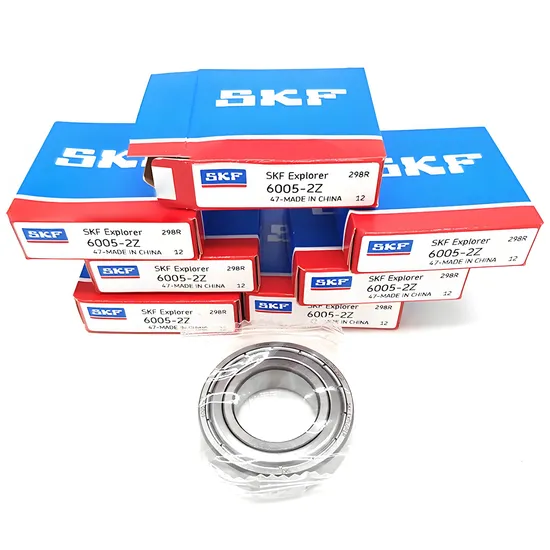
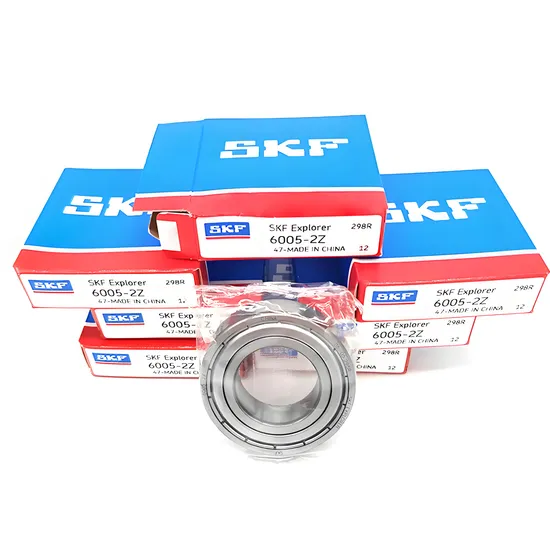
Layer 1: Visual mark inspection. Genuine SKF bearings carry markings on both the outer ring and the inner ring. The outer ring typically shows the SKF logo, the full designation code, and the country of origin. The inner ring carries the designation and often a date or batch code. On genuine units, the engraving depth is consistent, the font is sharp, and the characters are evenly spaced. Counterfeit bearings often have a clean-looking outer ring laser mark but shallow, blurry, or misaligned inner ring engraving. [NEED_CITE: SKF anti-counterfeit visual identification guidelines]
Layer 2: Country-of-origin cross-check. SKF operates manufacturing facilities in multiple countries. The country-of-origin mark on the bearing must match the country printed on the packaging label. A mismatch between the ring marking and the box label is a red flag. However, a mark reading a specific country does not automatically mean the bearing is fake — SKF produces in several countries, and the origin code must be checked against the official list of manufacturing locations. [NEED_CITE: SKF global manufacturing facility list per official documentation]
A maintenance team in South America intercepted a suspected counterfeit batch by combining the origin code on the bearing ring with a QR code scan. The verification took minutes, and the batch was flagged before installation. The origin code on the rings pointed to a location that did not match any known SKF production facility for that product line.
Layer 3: Digital authentication. SKF provides a digital verification tool that allows buyers to scan a QR code or enter a product code to confirm authenticity. This tool cross-references the code against the manufacturer’s database. [NEED_CITE: SKF digital authentication tool per official brand protection program]
| Verification Layer | What to Check | Genuine Indicator | Counterfeit Indicator |
|---|---|---|---|
| Visual Mark Quality | Engraving depth, font, alignment | Consistent depth, sharp font, even spacing | Shallow or blurry inner ring, misaligned characters |
| Country of Origin | Ring mark versus box label | Match between ring and packaging | Mismatch or origin not in official facility list |
| Digital Authentication | QR code or code entry scan | Confirmed in manufacturer database | Code not found or returns error |
No single layer catches all fakes. Counterfeiters have improved their laser engraving quality substantially, so visual inspection alone is no longer enough. The three-layer approach — mark quality, origin consistency, and digital confirmation — provides the strongest pre-payment verification available to wholesale buyers. This is exactly the kind of sourcing support that authorized channels provide as standard practice, including verification documentation and full model traceability.
What Common Mistakes Do Buyers Make When Reading SKF Codes?
The most costly reading errors come from three misconceptions: confusing clearance class with precision grade, assuming country of origin indicates authenticity, and trusting laser mark clarity alone.
Mistake 1: Treating the C3 suffix as a quality grade. The C3 suffix indicates a radial internal clearance greater than normal. It has nothing to do with the bearing’s precision grade or manufacturing quality. A C3 bearing is not "better" or "higher quality" than a standard clearance bearing — it simply has more internal play, which is necessary in certain applications involving high speed, high temperature, or heavy interference fits. Specifying C3 when standard clearance is required can lead to vibration and premature failure. [NEED_CITE: radial clearance class definition per ISO standard]
Mistake 2: Assuming a specific country-of-origin mark means the bearing is fake. SKF operates factories across multiple regions. A bearing marked with a particular country code may be perfectly genuine if that country is on SKF’s official manufacturing list for that product type. The error is in assuming that only one or two countries produce genuine SKF bearings. The correct approach is to check the origin code against the current official facility list, not against assumptions. [NEED_CITE: SKF authorized manufacturing locations per official documentation]
Mistake 3: Relying solely on laser mark clarity. Modern counterfeit laser engraving equipment has reached a quality level that makes outer ring marks very difficult to distinguish from genuine marks by eye alone. The critical differentiator is often the inner ring engraving, which requires a different marking process, and the cage material, which cannot be identified from external markings at all. A bearing can look perfect on the outside and still have an incorrect cage material that fails under load within months.
These three mistakes are the most common ones I see in wholesale procurement. Each one is avoidable with the correct reference material and a systematic reading approach.
How to Cross-Reference SKF Markings with Other Brands?
Cross-referencing SKF bearing codes with equivalent codes from other major brands requires matching the basic designation, clearance class, seal type, and cage specification — not just the bore size.
When a buyer needs to replace an SKF bearing with an equivalent from another major brand, the process starts with the SKF basic designation and suffix chain. Each element must be mapped to the corresponding element in the other brand’s designation system. [NEED_CITE: bearing cross-reference methodology per industry interchange guide]
The basic designation often translates directly, since the bore and series dimensions are standardized across brands under ISO dimensions. However, the suffix mapping is where errors occur. A seal type designated by one letter in the SKF system may use a completely different letter in another brand’s system. The same applies to cage material codes, clearance classes, and lubricant suffixes.
A practical cross-reference approach:
- Extract the SKF basic designation and confirm the bore size and series.
- Decode the full SKF suffix chain — clearance, seal, cage, lubricant.
- Match each element to the other brand’s equivalent suffix using an interchange chart.
- Verify that the combined suffix set exists as a valid product in the other brand’s catalog.
- Confirm physical dimensions and external features match before ordering.
| SKF Element | SKF Suffix Example | Equivalent Brand Mapping Required |
|---|---|---|
| Radial Clearance | C-class suffix | Match to target brand clearance code |
| Seal or Shield | Seal type suffix | Match to target brand seal designation |
| Cage Material | Cage design suffix | Match to target brand cage code |
| Lubricant Fill | Grease suffix | Match to target brand grease designation or confirm compatible fill |
Cross-referencing is not a simple bore-size lookup. It requires full suffix decoding and validation against the target brand’s current product range. Authorized distributors with multi-brand coverage can provide verified interchange charts and confirm that the replacement carries the same technical specification — not just the same dimensions.
Conclusion
Reading SKF bearing markings correctly is a procurement skill, not just a technical exercise. The prefix, basic designation, and suffix chain together encode the bearing’s complete identity. Suffix codes must be read in sequence and validated against the official catalog. Authenticity verification requires visual inspection, origin cross-checking, and digital confirmation working together. And cross-referencing to other brands demands full suffix mapping, not just bore-size matching. Buyers who master this system catch counterfeits before payment, avoid specification errors before installation, and source replacements with confidence.


