NSK 6205 Datasheet Specifications Guide Wholesale Supplier
Most buyers think "6205" is the whole story. It is not. The suffix letters after 6205 — clearance codes, seal types, cage materials — decide whether the bearing survives six months or six weeks on the shop floor.
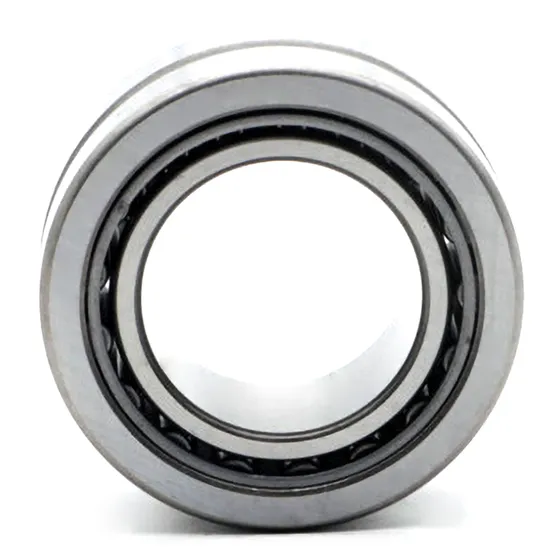
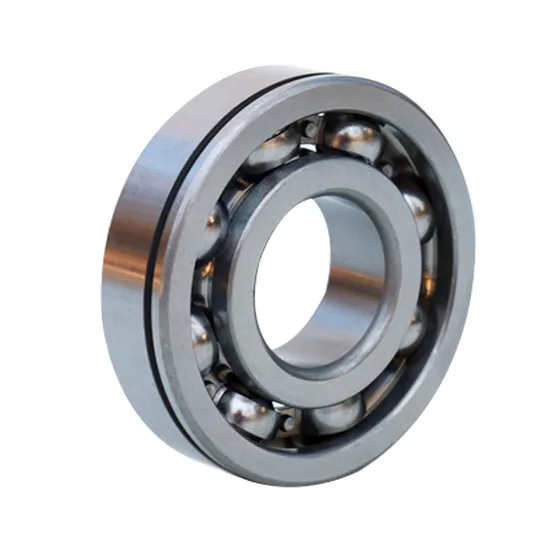
The NSK 6205 datasheet defines a deep groove ball bearing with a 25 mm bore, 52 mm outside diameter, and 15 mm width. Dynamic and static load ratings, internal clearance classes (C2 through C5), and seal suffixes (DDU, ZZ) are all documented in the official specification sheet. Reading the full datasheet — not just the base number — is the only reliable way to confirm fit, function, and interchangeability across brands.
Early in my trading career, I spent years at a Chinese port office staring at bills of lading and certificates of origin. When I moved into bearings, clients started asking me for load ratings, clearance codes, and seal types on models like the NSK 6205. I learned the hard way that a single missing suffix letter can wreck an entire production line. A motor plant in southern Brazil once ordered a batch of standard-clearance 6205 DDU units. The motors ran in a high-temperature environment. The grease baked out, the internal clearance collapsed from thermal expansion, and the bearings seized within weeks. The fix was simple on paper — switch to C3 clearance with high-temperature grease — but the replacement cost several times the original order value. Since that shipment, I pull the complete datasheet for every model before quoting, and I check every suffix letter against the actual operating conditions. [NEED_CITE: ISO 5753 defines internal clearance groups for radial ball bearings]
Let me walk you through the full datasheet breakdown, the suffix logic, cross-brand interchange rules, and authenticity verification — the same path I use when sourcing for industrial buyers.
What Are the Core Dimensions and Load Ratings of NSK 6205?
The NSK 6205 datasheet lists the basic boundary dimensions as 25 mm inner diameter, 52 mm outer diameter, and 15 mm width, conforming to the ISO 15 boundary dimension standard. These three numbers are the foundation of any selection. If the bore does not match the shaft, or the OD does not fit the housing, nothing else matters.
The datasheet also provides the basic dynamic load rating (C) and the basic static load rating (C0). These values determine how much radial and axial load the bearing can handle at a given rotational speed and expected service life. [NEED_CITE: ISO 281 defines the calculation method for bearing dynamic load rating and rated life]
Here is the core parameter set as documented in the NSK 6205 datasheet:
| Parameter | Value / Designation |
|---|---|
| Bore (d) | 25 mm |
| Outside Diameter (D) | 52 mm |
| Width (B) | 15 mm |
| Basic Dynamic Load Rating (C) | Per datasheet |
| Basic Static Load Rating (C0) | Per datasheet |
| Reference Speed | Per datasheet |
| Limiting Speed | Per datasheet |
| Bearing Weight | Per datasheet |
| Clearance Class | C2 / C0 (standard) / C3 / C4 / C5 |
The reference speed and limiting speed values tell you the thermal and mechanical boundaries of the bearing at standard lubrication conditions. Exceeding the limiting speed without upgraded lubrication or special internal design leads to rapid cage failure and raceway damage. [NEED_CITE: NSK general catalog provides limiting speed guidelines based on lubrication type and cage material]
A maintenance team at a mining operation in West Africa received a shipment of 6205 bearings for conveyor pulley rollers. The base dimensions matched, but the original equipment specification called for a specific dynamic load capacity that the substituted units did not meet. The pulleys ran under heavy radial load with moderate shock. The underspecified bearings showed early spalling on the outer raceway. The lesson: always compare the C and C0 values in the datasheet against the application load calculation, not just the bore and OD.
When you request a quotation from an NSK 6205 datasheet supplier, the first document you should receive is the official specification sheet with all these values printed — not a generic catalog page.
How Do You Read NSK 6205 Suffix Codes for Clearance and Seal?
Suffix letters after the basic number 6205 define the internal clearance class and the seal or shield configuration. These are not optional decorations — they are functional specifications that directly affect bearing life under real operating conditions.
Internal clearance is the amount of free movement between the rolling elements and the raceways before the bearing is mounted. The standard clearance class is C0 (often unmarked). But in applications with high operating temperatures, heavy interference fits on the shaft or housing, or significant thermal gradients, the effective internal clearance shrinks after mounting and during operation. If it drops to zero or negative, the bearing locks up. That is where C3, C4, or C5 clearance grades come in. [NEED_CITE: ISO 5753 specifies radial internal clearance groups for deep groove ball bearings]
Here is the clearance selection logic:
| Operating Condition | Recommended Clearance |
|---|---|
| Normal temperature, light fit | C2 or C0 (standard) |
| Moderate heat, standard interference fit | C3 |
| High temperature, heavy interference fit | C4 |
| Extreme temperature or special shaft conditions | C5 |
Seal suffixes work the same way — they are not interchangeable by assumption.
| Suffix | Description | Application Environment |
|---|---|---|
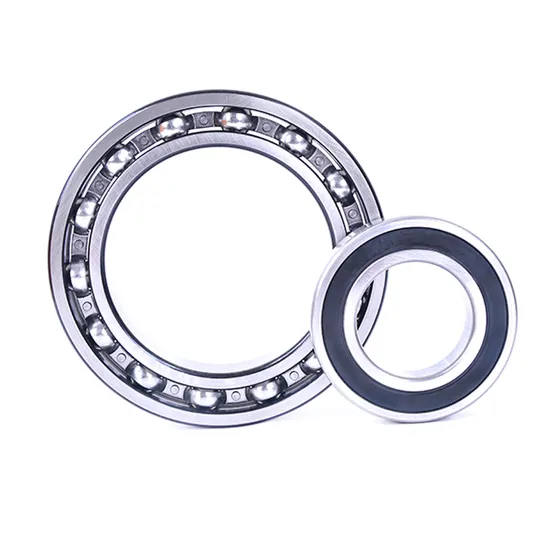
| DDU | Double-sided contact rubber seal | Dusty, moist, or washdown environments |
| ZZ (or Z) | Double-sided (or single) metal dust shield | Clean or lightly contaminated dry environments |
A steel mill in the Middle East ordered NSK 6205 ZZ units for continuous caster guide rolls. The environment had heavy scale dust and occasional coolant splash. The metal shields kept out large particles but allowed fine dust and moisture to enter the raceway. The bearings failed well before the expected interval. Switching to 6205 DDU with the contact rubber seal blocked both contaminants and extended service life substantially. The datasheet supplier should always ask about the contamination level before confirming the seal suffix. [NEED_CITE: NSK technical guide on seal selection for deep groove ball bearings by contamination class]
The reverse mistake happens too. A food processing line in Central America specified 6205 DDU for a conveyor where the ambient temperature ran high. The contact seal generated additional friction heat, the grease degraded faster, and the bearing temperature climbed beyond the seal material limit. The fix was switching to ZZ shields with a high-temperature grease fill. The datasheet must be read as a complete system — clearance, seal, and grease are linked.
What Is the Cross-Reference for NSK 6205 to SKF, FAG, NTN, and KOYO?
Cross-brand interchange for the NSK 6205 is possible at the base dimension level, but suffix codes do not map one-to-one across manufacturers. A direct swap based on "6205" alone will cause seal-type mismatches and potential field failures.
The base dimensions — 25 × 52 × 15 mm — are standardized under ISO 15, so a 6205 from NSK, SKF, FAG, NTN, or KOYO will physically fit the same shaft and housing. The problem lies in how each manufacturer names the seal and shield variants.
Here is the interchange logic for the most common sealed and shielded versions:
| NSK Suffix | SKF Equivalent | FAG Equivalent | NTN Equivalent | KOYO Equivalent |
|---|---|---|---|---|
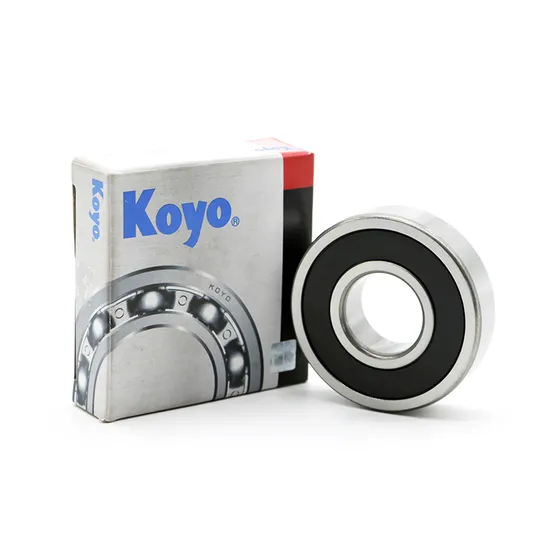
| 6205 DDU | SKF 6205-2RZ | FAG 6205-2RSR | NTN 6205LLU | KOYO 6205 2RS |
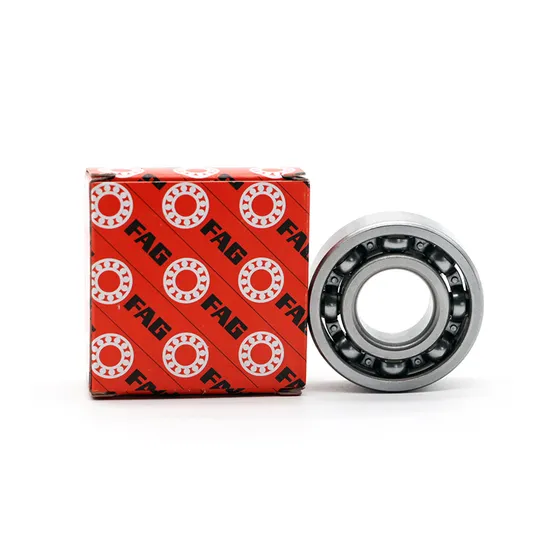
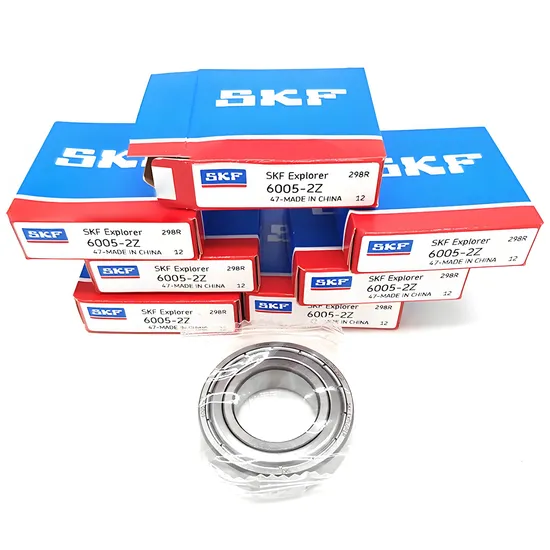
| 6205 ZZ | SKF 6205-2Z | FAG 6205-2Z | NTN 6205ZZ | KOYO 6205 2Z |
Notice the difference: NSK uses "DDU" for double contact rubber seals, while SKF uses "2RZ," FAG uses "2RSR," and NTN uses "LLU." If a buyer in Latin America orders "6205-2RS" from a supplier who assumes it means NSK DDU, they may receive a different seal design depending on which manufacturer’s naming convention the supplier applied. [NEED_CITE: Bearing interchange standards per ISO 15 and manufacturer cross-reference catalogs]
A distributor in Chile received a return claim because the end user replaced NSK 6205 DDU bearings with what they believed was an exact SKF equivalent. The SKF units arrived with a different seal lip geometry. In a washdown environment, the alternative seal allowed water ingress, and corrosion appeared on the raceways within a short operating period. The distributor avoided further returns by building a verified cross-reference table that maps every suffix across all six major brands — NSK, SKF, FAG, TIMKEN, NTN, and KOYO — and requiring purchase orders to specify the full suffix, not just the base number.
When you work with an NSK 6205 datasheet supplier who handles multi-brand sourcing, the cross-reference table should be part of the standard documentation package. Never accept "6205 same as 6205" as a technical answer.
How to Verify NSK 6205 Authenticity Before Import?
Genuine NSK 6205 bearings must be verified through a three-step chain: authorized distributor confirmation, anti-counterfeit code validation, and certificate of origin cross-check against customs documentation. Country-of-origin marking alone is not proof of authenticity.
Counterfeit bearings remain a serious problem in global industrial supply chains. Fake units may carry correct dimensions, correct branding, and even correct packaging — but the steel quality, heat treatment, and internal geometry fall below specification. Under load, counterfeit bearings show premature fatigue spalling, cage wear, and dimensional instability. [NEED_CITE: ABMA and bearing industry anti-counterfeiting guidelines on identification of fraudulent bearings]
The verification process I follow for every shipment works in three stages:
Step 1 — Confirm the distributor’s authorization status. The seller must appear on the manufacturer’s current authorized distributor list for the destination market. A company may be a legitimate bearing trader but not hold direct authorization for a specific brand in a specific country. In that case, the supply chain must be traceable back to an authorized source.
Step 2 — Validate the anti-counterfeit code. NSK uses QR-code-based verification on packaging for many product lines. Scanning the code through the official verification channel should return a match with the product batch, model, and manufacturing origin. If the code is missing, duplicated across multiple units, or returns an unrecognized result, the shipment is suspect.
Step 3 — Cross-check the certificate of origin against customs and shipping documents. The country of origin stated on the certificate must match the commercial invoice, the packing list, and the bill of lading. Discrepancies — such as a certificate stating Japan while the shipping documents show a different origin port, or a mismatch in the manufacturer’s name — are red flags that require investigation before the goods are accepted.
A mining operation in Central Africa received a batch of 6205 bearings where the packaging looked correct but the certificate of origin listed a manufacturer address that did not match any known production facility. The buyer’s procurement team flagged the inconsistency, held the shipment, and arranged third-party inspection. The inspection confirmed that the internal components did not meet the specified material and hardness standards. The entire batch was rejected. Without the document cross-check, those bearings would have gone onto critical conveyor drives and caused unplanned downtime across the site. [NEED_CITE: ISO 9001 supply chain traceability requirements for industrial bearing procurement]
Working with an NSK 6205 datasheet supplier who provides full documentation transparency — authorization letters, verifiable anti-counterfeit codes, and consistent origin certificates — is the only way to protect your operation from counterfeit risk.
Conclusion
The NSK 6205 datasheet is not a single number — it is a complete specification system where dimensions, load ratings, clearance classes, and seal suffixes must all align with the actual operating conditions. Cross-brand interchange requires suffix-level verification, not just base-number matching. And authenticity depends on a documented chain of authorization, code validation, and origin consistency — never on packaging appearance alone.


