
KOYO vs SKF Bearing Cage Material Comparison for Wholesale Sourcing
Same model number does not mean same cage material — and this single oversight has shut down production lines across multiple continents.
KOYO and SKF bearings with identical base model numbers frequently ship with fundamentally different cage materials: KOYO commonly uses stamped steel cages while SKF often defaults to machined brass cages in the same size range. Direct cross-reference without verifying cage suffix codes can lead to premature cage failure under high-temperature or high-speed conditions, turning a routine replacement into a costly unplanned shutdown.
I still remember a call from a maintenance manager at a cement plant somewhere in northern Mexico. He had ordered what he believed was a direct replacement for a spherical roller bearing on a kiln support roller — same bore, same OD, same width. The KOYO unit he received ran for roughly one season before the cage disintegrated. When we pulled the failed unit apart, the stamped steel cage showed severe thermal distortion and cracking at the rivet holes. The original SKF bearing that came with the machine used a machined brass cage rated for substantially higher operating temperatures. Nobody on the purchasing side had checked the suffix. Nobody asked which cage material was actually inside the box. That kind of KOYO SKF bearing cage material comparison is exactly what separates a smooth swap from a production disaster. [NEED_CITE: bearing failure root cause categories per ISO 15243]
Let me walk you through what actually matters when you are evaluating these two brands for cross-reference work.
Why Can’t I Simply Swap KOYO for SKF by Model Number?
The base model number only defines the bearing’s external dimensions and basic load ratings — it tells you almost nothing about the cage material, internal clearance, or grease fill.
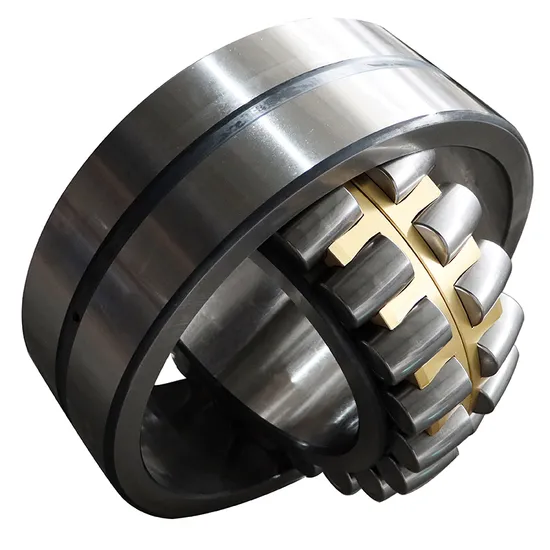
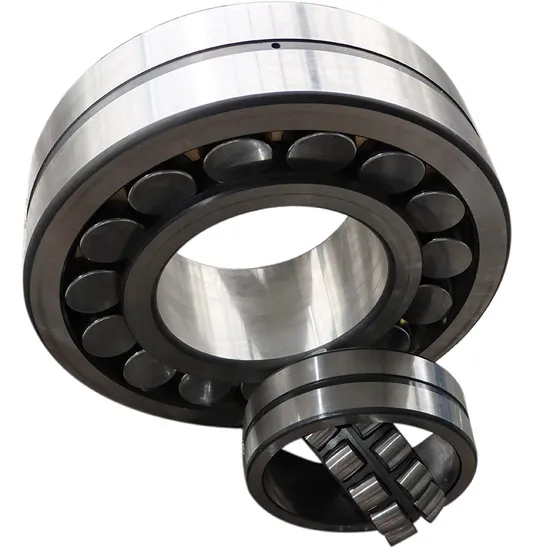
When you look at a 22320 spherical roller bearing from KOYO and the same 22320 from SKF, the outer envelope is identical. Both conform to ISO 15 dimensional standards. But inside that envelope, the cage construction can differ dramatically. KOYO’s standard offering for many spherical roller bearing series uses a stamped steel cage with guided rollers, while SKF’s default catalog configuration for the same size range often specifies a machined brass cage centered on the rollers. [NEED_CITE: ISO 15 bearing boundary dimension standard scope]
This is not a defect or a quality gap — it is a design philosophy difference. KOYO’s stamped steel cage approach prioritizes cost efficiency and adequate performance under moderate operating conditions. SKF’s machined brass cage approach prioritizes thermal stability and high-speed capability. Both are valid engineering choices, but they are not interchangeable in every application.
I have seen distributors in the Middle East quote bulk orders by model number alone, only to face return claims when the end user’s equipment ran hotter than expected. The bearing itself was genuine, the dimensions were correct, but the cage material was wrong for the duty cycle. A KOYO SKF bearing cage material comparison that stops at the model number is no comparison at all.
KOYO vs SKF Cage Materials: Stamped Steel vs Machined Brass Explained
Stamped steel cages and machined brass cages represent two entirely different manufacturing processes, material properties, and performance boundaries — understanding the distinction is the foundation of any credible KOYO SKF bearing cage material comparison.
Here is how the two approaches break down from an engineering standpoint:
Stamped Steel Cages (KOYO’s common default):
These are formed from sheet steel through a pressing and riveting process. The cage pockets are stamped out, and the assembly is held together with rivets or crimped joints. The material is typically low-carbon steel with surface treatment for corrosion resistance. Stamped steel cages are lightweight, cost-effective, and perform reliably under moderate temperatures and speeds. They are the standard choice for general-purpose industrial applications — conveyor rollers, gearboxes running below rated thermal limits, and standard electric motors. [NEED_CITE: stamped steel cage manufacturing process and material specifications per bearing engineering handbook]
Machined Brass Cages (SKF’s common default in heavy-duty ranges):
These are machined from solid brass bars or forgings on CNC lathes. The result is a one-piece or two-piece cage with excellent dimensional accuracy, superior heat dissipation, and high resistance to mechanical shock. Brass cages maintain their structural integrity at elevated temperatures where stamped steel begins to lose yield strength. They also handle the lubrication film breakdown that occurs during start-stop cycles or momentary overloads. This is why SKF specifies machined brass cages as standard for many spherical roller bearing and cylindrical roller bearing series intended for heavy industry. [NEED_CITE: machined brass cage thermal and mechanical performance characteristics per manufacturer technical documentation]
| Parameter | Stamped Steel Cage | Machined Brass Cage |
|---|---|---|
| Manufacturing Process | Pressed and riveted from sheet steel | CNC machined from solid brass bar or forging |
| Thermal Stability | Moderate — suitable for standard operating temperatures | High — retains structural integrity at elevated temperatures |
| Speed Capability | Adequate for moderate RPM ranges | Superior — handles high-speed operation with lower friction heat |
| Shock Load Resistance | Basic — rivet points are potential failure locations under impact | Robust — monolithic structure absorbs shock effectively |
| Weight | Lightweight | Heavier |
| Cost Level | Lower | Noticeably higher |
| Typical Application Range | General industrial, moderate duty | Heavy industry, high temperature, high speed, severe duty |
A distributor in West Africa once received a complaint from a mining operation. The customer had been running SKF spherical roller bearings with machined brass cages on a vibrating screen. When the SKF supply was delayed, the maintenance team sourced KOYO bearings of the same model number — but the KOYO units arrived with stamped steel cages. Within weeks, the cages showed fatigue cracking at the rivet holes. The vibration spectrum and thermal load on that screen simply exceeded what stamped steel could handle long-term. This is the kind of KOYO SKF bearing cage material comparison that only becomes visible after failure.
How to Read Bearing Suffix Codes for Cage Material
The suffix code appended to the base model number is the only reliable way to confirm cage material before shipment — ignoring it is the single most common mistake in cross-brand bearing sourcing.
Both KOYO and SKF use suffix letter systems to designate cage type and material, but the codes are not identical between brands. Here is the practical reading method I use on every order verification:
Step 1 — Identify the base model number.
For example, 22320. This tells you the bearing type (spherical roller), size series, and bore diameter. It does not tell you the cage material.
Step 2 — Locate the cage designation suffix.
In the KOYO system, common cage suffixes include designations for stamped steel cages and machined brass cages, each represented by specific letter combinations after the model number. In the SKF system, the suffix structure follows a different convention — for instance, certain letter codes indicate machined brass cages centered on rollers, while other codes indicate stamped steel cages or polymer cages. [NEED_CITE: KOYO bearing suffix code system for cage material designation per manufacturer catalog]
Step 3 — Cross-reference the suffix to the actual cage material.
Do not assume that a suffix letter in KOYO means the same thing in SKF. I maintain a side-by-side suffix mapping table for every major bearing series I handle, and I check it against the current edition of each manufacturer’s catalog — because suffix codes do get updated between catalog editions. [NEED_CITE: SKF bearing suffix code system for cage material designation per manufacturer catalog]
Step 4 — Confirm with the supplier’s packing list or technical data sheet before shipment.
If the supplier cannot confirm the cage material from the suffix on the actual stock they are shipping, do not accept the order. I have had shipments arrive with model numbers that looked correct on the box label, but the inner packaging showed a different suffix — meaning the physical bearing inside did not match what was ordered.
A buyer at a steel mill in Southeast Asia learned this the hard way. They ordered a batch of cylindrical roller bearings for a continuous caster roll. The purchase order specified machined brass cages. The supplier shipped bearings with the correct base model number — but with stamped steel cages and a different suffix. The bearings ran, but the cage temperature ran noticeably higher than the previous set. Maintenance caught it during a routine thermal inspection before failure occurred, but the entire batch had to be returned and replaced. The KOYO SKF bearing cage material comparison had to be redone with suffix-level precision.
What Happens When You Use the Wrong Cage Material?
Cage material mismatch does not announce itself immediately — it accumulates damage silently until the cage fails catastrophically, often taking the rollers, rings, and sometimes the entire machine with it.
When a stamped steel cage is installed in an application that demands machined brass performance, the failure sequence typically follows a predictable pattern:
Thermal degradation phase. The stamped steel cage operates near its thermal limit. The rivet holes — which are stress concentration points — begin to experience micro-cracking as the steel loses yield strength at elevated temperature. The cage pockets elongate slightly, allowing roller skew. [NEED_CITE: stamped steel cage thermal failure modes under sustained high-temperature operation]
Lubrication breakdown phase. As roller skew increases, the lubricant film between the roller and cage pocket becomes inconsistent. Friction rises locally. Temperature at the cage pocket climbs further. The brass cage alternative would dissipate this heat more effectively due to the material’s superior thermal conductivity.
Fatigue cracking phase. The combination of thermal cycling, mechanical vibration, and friction-induced local heating causes fatigue cracks to propagate from the rivet holes or pocket edges. This phase can last weeks or months depending on the severity of the mismatch.
Catastrophic cage failure. The cage fractures. Rollers lose guidance. They cluster, skid, and generate extreme friction. The bearing seizes — often within minutes. The resulting damage to the shaft, housing, and connected equipment can cost several times the price of the bearing itself.
I worked with a European paper mill that experienced this exact sequence on a dryer roll bearing. They had been running a specific spherical roller bearing with a machined brass cage for years. During a cost-reduction exercise, the maintenance team accepted a cross-reference suggestion that matched the model number but not the cage suffix. The replacement bearing had a stamped steel cage. It ran for a few months — long enough to feel like a success — before the cage failed during a weekend shift. The dryer roll dropped, the felt tore, and the production line was down for an extended period. The total loss — including lost production, felt replacement, and roll damage — was a mid-six-figure figure in local currency. A proper KOYO SKF bearing cage material comparison at the suffix level would have prevented the entire incident.
Cross-Reference Checklist Before Ordering
Every cross-brand bearing order should pass through a structured verification process that goes well beyond matching the base model number — this checklist is the minimum standard I apply to every shipment I handle.
Here is the step-by-step verification sequence:
Step 1 — Confirm the base model number and bearing type.
Verify that the bore, OD, and width match the application requirement. Check against ISO 15 dimensional standards. [NEED_CITE: ISO 15 bearing boundary dimension verification procedure]
Step 2 — Identify the original bearing’s cage material.
Pull the maintenance record, the original equipment manual, or the failed bearing itself. Read the suffix on the original bearing’s marking. Determine whether it uses a stamped steel cage, machined brass cage, polymer cage, or machined steel cage.
Step 3 — Match the cage material suffix in the replacement brand.
Using the current manufacturer catalog, find the replacement bearing model that carries the same cage material designation. Do not assume the default catalog offering matches the original. If the original had a machined brass cage, the replacement must explicitly specify machined brass — not just "the same model number."
Step 4 — Verify internal clearance and grease fill.
Cage material is not the only suffix that matters. Internal clearance (C3, C4, etc.) and grease type/fill quantity also vary between brands and can affect performance. Confirm these match the application requirements. [NEED_CITE: bearing internal clearance class designations per ISO 5753]
Step 5 — Confirm operating conditions against cage material limits.
Check the application’s actual operating temperature range, speed range, and vibration profile. If the bearing will run at elevated temperature or high speed, a machined brass cage is the safer choice. If the application is moderate duty, stamped steel is adequate and more economical.
Step 6 — Request supplier confirmation of the physical stock’s suffix.
Before the shipment leaves the warehouse, ask the supplier to confirm the exact suffix code on the bearings being shipped — not just the model number on the order form. I do this on every order I manage, and I have caught mismatches at this stage more times than I can count.
Our cross-reference support covers KOYO, SKF, NSK, FAG, NTN, and TIMKEN across all major bearing types — spherical roller, cylindrical roller, tapered roller, deep groove ball, and angular contact. When a buyer sends us an OEM part number or a failed bearing sample, we trace the original cage material, match it to the correct suffix in the replacement brand, and confirm the full specification before quoting. That is how a KOYO SKF bearing cage material comparison should work in practice — not as a guess, but as a verified engineering match.
Conclusion
Cage material is the hidden variable that turns a simple bearing swap into a reliability risk. Matching model numbers without verifying suffix-level cage specifications exposes your operation to thermal degradation, fatigue cracking, and catastrophic failure. Stamped steel and machined brass cages serve different duty ranges, and the KOYO SKF bearing cage material comparison must be conducted at the suffix code level — not the model number level — to ensure the replacement bearing matches the original’s performance capability. Read the suffix, confirm the material, verify the stock, and your equipment will tell you the difference.


