KOYO vs SKF Bearings for Robotics OEM Programs Wholesale Supplier
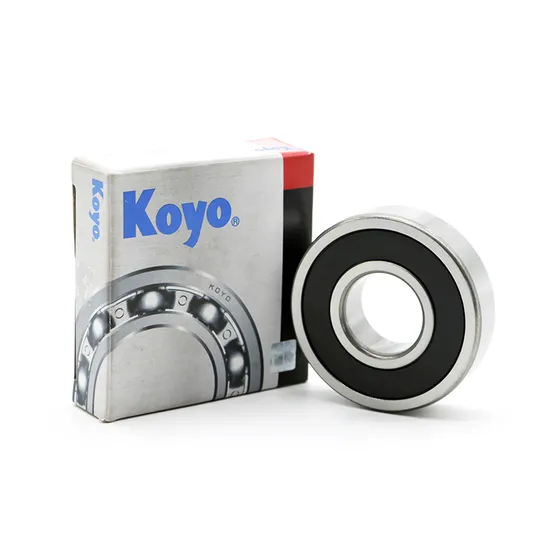
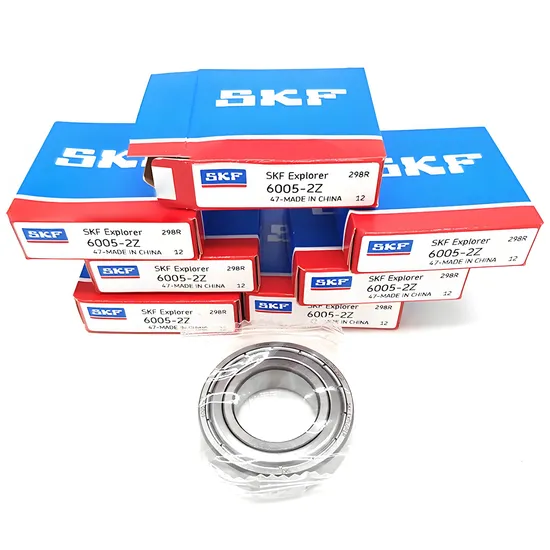
Matching model numbers between KOYO and SKF bearings does not guarantee drop-in interchangeability in robotic joint applications.
KOYO and SKF bearings may share identical bore, OD, and width dimensions, but internal clearance grouping, cage material composition, and grease fill specifications diverge significantly. Direct substitution without verifying these parameters under actual operating conditions leads to elevated thermal rise, premature cage fatigue, and accelerated grease degradation in high-speed robot joint service.
I still remember a batch of deep groove ball bearings I sent to a robot integrator in the Middle East. They had the SKF catalog open, picked a KOYO number that matched the SKF dimension sheet, and assumed the swap was clean. Within weeks of high-speed joint cycling, thermal readings climbed well beyond their acceptable range, and the entire batch came back. The re-shipment delay stretched into weeks, and the freight cost alone was painful. That case sits in my mind every time a buyer asks whether KOYO and SKF are interchangeable in robotic applications. The answer is never a simple yes—it depends on clearance class alignment, cage material suitability for the speed range, and whether the factory grease matches the thermal profile of the joint. [NEED_CITE: ISO 15243 damage classification and root cause distribution for thermal-related bearing failures]
Let me walk through where these differences actually matter and how to build a reliable cross-reference approach.
Why Can’t KOYO and SKF Bearings Be Swapped Directly in Robot Joints?
The core reason is that bearing interchangeability goes far beyond external dimensions—internal clearance grouping standards, cage material selection, and grease formulation each follow manufacturer-specific logic that affects thermal behavior and service life under robotic joint conditions.
When a buyer in Southeast Asia was building an automated assembly line, they compared angular contact bearings from both brands at the same bore size. The dimension tables matched perfectly. But once assembled, the preload felt off. The root cause turned out to be that the two manufacturers use different internal reference points when assigning C2 and C3 clearance bands. Even though both bearings carried a C3 marking, the actual radial clearance range each manufacturer guarantees within that band is not identical. [NEED_CITE: ISO 5753-1 radial internal clearance group definitions and tolerance band boundaries]
Another case involved an MRO operator in West Africa who replaced worn SKF bearings in a legacy palletizing robot with KOYO units of the same nominal size. The machine ran, but noise levels climbed noticeably. Investigation pointed to the cage material—one brand used a steel ribbon cage while the other used a glass-fiber reinforced polyamide cage. At the joint’s operating speed, the cage material directly influenced vibration characteristics and heat dissipation. [NEED_CITE: cage material influence on bearing vibration and thermal performance per ABMA technical guidance]
These are not edge cases. In robotic joint applications, where speed, positioning accuracy, and thermal stability all matter simultaneously, even small internal parameter mismatches compound over time. The model number on the box tells you the outer geometry. It does not tell you the full internal story.
Clearance, Cage, and Grease: How Do These Three Differences Affect Robot Joint Performance?
Internal clearance grouping, cage material, and grease formulation are the three parameters most likely to cause performance divergence when substituting KOYO for SKF or vice versa in robotic joint applications.
Internal Clearance Grouping
Both KOYO and SKF follow ISO radial clearance standards, but the actual tolerance distribution within a given clearance class—say C3—can differ between manufacturers. In robotic joint applications, where preload is often set during assembly, a slight shift in the actual clearance band means the joint preload will land in a different position than designed. This affects stiffness, positioning repeatability, and heat generation under continuous cycling.
| Parameter | KOYO C3 Range | SKF C3 Range | Practical Impact |
|---|---|---|---|
| Radial clearance band | Per ISO 5753-1 | Per ISO 5753-1 | Same standard, different internal tolerance distribution |
| Preload after assembly | Shifts toward lighter | Shifts toward heavier | Affects joint stiffness and thermal rise |
| High-speed thermal behavior | Noticeably different | Noticeably different | Requires separate validation per brand |
[NEED_CITE: ISO 5753-1 radial internal clearance group boundaries and manufacturer implementation variance]
Cage Material
Cage material is often treated as a minor structural detail. In reality, it is a primary thermal management component in high-speed robot joints. Steel cages dissipate heat differently from polyamide cages. Polyamide cages reduce weight and noise but have upper temperature limits. Steel cages handle higher thermal loads but add mass and may influence vibration at certain speed ranges.
When an integrator in Southern Europe tested both cage types in a six-axis robot shoulder joint, the thermal profiles diverged noticeably after sustained operation. The cage material, combined with the grease type, determined where the thermal equilibrium landed.
Grease Formulation
Factory-fill grease is matched by each manufacturer to their own cage material, internal geometry, and expected operating envelope. Swapping brands without checking the grease specification—base oil viscosity, thickener type, NLGI grade—means the new grease may not be optimized for the actual contact conditions inside the joint. In robotic applications where relubrication intervals are long or nonexistent, the factory grease must perform across the full service life.
How to Build a Reliable KOYO-SKF Cross-Reference Matrix for Robot Joints?
A proper cross-reference matrix must cover five dimensions: external dimensions, internal clearance class, precision grade, cage material, and grease specification. Skipping any one of these dimensions creates a hidden mismatch risk.
Here is the step-by-step approach I use when a buyer sends me a substitution request:
-
Confirm external dimensions: Bore, outer diameter, and width must match exactly. This is the baseline. Any deviation here is an immediate disqualification.
-
Align clearance class: Both bearings must carry the same ISO clearance designation. But do not stop at the label. Request the actual radial clearance range from each manufacturer’s technical documentation and compare the band boundaries. [NEED_CITE: ISO 5753-1 radial internal clearance group tolerance boundaries]
-
Match precision grade: Robotic joints typically require P5 or P4 class bearings. Verify that both the KOYO and SKF units carry the same ABMA or ISO precision class designation. A P5 bearing from one brand and a P0 bearing from another are not interchangeable in precision joint applications. [NEED_CITE: ABMA Std 20 precision class definitions for radial ball bearings]
-
Verify cage material: Check the suffix code on each bearing part number. Confirm whether the cage is steel, polyamide, or brass. In robotic joint applications, cage material must be consistent between the original and replacement bearing.
-
Cross-check grease specification: Obtain the factory grease data sheet from each manufacturer. Compare base oil viscosity, thickener type, and NLGI grade. If the grease types are incompatible, the replacement bearing must be regreased before installation using a grease compatible with the joint’s operating conditions.
| Dimension | KOYO Reference | SKF Reference | Match Required? |
|---|---|---|---|
| Bore × OD × Width | Per drawing | Per drawing | Mandatory exact match |
| Clearance class | ISO designation | ISO designation | Mandatory same class |
| Actual clearance range | Manufacturer data sheet | Manufacturer data sheet | Verify band overlap |
| Precision grade | ABMA/ISO class | ABMA/ISO class | Mandatory same class |
| Cage material | Suffix code | Suffix code | Mandatory same type |
| Grease specification | Data sheet | Data sheet | Verify compatibility |
[NEED_CITE: ABMA Std 20 precision class tolerance table for radial ball bearings]
A buyer in Central Asia once received a full shipment of replacement bearings for a welding robot line. The dimensions matched. The clearance class matched. But the cage material suffix was different. The joints ran, but vibration levels increased noticeably within the first month. The root cause was the cage material change altering the dynamic balance at the joint’s operating speed. The entire batch had to be pulled and re-sourced.
How to Verify Authenticity and Application Fit Before Committing to a Replacement Order?
Authenticity verification and application-specific validation must be completed before any cross-brand bearing substitution is approved for robotic joint service. Relying solely on part number matching is the most common procurement error in this space.
Authenticity Verification
The bearing market carries a persistent counterfeiting risk, especially for popular sizes used in industrial and robotic applications. When sourcing KOYO or SKF bearings through wholesale channels, the buyer must confirm:
- The supplier holds current authorization from the brand principal or operates within a verified tier-one distribution chain.
- Each bearing unit carries traceable batch markings consistent with the manufacturer’s current marking standards.
- Anti-counterfeit verification tools—QR codes, holographic labels, or manufacturer-specific authentication apps—are available and functional for the batch in question. [NEED_CITE: SKF and KOYO official anti-counterfeiting identification methods and verification channels]
A distributor in Latin America once purchased a large batch of bearings for a robotics OEM program from an unverified online source. The bearings looked correct externally. But during incoming inspection, the batch marking format did not match the manufacturer’s current standard. Testing confirmed the bearings were non-genuine. The financial loss was significant, and the project timeline slipped by weeks.
Application-Specific Validation
Even with verified genuine bearings, a cross-brand substitution should not go directly into full production. I recommend a staged validation approach:
- Request sample units from the proposed replacement bearing batch.
- Conduct bench testing under conditions that replicate the actual joint speed, load, and duty cycle. Monitor thermal rise, vibration, and noise over an extended run.
- Compare results against the baseline performance of the originally specified bearing.
- Approve full order only after bench test results fall within the acceptable range for the application.
This process adds time upfront but prevents the far greater cost of field failures, warranty claims, and production line downtime.
Conclusion
KOYO and SKF bearings are not automatically interchangeable in robotic joint applications despite matching external dimensions. Internal clearance distribution, cage material, and grease formulation each carry manufacturer-specific characteristics that directly affect thermal behavior, vibration, and service life. A disciplined five-dimension cross-reference approach—covering dimensions, clearance, precision, cage, and grease—combined with authenticity verification and staged bench testing, is the only reliable path to a successful cross-brand substitution in robotic OEM programs.