UK Wind Turbine Bearing Bulk Sourcing Supplier
The lowest unit price is rarely the true cost driver in offshore wind projects.
Successful bulk sourcing for UK wind assembly hinges not just on price, but on verified authenticity, marine-grade corrosion protection, and complete documentation for customs and QA. Procurement teams often focus on the sticker price of spherical roller bearings or main shaft units, only to face catastrophic delays at Liverpool or Felixstowe ports due to missing origin certificates or failed moisture barrier tests. The real value lies in a supply chain that guarantees traceability from the manufacturer’s production facilities to the turbine nacelle, ensuring that every component meets the rigorous demands of North Sea conditions without triggering costly rework or rejection.
I still recall the silence in the warehouse when we opened a container of yaw bearings destined for a major UK offshore project. The packaging looked intact from the outside, but inside, the humidity trapped during the sea voyage had caused micro-corrosion on the raceways. It was not a manufacturing defect; it was a packaging failure. The client rejected the entire shipment. The cost of repackaging, re-inspection, and the delay penalties far exceeded the initial savings we had negotiated on the purchase order. That incident reshaped how I approach every single inquiry for UK wind turbine bearing bulk sourcing supplier contracts. It is not about moving boxes; it is about protecting asset integrity through a hostile logistics environment.
Transitioning from simple trading to technical procurement support means understanding that the bearing is only as good as its journey to the site. Below, we break down the critical factors that separate a reliable partner from a risky vendor.
Why Do UK Wind Projects Reject Imported Bearings?
Lack of traceability and poor corrosion protection are the primary drivers of rejection, not just dimensional accuracy.
When a procurement manager asks for a quote, they are often comparing line items across multiple spreadsheets. However, the technical evaluation team at the wind farm operator is looking for something entirely different: proof that the bearing will survive the salt-laden air and high-load cycles of an offshore installation. Rejections usually stem from two specific failures. First, the inability to prove the genuine origin of the brand. Second, inadequate protection against marine atmospheric corrosion during transit.
| Rejection Factor | Standard Export Practice | Required Marine-Grade Standard | Risk Level |
|---|---|---|---|
| Packaging Material | Standard kraft paper and plastic wrap | VCI (Vapor Corrosion Inhibitor) paper with vacuum sealing | High |
| Documentation | Commercial invoice and packing list only | Full mill test certificates, origin certs, and batch traceability logs | Critical |
| Brand Verification | Self-declared authenticity | Verifiable batch codes cross-referenced with manufacturer databases | High |
| Moisture Control | Desiccants placed loosely | Calculated desiccant ratios with humidity indicator cards included | Medium |
[NEED_CITE: ISO standards for packaging of rolling bearings for long-term storage and transport]
A European wind farm operator once shared their data on rejected shipments. The majority of issues were not related to the bearing geometry itself, which is often held to tight tolerances by reputable manufacturers. Instead, the failures occurred because the supplier could not provide a continuous chain of custody for the materials. Without this documentation, the quality assurance team cannot sign off on the installation, leaving the turbines idle while paperwork is sorted out. This is why working with a dedicated UK wind turbine bearing bulk sourcing supplier who understands these documentary requirements is essential. The physical product might be perfect, but if the paper trail is broken, the bearing is useless to the project timeline.
How to Verify Authenticity in Bulk Orders?
Implement a multi-step verification process involving batch code checks and third-party inspection before shipment.
Counterfeit bearings are a persistent threat in the global market, particularly for high-value items like main shaft and gearbox bearings. A fake bearing might look identical to the genuine article, but the steel quality and heat treatment will fail under the extreme loads of a wind turbine. Verification cannot be left to chance. It requires a systematic approach that begins long before the container leaves the port of origin.
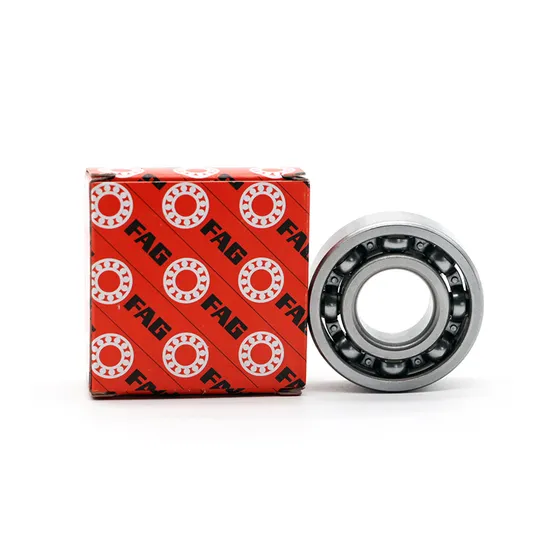
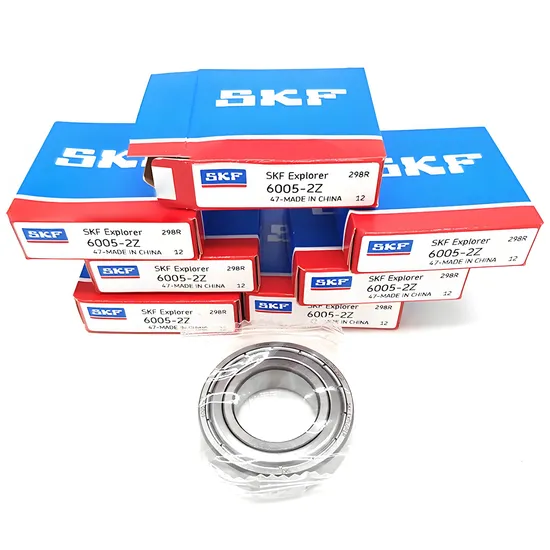
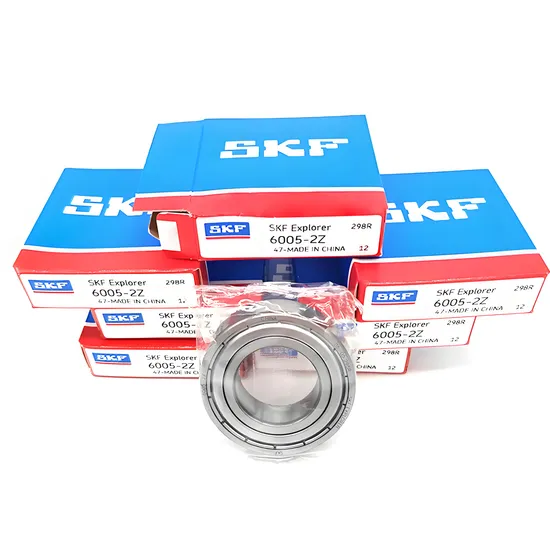
The first step is requesting the official authorization letter from the brand manufacturer. Many suppliers claim to have direct access, but few can produce current, valid documentation. Next, verify the batch codes. Genuine bearings from brands like SKF, FAG, or NSK have laser-etched or stamped codes that can be cross-referenced with the manufacturer’s database. This is not a mere formality; it is the only way to ensure that the steel used meets the required purity standards for heavy-duty applications.
[NEED_CITE: Methods for identifying counterfeit rolling bearings via batch code verification]
Consider the case of a mixed-brand consolidation order for a maintenance overhaul. The client needed spherical roller bearings from one brand and cylindrical roller bearings from another. By consolidating these into a single container, we reduced logistics costs significantly. However, the verification process remained rigorous for each SKU. We conducted a pre-shipment inspection where random samples were checked against the provided batch codes. Any discrepancy would have halted the entire shipment. This level of diligence ensures that when the bearings arrive at the UK site, the QA team can trust the product implicitly. A reliable UK wind turbine bearing bulk sourcing supplier will welcome this scrutiny, as it demonstrates confidence in their supply chain.
What Are the Critical Packaging Requirements for Sea Freight?
Standard export packing is insufficient; marine-grade anti-rust measures are mandatory for UK port entry.
The journey from China to the UK involves weeks at sea, where temperature fluctuations and high humidity create a perfect environment for corrosion. Standard industrial packaging, which might suffice for domestic transport or dry climates, is a liability for offshore wind projects. The key is to create a micro-environment within the packaging that remains stable regardless of external conditions.
VCI (Vapor Corrosion Inhibitor) technology is the industry standard for this purpose. The bearings must be wrapped in VCI paper, which releases protective vapors that form a molecular layer on the metal surface, preventing oxidation. This wrap should then be vacuum-sealed to remove air and moisture. Additionally, desiccant packs must be calculated based on the volume of the container and the expected duration of the voyage. Simply throwing in a few silica gel packets is not enough; the ratio must be precise to ensure effectiveness throughout the trip.
[NEED_CITE: Best practices for VCI packaging and desiccant calculation for maritime shipping]
I remember a shipment of SNL housing units that were destined for a coastal wind farm. The client had previously suffered from rust issues with other suppliers. We implemented a double-layer VCI wrap and added humidity indicator cards inside each package. When the container arrived, the cards showed no color change, indicating that the internal environment had remained dry. The bearings were installed without any cleaning or re-greasing, saving the maintenance team hours of labor. This attention to detail is what distinguishes a professional UK wind turbine bearing bulk sourcing supplier from a general trader. It is not just about sending the product; it is about ensuring it arrives in install-ready condition.
How to Optimize Costs Without Compromising Quality?
Leverage mixed-brand consolidation and direct-from-source pricing while maintaining full documentation.
Cost optimization in wind energy procurement is often misunderstood as simply finding the cheapest unit price. In reality, true cost efficiency comes from reducing total landed costs and minimizing risk. One effective strategy is mixed-brand consolidation. Instead of ordering full containers from single brands, which may lead to overstocking or long lead times for specific SKUs, buyers can consolidate various brands and sizes into a single shipment. This approach reduces freight costs per unit and allows for more flexible inventory management.
Furthermore, sourcing directly from authorized distributors rather than secondary traders eliminates markup layers. However, this requires a supplier who has established relationships with multiple major brands and can navigate the complexities of multi-brand procurement. The ability to provide genuine products from SKF, FAG, INA, NSK, and others, along with reliable domestic Chinese lines for less critical applications, offers a balanced portfolio that meets both budget and performance needs.
[NEED_CITE: Economic benefits of consolidated LCL vs FCL shipments for industrial MRO]
For emergency MRO replacements, the cost of downtime far outweighs the price of the bearing. Having a supplier with significant spot inventory means that critical components can be shipped immediately, avoiding the long lead times associated with OEM orders. This agility is crucial for maintaining operational continuity. A strategic UK wind turbine bearing bulk sourcing supplier acts as an extension of your procurement team, offering technical selection support and ensuring that every purchase contributes to the overall reliability and profitability of the wind farm.
Conclusion
Reliable sourcing is defined by documentation, protection, and traceability, not just price.
Procuring bearings for UK wind projects requires a shift from transactional buying to strategic partnership. By prioritizing verified authenticity, implementing marine-grade packaging standards, and leveraging consolidated logistics, operators can mitigate the hidden risks that often derail offshore projects. The right UK wind turbine bearing bulk sourcing supplier provides not just components, but the certainty that those components will perform as intended from the moment they leave the factory until they are fully integrated into the turbine system.