Long-Term Supply Agreements for KOYO SKF Cross-Brand Buyers
"Equivalent substitution" is the most expensive phrase in any bearing contract.
A cross-brand bearing supply agreement must lock in explicit interchange charts, country-of-origin clauses, and authenticity verification terms as non-negotiable attachments—not vague "equal replacement" language.
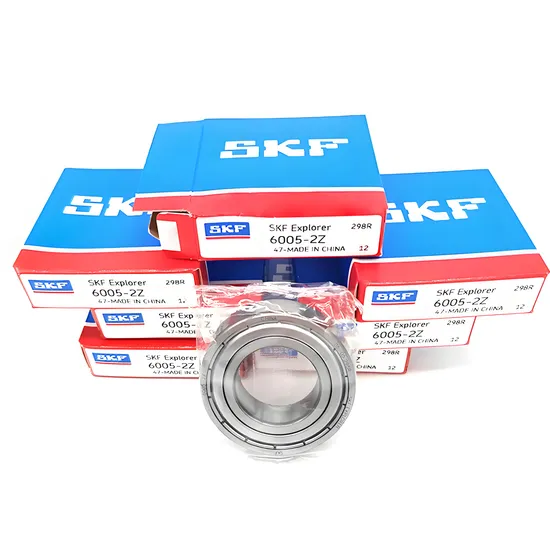
I still remember a framework agreement I signed years ago in Chicago for an industrial maintenance outfit. The contract said "SKF 6205 or equivalent." No brand locked, no origin specified, no clearance class mentioned. The second shipment arrived from Eastern Europe—look-alike packaging, different cage material, different internal clearance. Three months later, motors started howling on the shop floor. The downtime cost dwarfed the bearing price tag, and the return cycle stretched across weeks. I paid for that mistake personally, and it pushed me to switch sides—from buyer to supplier—so I could build contracts the way they should have been built from day one. Since then, at Hannover Messe, at the industrial shows in Las Vegas, the first thing I pull out with any buyer negotiating a multi-year deal is the cross-reference chart, pinned to the annex, with brand, series, origin, and verification method all written in ink [NEED_CITE: ISO 15243 rolling bearing damage classification and failure modes].
Let me walk you through what actually needs to go into these agreements, and where most long-term contracts quietly fail.
What Must a Cross-Brand Bearing Supply Agreement Include?
Three attachments are non-negotiable: the interchange chart, the origin clause, and the authenticity verification protocol.
Without all three sitting inside the contract annex, a framework agreement is just a price list waiting to go wrong. The interchange chart maps every requested型号 against its approved cross-brand alternative—SKF to KOYO, NSK to FAG, TIMKEN to NTN—down to the series suffix, not just the basic bore and outside diameter. The origin clause pins the manufacturing country to a specific HS code, so customs clearance and compliance do not become afterthoughts. The verification protocol defines how every shipment gets checked before it reaches the warehouse floor [NEED_CITE: ABMA standard practices for bearing identification and traceability].
A Middle East distributor once placed a standing order for a specific deep groove ball bearing series under an SKF part number. The supplier, operating under a loose "equivalent" clause, shipped KOYO alternatives without prior notice. The end customer rejected the entire batch on sight. The return logistics ate into the margin so heavily that the distributor nearly walked away from the contract altogether. The root cause was not the bearing quality—it was the absence of a written substitution rule.
The risk checklist for any agreement missing these attachments reads like a procurement post-mortem:
- Unapproved brand swaps arriving without notice
- Origin mismatches triggering customs holds
- Clearance class differences causing field failures
- No traceability path when a batch is later questioned
How Do You Define "Equivalent Substitution" Without Risk?
Dimensional equivalence alone is a trap—specify brand, series, clearance class, cage material, and country of origin.
Two bearings can share identical bore, outside diameter, and width yet behave completely differently under load. Internal clearance class—C2, C3, C4—determines how the bearing handles thermal expansion and fit tolerance. Cage material—whether stamped steel, machined brass, or polyamide—affects speed rating, noise, and lubricant compatibility. Manufacturing origin influences steel purity standards and heat treatment consistency across production runs [NEED_CITE: FEA technical guidance on bearing interchange limitations and clearance selection].
A Latin American buyer once signed an意向 agreement at a trade fair without attaching a cross-reference table. When the shipment arrived, the radial internal clearance did not match the application requirement. The motors ran hot, the grease degraded faster than expected, and the rework hours consumed any cost advantage the alternative brand was supposed to deliver. The bearing dimensions were "correct"—the performance was not.
The proper substitution definition must include:
- Exact brand and series with suffix codes
- Internal clearance class matching the OEM specification
- Cage material and design type
- Country of origin tied to the manufacturer’s production facilities
- Lubrication compatibility confirmation
When any of these fields is left blank or marked "or equal," the supplier gains discretion that the buyer will eventually pay for in the field.
What Are the Most Common Pitfalls in Long-Term Cross-Brand Contracts?
Vague substitution language is the single largest source of mismatched shipments, downtime losses, and rejected batches.
Most buyers assume that a framework agreement automatically reduces procurement cost. It does—provided the cross-reference table and inspection standards are embedded in the annex as binding attachments. When they are not, the agreement becomes a vehicle for the supplier to ship whatever is available in stock, not what the application demands.
A European maintenance company signed an annual supply deal without locking origin or replacement brand. The second delivery contained bearings from a region known for look-alike packaging and inconsistent heat treatment. The motors failed within months. The downtime multiplier against the unit bearing price was severe, and the return cycle added weeks of operational paralysis. The contract had no clause triggering third-party inspection, no QR-based authenticity check, and no origin verification step [NEED_CITE: ISO bearing interchange standards and failure mode documentation].
The recurring pitfalls across multi-brand agreements include:
- Substitution clauses that say "equivalent" without defining equivalence parameters
- Missing origin documentation leading to customs and compliance delays
- No pre-shipment verification trigger for high-value or safety-critical batches
- Absence of a complaint and replacement timeline, leaving the buyer exposed during disputes
- Failure to update the interchange chart when manufacturers revise series suffixes or discontinue lines
How Should Authenticity Verification Be Written Into the Agreement?
Embed QR code verification, authorized-source confirmation, and third-party inspection triggers directly into the contract body.
Authenticity is not something you check after the fact—it must be a contractual gate that the shipment cannot pass without clearing. The agreement should require that every bearing unit carries a scannable QR code or authentication marker traceable to the manufacturer’s database. The supplier must confirm, in writing, that the goods originate from an authorized distribution channel, and the buyer retains the right to trigger independent third-party inspection at any point before final acceptance [NEED_CITE: brand-specific anti-counterfeit verification program requirements and authorized channel structures].
The verification clause should specify:
- Mandatory QR or app-based authenticity check upon receipt
- Written confirmation of authorized distributor status for the supplied brand
- Buyer’s right to invoke third-party metallurgical or dimensional inspection
- Defined timeline and cost allocation for inspection and rejection procedures
- Consequences for supplying goods that fail authenticity verification, including replacement at supplier cost and liability for downstream losses
A buyer in the heavy industrial sector once received a batch of tapered roller bearings that passed visual inspection but failed dimensional spot-checks under third-party review. The contract had no explicit inspection trigger, and the dispute resolution stretched across months. Had the verification clause been written in from the start, the rejection would have happened at the dock, not in the maintenance workshop.
When Should Buyers Request Country-of-Origin Documentation?
At contract signing—not after the shipment arrives at the port.
Origin documentation is not a customs afterthought; it is a compliance foundation. The country of origin determines tariff classification, sanctions exposure, and anti-dumping duty applicability. If the origin is not locked in the agreement before the first purchase order is issued, the buyer inherits every regulatory and financial risk that comes with an ambiguous supply chain [NEED_CITE: HS code classification rules and origin documentation requirements for bearing imports].
A buyer sourcing from multiple regions once discovered, upon customs clearance, that the declared origin did not match the actual manufacturing location. The shipment was held, the tariff classification was reassessed, and the delay cascaded into production schedule disruptions. The agreement had mentioned origin only as a "to be confirmed" field—a gap that cost far more than the bearing margin.
The origin clause must include:
- Explicit manufacturing country tied to each approved brand and series
- HS code alignment for each origin-brand combination
- Supplier obligation to provide certificates of origin with every shipment
- Buyer’s right to reject shipments where origin documentation is missing or inconsistent
- Pre-agreed remedy for origin substitution, including price adjustment or full return
Conclusion
A long-term cross-brand bearing supply agreement lives or dies on the detail in its annexes.
Interchange charts, origin clauses, and verification protocols are not administrative extras—they are the structural safeguards that prevent mismatched shipments, field failures, and compliance disasters. Write them in clearly before the first order goes out, and the framework agreement becomes what it was meant to be: a tool for cost control and supply stability, not a liability waiting to surface on the shop floor.