SKF Bearing Distributor in Nigeria: Authorized Wholesale Supplier Guide
Low-priced SKF bearings are rarely discounted stock — they are almost always counterfeit units built with substandard steel and incomplete heat treatment.
To source genuine SKF bearings in Nigeria, buyers must verify authorized distributor status through the official SKF channel, authenticate products using QR codes and the SKF Authenticate App, and confirm import documentation including certificates of origin and correct HS codes before customs clearance.
Walking through the industrial markets in Lagos, I have seen pallets of SKF-branded bearings sitting in open-air stalls, priced at a fraction of what authorized channels charge. A mining operation in West Africa once purchased a batch of spherical roller bearings from an unverified local vendor. The units failed within months, causing extended downtime that cost several times what genuine replacements would have required. The root cause was never the application — it was the supply chain. As an SKF bearing distributor in Nigeria, I have helped industrial buyers across multiple regions trace authentic sourcing paths, and the pattern is always the same: verification before purchase, not after failure. [NEED_CITE: SKF anti-counterfeit program scope and verification tools]
Let me walk you through the exact verification steps, authentication methods, cross-reference practices, and documentation requirements that separate a reliable SKF bearing distributor in Nigeria from the rest of the market.
How to Verify Authorized SKF Distributors in Nigeria?
The only reliable method is cross-checking the supplier against SKF’s official authorized distributor list and requesting verifiable authorization documents directly from the supplier.
SKF maintains a global network of authorized distributors, and the verification process starts on the official SKF website. However, many buyers in Nigeria and across West Africa are unaware that SKF’s authorized distribution network extends well beyond Europe. A significant portion of the authorized supply chain for the African market operates through tier-one distributors headquartered in Asia, including China, where complete authorization documentation and direct factory linkage are standard. [NEED_CITE: SKF global authorized distributor network structure]
The verification process involves several steps:
- Official Website Query: Access the SKF distributor locator on skf.com and filter by region. If a Nigerian supplier claims authorization but does not appear in the system, treat this as a red flag.
- Authorization Certificate Review: Request the supplier’s current authorization letter. Genuine certificates include the distributor’s registered name, authorized territory, validity period, and SKF’s official stamp or digital signature.
- Tier Verification: Confirm whether the supplier is a direct SKF-authorized distributor or a sub-tier reseller. Sub-tier resellers may carry genuine products but lack direct accountability to SKF.
- Cross-Check with SKF Regional Office: Contact SKF’s regional representative for Africa or the supplying region to confirm the distributor’s status independently.
A steel mill operator in West Africa once sourced spherical roller bearings from a vendor claiming SKF authorization. The supplier provided a document that looked official, but a cross-check with SKF’s regional office revealed the certificate had expired over a year prior. The entire batch was returned. This is why independent verification matters — a self-declared authorization means nothing without third-party confirmation. [NEED_CITE: common counterfeit supply chain tactics in West African industrial markets]
The risk of skipping this step is severe. Unverified suppliers may mix genuine and counterfeit units within the same shipment, making visual inspection alone insufficient. An SKF bearing distributor in Nigeria with verified authorization provides traceability from factory to delivery — a safeguard that unverified vendors simply cannot offer.
What Are the Key Authenticity Checks for SKF Bearings?
Use the SKF Authenticate App, scan product QR codes, and inspect packaging identifiers — these three methods together form the standard anti-counterfeit verification protocol.
SKF has invested heavily in anti-counterfeit technology, and the verification tools available to buyers are both accessible and reliable. The process begins the moment the product arrives.
QR Code Verification: Every genuine SKF bearing package carries a unique QR code. Scanning this code through the SKF Authenticate App (available on iOS and Android) returns the product’s verification status, batch information, and manufacturing origin. If the QR code is missing, damaged, or returns an error, the product should be treated as suspect. [NEED_CITE: SKF Authenticate App functionality and verification response parameters]
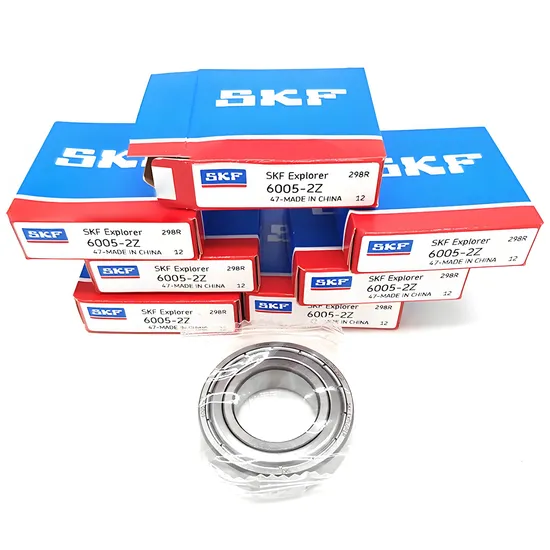
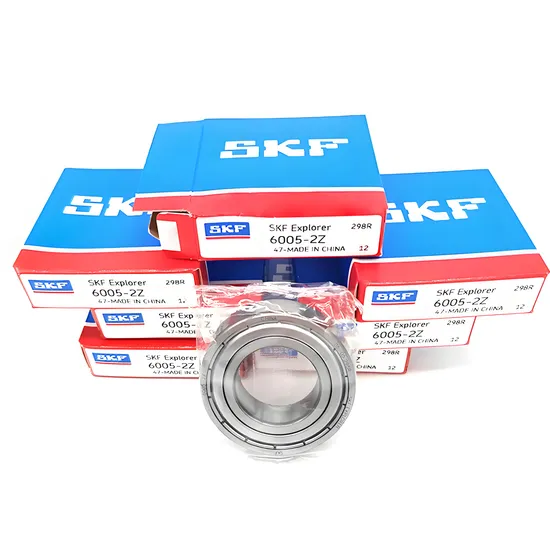
Packaging Inspection: Genuine SKF packaging features specific security elements — holographic labels, consistent print quality, correct font usage, and tamper-evident seals. Counterfeit packaging often shows slight color variations, blurred text, or misspelled product descriptions. The SKF brand logo on genuine packaging uses precise proportions that counterfeiters frequently fail to replicate accurately.
Physical Product Markings: The bearing itself carries laser-etched markings including the SKF logo, designation code, and origin identifier. Genuine markings are clean, uniform, and deeply etched. Counterfeit markings often appear stamped, shallow, or inconsistently aligned.
A maintenance team at a cement plant in East Africa replaced a series of deep groove ball bearings on a conveyor system. Within weeks, multiple units showed premature surface distress. Investigation revealed the QR codes on the packaging led to a generic website rather than SKF’s official verification portal. The entire batch was counterfeit. The maintenance team subsequently adopted a strict protocol: no bearing enters the warehouse without passing QR verification first. [NEED_CITE: SKF packaging security features and anti-counterfeit identification markers]
For buyers working with an SKF bearing distributor in Nigeria, requesting that the supplier perform pre-shipment QR verification on behalf of the buyer adds a layer of protection. Reputable distributors routinely provide verification confirmation alongside shipping documents.
How to Cross-Reference SKF Bearings with Other Brands?
Cross-referencing requires comparing dimension tables, dynamic load ratings, and internal clearance specifications — matching the model number alone is not sufficient for reliable interchange.
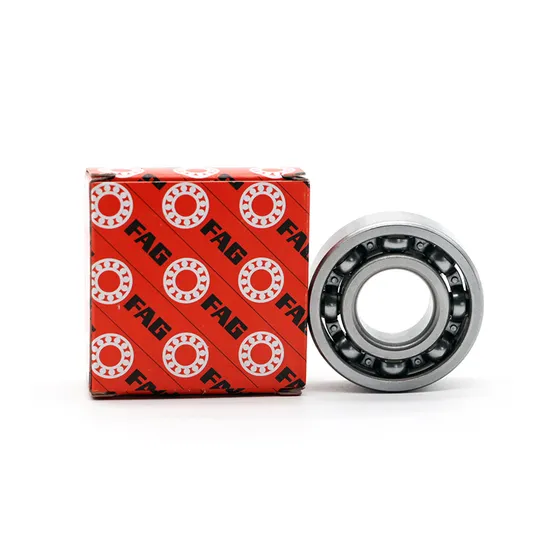
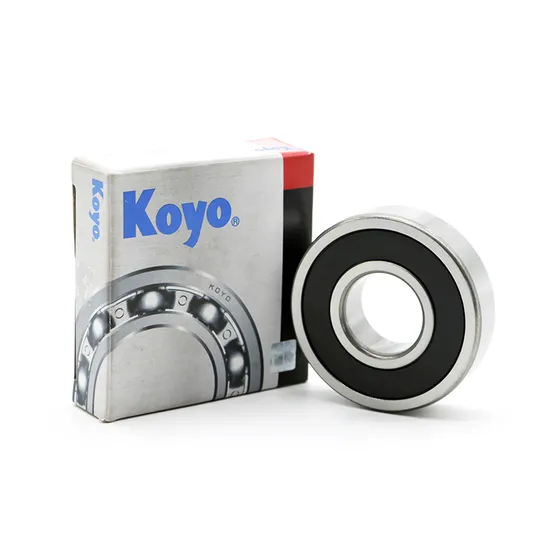
Industrial buyers in Nigeria often need to source replacement bearings for equipment originally fitted with NSK, FAG, TIMKEN, NTN, or KOYO units. While SKF bearings can serve as direct replacements in many applications, the cross-reference process demands technical precision.
The cross-reference methodology follows a structured approach:
- Dimensional Matching: Confirm that the bore diameter, outside diameter, and width match exactly between the original and replacement bearing. This is the baseline requirement.
- Load Rating Comparison: Compare the dynamic load rating (C) and static load rating (C0) between brands. A bearing with a lower load rating than the original specification will underperform regardless of dimensional compatibility.
- Internal Clearance Verification: Bearings with the same external dimensions may have different internal clearance groups (C2, C3, C4, CN). Selecting the wrong clearance group for the operating temperature and load conditions leads to premature failure. [NEED_CITE: bearing internal clearance classification per ISO 5753]
- Cage Design and Material: Different brands use different cage designs and materials (steel, brass, polymer). The cage type affects speed capability, lubrication requirements, and noise characteristics.
A distributor in Lagos once received a request to supply SKF equivalents for a large order of tapered roller bearings originally specified under another brand. By performing a full cross-reference — not just matching model numbers but comparing load ratings and clearance specifications — the team identified that two of the requested SKF models had a different internal clearance class than the original specification. The buyer was advised to adjust the application parameters or select the correct clearance variant. This prevented a potential field failure that would have damaged the distributor’s reputation. [NEED_CITE: bearing cross-reference methodology and interchange limitations between major brands]
Working with an SKF bearing distributor in Nigeria that offers complete cross-reference support across SKF, NSK, FAG, TIMKEN, NTN, and KOYO ensures that substitutions are technically validated, not just model-number guesses.
Why Do Fake SKF Bearings Fail Prematurely?
Counterfeit bearings use inferior steel with higher inclusion content and skip critical heat treatment stages, leading to early-stage spalling, cage fracture, and catastrophic seizure under normal operating loads.
The failure mechanism of counterfeit bearings is not mysterious — it is metallurgical. Genuine SKF bearings are manufactured from clean bearing steel with controlled inclusion levels and undergo precisely controlled carburizing or through-hardening processes. Counterfeit operations cannot replicate these processes because they lack the equipment, the material supply chain, and the quality control infrastructure. [NEED_CITE: metallurgical failure analysis of counterfeit versus genuine rolling bearings]
The typical failure progression in counterfeit bearings follows a predictable pattern:
- Early Spalling: The raceway surface develops pits and flakes within a fraction of the expected service life. This occurs because the subsurface material contains non-metallic inclusions that act as stress concentrators, initiating fatigue cracks prematurely.
- Cage Failure: Counterfeit cages are often made from lower-grade steel or polymer compounds that cannot withstand operational temperatures and centrifugal forces. Cage fracture follows, leading to rolling element clustering and rapid escalation.
- Dimensional Instability: Inadequate heat treatment means the bearing’s dimensional stability is compromised. Under operating temperatures, the rings and rolling elements deform, clearing changes unpredictably, and the bearing seizes.
A mining operation in Central Africa installed counterfeit spherical roller bearings on a crusher shaft. The original genuine units had provided extended service life under identical conditions. The counterfeit replacements failed repeatedly, with the longest-surviving unit lasting only a fraction of the expected duration. The total cost of downtime, replacement labor, and secondary damage to adjacent components amounted to a mid-six-figure loss. [NEED_CITE: documented case studies of counterfeit bearing failures in heavy industry applications]
The lesson is clear: the purchase price of a bearing represents a small fraction of its total cost of ownership. A counterfeit bearing that fails early does not just waste the purchase price — it multiplies the total cost through downtime, collateral damage, and safety risk. An SKF bearing distributor in Nigeria that guarantees authenticity protects the buyer from this entire failure chain.
What Documentation Is Required for Import Clearance?
Certificates of origin, correct HS code classification, and commercial invoices with accurate product descriptions are mandatory for Nigerian customs clearance of bearing imports.
Importing bearings into Nigeria requires compliance with customs regulations, and documentation errors are among the most common causes of clearance delays. Buyers working with an SKF bearing distributor in Nigeria should ensure that all documentation is prepared correctly before shipment departs the origin country.
The required documentation includes:
- Certificate of Origin: This document confirms the country where the bearings were manufactured. It is essential for customs valuation and for verifying that the products originate from legitimate manufacturing facilities. The certificate must be issued by a recognized chamber of commerce or authorized body in the exporting country. [NEED_CITE: Nigerian customs import documentation requirements for industrial bearing shipments]
- HS Code Classification: Bearings fall under specific Harmonized System codes. Ball bearings are classified under HS 8482.10, roller bearings under HS 8482.20 through 8482.80. Incorrect HS coding leads to wrong duty assessments, potential penalties, and shipment holds.
- Commercial Invoice: The invoice must include accurate product descriptions, unit prices, total values, country of origin, and the buyer’s and seller’s complete details. Vague descriptions like "bearing parts" or "mechanical components" are rejected by Nigerian customs.
- Packing List: A detailed packing list showing the number of packages, gross and net weights, dimensions, and contents of each package facilitates physical inspection and speeds clearance.
- Bill of Lading or Airway Bill: The transport document must match the commercial invoice and packing list in all material details.
A distributor in West Africa once experienced a three-week customs hold because the commercial invoice listed the bearing descriptions using abbreviated codes rather than full product names. Nigerian customs officers could not verify the product classification, and the shipment was flagged for physical inspection. The delay disrupted a scheduled maintenance shutdown at the buyer’s facility. Since then, the distributor has adopted a policy of using full, unabbreviated product descriptions on all commercial invoices. [NEED_CITE: common documentation errors causing customs delays for bearing imports in West Africa]
For buyers sourcing through an SKF bearing distributor in Nigeria, confirming that the supplier provides complete, accurate, and customs-ready documentation before shipment eliminates the most common import bottlenecks.
Conclusion
Sourcing genuine SKF bearings in Nigeria requires disciplined verification at every stage — from distributor authorization to product authentication to import documentation. Counterfeit bearings do not just underperform; they create cascading failures that multiply costs across the entire operation. By verifying authorized channels, using SKF’s authentication tools, applying rigorous cross-reference methodology, and preparing complete customs documentation, industrial buyers eliminate the risks that unverified supply chains introduce. The difference between a genuine SKF bearing distributor in Nigeria and an unverified vendor is not just a certificate — it is the difference between predictable performance and catastrophic failure.