
Rail Wheelset Bearing Load Rating Standards: Wholesale Supplier
A higher static load number does not guarantee longer service life on the tracks.
Rail bearing load ratings are not universal values; they are calculated results derived from specific regional standards. Misinterpreting UIC, AAR, or ISO calculation bases leads to critical selection errors where a bearing technically meets the datasheet requirement but fails under actual operational stress. Correctly mapping the standard to the operational region is essential for compliance and safety, as tender documents in Europe, North America, and Asia often mandate different fatigue life metrics despite using similar physical components.
I have stood on the docks in Qingdao watching containers of railway wheelset bearings get held up because the dynamic load rating on the certificate did not match the client’s local regulatory expectation. The bearings were genuine, high-quality units from premium global brands, yet the paperwork triggered a rejection. The issue was not material quality but the mathematical basis of the rating. One system prioritizes pure rolling contact fatigue under idealized conditions, while another applies heavy impact factors for rougher track geometries. Understanding these distinctions prevents costly shipment rejections and ensures that the Rail Wheelset Bearing Load Rating Standards applied during procurement align with the actual maintenance cycles of the end user.
To navigate this complexity, we must look beyond the basic catalog numbers and understand how each standard defines "life" and "load."
Why Do Rail Bearing Load Ratings Vary Across Regions?
The variation in load ratings stems from the differing historical development of railway infrastructure and the distinct operational philosophies of major rail networks. Standards dictate calculation baselines, not just material quality. When a buyer requests a bearing based on a specific Rail Wheelset Bearing Load Rating Standards reference, they are implicitly asking for a component validated against a specific set of environmental and mechanical assumptions.
In Europe and many parts of Asia and Africa, the International Union of Railways (UIC) standards prevail. These standards assume a relatively well-maintained track infrastructure with consistent gauge and smoother gradients. Consequently, the calculation models focus heavily on continuous rotational fatigue. In contrast, the Association of American Railroads (AAR) standards, dominant in North America and influential in heavy-haul mining railways globally, account for significantly higher axle loads and more severe impact forces due to heavier freight compositions and varying track conditions. The ISO standards provide a generic international baseline but are often modified by national annexes or specific industry mandates that override generic specifications in tender documents [NEED_CITE: hierarchy of railway bearing standards application].
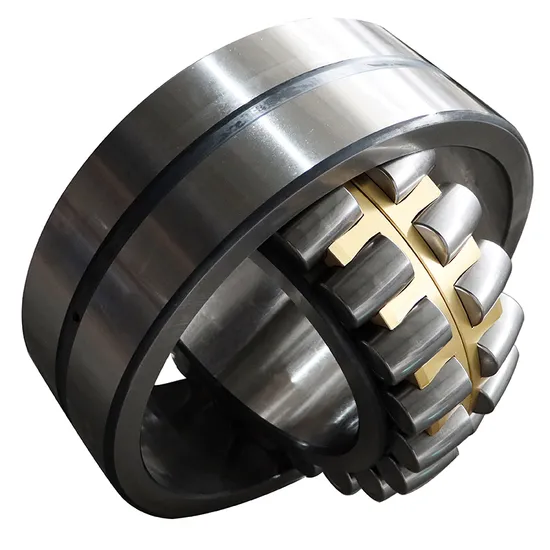
This divergence means that a spherical roller bearing with a specific dynamic load rating $C$ under ISO 281 might have a different recommended application limit when evaluated under UIC Leaflet 510-1 versus AAR M-936. The physical bearing may be identical, but the "allowed" workload differs because the safety coefficients and life expectancy formulas are not interchangeable. For distributors and MRO operators, this creates a frequent point of confusion when sourcing replacements for multinational fleets or when exporting to new markets.
Decoding the Big Three: UIC, AAR, and ISO Standards
Each of the major standard bodies uses unique life-expectancy formulas and safety coefficients. Understanding these differences is crucial for interpreting technical datasheets from brands like SKF, Timken, or FAG correctly.
| Standard Body | Primary Region | Focus Area | Life Calculation Basis | Impact Factor Consideration |
|---|---|---|---|---|
| UIC | Europe, Asia, Africa | Passenger & Mixed Freight | Modified L10 life with strict contamination limits | Low to Moderate |
| AAR | North America, Heavy Haul | Heavy Freight & Mining | Robust dynamic rating with high safety margins | High |
| ISO | Global Generic | General Industrial/Rail | Basic dynamic load rating (C) per ISO 281 | Variable (User Defined) |
The UIC standards, particularly UIC Leaflet 510-1, emphasize the reliability of the bearing system within a defined maintenance interval. They often require detailed documentation of the lubrication regime and sealing efficiency, as these factors directly influence the adjusted rating life. The AAR Manual, specifically section M-936 for freight car journals, places a heavier emphasis on the bearing’s ability to withstand shock loads and misalignment. This is why tapered roller bearings are frequently specified in AAR-compliant applications, as their geometry handles combined radial and axial loads differently than the cylindrical or spherical designs often favored in UIC contexts [NEED_CITE: comparative analysis of bearing types in UIC vs AAR specs].
ISO 281 provides the fundamental definition of the basic dynamic load rating $C$, which is the constant radial load that a group of identical bearings can theoretically endure for one million revolutions. However, ISO alone is rarely sufficient for railway procurement. It serves as the foundational physics engine, but the regional standards apply the "traffic rules." A common mistake is quoting an ISO-based $C$ value to a client who requires UIC compliance without applying the necessary modification factors for reliability and operating conditions. This discrepancy can lead to a situation where the Rail Wheelset Bearing Load Rating Standards appear to match on paper, but the predicted service life diverges significantly in practice.
How to Calculate Actual Service Life for Wheelsets
Calculating the actual service life requires moving beyond the basic rating and applying correction factors for real-world track conditions and maintenance intervals. The basic dynamic load rating is a theoretical construct; actual performance depends on the adjusted rating life equation, which incorporates factors for reliability, temperature, contamination, and lubrication.
- Identify the Base Rating: Start with the basic dynamic load rating $C$ provided by the manufacturer. Ensure this value is sourced from a reputable brand with traceable testing data.
- Determine the Equivalent Dynamic Load ($P$): This is not simply the weight of the wagon. It includes the vertical load, lateral forces from curving, and impact loads from track irregularities. For heavy-haul applications, this value can be substantially higher than the static axle load.
- Apply Modification Factors: Use the ISO 281 modification factor $a_{ISO}$ or equivalent regional factors. This adjusts the life calculation based on the cleanliness of the lubricant, the effectiveness of the seals, and the operating temperature. In railway environments, contamination from brake dust and track debris is a critical variable [NEED_CITE: effect of contamination on railway bearing fatigue life].
- Calculate Adjusted Life: Compute the $L{10}$ or $L{nm}$ life using the adjusted formula. Compare this result against the required maintenance interval. If the calculated life is shorter than the scheduled overhaul period, the bearing selection is inadequate regardless of its static capacity.
A European retrofit project once highlighted the importance of this step. The operator was replacing legacy units with modern equivalents. While the new bearings had higher basic load ratings, the initial calculations ignored the specific contamination level of the older axle boxes. By applying the correct contamination factor from the relevant Rail Wheelset Bearing Load Rating Standards, we adjusted the expected life downward, revealing that a higher-grade seal configuration was necessary to meet the maintenance cycle requirements. This adjustment prevented premature failures that would have occurred if only the basic $C$ value had been considered.
Common Pitfalls in Cross-Border Procurement
Mismatched documentation causes customs and technical rejection. One of the most frequent issues I encounter involves clients importing bearings into regions with strict regulatory oversight, such as North Africa or Southeast Asia, where local authorities may enforce UIC or specific national standards that differ from the supplier’s default ISO documentation.
A notable case involved a shipment to a North African client. The client rejected a container because the dynamic load values on the test certificates were presented according to a domestic standard that differed slightly in its calculation base from the UIC standard they required for their rolling stock. The discrepancy was not in the physical product but in the reported numerical value of the rated life. The client’s engineers saw a lower number and assumed inferior quality, not realizing it was a difference in calculation methodology. Resolving this required providing cross-standard equivalence charts and verified traceability documents that mapped the ISO-tested values to the UIC-required format.
Another pitfall is assuming that "ISO" is the only global standard. In reality, regional mandates override generic ISO specs in tender documents. A buyer in South America specifying AAR-compliant bearings for a mining railway cannot accept a standard ISO-certified unit without verifying that it meets the specific impact load factors of AAR M-936. Failure to do so can result in bearings that fail prematurely under heavy haul conditions, leading to significant downtime and safety risks. Ensuring that the Rail Wheelset Bearing Load Rating Standards cited in the purchase order match the operational reality of the railway line is a critical step in the procurement process.
Conclusion
Correct standard mapping is as vital as material quality.
Selecting the right wheelset bearing requires more than checking dimensions; it demands a clear understanding of the underlying calculation standards. Whether adhering to UIC, AAR, or ISO frameworks, aligning the load rating methodology with the operational environment ensures reliability and compliance. By focusing on the specific Rail Wheelset Bearing Load Rating Standards applicable to your region, you avoid technical mismatches and secure the long-term performance of your railway assets.


