
Commercial Electric Motor Bearing Specs: Genuine Wholesale Supplier
Specifying a bearing by its basic dimensions alone is a recipe for premature failure.
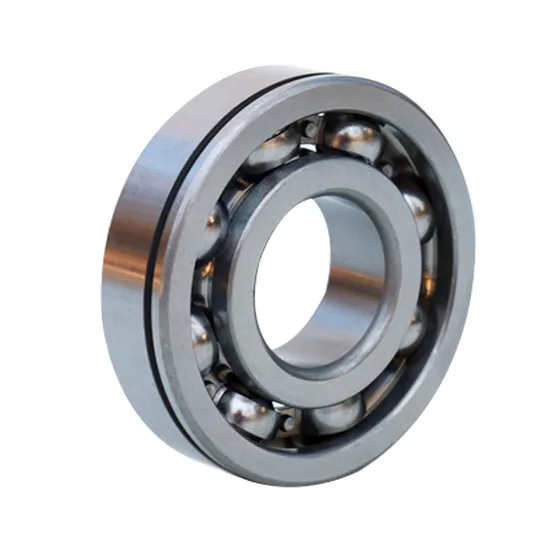
Correct motor bearing selection relies on matching precise technical specifications—specifically radial clearance, lubrication type, and speed limits—to actual operating conditions rather than just basic dimensions. When procurement teams or MRO managers order replacements based solely on the part number like "6205," they often overlook critical suffixes that define internal geometry and seal compatibility. This oversight leads to thermal seizure in high-ambient environments or grease churning in high-speed applications. Understanding commercial electric motor bearing specifications requires looking beyond the outer diameter and bore size to the internal dynamics that dictate survival under stress.
In my early days handling orders from Southeast Asian industrial clients, I encountered a recurring issue that reshaped how I approach technical inquiries. A factory in Vietnam requested a bulk shipment of standard deep-groove ball bearings for their conveyor motors. The purchase order listed only the basic series and size. We shipped standard C0 clearance units, assuming they matched the original equipment manufacturer’s baseline. Within months, the client reported widespread motor seizures. The root cause was not defective manufacturing but a mismatch in environmental specs. The ambient temperature in their facility consistently exceeded 35°C, causing the inner ring to expand more than the outer ring due to heat transfer from the rotor. This expansion eliminated the internal clearance, creating excessive preload that generated friction heat until the bearing locked up. Had we verified the commercial electric motor bearing specifications against the operating environment, we would have specified C3 or C4 clearance to accommodate thermal expansion. This experience underscored that internal geometry matters as much as dimensional accuracy.
Why Basic Dimensions Are Not Enough for Motor Bearings?
Many buyers assume that if a bearing fits the shaft and housing, it will perform adequately. This assumption ignores the complex interplay between load, speed, and temperature that defines bearing life. The basic dynamic load rating provided in catalogs is calculated under ideal laboratory conditions, which rarely match real-world industrial settings. [NEED_CITE: ISO 281 standard for bearing load ratings and life calculation]
When selecting commercial electric motor bearing specifications, one must consider the internal fit and material integrity. A bearing with the correct outer diameter but incorrect internal clearance can fail catastrophically even under light loads. For instance, in precision spindle applications, using a standard clearance bearing instead of a precision-grade unit with controlled internal play leads to vibration and noise. Conversely, in heavy-load crushers, ignoring the dynamic load capacity and opting for a cheaper alternative results in raceway brinelling.
The key differentiator lies in the suffix codes attached to the part number. These codes indicate seal types, cage materials, and clearance classes. Ignoring them is akin to buying a tire without checking its speed rating. Suppliers who provide genuine products with full traceability ensure that these suffixes match the original design intent, preventing the subtle mismatches that cause downtime.
Critical Parameter 1: Radial Clearance and Thermal Expansion
Radial internal clearance is the most frequently overlooked parameter in motor bearing replacement. It refers to the distance one ring can be displaced relative to the other in a direction perpendicular to the bearing axis. Standard bearings come with Normal (CN) clearance, which is suitable for general applications with moderate temperatures and standard fits. However, electric motors generate significant heat, and the inner ring typically operates at a higher temperature than the outer ring.
[NEED_CITE: Effect of thermal expansion on bearing internal clearance per DIN 620 standards]
In high-temperature environments, such as those found in steel mills or tropical climates, standard clearance becomes insufficient. As the inner ring heats up, it expands, reducing the internal clearance. If the initial clearance is too tight, this expansion leads to negative clearance, causing the rolling elements to press heavily against the raceways. This condition generates excessive heat, degrades the lubricant, and eventually causes seizure.
To prevent this, engineers specify C3 or C4 clearance for motors operating in elevated temperatures. C3 clearance offers a larger internal gap than CN, accommodating thermal expansion without inducing preload. C4 provides even greater clearance for extreme conditions. Selecting the appropriate commercial electric motor bearing specifications involves calculating the expected temperature differential between the inner and outer rings.
| Clearance Class | Typical Application Environment | Thermal Tolerance |
|---|---|---|
| C2 | Precision instruments, low noise requirements | Low |
| CN (Normal) | General industrial motors, standard ambient temp | Moderate |
| C3 | High-temperature motors, tight shaft fits | High |
| C4 | Extreme heat, severe thermal gradients | Very High |
A case from a mining operation in Australia illustrates this point. Their crusher motors were failing prematurely due to raceway damage. Upon inspection, we found that the bearings had been installed with standard clearance despite the high ambient heat and heavy vibratory loads. Switching to C3 clearance bearings reduced the failure rate significantly by allowing the necessary thermal expansion and accommodating slight misalignments caused by vibration. This adjustment aligns with best practices for commercial electric motor bearing specifications in harsh environments.
Critical Parameter 2: Lubrication and Seal Compatibility
Lubrication is the lifeblood of any bearing, yet it is often treated as an afterthought. The type of grease, its viscosity, and the method of sealing determine how well the bearing withstands contamination and maintains film strength under load. Over-lubrication is a common mistake, particularly in high-speed motors. Excess grease causes churning, which generates heat and increases drag, leading to premature failure. [NEED_CITE: Lubrication guidelines for rolling bearings per SKF/FAG technical manuals]
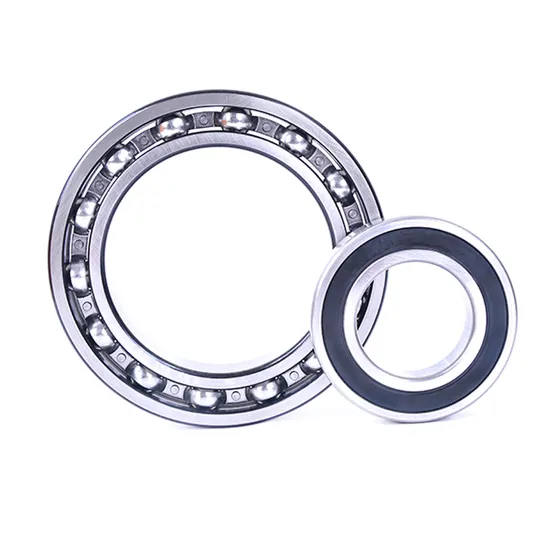
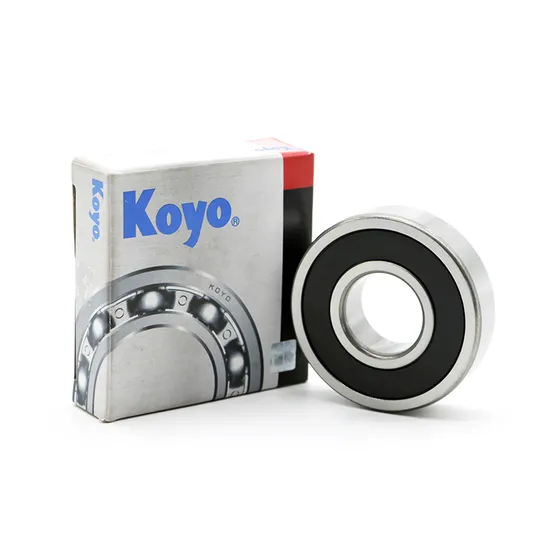
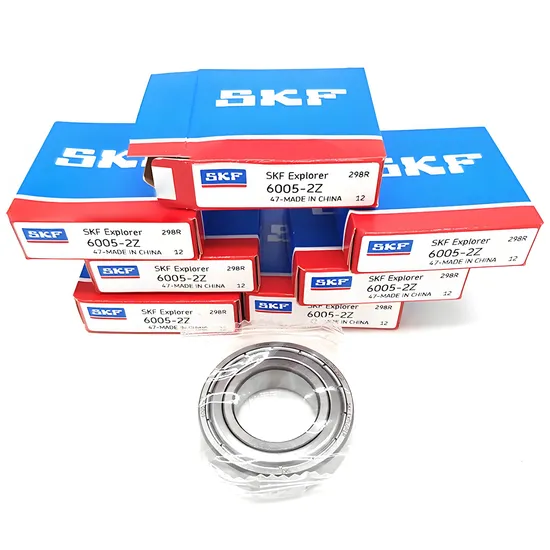
Seal selection is equally critical. Rubber seals (2RS) provide better protection against contaminants and retain grease effectively but have higher friction and lower speed limits. Metal shields (ZZ) offer lower friction and higher speed capabilities but provide less protection against dust and moisture. Choosing the wrong seal type for the environment can lead to rapid contamination ingress or overheating.
For high-speed applications, such as CNC machine tool spindles, low-viscosity grease and metal shields are preferred to minimize heat generation. In contrast, for motors operating in dusty or wet environments, rubber seals with high-quality lithium complex grease offer superior protection. Matching the grease base oil viscosity to the operating speed factor (n×dm) ensures adequate film formation without excessive churning.
When sourcing commercial electric motor bearing specifications, it is essential to verify the lubricant compatibility with the operating temperature range. Some greases harden in cold conditions or break down in high heat. Manufacturers provide detailed charts linking grease types to temperature limits and speed factors. Ignoring these parameters can void warranties and lead to unexpected downtime. Our technical team often assists clients in cross-referencing these lubrication requirements to ensure the selected bearing matches the specific operational demands of their machinery.
How to Verify Specifications Before Ordering?
Verifying commercial electric motor bearing specifications before placing an order prevents costly mistakes. The process begins with identifying the exact part number, including all suffixes, from the existing bearing or the motor’s nameplate. If the original bearing is unavailable, measuring the dimensions is only the first step. One must also determine the required clearance class, seal type, and lubrication specification.
- Identify the Base Part Number: Record the series and size code (e.g., 6205).
- Check Suffix Codes: Look for letters indicating clearance (C3, C4), seals (2RS, ZZ), and cage material (J, M).
- Assess Operating Conditions: Determine the ambient temperature, load type (radial, axial, combined), and speed.
- Cross-Reference Manufacturer Data: Use official catalogs from brands like SKF, FAG, or NSK to verify the technical parameters associated with the suffixes. [NEED_CITE: Cross-reference tables for major bearing brands]
- Validate Load Ratings: Ensure the dynamic and static load ratings meet the application requirements, especially for heavy-load scenarios.
A common pitfall is assuming universal interchangeability without checking suffixes. Two bearings with the same base number but different suffixes may look identical but perform vastly differently. For example, a 6205-2RS/C3 is not interchangeable with a 6205-ZZ/CN in a high-temperature application. Verifying these details ensures that the replacement bearing meets the original design intent.
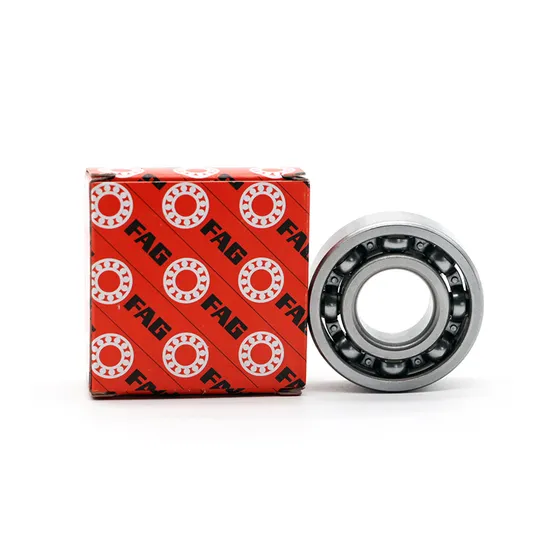
In mixed-batch orders, where clients source from multiple brands, cross-brand equivalent validation becomes crucial. Different manufacturers may use slightly different suffix conventions. Our team provides original manufacturer datasheets to help clients navigate these differences, ensuring that a FAG bearing replaces an SKF unit without compromising performance. This level of technical support is integral to maintaining the integrity of commercial electric motor bearing specifications across diverse supply chains.
Common Specification Mistakes Leading to Premature Failure
Even with careful planning, mistakes occur. One frequent error is ignoring mounting fits. The fit between the bearing and the shaft or housing affects internal clearance. A tight shaft fit reduces internal clearance, while a loose housing fit can cause creeping and fretting corrosion. Another mistake is assuming that more expensive always means better. Precision-grade bearings (P4, P5) are unnecessary for standard industrial motors and can be cost-prohibitive without adding value.
Ignoring environmental contaminants is another critical error. In dirty environments, open bearings or those with inadequate seals will fail quickly. Conversely, using sealed bearings in high-speed applications can lead to overheating due to seal friction. Understanding these trade-offs is key to selecting the right commercial electric motor bearing specifications.
Regular maintenance and monitoring can mitigate some risks, but proper initial selection is the foundation of reliability. By focusing on internal geometry, lubrication, and environmental compatibility, buyers can avoid the common pitfalls that lead to premature failure. This approach transforms bearing procurement from a simple transaction into a strategic decision that supports operational efficiency.
Conclusion
Selecting the right bearing requires looking beyond the part number to the underlying technical parameters.
Understanding radial clearance, lubrication needs, and seal compatibility ensures that motor bearings perform reliably under specific operating conditions. By verifying commercial electric motor bearing specifications against actual application demands, businesses can prevent premature failures and reduce unplanned downtime. This technical diligence turns a routine replacement into a long-term reliability strategy.


