Buy FAG Bearings Wholesale: Authorized Supplier
Buying the right bearing model is only half the battle; sourcing it from a verified channel is what keeps your production line running.
When you buy FAG bearings wholesale, the single most critical step is confirming that your supplier holds active authorization from the manufacturer, backed by traceable origin documents and batch-level anti-counterfeit verification. Skipping this step turns a routine procurement into a liability, regardless of how competitive the unit price appears.
I still remember a shipment we handled for a cement plant in Indonesia. They needed spherical roller bearings for their kiln support rollers and asked us to quote against an existing NSK reference. The purchase team sent over the basic model number and expected a straightforward price comparison. What they did not send—and what we had to push hard to extract—were the full suffix codes. Once we received the complete designation, the internal clearance class and cage material told a completely different story from what their previous supplier had been delivering. Had we matched the base number alone, those bearings would have failed on-site within months. [NEED_CITE: bearing failure root cause distribution per ISO 15243] That incident reinforced a principle I apply to every order: the suffix is where the engineering lives, and authorization is where the authenticity lives.
Let me walk you through the verification, documentation, cross-reference, and inspection steps that separate a reliable procurement from an expensive lesson.
How to Verify an Authorized FAG Bearing Supplier?
Verification requires three independent layers: official authorization lookup, country-of-origin documentation, and batch-level anti-counterfeit validation. Relying on any single layer leaves gaps that counterfeit operations routinely exploit.
The first layer is the manufacturer’s authorized distributor directory. Most major bearing brands maintain publicly searchable registries of certified partners. [NEED_CITE: official brand distributor verification portal requirements] You enter the supplier’s registered business name and cross-check their listed address, contact details, and scope of authorization. A supplier claiming to sell FAG products but absent from the official registry should immediately raise red flags. Some traders present expired certificates or authorization letters from unrelated subsidiaries—always confirm the certificate’s validity period and the specific product lines covered.
The second layer is the Country of Origin certificate. A legitimate authorized supplier will provide a COO that matches the shipment’s commercial invoice, packing list, and bill of lading. The HS codes on these documents must align with the bearing categories being shipped. [NEED_CITE: HS code classification for rolling bearings per WCO nomenclature] Discrepancies between the COO and the declared origin often indicate gray-market diversion or outright fraud.
The third layer is batch-level verification. Modern FAG packaging includes QR codes and holographic security labels tied to specific production batches. [NEED_CITE: manufacturer anti-counterfeit technology specifications for bearing packaging] Scanning the QR code through the brand’s official verification tool should return matching batch data, production date, and origin facility. If the code redirects to an unfamiliar webpage or returns no data, the batch is suspect.
A distributor in the Middle East once contacted us after receiving a large deep groove ball bearing order from an unverified source. The packaging looked convincing at first glance, but the QR codes on the boxes led to generic tracking pages rather than the brand’s official verification portal. The COO documents listed a country that did not match any of the manufacturer’s known production facilities for that bearing series. The entire shipment was quarantined, and the buyer had to restart procurement from a verified channel. [NEED_CITE: counterfeit bearing detection methods recommended by industry associations]
When you buy FAG bearings wholesale, building this three-layer verification into your standard procurement protocol is non-negotiable. The cost of verification is negligible compared to the cost of a single field failure caused by a counterfeit unit.
What Documents Are Required for Wholesale FAG Bearing Purchase?
A complete document package includes the authorization certificate, Certificate of Origin, commercial invoice with correct HS codes, and a mill or factory quality inspection report. Missing any of these creates customs clearance delays and eliminates your ability to trace the product back to its production source.
The authorization certificate confirms that the supplier is permitted to distribute the specific brand and product lines. This document should be current, issued directly by the brand principal or its regional headquarters, and should clearly state the supplier’s registered legal entity name. [NEED_CITE: requirements for valid brand authorization certificates in international bearing trade]
The Certificate of Origin serves dual purposes: it satisfies import customs requirements in many jurisdictions, and it provides a verifiable link between the goods and their manufacturing source. The COO must be consistent with all other shipping documents. Any mismatch in product descriptions, quantities, or origin declarations can trigger customs holds or rejections.
The commercial invoice must carry the correct Harmonized System codes for rolling bearings. Incorrect HS classification can result in overpayment of duties, shipment delays, or even seizure by customs authorities. [NEED_CITE: WCO HS code guidelines for bearing classification] Experienced suppliers will pre-verify the HS codes against the destination country’s tariff schedule before shipment.
The quality inspection report—often referred to as a mill certificate or factory test report—documents dimensional accuracy, material composition, and hardness values against the applicable standards. [NEED_CITE: ISO bearing inspection and testing standards for dimensional and material compliance] For wholesale transactions, this report should cover the specific batch being shipped, not a generic template.
An MRO buyer in Latin America learned this the hard way. They placed a wholesale order for tapered roller bearings through a trading company that provided only a commercial invoice and a packing list. When the shipment arrived, customs at the destination port flagged the goods for missing origin documentation. The bearings were held for weeks, incurring storage fees and demurrage charges. By the time the paperwork issues were resolved, the buyer’s maintenance schedule had slipped, and the equipment they were repairing remained offline longer than planned. The total cost of the delay dwarfed any price advantage they had initially negotiated.
Before you finalize any wholesale purchase, request the complete document set in advance. A legitimate supplier will provide these without hesitation. If a supplier delays, provides incomplete paperwork, or offers vague explanations, treat that as a disqualifying signal.
Can I Replace FAG Bearings with Other Brands Directly?
Direct cross-brand replacement based on the base model number alone is one of the most common and costly mistakes in bearing procurement. The base number identifies the bearing’s geometry—bore diameter, outside diameter, and width—but it tells you nothing about internal clearance, cage design, seal type, or lubrication specifications.
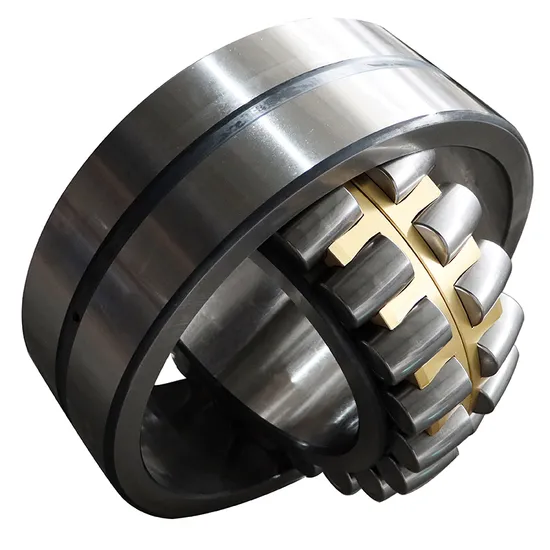
Consider a spherical roller bearing designated 22320. That base number tells you the dimensions. But the full designation might read 22320-E1-XL-C3, where each suffix element carries specific engineering meaning. The E1 indicates the internal design variant, the XL denotes an enhanced performance generation, and C3 specifies the internal radial clearance class. [NEED_CITE: ISO bearing designation system for suffix code interpretation] Replace this bearing with another brand’s 22320 that carries a different clearance class or cage material, and you may introduce premature fatigue, excessive vibration, or thermal runaway under load.
A cement plant in Southeast Asia faced exactly this scenario. Their kiln support rollers originally used FAG 22320 bearings with specific clearance and cage specifications. During a cost-reduction exercise, the maintenance team sourced replacement bearings from a different brand using only the base number 22320. The substitute bearings had a different internal clearance class and a cage material not optimized for the high-temperature, high-vibration environment of the kiln. Within a few months of operation, the bearings began overheating. The plant shut down the kiln for inspection, discovered seized rollers, and faced a full replacement cycle plus lost production revenue. The total financial impact ran into multiple times the original procurement savings they had targeted.
This is where structured cross-reference support becomes essential. When you buy FAG bearings wholesale and need to evaluate alternatives—whether switching from FAG to SKF, NSK, TIMKEN, NTN, or KOYO, or vice versa—the cross-reference must go beyond the base number. It must account for:
- Internal clearance class (C2, C3, C4, and their brand-specific equivalents)
- Cage material and design (pressed steel, machined brass, polyamide, and their performance boundaries)
- Seal or shield type (open, ZZ, 2RS, and the sealing material compatibility)
- Lubrication specification (grease type, fill quantity, and re-lubrication intervals)
- Precision class (P0, P6, P5, P4, and the corresponding tolerance bands)
[NEED_CITE: cross-brand bearing interchange guidelines per ISO and ABMA standards]
A maintenance team at a steel mill in the Middle East avoided a similar disaster by insisting on full suffix verification before approving a cross-brand substitution. Their original equipment used FAG angular contact bearings with a specific contact angle and preload specification. The proposed alternative from another brand matched the base dimensions but differed in contact angle. By catching this discrepancy during the selection phase, the team prevented what would have been a catastrophic misapplication in their high-speed rolling mill stands.
When sourcing through a supplier that offers complete cross-reference support across major brands, you gain access to technical validation that goes well beyond a simple dimension lookup. This is particularly valuable when the original equipment manufacturer’s documentation is incomplete or when the equipment has been modified from its original configuration.
How to Spot Fake FAG Bearings Before Shipment?
Pre-shipment inspection combines packaging analysis, physical examination, and third-party testing to identify counterfeits before they enter your inventory or reach the field. Counterfeit bearing operations have become increasingly sophisticated, but they still leave identifiable traces if you know where to look.
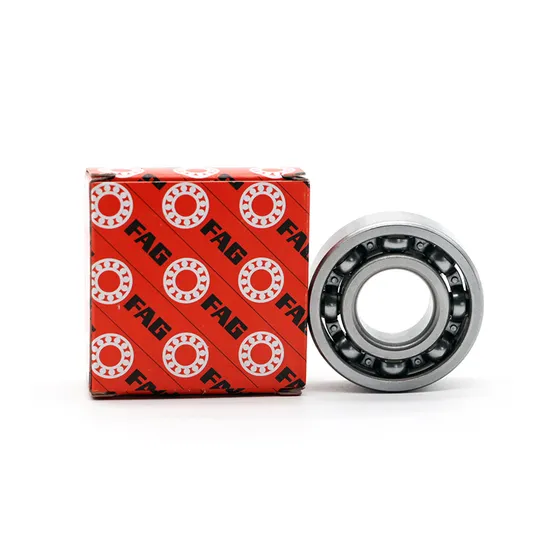
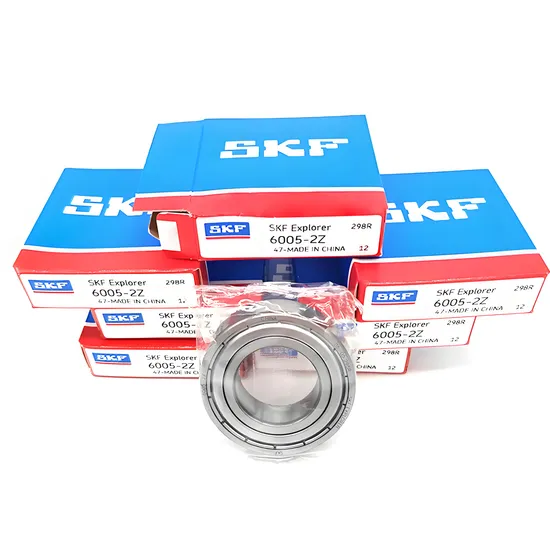
Start with the packaging. Genuine FAG packaging features high-resolution printing with sharp text, consistent color registration, and security elements such as holographic labels and tamper-evident seals. [NEED_CITE: manufacturer packaging security features for authentic bearing identification] Counterfeit packaging often shows subtle defects: slightly blurred text, color shifts, misaligned logos, or labels that peel easily. The QR codes on genuine packaging are precisely printed and scannable; fake codes may be pixelated or lead to incorrect destinations.
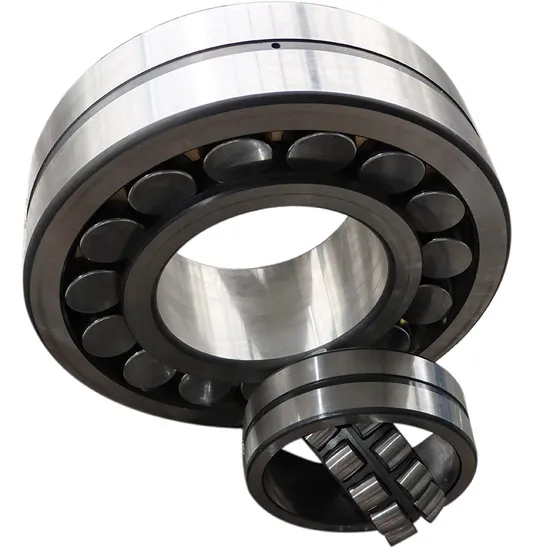
Move to the physical bearing itself. Authentic bearings exhibit uniform surface finish on the races and rolling elements. The steel has a consistent, bright appearance indicative of proper heat treatment and finishing. [NEED_CITE: visual and metallurgical inspection criteria for genuine vs counterfeit bearings] Counterfeit bearings often show surface irregularities, inconsistent polishing marks, or discoloration suggesting inferior heat treatment.
The cage construction provides another telling indicator. Genuine cages—whether pressed steel, machined brass, or molded polyamide—display precise forming, clean edges, and consistent material thickness. Counterfeit cages may show rough edges, uneven rivet placement, or material inconsistencies.
The marking on the bearing rings should be clean, legible, and correctly positioned. Genuine manufacturers use controlled marking processes that produce consistent font styles, depths, and alignments. Counterfeit markings are often laser-etched with incorrect fonts, uneven depths, or misaligned characters. [NEED_CITE: bearing marking standards and authentication methods]
A European industrial buyer received a shipment of cylindrical roller bearings that appeared correct at first inspection. The packaging was clean, the markings were present, and the dimensions measured within tolerance. However, during routine incoming inspection, the quality team noticed that the cage rivets had an unusual surface texture. Metallurgical analysis revealed that the cage material did not match the specification for genuine FAG products. The bearings were rejected and returned, and the supplier was removed from the approved vendor list.
For high-value or safety-critical applications, engaging a third-party inspection service adds an independent layer of assurance. These services can perform dimensional checks, hardness testing, and even metallurgical analysis to confirm that the bearings meet the manufacturer’s specifications. [NEED_CITE: third-party bearing inspection and testing service standards]
When you buy FAG bearings wholesale, incorporating pre-shipment inspection into your procurement workflow is a small investment that protects against outsized risks. The consequences of installing counterfeit bearings—unplanned downtime, equipment damage, safety incidents, and reputational harm—far exceed the cost of verification.
Conclusion
Procuring genuine FAG bearings at wholesale scale demands disciplined verification at every stage: supplier authorization, documentation completeness, suffix-level cross-reference accuracy, and pre-shipment physical inspection. Each of these steps addresses a distinct failure mode—counterfeit infiltration, customs delays, engineering misapplication, and undetected manufacturing defects. Treat them as interconnected requirements rather than optional checkpoints, and your procurement outcomes will reflect that discipline in reduced field failures, smoother logistics, and reliable equipment performance.