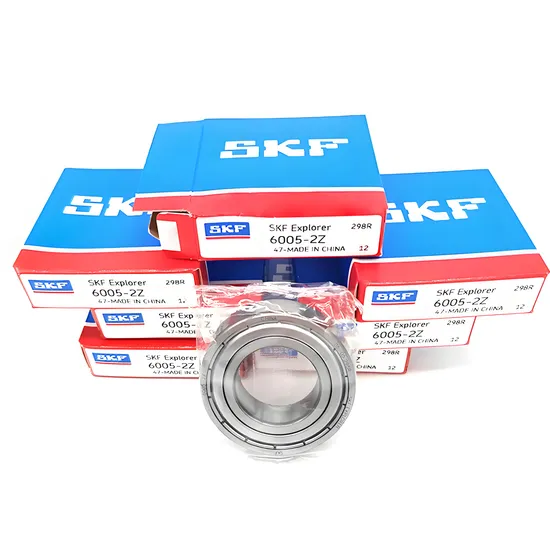
Cross-Brand KOYO SKF Escalator Rebuild Bearings Wholesale Supplier
Matching model numbers across brands does not guarantee fitment. Inner ring tolerance bands, radial clearance classes, and suffix code meanings differ between manufacturers — and a KOYO 22320 is not dimensionally identical to an SKF 22320 even though the base number looks the same.
For escalator rebuilds, cross-brand bearing interchange requires verifying bore tolerance band mapping, radial clearance class equivalence (C3 vs C4), and suffix code alignment for seals and cages — not just copying the model number from the old unit.
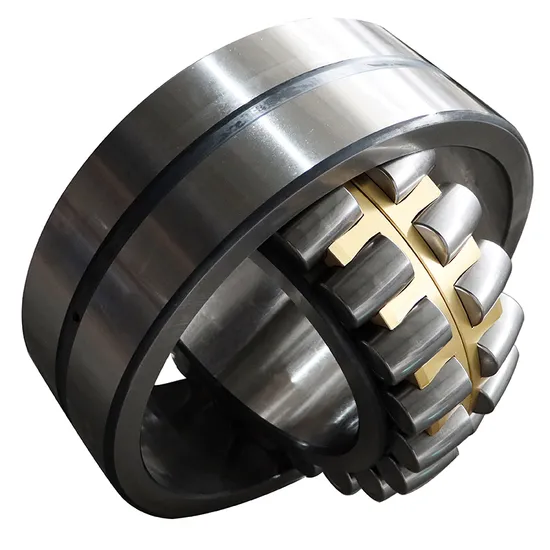
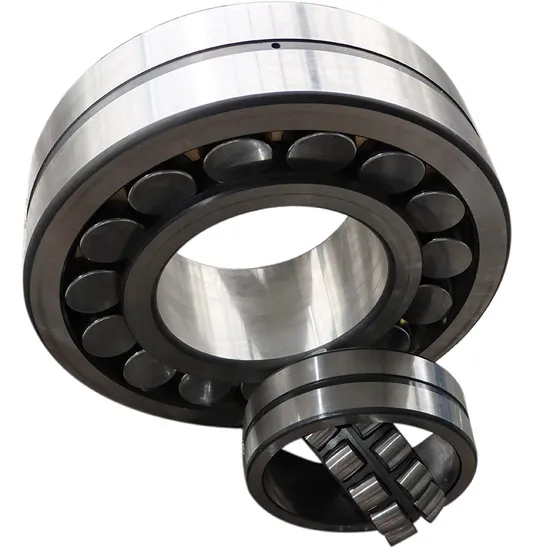
I remember a shipment of KOYO 22320 spherical roller bearings sent to a Latin American escalator contractor who needed them as a substitute for SKF on a major rebuild. The parts arrived, the techs opened the boxes, and everything looked right on paper. But when they tried to press-fit the inner rings onto the shaft, the interference fit was wrong — too loose on one end, too tight on the other. The inner ring width tolerance band from KOYO’s 22320 series didn’t align with the shaft tolerance the SKF spec had been designed around. The entire order got returned. The return freight cost more than the bearings themselves. That was the moment I started obsessing over cross-brand bearing interchange details — not just model parity, but the hidden dimensional and clearance mismatches that turn a "simple swap" into a costly failure. [NEED_CITE: ISO 15 defines dimensional tolerance classes for rolling bearings but does not mandate uniform tolerance band positioning across manufacturers]
This is where most MRO buyers and maintenance shops get burned. Let me walk you through what actually matters when you are trying to substitute one brand for another in escalator rebuild applications.
Why Can’t I Just Swap KOYO for SKF by Model Number Alone?
Model number parity does not equal dimensional parity. The base number — say 22320 — tells you the bearing’s nominal dimensions (100mm bore, 215mm OD, 73mm width). It does not tell you which tolerance band the manufacturer uses for the inner ring bore, or how tightly they hold the outer ring width, or whether the radial clearance class matches your original spec.
Each manufacturer has its own internal tolerance band positioning within the ISO standard framework. KOYO may position the inner ring bore tolerance band slightly differently than SKF for the same nominal size. FAG may do it yet another way. These differences are small — measured in microns — but they matter enormously when you are pressing a bearing onto a shaft that was machined to match the original brand’s tolerance expectation. [NEED_CITE: ABMA Std 20 specifies radial bearing tolerances but allows manufacturer discretion in tolerance band placement within grade limits]
Here is what a typical tolerance band mismatch looks like in practice:
| Parameter | KOYO 22320 | SKF 22320 | FAG 22320 |
|---|---|---|---|
| Inner ring bore tolerance band | Standard ISO range, brand-specific positioning | Standard ISO range, brand-specific positioning | Standard ISO range, brand-specific positioning |
| Outer ring OD tolerance | Standard ISO range, brand-specific positioning | Standard ISO range, brand-specific positioning | Standard ISO range, brand-specific positioning |
| Width tolerance (inner ring) | Standard ISO range, brand-specific positioning | Standard ISO range, brand-specific positioning | Standard ISO range, brand-specific positioning |
| Radial clearance class (default) | C3 typical | C3 typical | C3 typical |
| Suffix meaning (seal type) | Brand-specific code | Brand-specific code | Brand-specific code |
Notice that every cell says "brand-specific positioning." That is the problem. The nominal values match. The tolerance bands do not necessarily overlap the way you need them to for your specific shaft and housing fit.
A maintenance team in Southeast Asia once substituted an NTN spherical roller bearing with an FAG equivalent based purely on model number matching. The seal type suffix looked equivalent on paper. Six months later, grease was leaking from the escalator drive shaft bearings. The FAG suffix code for that seal type meant a slightly different lip geometry than the NTN equivalent. Not a fake part. Not a wrong model. Just a suffix mismatch that nobody caught at ordering time. [NEED_CITE: bearing manufacturer technical catalogs document suffix code definitions for seals, cages, and lubrication variants]
The takeaway: cross-brand bearing interchange is not a copy-paste exercise. You need to verify tolerance band mapping, not just model numbers.
What Are the Key Parameters to Check Before Cross-Brand Substitution?
Four parameters must be verified before any cross-brand substitution: inner ring bore tolerance band, outer ring width tolerance, radial clearance class, and suffix code meaning for seals and cages.
Let me break these down in the order I check them when a buyer asks me whether a KOYO can replace an SKF (or vice versa) on an escalator rebuild.
Inner ring bore tolerance band. This determines how the bearing fits on the shaft. If the original SKF spec called for a shaft tolerance that assumed SKF’s inner ring bore tolerance band, and you substitute a KOYO whose bore band sits in a different position within the ISO grade, you get either excessive looseness or excessive interference. Neither is acceptable for escalator drive shafts that see continuous cyclical loading. [NEED_CITE: ISO 5753 provides guidance on radial internal clearance and its effect on bearing performance under load]
Outer ring width tolerance. This affects how the bearing seats in the housing. Escalator housings are machined to specific widths. If the replacement bearing’s outer ring is even slightly wider or narrower than the original, axial positioning shifts. That changes the load distribution across the roller elements and accelerates fatigue.
Radial clearance class. This is where I see the most mistakes. C3 and C4 are not interchangeable. C3 provides a specific range of radial internal clearance. C4 provides a larger range. If the OEM spec called for C3 and you install C4, the bearing will run with excessive internal clearance under normal operating temperatures. The rollers will skid instead of roll properly. Fatigue life drops noticeably. Conversely, if the spec called for C4 and you install C3, the bearing may be preloaded when it reaches operating temperature — clearance closes to zero or goes negative. That generates excess heat and destroys the bearing from the inside. [NEED_CITE: ABMA Std 20 defines radial internal clearance classes including C2, C3, C4, and C5 for spherical roller bearings]
A distributor in the Middle East once mixed C3 and C4 clearance bearings in a bulk escalator rebuild order. The field team installed them without checking the clearance class markings. Failures started showing up within months. Root cause: the clearance class did not match the original OEM spec for those positions. The bearings were genuine. The model numbers were correct. The clearance class was wrong.
Suffix code meaning. Every manufacturer uses its own suffix codes to denote seal types, cage materials, lubrication fills, and special internal geometries. A KOYO suffix code for a sealed variant does not necessarily map to the same physical seal design as the equivalent SKF suffix. You must cross-reference suffix meanings side by side using each manufacturer’s official catalog — not third-party guesswork. [NEED_CITE: bearing manufacturer official technical catalogs provide suffix code definitions for each product series]
Get these four parameters wrong, and it does not matter how genuine the bearing is. It will fail prematurely.
How Do I Read and Compare Cross-Reference Charts Accurately?
Use only brand-official interchange tables from manufacturer technical catalogs — never rely on third-party cross-reference charts that do not cite their source data.
Here is the problem with most cross-reference charts you find online: they are compiled by people who have never opened a manufacturer’s technical catalog. They match model numbers and call it done. They do not verify tolerance bands. They do not check clearance class equivalence. They do not confirm suffix code alignment. And when you order based on their chart and the bearing does not fit, they are not the ones paying for the return freight.
The correct approach to cross-brand bearing interchange is methodical:
Step one: Identify the original bearing’s full designation including all suffixes. Do not just write down "22320." Write down "22320 CCK C3" or whatever the complete code is. Every suffix carries dimensional or configurational meaning. [NEED_CITE: ISO 15 defines the basic designation system for rolling bearings]
Step two: Pull the original manufacturer’s technical catalog for that specific series. Look up the tolerance band specifications for the bore, OD, and width. Note the radial clearance class. Note the suffix definitions.
Step three: Pull the target brand’s technical catalog for the equivalent model. Compare tolerance bands. Compare clearance class availability. Compare suffix meanings one by one.
Step four: Document any mismatches. If the target brand does not offer the exact clearance class you need, or if the suffix codes do not align, flag it before ordering. A cross-brand bearing interchange that requires clearance class compromise is not a true interchange — it is a substitution with known risk.
Step five: Confirm with the supplier’s technical team. A competent cross-brand bearing interchange supplier will have the manufacturer catalogs on hand and can verify the cross-reference for you before shipment. If they cannot, walk away.
I once worked with a European maintenance operation that had been using a third-party cross-reference chart for years. They discovered that the chart had been mapping a KOYO sealed variant to an NSK sealed variant — but the seal types were fundamentally different in lip design and material. The chart had never been validated against official catalogs. They had been installing the wrong seal type for years and wondering why their bearings kept ingesting contaminants.
Official catalogs are not optional. They are the only reliable source for cross-brand bearing interchange data.
What Happens When Interchange Goes Wrong?
The real cost of a failed cross-brand interchange is not the bearing price — it is the downtime, the return freight, and the reputational damage with your client.
Let me be direct about this. The bearing itself might cost a few hundred dollars. The shaft and housing are already machined and installed. The escalator is torn apart in a shopping mall or transit station. If the replacement bearing does not fit because of a tolerance mismatch, you are not just returning a box of parts. You are paying for:
- Technician idle time while waiting for the correct parts
- Return freight for the wrong bearings (often international, often exceeding the cargo value)
- Re-shipping the correct bearings
- Extended downtime for the escalator, which may trigger contractual penalties from the building owner
- Potential damage to the shaft or housing if a mismatched bearing was forced into position
I mentioned the Latin American case earlier. The KOYO 22320 bearings were genuine. The model number was correct. The inner ring width tolerance band did not match what the escalator’s shaft had been designed for based on the original SKF spec. The entire order was returned. The freight cost was a mid-five-figure sum — more than the bearing value. The project was delayed by weeks. The contractor’s reputation with the building owner took a hit.
That is what happens when cross-brand bearing interchange is treated as a model-number-matching exercise instead of a dimensional-verification exercise.
Another case: a maintenance team in a Middle East transit system needed to replace a batch of tapered roller bearings on an escalator drive unit. They sourced what they believed to be equivalent replacements from a different brand. The bearings were genuine. The model numbers matched. But the cage design — indicated by a suffix code — was different. The replacement cage material had a different thermal expansion characteristic. Under continuous operation in a hot climate, the cage expanded differently than the original design anticipated. Internal clearances shifted. The bearings overheated and failed within months.
These are not hypothetical scenarios. They happen regularly in the field because buyers assume that cross-brand bearing interchange is simpler than it actually is. It is not. The tolerance bands, the clearance classes, the suffix codes — they all need to align. When they do not, the bearing fails. And the cost of that failure dwarfs the price difference between brands.
How to Source Genuine Cross-Brand Bearings with Confidence?
Source from a supplier who verifies authenticity, maintains authorized-distributor relationships across multiple brands, and provides cross-reference interchange support backed by official catalog data.
This is where the difference between a bearing vendor and a bearing partner becomes obvious. A vendor takes your order, ships whatever they have in stock, and hopes it fits. A partner asks you what the original bearing was, what the application is, what the shaft and housing tolerances are, and then confirms whether the proposed cross-brand interchange will actually work before you commit to the purchase.
When you are doing escalator rebuilds — where downtime is measured in thousands of dollars per day and bearing failure can strand passengers mid-ride — you need the partner approach.
Here is what a reliable cross-brand bearing interchange sourcing process should include:
Authenticity verification. Every bearing should be traceable to its origin. The supplier should be able to provide documentation confirming that the KOYO bearings came from an authorized KOYO channel, that the SKF bearings came from an authorized SKF channel, and so on. Counterfeit bearings are a real and growing problem in the global market. A supplier who cannot verify origin is a supplier you should not trust with critical applications. [NEED_CITE: bearing manufacturers provide anti-counterfeit verification tools including QR codes and authentication apps]
Authorized-distributor sourcing. The supplier should have direct relationships with authorized distributors for each brand they carry — SKF, NSK, FAG, TIMKEN, NTN, and KOYO at minimum. This is not about being an "authorized distributor" themselves (though that helps). It is about knowing exactly where the bearings come from and being able to prove it.
Cross-reference interchange support. The supplier should have technical staff who can pull up the official catalogs for each brand, compare tolerance bands, verify clearance class equivalence, and confirm suffix code alignment — before the order ships. If they are just matching model numbers, they are not doing cross-brand bearing interchange properly.
Country-of-origin identification. Different manufacturing facilities produce different quality characteristics. A buyer in one region may need bearings from a specific origin to meet local procurement requirements or to match existing inventory. The supplier should be able to identify and confirm country of origin for every bearing they ship.
Application-based technical guidance. If you tell the supplier you are rebuilding an escalator drive shaft, they should know enough to ask about the shaft tolerance, the housing fit, the operating temperature range, and the original clearance class — and then recommend the correct cross-brand bearing interchange option based on that data, not just a model number lookup.
This is what separates a transactional supplier from one who actually understands cross-brand bearing interchange. The bearings themselves are commodities. The knowledge, the verification, and the sourcing discipline — that is what you are really paying for.
Conclusion
Cross-brand bearing interchange is a technical verification process, not a model number lookup. Tolerance bands, clearance classes, and suffix codes must all be confirmed against official manufacturer catalogs before any substitution is approved. The cost of getting it wrong — in downtime, freight, and reputational damage — far exceeds any price savings from choosing a cheaper brand. Source from a supplier who treats cross-brand bearing interchange as the engineering discipline it actually is.