Genuine SKF Bearing Supplier for France: Verified Dealer Guide
Scanning a QR code on a bearing box does not prove authenticity — counterfeiters replicate QR systems routinely.
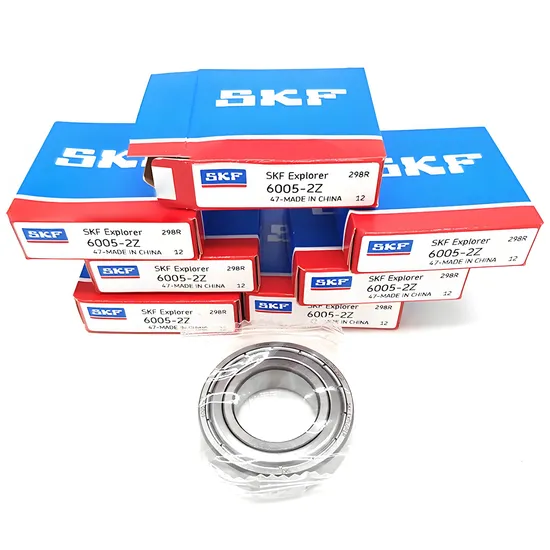
Sourcing genuine SKF bearings for the French market requires verifying the full authorized supply chain documentation — not just comparing unit prices. A genuine SKF bearing supplier must provide traceable origin certificates, verifiable dealer authorization, and complete invoice chains that hold up under EU customs inspection.
I still remember the Le Havre incident vividly. A distributor in Lyon had ordered a batch of SKF deep groove ball bearings through what appeared to be a legitimate trading channel. When the shipment arrived at the port, French customs pulled the entire container for a random inspection. The cage material composition didn’t match SKF specifications, and the laser-etched markings showed slightly thicker font strokes than genuine units. The client called me furious — his end user had already flagged the discrepancy and threatened legal action. I had just transitioned from customs documentation work into sales at that point, so I personally dug through the shipping papers, cross-referenced batch numbers, and traced the goods back through three intermediaries before hitting a dead end. No valid dealer certificate existed. No traceable origin documentation could be produced. The entire batch had to be returned, and the financial damage extended well beyond the product cost — customs storage fees, re-shipment expenses, and most critically, the destroyed trust with the end user.
That situation crystallized something fundamental: when you’re importing bearings into France, the supplier’s paper trail matters far more than their price list.
Let me walk you through exactly what this verification process looks like in practice.
Why France Requires Extra Caution When Sourcing SKF Bearings?
French customs authorities maintain one of the most rigorous bearing inspection protocols within the European Union, with particular focus on anti-counterfeiting enforcement for industrial components.
The Douane française has significantly increased random inspection rates for bearing shipments entering through major ports including Le Havre, Marseille-Fos, and Dunkirk over recent years. This isn’t arbitrary — France serves as a primary distribution hub for industrial components flowing into Southern Europe, North Africa, and West African markets, making it a high-value target for counterfeit infiltration.
When customs officers pull a bearing shipment, they don’t just glance at the packaging. They check specific technical indicators [NEED_CITE: French customs anti-counterfeiting inspection protocols for industrial bearings]:
- Marking consistency — genuine SKF bearings use specific laser-etching patterns with precise font weights and spacing
- Cage material verification — polyamide cages must match SKF’s specified material grades; steel cages require correct alloy composition
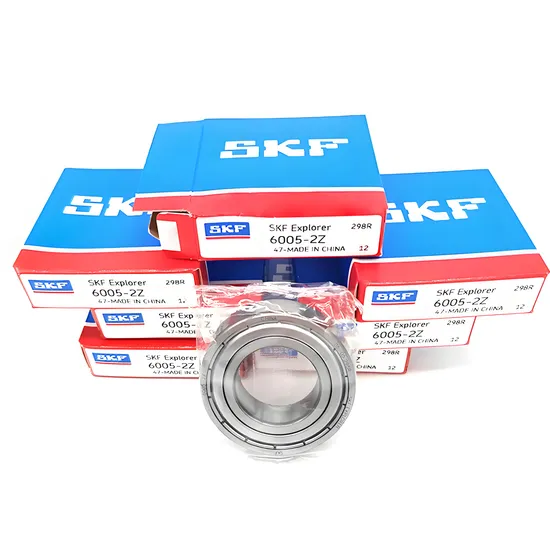
- Packaging integrity — SKF’s packaging includes specific holographic elements and batch coding systems that counterfeiters frequently get wrong
- Lubricant sampling — in some cases, customs may request grease analysis to confirm it matches SKF’s specified lubricant types
A genuine SKF bearing supplier operating legitimately for the French market understands these inspection realities and prepares documentation accordingly. The difference between smooth customs clearance and a multi-week hold often comes down to whether your supplier can produce the right paperwork within hours of a customs request.
I’ve seen shipments delayed for weeks because the supplier couldn’t produce a proper certificate of origin quickly enough. Meanwhile, storage fees accumulate, the buyer’s end customer grows impatient, and the entire transaction’s profitability evaporates.
How to Verify a Supplier Is a Genuine SKF Authorized Dealer?
Request the supplier’s current SKF dealer authorization certificate and independently verify it through SKF’s official dealer locator — do not accept self-declared authorization status.
Verification requires a systematic approach covering multiple documentation layers. Here’s the matrix I use when evaluating any potential supplier:
| Verification Element | Tier-One Authorized Dealer | Secondary Distributor | Unverified Trader |
|---|---|---|---|
| SKF Dealer Certificate | Current, verifiable | May have expired or indirect | Not provided |
| Origin Traceability | Full batch-level to manufacturer | Partial, sample-level only | Not provided |
| Invoice Chain Continuity | Complete, unbroken | Gaps present | Missing intermediary links |
| Anti-Counterfeit Code Support | Full validation capability | Limited or inconsistent | None |
| Customs Documentation Readiness | Immediate response capability | Delayed, requires follow-up | Unable to respond |
The verification process itself involves several steps:
Step 1: Certificate Validation
Ask the supplier to provide their SKF dealer authorization certificate. This document should include the dealer’s registered business name, address, authorization period, and scope of authorized products. Cross-reference this information against SKF’s official channels — SKF maintains dealer verification resources that allow buyers to confirm authorization status [NEED_CITE: SKF official dealer verification and authorization confirmation process].
Step 2: Origin Documentation Request
A legitimate authorized dealer can provide certificate of origin documentation for any batch they supply. This isn’t just a generic "made in X country" statement — it should include batch-specific origin traceability linking the bearings back to SKF’s manufacturing facilities.
Step 3: Invoice Chain Examination
Request documentation showing the complete transaction chain from SKF to the dealer to your company. Any gaps in this chain represent potential points where non-genuine products could have been introduced. I’ve encountered situations where suppliers claimed authorized status but couldn’t produce invoices showing direct purchase from SKF or SKF-authorized sources.
Step 4: Physical Sample Verification
Before committing to a large order, request physical samples and conduct your own authenticity checks. SKF provides detailed guidance on identifying genuine products through visual inspection of markings, packaging elements, and physical characteristics [NEED_CITE: SKF product authentication visual inspection guidelines and marking specifications].
A European distributor I work with once discovered that a supplier claiming "authorized dealer" status actually held authorization for a completely different product category — not bearings. The certificate was technically valid but irrelevant to the transaction. This kind of misrepresentation only surfaces through careful document review.
What Documents Must You Request Before Placing an Order?
Demand the complete documentation package before transferring payment — certificate of origin, dealer authorization certificate, continuous invoice chain, and batch-specific anti-counterfeit validation codes.
The mandatory paper trail for importing genuine SKF bearings into France includes several specific documents. Each serves a distinct purpose in establishing authenticity and ensuring customs compliance:
Certificate of Origin (COO)
This document establishes the manufacturing origin of the bearings and is required for customs clearance in France. The COO should specify the exact SKF manufacturing facility where the bearings were produced. For EU imports, preferential origin documentation may apply depending on the manufacturing location, affecting duty rates [NEED_CITE: EU customs regulations for bearing imports and certificate of origin requirements].
Dealer Authorization Certificate
This confirms the supplier’s authorized status with SKF. The certificate must be current (not expired), must cover the specific product categories being purchased, and must be issued to the exact business entity named on your purchase order and commercial invoice.
Commercial Invoice Chain
The invoice documentation should show an unbroken transaction chain. If you’re purchasing from a distributor rather than directly from SKF, you need documentation showing that distributor’s purchase from SKF or from another authorized source. Each link in this chain should be traceable through matching invoice numbers, dates, and quantities.
Batch-Specific Anti-Counterfeit Codes
Modern SKF bearings include anti-counterfeit features that can be validated. Your supplier should be able to provide batch-specific validation codes or guidance on using SKF’s authentication systems to verify the products you’re receiving.
Technical Documentation
Depending on your application requirements, you may also need technical specifications, material certificates, or compliance documentation confirming the bearings meet specific standards.
A Middle East trading company once approached me after receiving a shipment where the commercial invoices showed inconsistent batch numbers between the packing list and the certificate of origin. The discrepancy was small — just a few digits off — but it raised red flags about whether the documentation matched the actual products. Investigation revealed the supplier had mixed products from different sources and created documentation after the fact. The entire shipment had to be returned.
How Do Cross-Reference Substitutions Work Across Major Brands?
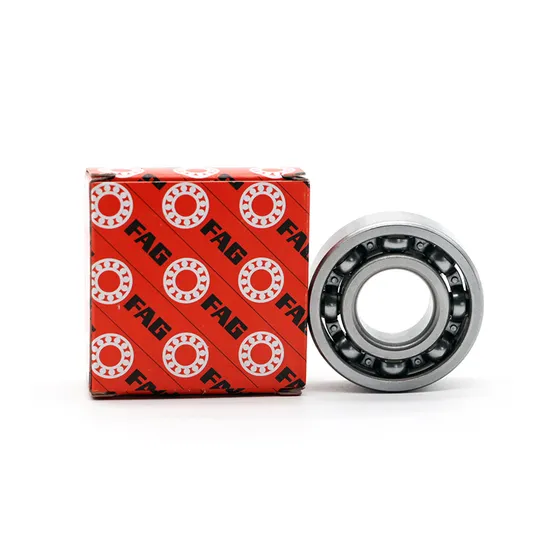
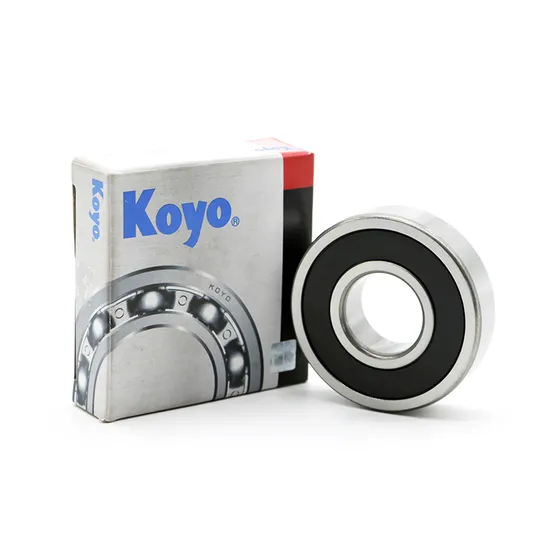
Cross-reference substitution between SKF, FAG, NSK, TIMKEN, NTN, and KOYO requires matching not just dimensional specifications but also internal design parameters, cage types, and performance ratings.
Industrial buyers frequently need to substitute between bearing brands due to availability constraints, cost optimization, or supply chain diversification. However, cross-referencing isn’t as simple as matching part numbers across brand catalogs.
Here’s a comparison framework for common cross-reference scenarios:
| SKF Designation | FAG Equivalent | NSK Equivalent | TIMKEN Equivalent | Key Substitution Considerations |
|---|---|---|---|---|
| 6205 series | 6205 series | 6205 series | — | Direct dimensional match; verify cage material and internal clearance |
| 6206 series | 6206 series | 6206 series | — | Standard deep groove; confirm lubricant type compatibility |
| 22320 series | 22320 series | 22320 series | 22320 series | Spherical roller; verify cage design and load rating alignment |
| 32218 series | 32218 series | 32218 series | 32218 series | Tapered roller; confirm cone and cup interchangeability |
| 30206 series | 30206 series | 30206 series | 30206 series | Tapered roller; check internal geometry specifications |
The substitution process requires careful attention to several factors:
Dimensional Compatibility
Basic dimensions (bore diameter, outside diameter, width) must match exactly. However, dimensional matching alone doesn’t guarantee interchangeability.
Internal Design Parameters
Bearing internal geometry — including ball/roller complement, raceway curvature, and contact angles — varies between manufacturers even when external dimensions match. These differences affect load capacity, speed ratings, and service life [NEED_CITE: bearing cross-reference methodology and internal design parameter comparison across major brands].
Cage Design and Material
Different manufacturers use different cage designs and materials. A polyamide cage from one brand may have different thermal characteristics than a polyamide cage from another brand. Steel cage designs also vary in terms of window geometry and guidance surfaces.
Performance Ratings
Dynamic and static load ratings, limiting speeds, and reference speeds may differ between brands for dimensionally equivalent bearings. Substitution requires confirming that the alternative bearing meets or exceeds the performance requirements of the original specification.
I worked with a Central African mining operation that needed to substitute SKF spherical roller bearings with FAG equivalents due to supply constraints. The dimensional match was perfect, but the cage design differed significantly — the FAG units used a different roller guidance system that affected performance under the specific misalignment conditions present in their application. We had to source alternative bearings with matching cage design characteristics rather than simply matching the basic designation.
What Happens When Non-Genuine Bearings Reach Your End User?
Non-genuine bearings reaching end users trigger a cascade of consequences — from immediate equipment failure and production downtime to long-term supply chain reputation damage and potential legal liability.
The consequences of supplying non-genuine bearings extend far beyond the immediate product replacement cost. I’ve witnessed multiple scenarios where the downstream effects created problems lasting years.
Equipment Failure and Production Downtime
Non-genuine bearings typically fail well before their expected service life. A European wind farm operator discovered this when replacement bearings in their gearboxes failed within months rather than the expected multi-year service period. The failure wasn’t just the bearing cost — it included crane mobilization for gearbox access, production losses during the downtime, and emergency sourcing premiums for replacement units.
Customs Holds and Import Disruptions
As mentioned earlier, French customs actively inspects bearing shipments. When non-genuine products are identified, the consequences include shipment seizure, potential fines, and mandatory destruction or return of the goods. The importing company bears all associated costs — storage fees, inspection fees, legal fees, and the cost of sourcing replacement products.
Legal Liability and End User Disputes
When non-genuine bearings cause equipment failures that result in production losses, safety incidents, or property damage, the supplier faces legal liability. A French industrial distributor I know faced a lawsuit from an end user after non-genuine bearings supplied for critical conveyor equipment failed, causing production line damage. The legal defense costs alone exceeded the original order value many times over.
Supply Chain Reputation Damage
Perhaps most damaging long-term is the reputation impact. Industrial buyers operate in relatively tight-knit communities. Word spreads quickly when a supplier delivers non-genuine products. Rebuilding trust requires years of consistent performance and may never fully recover.
A North African steel mill once discovered that bearings supplied for their rolling mill equipment were non-genuine after experiencing repeated premature failures. Investigation traced the problem back through multiple intermediary suppliers. The mill terminated relationships with all involved parties and implemented a completely new supplier qualification process requiring direct manufacturer authorization verification. The original supplier lost not just that account but referrals to other potential customers in the region.
Conclusion
Authenticity verification through complete documentation chains is the only reliable defense against counterfeit bearings in the French market.
Sourcing genuine SKF bearings for France requires systematic verification of supplier authorization status, complete origin traceability documentation, and continuous invoice chains. Cross-reference substitution between brands demands attention to internal design parameters beyond basic dimensional matching. The cost of non-genuine products extends far beyond replacement expenses — encompassing customs penalties, legal liability, equipment downtime, and irreversible supply chain reputation damage. Work only with suppliers who can demonstrate verifiable tier-one authorization and provide complete documentation before order placement.