Where to Buy KOYO and SKF Bearings from One Wholesale Supplier
Most buyers assume "original import" means checking the sealed box. The real risk lies in a broken authorization chain — certificates can be forged, but origin engravings and batch traceability codes require official-channel verification.
To source genuine KOYO and SKF bearings from a single supplier, you need a cross-brand bearing supplier China-based or globally operating that holds verifiable authorization chains for both brands, provides complete cross-reference interchange support, and offers origin verification with anti-counterfeit documentation — rather than simply listing multiple brand names on a catalog.
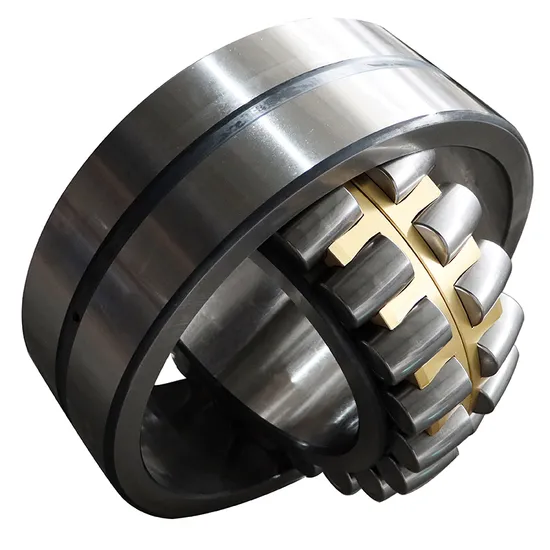
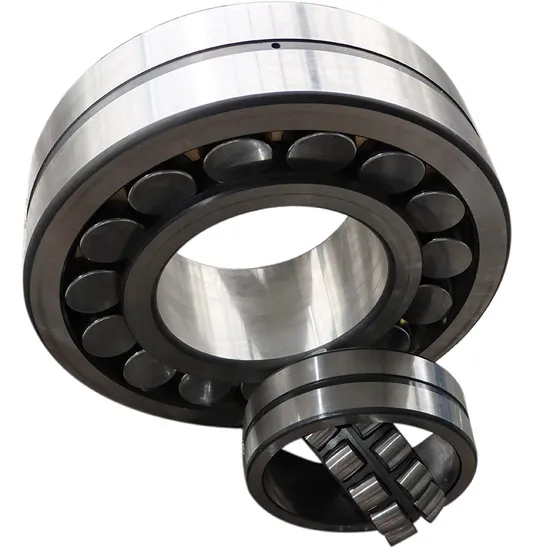
I still remember a shipment of 22320 spherical roller bearings destined for a steel mill in Riyadh. The client specifically requested SKF originals. The upstream paperwork looked flawless — certificates, invoices, even hologram stickers. Less than four months after installation, the cage disintegrated. When the failed units were sent back and sectioned, the inner ring hardness measured roughly HRC 3 lower than the standard range for through-hardened bearing steel [NEED_CITE: SKF general catalog hardness specification for through-hardened bearing steel]. That is a textbook remanufactured part. From that point on, I made it a rule: any mixed order containing both SKF and KOYO must be traced back to the origin facility and the full authorization chain, not just a printed certificate. Finding a KOYO SKF bearing supplier who can stand behind that level of verification is far more reliable than sourcing from separate dealers on your own.
That lesson shaped how I evaluate every KOYO SKF bearing supplier I work with today. What follows is a practical breakdown of why consolidating multi-brand bearing procurement matters, how to verify authenticity across brands, what to check when cross-referencing KOYO and SKF, and how to choose a supplier that can genuinely deliver on all fronts.
Why Buy KOYO and SKF from One Supplier?
Consolidating KOYO and SKF purchases under one authorized KOYO SKF bearing distributor eliminates supplier fragmentation, aligns quality control standards, and reduces total procurement cost — even if per-unit pricing appears slightly higher than fragmented sourcing.
When a maintenance team in a Latin American mining operation needed both KOYO deep groove ball bearings for conveyor idlers and SKF tapered roller bearings for gearbox rebuilds, they initially placed two separate orders through different channels. The KOYO shipment arrived on schedule, but the SKF consignment was delayed by weeks due to a documentation hold at the origin port. The result: the conveyor line ran with mixed新旧 stock, the gearbox sat idle waiting for bearings, and the total downtime cost dwarfed any per-unit savings from splitting the order. A cross-brand bearing supplier China-based with inventory depth in both brands could have shipped everything in one consolidated consignment, cutting logistics overhead noticeably [NEED_CITE: consolidated freight cost comparison for multi-brand bearing shipments].
| Procurement Dimension | Split Sourcing (Two Dealers) | Single KOYO SKF Bearing Supplier |
|---|---|---|
| Authorization traceability | Separate chains, inconsistent depth | Unified chain with dual-brand verification |
| Delivery coordination | High risk of mismatched timelines | Single shipment, synchronized lead times |
| Cross-reference support | Dealer only validates own brand | Full interchange table across both brands |
| After-sales accountability | Blame-shifting between suppliers | Single point of contact for claims |
| Logistics cost | Two freight bookings, double customs handling | Consolidated shipment, reduced handling fees |
Consider the scenario from a different angle: a Middle East MRO team managing a cement plant needed to replace a set of spherical roller bearings. The OEM manual listed an SKF 22320 as the original fitment, but the plant’s procurement policy required a cost-comparison quote. The team asked a KOYO SKF bearing supplier to provide the KOYO equivalent along with a full dimensional and load-capacity cross-reference. The supplier delivered a side-by-side comparison covering bore, outside diameter, width, dynamic load rating, static load rating, and limiting speed — all verified against ISO bearing designation rules [NEED_CITE: ISO 15 bearing designation system cross-reference methodology]. The plant proceeded with the KOYO alternative for non-critical positions and kept SKF for the main drive, confident that both brands were sourced through the same verified channel.
The takeaway is straightforward: a KOYO SKF bearing supplier that handles both brands under one roof does not just save you paperwork. It removes the blind spots that appear when authorization chains, shipping schedules, and technical validation are scattered across multiple vendors.
How to Verify Authenticity Across Multiple Brands?
Authenticity verification for a KOYO SKF bearing supplier must go beyond certificate presentation — it requires a four-step process: authorization certificate validation, origin engraving comparison, batch traceability code query, and physical spot-checks on hardness and internal clearance.
Most buyers stop at the first step. They receive a scanned authorization letter, see a company logo, and move on. But authorization certificates can be reproduced. The real differentiation happens when a KOYO SKF bearing supplier can walk you through the remaining three steps with documented evidence.
Step one is authorization certificate validation. For SKF, this means checking the official SKF distributor locator and confirming the supplier’s listed status [NEED_CITE: SKF authorized distributor verification portal]. For KOYO (now under JTEKT), it means verifying the supplier against JTEKT’s global dealer network listing. A credible cross-brand bearing supplier China-based or operating internationally should be able to provide both verifications without hesitation.
Step two is origin engraving comparison. Genuine SKF bearings carry specific marking conventions that vary by production facility — the country of origin is laser-etched or stamped on the outer ring, and the font, depth, and positioning follow strict internal standards. KOYO bearings similarly carry JTEKT origin markings. A qualified KOYO SKF bearing supplier should be able to supply high-resolution reference images of correct markings for each brand and each production origin, so your incoming inspection team can compare directly.
Step three is batch traceability code query. Both SKF and KOYO use batch or lot codes that can be cross-referenced with the manufacturer’s production records. An authorized KOYO SKF bearing distributor should be able to trace any batch code back to the production facility and date range, providing documentation that links the physical goods to the manufacturer’s shipment records [NEED_CITE: bearing batch traceability and anti-counterfeit verification standards].
Step four is physical spot-checks. This is where the Riyadh steel mill case becomes relevant. Hardness testing on the inner and outer rings, internal clearance measurement, and visual inspection of cage material and surface finish can reveal remanufactured or substandard products that pass all document checks. A KOYO SKF bearing supplier confident in their goods will either perform these checks before shipment or support your third-party inspection.
A European industrial buyer once received a batch of KOYO 6206 bearings from a new supplier. The packaging looked correct, the price was attractive, and the authorization certificate appeared valid. But during incoming inspection, the cage material showed inconsistent surface finish, and the internal clearance measurements fell outside the standard C3 range across multiple samples. When the buyer asked the KOYO SKF bearing supplier they normally worked with to run a verification, the batch code did not match any recorded KOYO production lot. The goods were counterfeit. The lesson: document verification is necessary but not sufficient. Physical validation closes the gap.
What to Check in Cross-Reference Between KOYO and SKF?
A model number cross-reference between KOYO and SKF is not a direct substitution guarantee — you must verify six dimensions: bore and outside diameter, width, dynamic and static load ratings, limiting speed, cage material, and lubrication compatibility.
This is one of the most common pitfalls in multi-brand bearing procurement. A maintenance engineer sees that SKF 6305 and KOYO 6305 share the same basic designation and assumes they are interchangeable. In many cases, they are — but not always. The differences hide in internal clearance class, cage design, and precision grade.
A KOYO SKF bearing supplier with genuine technical capability should provide a cross-reference matrix that goes well beyond model number matching. Here is what a proper comparison looks like:
| Comparison Dimension | What to Verify | Risk if Ignored |
|---|---|---|
| Bore / OD / Width | Dimensional identity per ISO 15 | Physical fit failure |
| Dynamic load rating (C) | Within tolerance band | Premature fatigue |
| Static load rating (C0) | Within tolerance band | Brinelling under heavy load |
| Limiting speed | Grease and oil ratings | Overheating, cage failure |
| Cage material | Steel, brass, or polymer | Incompatibility with lubricant or temperature |
| Internal clearance | C2 / CN / C3 / C4 class | Excess preload or looseness |
[NEED_CITE: bearing cross-reference methodology per ISO standards for dimensional and performance equivalence]
A Southeast Asian maintenance team managing a fleet of textile machinery faced this exact challenge. The OEM had originally specified KOYO deep groove ball bearings for the spindle positions. During a routine rebuild, the team could not source the exact KOYO part number locally and asked their KOYO SKF bearing supplier whether the SKF equivalent would work. The supplier provided a full cross-reference and flagged one critical detail: the original KOYO specification called for a specific cage material suited to the high-speed, low-torque conditions of the spindle, while the standard SKF equivalent used a different cage design. The supplier recommended a non-standard SKF variant that matched the cage specification, rather than the default cross-reference. That single check prevented a potential high-speed cage failure that would have caused extended machine downtime.
This is why working with a KOYO SKF bearing supplier that offers technical selection guidance — not just part-number lookup — matters. The cross-reference table is a starting point, not a conclusion. Application conditions, operating temperature, lubrication type, and speed requirements all influence whether a cross-brand substitution is truly safe.
How to Choose a Reliable Multi-Brand Bearing Supplier?
A reliable KOYO SKF bearing supplier must demonstrate four capabilities: verifiable authorization for each brand, sufficient inventory depth for common models, technical responsiveness for cross-reference and selection, and willingness to support third-party inspection or physical verification.
Authorization is the foundation. A cross-brand bearing supplier China-based or operating from any major industrial hub should hold current, verifiable authorization from both SKF and KOYO/JTEKT — or at minimum, demonstrate a documented supply chain traceable to authorized tier-one distributors. "We source from authorized channels" is not enough. Ask for the authorization certificate number and verify it independently.
Inventory depth matters for operational continuity. A KOYO SKF bearing supplier that stocks popular models — such as 6205, 6206, 6305 in deep groove ball; 22320 in spherical roller; 32218 and 30206 in tapered roller — across both brands can fulfill mixed orders without splitting shipments. This is where consolidation delivers real cost savings: one freight booking, one customs clearance, one delivery window.
Technical responsiveness separates a trading desk from a genuine sourcing partner. When you send an OEM part number or an application description, a credible KOYO SKF bearing supplier should return a cross-reference with dimensional data, load ratings, and clearance class — not just a matching model number. If the supplier cannot explain why a particular KOYO bearing and its SKF counterpart may differ in cage material or internal clearance, they are not equipped to support your technical decisions.
Finally, inspection willingness is the ultimate credibility test. A KOYO SKF bearing supplier confident in their product authenticity will agree to pre-shipment hardness sampling, clearance measurement, or third-party inspection without resistance. If they push back or insist that "the certificate is enough," treat that as a warning signal.
An industrial buyer in Central Asia once needed to qualify a new KOYO SKF bearing supplier for a long-term supply agreement covering both brands across multiple model families. The buyer’s qualification process included authorization verification, sample testing for hardness and clearance, a trial order for common models, and a site visit to the supplier’s warehouse to confirm stock depth and storage conditions. The supplier that passed all four stages became the single-source partner for both KOYO and SKF requirements, eliminating the previous fragmentation across three different dealers.
Conclusion
Sourcing KOYO and SKF bearings from one verified supplier is not a convenience choice — it is a risk-control decision that consolidates authorization traceability, simplifies cross-reference validation, and eliminates the blind spots created by multi-dealer procurement. Verify the authorization chain, demand physical spot-checks, cross-reference beyond model numbers, and choose a KOYO SKF bearing supplier that welcomes scrutiny at every step.