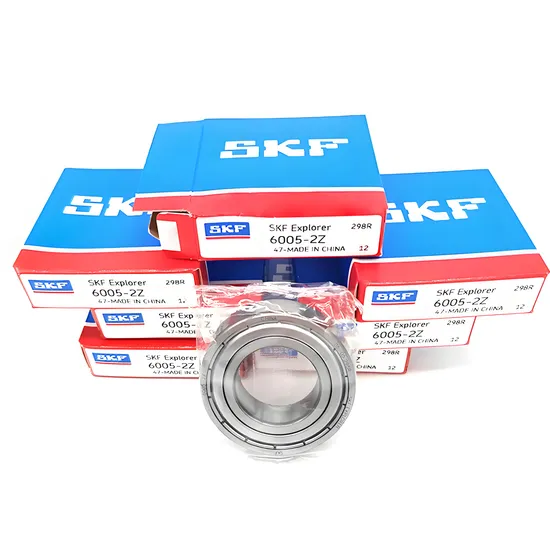
KOYO vs SKF Wholesale Pricing for Industrial Buyers
Most buyers think a lower unit price means lower procurement cost—but cross-reference errors, counterfeit returns, and customs delays routinely inflate the real landed cost far beyond the initial "savings."
When comparing KOYO vs SKF wholesale pricing, industrial buyers must look beyond the sticker price on a quotation. The true cost of bearing procurement is shaped by cross-reference compatibility, internal clearance matching, authenticity verification, and country-of-origin traceability. A quote that looks cheaper on paper can become the most expensive order in your warehouse if the parts fail verification or do not fit the application.
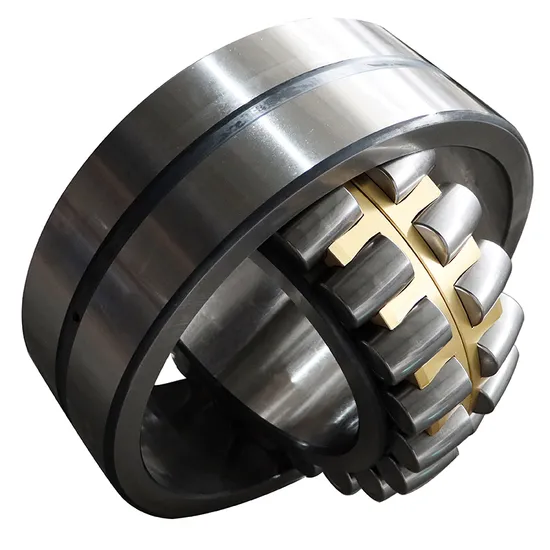
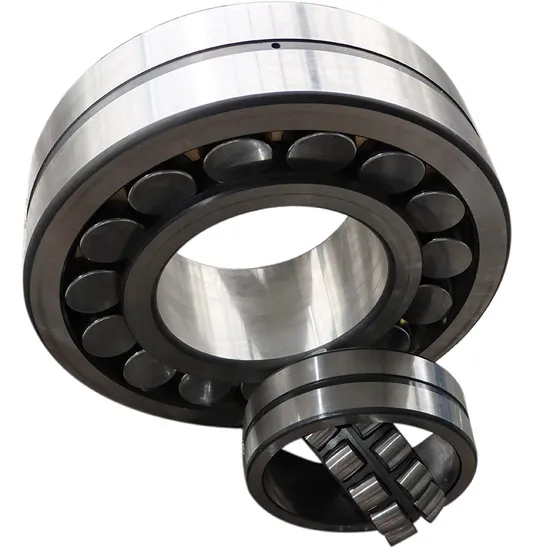
I still remember a shipment I handled early in my career. A buyer in Monterrey, Mexico, needed 22320 spherical roller bearings. I quoted KOYO. He came back asking if they could replace his existing SKF units. I confirmed the dimensions matched and shipped the order. Weeks later, the entire batch was returned. The internal clearance tolerance bands differed between the two brands, and the bearings ran hot in service. The freight, demurrage, and re-order lead time cost several times what he had "saved" by choosing the lower quote. That order taught me that buyers asking about KOYO vs SKF wholesale pricing are really asking: "Can I use it, and will it arrive genuine?" [NEED_CITE: bearing interchangeability factors per ISO 15243 and ABMA standards]
Let me walk you through what actually determines the real cost when you source these two brands at wholesale scale.
What Is the Typical Wholesale Price Gap Between KOYO and SKF?
SKF generally commands a brand premium across most overlapping categories, while KOYO offers competitive wholesale pricing—yet the gap narrows, disappears, or even reverses depending on the model series, volume tier, and country of origin.
In my day-to-day work handling wholesale inquiries, I see SKF positioned as a premium-tier brand. Their pricing reflects decades of global brand investment, extensive R&D in condition monitoring systems, and a dense authorized distributor network. KOYO, as part of the JTEKT group, sits in a slightly different market position—still a top-tier Japanese manufacturer, but often priced more aggressively in overlapping deep groove ball bearing and tapered roller bearing categories to win volume from distributors and MRO buyers.
Here is a qualitative comparison of how wholesale pricing structures typically differ:
| Pricing Factor | SKF | KOYO |
|---|---|---|
| Brand tier positioning | Premium tier | Competitive tier |
| Volume discount depth | Moderate | Noticeably aggressive at high volume |
| Availability of popular models (6205, 6206, 6305, 22320) | Broad, but premium-priced | Broad, often lower unit cost |
| Origin country impact on landed cost | Multiple production sites; tariff varies | Japan and regional plants; tariff varies |
| Authorized channel markup | Higher | Moderate |
[NEED_CITE: brand tier positioning and pricing structure differences between major bearing manufacturers]
However, the picture changes when you factor in Incoterms and destination tariffs. A CIF quote for SKF bearings shipped from a European plant to West Africa may carry a different landed cost than a KOYO quote from a Japanese plant to the same port—simply because of how free trade agreements and HS code classifications interact. I have seen cases where the KOYO quote looked cheaper on a per-unit basis, but after customs clearance and inland freight, the total landed cost gap narrowed substantially.
A distributor in the Middle East once compared quotes from an authorized tier-1 SKF dealer and a gray-market trader offering the same models at a noticeably lower price. The price differential was significant on paper. But the gray-market goods lacked proper origin documentation, and the shipment was held at customs for an extended period. The delay cost erased the price advantage entirely. [NEED_CITE: impact of origin documentation and HS code classification on bearing import clearance]
The takeaway: when you evaluate KOYO vs SKF wholesale pricing, always request a landed-cost breakdown, not just a unit price.
Are KOYO and SKF Bearings Fully Interchangeable at the Same Size?
Dimensional equivalence does not guarantee functional interchange. Tolerance bands, internal clearance classes, cage designs, and lubrication compatibility must all be cross-verified before substituting one brand for another.
This is where most procurement mistakes happen. A buyer sees that a KOYO 32218 and an SKF 32218 share the same bore, outer diameter, and width—and assumes they are drop-in replacements. In many standard applications, they will work. But in demanding environments—high temperature, heavy load, precision spindle operation—the subtle differences between brands can cause premature failure.
| Cross-Reference Factor | What to Verify | Risk if Ignored |
|---|---|---|
| Bore, OD, width | Dimensional match per ISO standards | Physical fit failure |
| Internal clearance class (C2, C3, C4) | Must match application thermal profile | Elevated operating temperature, premature wear |
| Cage material and design | Steel, brass, or polymer; lubrication compatibility | Cage failure, lubrication breakdown |
| Load rating (dynamic and static) | Must meet or exceed OEM specification | Reduced service life |
| Precision class (P0, P6, P5, P4) | Must match machine tool or application requirement | Vibration, noise, accuracy loss |
[NEED_CITE: bearing interchange methodology covering dimensional, clearance, and cage compatibility per ISO and ABMA standards]
Let me share another case. A steel mill in Southeast Asia was replacing tapered roller bearings on a continuous caster line. The OEM specification called for a specific SKF 30206 with C3 clearance. The maintenance team sourced KOYO 30206 bearings at a lower wholesale price, assuming dimensional equivalence was sufficient. They did not verify the clearance class. The KOYO units they received were standard clearance, not C3. Under the high operating temperatures of the caster line, the bearings ran too tight, overheated, and failed within weeks. The downtime cost far exceeded the price difference on the original quote.
This is why cross-reference support is not a luxury—it is a necessity. When I prepare a wholesale quotation, I always check whether the buyer needs a direct brand-for-brand replacement or whether an application-based cross-reference is required. Providing interchange charts that compare tolerance bands, clearance classes, and cage options between SKF, KOYO, NSK, FAG, TIMKEN, and NTN helps buyers make informed decisions before the order is placed. [NEED_CITE: cross-reference interchange charts and tolerance comparison methodology across major bearing brands]
How Can Buyers Verify They Are Getting Genuine KOYO or SKF Bearings at Wholesale?
Authenticity cannot be confirmed by price or appearance alone. QR code verification, authorized-source confirmation, and country-of-origin documentation are the only reliable methods to ensure you receive genuine products.
The counterfeit bearing market is a serious and growing problem. Fake bearings are routinely sold through online marketplaces, social media channels, and even seemingly legitimate trading companies at prices significantly below authorized wholesale levels. They look real. The packaging looks real. The markings on the rings look real. But the steel quality, heat treatment, and dimensional accuracy are not.
I once worked with a distributor in Latin America who sourced a large batch of "SKF" deep groove ball bearings from an online supplier at a price well below what authorized channels offered. When the goods arrived, his team scanned the QR codes on the packaging using the official SKF verification app. A large portion of the units failed the authenticity check. The financial loss was substantial—not just the cost of the fake bearings, but the freight, the reputational damage with his own customers, and the time spent sourcing replacements. [NEED_CITE: counterfeit bearing prevalence and verification failure rates in online sourcing channels]
Here is the verification workflow I recommend for every wholesale purchase:
- QR code or app scan: Both SKF and KOYO offer official verification tools. Scan the QR code on the packaging or use the brand’s official app to confirm authenticity.
- Authorized distributor check: Verify that your supplier appears on the brand’s official authorized distributor list. SKF and KOYO both maintain publicly accessible dealer locator tools on their websites.
- Country-of-origin documentation: Request the certificate of origin or equivalent documentation. Genuine bearings will have clear, consistent origin marking on both the packaging and the product.
- Packaging and marking inspection: Check for spelling errors, inconsistent font quality, missing batch numbers, or poor print quality on the packaging. Genuine brands maintain strict packaging standards.
- Physical product inspection: Examine the bearing markings on the rings. Genuine bearings have clean, precise laser or stamped markings. Counterfeit markings are often blurry, misaligned, or use incorrect fonts.
[NEED_CITE: official brand authenticity verification tools and authorized distributor verification methods for SKF and KOYO]
When I source bearings for wholesale buyers, every quotation I provide includes authenticity verification support. I confirm the origin, verify the supplier’s authorization status, and ensure the products can pass QR or app verification before shipment. This is not an add-on service—it is the baseline for any responsible bearing supply operation.
What Hidden Costs Arise from Mis-Specified or Counterfeit Bearing Orders?
Freight returns, demurrage charges, machine downtime, and reputational damage from mis-specified or counterfeit orders routinely exceed the initial price "savings" by multiples.
The true cost of a bearing procurement decision extends far beyond the unit price on the invoice. When an order goes wrong—whether due to cross-reference errors, counterfeit products, or missing documentation—the downstream costs accumulate quickly and often silently.
Consider the types of hidden costs that emerge:
- Freight and return logistics: When a batch of bearings is rejected due to authenticity failure or specification mismatch, the buyer bears the cost of return shipping, customs re-export procedures, and potential warehousing fees.
- Demurrage and port charges: If a shipment is held at customs due to missing origin documentation or suspected counterfeit goods, demurrage charges accumulate daily. These charges can reach substantial amounts within weeks.
- Machine downtime: A failed bearing in a critical application—whether a steel mill conveyor, a wind turbine gearbox, or a CNC spindle—can halt an entire production line. The cost of lost production often dwarfs the bearing cost itself.
- Re-order lead time: Sourcing replacement bearings, especially if the original order was from an unreliable channel, adds lead time. During this period, the machine remains down or operates at reduced capacity.
- Reputational damage: For distributors and trading companies, delivering counterfeit or mis-specified goods to your own customers destroys trust. Rebuilding that trust takes years.
[NEED_CITE: total cost of ownership factors in industrial bearing procurement including downtime, logistics, and reputational impact]
I have seen a full order of counterfeit bearings result in a mid-six-figure loss when all downstream costs were tallied. The buyer had saved a small percentage on the unit price. The total cost was several times what a genuine wholesale order would have been.
This is why I emphasize that KOYO vs SKF wholesale pricing comparisons must include a risk assessment. The cheapest quote is only the best deal if the products are genuine, correctly specified, and properly documented.
How Should Buyers Structure a Wholesale Inquiry to Get Accurate, Comparable Quotes?
A proper RFQ must include brand preference or cross-reference request, quantity tier, destination Incoterms, and authenticity documentation requirements to enable an apples-to-apples comparison between KOYO vs SKF wholesale pricing.
Most buyers send inquiries that look like this: "Price for 6205 bearing, 500 pieces." This is not enough information to provide a meaningful quote. Without knowing the brand preference, clearance class, cage type, destination, and documentation requirements, any quote you receive is a guess—and likely an incomparable one.
Here is the inquiry structure I recommend for every wholesale bearing RFQ:
- Brand preference or cross-reference request: Specify whether you need SKF, KOYO, or another brand. If you are open to cross-reference alternatives, state this clearly so the supplier can offer options.
- Complete model specification: Include the full part number, including suffixes that indicate clearance class (C3, C4), cage type, seal type (2Z, 2RS), and precision class (P5, P4).
- Quantity tier: Wholesale pricing is volume-dependent. Specify your exact quantity or annual volume requirement to receive accurate tier pricing.
- Destination and Incoterms: State your destination port or address and your preferred Incoterms (FOB, CIF, DDP, etc.). This determines how freight, insurance, and customs costs are allocated.
- Authenticity documentation requirements: Specify whether you require certificates of origin, authorization letters, QR verification confirmation, or other authenticity documentation.
- Application context (optional but valuable): Briefly describing your application helps the supplier recommend the correct specification, especially if cross-reference substitution is involved.
[NEED_CITE: best practices for structuring industrial bearing RFQs to ensure accurate and comparable wholesale quotations]
When buyers provide this level of detail, I can prepare a quotation that is transparent, comparable, and risk-adjusted. I can confirm whether the requested brand is available, whether a cross-reference alternative offers better value, and whether the specification matches the application requirements. This approach eliminates surprises after the order is placed.
For buyers who are unsure about brand selection or cross-reference compatibility, I offer complete RFQ support. I help clarify the specification, verify interchangeability, and ensure the quotation includes all necessary authenticity and origin documentation. This service is especially valuable for MRO buyers replacing bearings in existing equipment and for distributors sourcing for resale in regions with strict import regulations.
Conclusion
The real cost of bearing procurement is determined by cross-reference accuracy, authenticity verification, and documentation completeness—not just the unit price on a quote. When comparing KOYO vs SKF wholesale pricing, always evaluate the full landed cost, verify product authenticity through official channels, and structure your inquiry with complete specifications to ensure you receive comparable, risk-adjusted quotations. The cheapest quote is only the best deal if the products are genuine, correctly specified, and properly documented.