
OEM Angular Contact Ball Bearing Wholesale Supplier for Poland
Most buyers choose the wrong contact angle because they assume "bigger is better" for stability.
To successfully source an OEM angular contact ball bearing wholesale solution for the Polish market, you must prioritize matching the specific contact angle and preload class to your axial-to-radial load ratio, rather than simply replicating a standard part number. For importers in Poland, verifying batch consistency through ISO-compliant material certificates and dimensional reports is more critical than chasing the lowest unit price, as mixed batches cause premature failure in high-speed spindle applications.
I still remember the cold sweat on my back when a client from Warsaw called me late one night. He had installed a batch of 7215 series bearings into high-speed CNC spindles, expecting smooth operation. Instead, the machines exhibited excessive axial runout and rapid temperature spikes after just a few hours of testing. I had supplied them based on the standard model number, assuming a generic 15-degree contact angle would suffice. It didn’t. The high-speed machining process generated significant axial forces that the standard preload could not handle, leading to micro-slippage and heat generation. That incident changed how I approach every inquiry. Now, before I even look at stock levels for an OEM angular contact ball bearing wholesale order, I ask about the rotational speed, the nature of the load, and the required precision grade. This shift from transactional selling to technical consultation has saved my clients from costly downtime and helped me build long-term trust across Central Europe.
Understanding why standard off-the-shelf models often fail in custom or demanding applications is the first step toward smarter procurement. The mismatch between preload settings and operational conditions is the primary culprit. In the following sections, we will break down the technical parameters that matter, the quality verification steps essential for Polish importers, and strategies to optimize your sourcing costs without compromising reliability.
Why Do Standard Models Fail in Custom High-Speed Applications?
Standard bearings fail not because of poor quality, but because of mismatched internal geometry relative to the application’s dynamic loads.
Many distributors treat angular contact ball bearings as interchangeable commodities. However, the internal design—specifically the contact angle and preload—is highly sensitive to the operating environment. A bearing designed for a moderate-speed pump will likely fail catastrophically if used in a high-frequency spindle, even if the outer dimensions are identical. [NEED_CITE: relationship between preload class and stiffness in angular contact bearings]
Consider a recent case involving a machine tool manufacturer in Gdańsk. They were sourcing replacements for their grinding machines. The original equipment used bearings with a light preload (L) suitable for moderate speeds. To cut costs, they switched to a supplier offering a "standard" equivalent with no specified preload class. The result was increased vibration and noise. Upon inspection, we found that the new bearings had a medium preload (M), which created excessive internal friction at high RPMs. This friction led to thermal expansion, which further increased the preload, creating a vicious cycle that destroyed the raceways.
The key takeaway is that the contact angle determines how the bearing handles combined loads. A 15-degree angle is ideal for high-speed, low-axial-load applications. A 40-degree angle provides higher axial rigidity but limits maximum speed due to increased sliding friction. Choosing the wrong angle for an OEM angular contact ball bearing wholesale purchase can invalidate the entire assembly’s performance.
| Application Scenario | Recommended Contact Angle | Preload Class | Speed Capability | Axial Rigidity |
|---|---|---|---|---|
| High-Speed Spindles | 15° | Light (L) or Extra Light (EL) | Very High | Low |
| General Machine Tools | 25° | Medium (M) | Moderate | Moderate |
| Heavy Axial Loads (Pumps) | 40° | Heavy (H) | Low | High |
When evaluating suppliers, do not just ask for the part number. Ask for the specific contact angle and preload designation. If a supplier cannot provide this data, they are likely trading generic stock that may not meet your technical requirements. For an OEM angular contact ball bearing wholesale partner, transparency in these specifications is non-negotiable.
Key Technical Parameters for OEM Selection
Defining the correct precision grade, material, and cage type is more important than the brand name for consistent performance.
In the industrial sector, especially for OEMs building machinery for export or domestic use, consistency is king. You need bearings that perform identically from batch to batch. This requires a deep dive into three critical parameters: precision grade, cage material, and steel quality.
Precision grades such as P0, P6, P5, and P4 define the tolerances for bore diameter, outer diameter, and width. [NEED_CITE: ISO 492 standards for rolling bearing tolerances] For general industrial applications, P0 or P6 is sufficient. However, for machine tools and precision instruments, P5 or P4 is required to ensure minimal runout and vibration. Sourcing an OEM angular contact ball bearing wholesale lot with mixed precision grades can lead to assembly issues and uneven wear.
Cage material is another often-overlooked factor. Steel cages are robust and suitable for high temperatures and heavy loads. Nylon (polyamide) cages are lighter and allow for higher speeds due to lower friction, but they have temperature limits. Copper cages offer a balance but are more expensive. I once dealt with a reducer manufacturer who experienced unusual noise issues. The root cause was the substitution of a steel cage with a nylon one without adjusting the lubrication strategy. The nylon absorbed moisture from the environment, expanded slightly, and interfered with the rolling elements.
| Parameter | Option A | Option B | Option C | Selection Criteria |
|---|---|---|---|---|
| Precision Grade | P0 / P6 | P5 | P4 / P2 | P0/P6 for general use; P5/P4 for high precision/spindles. |
| Cage Material | Steel | Nylon (PA66) | Copper | Steel for heavy load/high temp; Nylon for high speed; Copper for balanced performance. |
| Steel Quality | Standard GCr15 | Vacuum Degassed | Ceramic Hybrid | Vacuum degassed steel offers better fatigue life for critical applications. |
When requesting quotes for an OEM angular contact ball bearing wholesale order, specify these parameters clearly. Do not assume that "standard" means the same thing to every manufacturer. A reliable supplier will confirm these details and provide test reports if necessary. This level of detail separates professional suppliers from simple traders.
Quality Verification for Polish Importers
Demanding material certificates and dimensional reports is the only way to ensure batch consistency and avoid counterfeit risks.
Poland serves as a major logistics hub for Central and Eastern Europe. With high volumes of goods passing through, the risk of receiving substandard or counterfeit products increases. For industrial buyers, the cost of a failed bearing is not just the price of the part, but the downtime of the entire machine. Therefore, quality verification must be rigorous.
ISO certification is a baseline, but it is not enough. You need traceability. Every batch of bearings should come with a material certificate that traces the steel back to the mill. This document confirms the chemical composition and heat treatment process. [NEED_CITE: importance of material traceability in bearing reliability] Additionally, dimensional inspection reports for a sample of the batch provide evidence that the manufacturing process is under control.
I recall a situation where a distributor in Kraków received a shipment that looked perfect externally. However, during installation, technicians noticed slight variations in the inner ring width. These variations, though within the broad P0 tolerance, were inconsistent within the same box. This suggested that the boxes contained mixed batches from different production runs. Such inconsistency can cause premature failure in paired mounting arrangements, which are common in angular contact applications. By requiring full traceability documentation, we were able to identify the issue before the bearings were installed.
For those seeking an OEM angular contact ball bearing wholesale supply, insist on seeing these documents before shipment. A reputable supplier will have no issue providing them. In fact, they should proactively offer them as part of their service. This practice not only protects your investment but also helps you maintain compliance with EU regulations regarding product safety and liability.
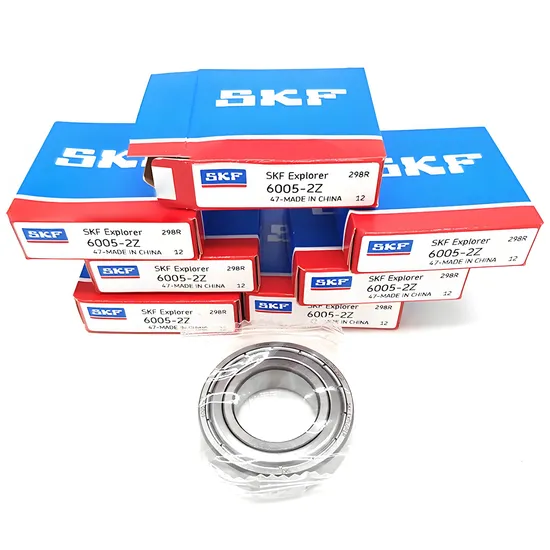
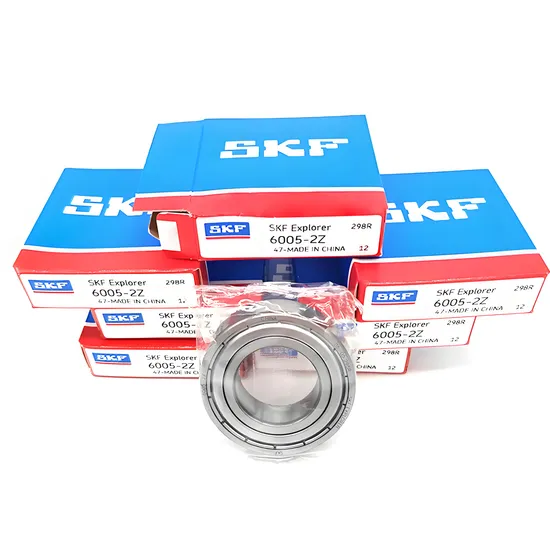
Furthermore, consider the packaging. Genuine high-quality bearings are packaged to prevent corrosion and damage during transit. Poor packaging can lead to rust, especially during sea freight or long-term storage. Check for proper sealing and labeling. If the packaging looks amateurish, it is a red flag. Trustworthy partners understand that presentation reflects the care taken in manufacturing and handling.
Cost-Efficient Sourcing Strategies
Balancing minimum order quantities with inventory consolidation optimizes landed cost without tying up excessive capital.
Sourcing bearings is a balancing act between unit price and inventory cost. Buying in large volumes reduces the unit price, but it ties up capital and warehouse space. For many distributors and OEMs in Poland, the solution lies in strategic consolidation. Instead of placing separate orders for different types of bearings, combine them into a single container load. This approach reduces shipping costs per unit and simplifies customs clearance.
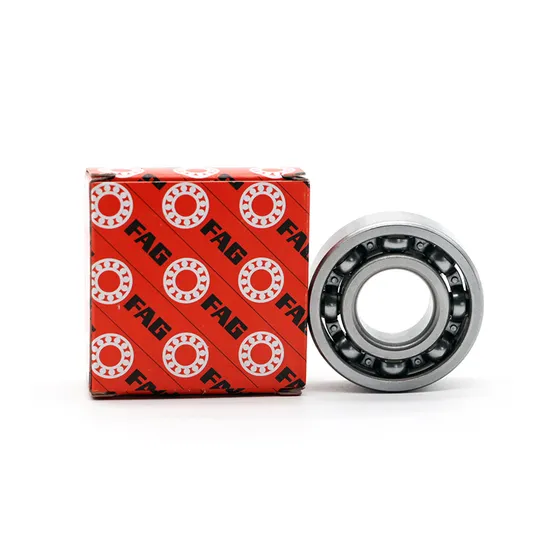
Another strategy is to mix brands. While premium brands like SKF or FAG offer top-tier performance, they come with a premium price tag. For less critical applications, high-quality domestic Chinese brands like ZWZ or HRB can provide excellent value. [NEED_CITE: comparative performance analysis of premium vs. mid-tier bearing brands] By sourcing a mix of premium and mid-tier bearings from a single supplier, you can optimize your overall cost structure. The key is to know which applications require premium performance and which can tolerate standard grades.
I worked with a mining equipment supplier who reduced their bearing procurement costs by nearly a third by adopting this mixed-brand strategy. They used premium bearings for the main drive systems and high-quality domestic brands for auxiliary components. The supplier provided technical support to ensure the right brand was used for the right application. This collaboration allowed them to maintain reliability while improving their margin.
| Sourcing Strategy | Pros | Cons | Best For |
|---|---|---|---|
| Single Brand Premium | High reliability, brand recognition | High cost, longer lead times | Critical applications, high-end OEMs |
| Mixed Brand Consolidation | Cost optimization, flexibility | Requires technical expertise | Distributors, general machinery OEMs |
| Just-in-Time Local Stock | Low inventory cost | Higher unit price, risk of stockouts | Emergency repairs, MRO |
When looking for an OEM angular contact ball bearing wholesale partner, seek one who offers technical consultation alongside sales. They should be able to advise on brand alternatives and help you build a balanced inventory. This value-added service is often more valuable than a small discount on the unit price. It ensures that you are buying the right product for the right price, maximizing your return on investment.
Conclusion
Precision matching and verified traceability are the pillars of successful bearing procurement.
Sourcing angular contact ball bearings requires more than just finding the lowest price. It demands a clear understanding of technical parameters like contact angle and preload, rigorous quality verification through documentation, and smart sourcing strategies that balance cost and reliability. By focusing on these elements, buyers in Poland and across Europe can secure a supply chain that supports their operational excellence. Partnering with a supplier who prioritizes technical accuracy and transparency ensures that every bearing delivered meets the exact needs of your application.