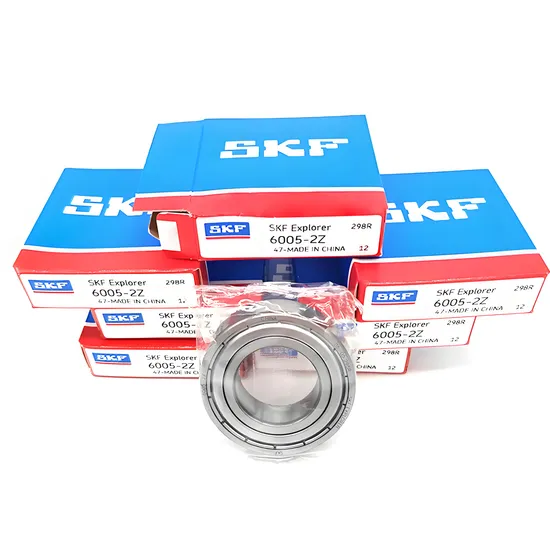
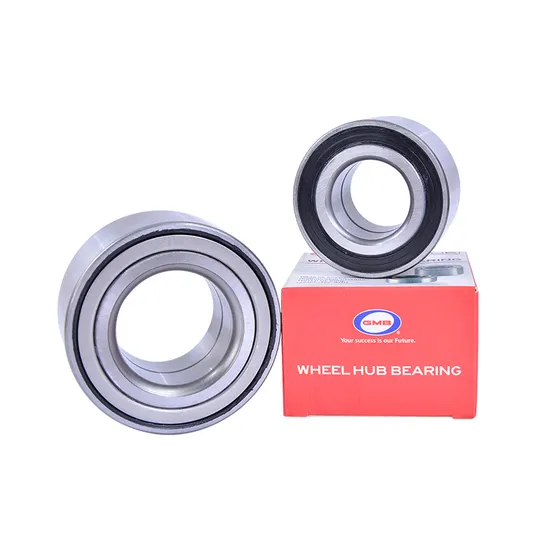
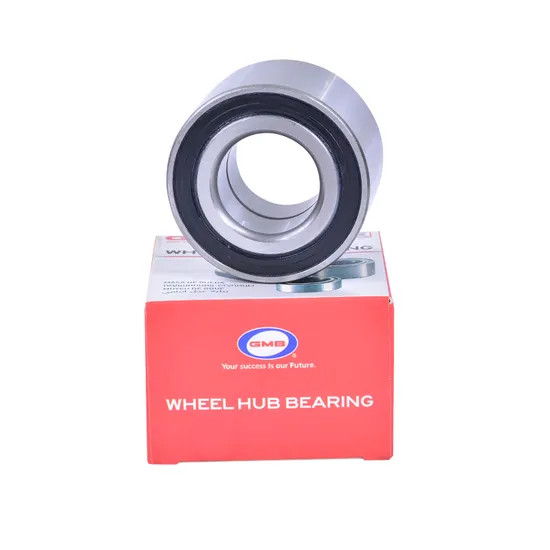
KOYO SKF Bearing Wholesale Supplier & Cross-Reference Service
Identical outer dimensions do not guarantee identical field performance.
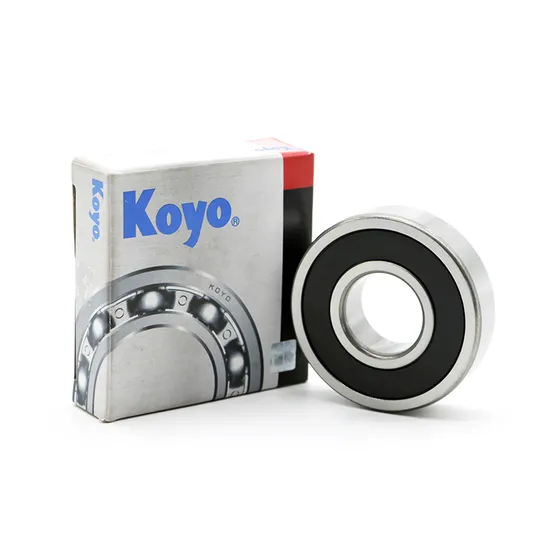
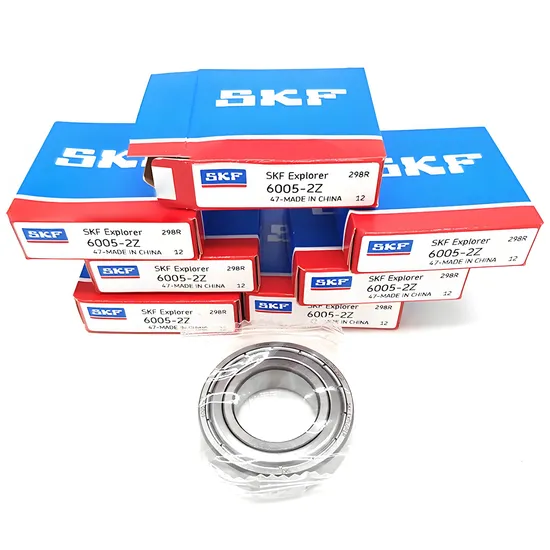
KOYO and SKF bearings share near-identical boundary dimensions across mainstream models (6205, 6206, 6305, 22320, 32218, 30206), making them appear interchangeable on paper. However, internal clearance groups, cage materials, grease fill volumes, and country-of-origin traceability differ significantly between the two brands. A naive "cross-reference swap" without verifying these parameters routinely leads to premature overheating, cage fracture, or seizure under load. For industrial buyers and MRO operators, the correct approach is not to match model numbers but to match application conditions through a verified cross-reference process backed by authorization-chain documentation and anti-counterfeit validation.
I still remember a shipment that nearly ended my career. A Dubai client ordered a batch of 22320 spherical roller bearings, explicitly specifying SKF. The upstream source shipped KOYO instead, assuring me the two were "cross-reference interchangeable." The bearings were installed on a cement plant conveyor line. Within weeks, they began overheating and seized, shutting down the entire production line. The financial hit was severe, and the client almost cut me off permanently. That episode burned into my memory the reality that KOYO and SKF may share boundary dimensions, but their internal clearances, cage architectures, and lubrication specifications diverge in ways that matter under real-world operating conditions. [NEED_CITE: ISO 15243 rolling bearing damage classification and root cause analysis framework] Since then, I have treated every cross-reference request with extreme caution—verifying clearance class, cage type, grease compatibility, and country-of-origin documentation before any shipment leaves the warehouse.
The following sections break down why these two brands coexist in Japanese automotive OEM supply chains, where naive cross-referencing fails, how to verify authenticity, and what to look for in a reliable supplier.
Why Do Japanese Auto OEMs Use Both KOYO and SKF?
Japanese automakers such as Toyota and Honda rely primarily on KOYO (JTEKT), NSK, and NTN for original equipment bearing supply, but SKF dominates the aftermarket and heavy-industry replacement segment.
The OEM landscape for Japanese vehicles is well-documented: KOYO, as part of the JTEKT group, supplies a substantial share of original equipment bearings for steering systems, wheel hubs, and transmission assemblies across Toyota, Honda, and Nissan platforms. [NEED_CITE: JTEKT annual report bearing segment OEM supply chain overview] NSK and NTN hold similar positions. SKF, by contrast, has a comparatively smaller footprint in Japanese automotive OEM assembly lines but commands strong presence in European and American vehicle platforms, as well as in heavy industrial and mining equipment worldwide.
However, in the aftermarket and MRO replacement space, the picture shifts dramatically. Maintenance teams across the Middle East, Africa, Latin America, and Southeast Asia frequently encounter equipment originally fitted with KOYO bearings but seek SKF replacements due to SKF’s broader global distribution network and brand recognition. This creates a massive cross-reference demand: buyers ask whether a KOYO 6205 can be replaced with an SKF 6205, or whether a KOYO 32218 tapered roller bearing is functionally equivalent to an SKF 32218.
The short answer is: dimensionally yes, functionally it depends. Boundary dimensions (bore, outside diameter, width) conform to ISO 15:2017 standards, meaning a KOYO 6205 and an SKF 6205 will physically fit the same housing and shaft. [NEED_CITE: ISO 15:2017 rolling bearing radial bearing boundary dimensions] But internal geometry—contact angles, internal clearance groups, cage design, and grease formulation—varies by brand and by the specific application grade each manufacturer targets.
From my observation in the Shenzhen bearing trade, many buyers assume that because KOYO is the OEM supplier for Japanese vehicles, it must be the "safer" choice universally. The reality is more nuanced: the same model number produced in Japan, China, or Europe may carry different authorization chains, batch traceability depth, and quality consistency depending on the manufacturing facility. [NEED_CITE: global bearing market share distribution by manufacturer and region] This is why cross-referencing is not merely a model-number exercise but a full specification-matching exercise.
Three Hidden Traps in KOYO-SKF Cross-Reference
Dimensional equivalence masks three critical divergence points: internal clearance group, cage material, and country-of-origin traceability. Ignoring any one of them can turn a routine replacement into a costly failure.
Trap 1: Internal Clearance Mismatch
Bearing internal clearance directly affects operating temperature, vibration, and service life. KOYO and SKF both offer standard clearance (CN), C3, C4, and C5 groups, but their default stock clearance for a given model number may differ. A KOYO 6206 shipped as standard CN clearance may have a different internal play range than an SKF 6206 in CN, because each manufacturer applies its own tolerance band within the ISO 5753-1 standard. [NEED_CITE: ISO 5753-1 rolling bearing internal clearance classification]
When a maintenance team in Southeast Asia replaced KOYO wheel hub bearings with SKF equivalents without checking clearance class, the SKF bearings were in a tighter clearance group than the original KOYO units. The result: excessive preload after assembly, abnormal noise during operation, and a rework cycle that cost several extra days of vehicle downtime. The bearing itself was genuine; the clearance class was wrong.
Trap 2: Cage Material and Lubrication Incompatibility
Cage materials—pressed steel, machined brass, or engineered polymer—determine the bearing’s speed capability, load capacity, and temperature resistance. KOYO frequently uses pressed steel cages for standard deep groove ball bearings, while SKF often supplies the same model with a polymer cage (such as its TN9 or GJN designations) as default for certain application segments. These cages behave differently under high-temperature or high-vibration conditions.
More critically, the grease fill volume and formulation differ between brands. Mixing a bearing pre-greased with one brand’s lubricant into an application where the original system used a different grease can cause chemical incompatibility, leading to grease softening, leakage, or accelerated oxidation. I have seen cases where a direct model-number swap resulted in grease degradation within weeks, not because the bearing was defective, but because the lubrication environment was mismatched.
Trap 3: Country-of-Origin and Authorization Chain Gaps
The same KOYO or SKF model number may be manufactured in Japan, China, India, Brazil, or France, depending on the brand’s global production network. Each facility has its own batch traceability system, and not all production sites serve all regional markets through authorized channels. A bearing sourced through an unauthorized intermediary may be genuine in origin but intended for a different regional market, meaning warranty support, technical documentation, and anti-counterfeit verification tools may not apply.
A Latin American auto parts distributor once purchased a full order of 32218 and 6205 bearings at a price noticeably below market. Upon arrival, the country-of-origin certificates were missing, and the anti-counterfeit QR codes failed verification through the manufacturer’s official app. The entire batch was returned. The bearings may have been genuine production overruns or diverted stock, but without verifiable authorization documentation, they were commercially unusable.
Real-World Failure: When a Cross-Reference Swap Destroyed a Production Line
A Middle East cement plant’s conveyor system was shut down for an extended period after non-authorized cross-reference bearings were installed without verifying clearance class and cage compatibility.
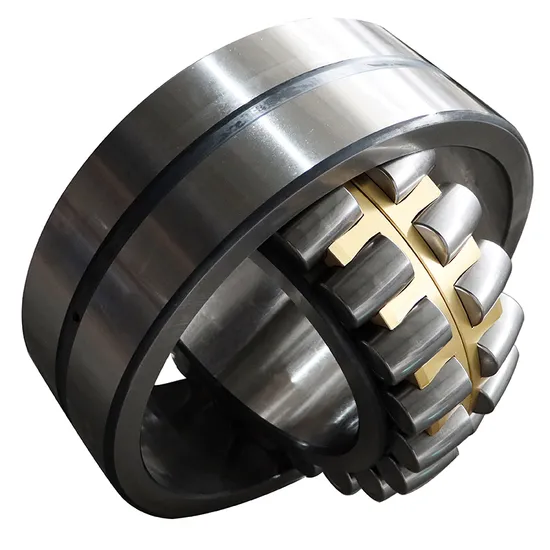
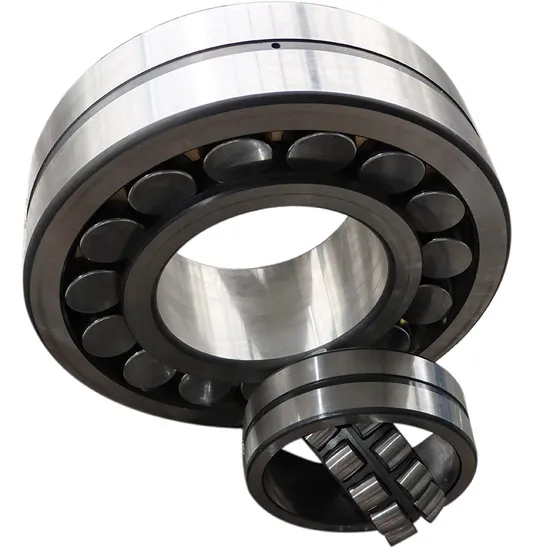
The scenario unfolded as follows: a cement plant in the Middle East operated a long-distance conveyor line equipped with spherical roller bearings in the 22320 size. The original equipment specification called for SKF 22320 bearings with C4 clearance and brass cage, suited for the high-temperature, high-vibration environment of a cement production facility. During a scheduled maintenance shutdown, the plant’s procurement team sourced replacement bearings through an intermediary supplier who provided KOYO 22320 units, assuring the buyer that the two brands were "cross-reference equivalent" based on identical boundary dimensions.
The KOYO bearings supplied were in standard CN clearance with pressed steel cages—a specification suitable for general industrial use but not for the elevated temperature and heavy shock-load conditions of a cement conveyor. Within a short operating period, the bearings began running hot. Maintenance staff detected abnormal vibration signatures. Before corrective action could be taken, multiple bearings seized simultaneously, halting the entire conveyor line.
The consequences extended far beyond the bearing cost. The production line remained idle for an extended period, requiring full bearing replacement, housing inspection, and shaft alignment verification. The financial impact included not only the bearing replacement cost but also the lost production revenue and contractual penalty payments to downstream customers. The intermediary supplier bore part of the liability, but the plant’s maintenance team also faced internal scrutiny for approving a substitution without technical verification.
This case illustrates a fundamental principle: cross-reference interchangeability is not a model-number matching exercise. It requires verifying clearance class, cage material, lubrication compatibility, and application-specific rating adjustments. [NEED_CITE: ISO 15243 rolling bearing damage failure mode classification] A bearing that fits physically but operates outside its designed clearance and thermal envelope will fail prematurely, regardless of brand authenticity.
Authenticity Verification Checklist: From Authorization Chain to Anti-Counterfeit Scan
Before any bearing shipment is accepted, three verification steps must be completed: authorized distributor confirmation, country-of-origin documentation review, and anti-counterfeit code validation.
The global bearing market is flooded with counterfeits, diverted stock, and misrepresented products. For buyers sourcing KOYO, SKF, NSK, FAG, TIMKEN, or NTN bearings through wholesale channels, a systematic verification process is the only reliable defense against receiving non-genuine or commercially compromised products.
Step 1: Verify Authorized Distributor Status
Both SKF and KOYO (JTEKT) maintain publicly accessible authorized distributor networks. Before placing an order, the buyer should confirm that the supplier appears on the manufacturer’s official authorized dealer list for the relevant geographic region. [NEED_CITE: SKF official authorized distributor network verification portal] This step eliminates the risk of sourcing from unauthorized intermediaries who may offer lower prices but cannot provide valid warranty support or technical documentation.
In my own operations, I cross-check every outbound shipment against the manufacturer’s current authorized dealer roster. If a supplier cannot provide verifiable authorization documentation, the transaction is declined regardless of pricing advantage.
Step 2: Review Country-of-Origin Documentation
Genuine bearings come with country-of-origin certificates that trace the product to a specific manufacturing facility. These documents should be reviewed for consistency: the manufacturer name, production facility location, and batch number should align with the manufacturer’s published production network. Discrepancies—such as a bearing labeled as made in one country but shipped from a facility in a different region without explanation—warrant further investigation.
For import-export buyers, country-of-origin documentation also affects customs clearance, tariff classification, and compliance with regional import regulations. Missing or inconsistent origin documentation can delay shipments or trigger customs holds.
Step 3: Validate Anti-Counterfeit Codes
Both SKF and KOYO have implemented anti-counterfeit verification systems. SKF uses QR codes and holographic labels that can be scanned through the SKF Authenticate app. [NEED_CITE: SKF Authenticate app product verification system] KOYO (JTEKT) has similar verification mechanisms for its products. Every bearing should be scanned and verified before installation. If the verification fails or the code has been previously scanned, the product should be quarantined and reported to the manufacturer.
In my warehouse, every outgoing shipment undergoes a three-step verification: authorization chain check, origin document review, and anti-counterfeit code scan. This process adds time to order fulfillment, but it eliminates the risk of shipping compromised products. I would rather delay a shipment by a day or two than face the consequences of a counterfeit-related field failure.
How to Identify a Reliable Cross-Brand Bearing Supplier
A trustworthy bearing supplier must demonstrate full cross-reference capability across SKF, NSK, FAG, TIMKEN, NTN, and KOYO, combined with complete authenticity verification documentation for every shipment.
The bearing wholesale market is fragmented, with suppliers ranging from manufacturer-authorized distributors to unauthorized intermediaries and, at the bottom tier, counterfeit operations. For industrial buyers, MRO operators, and regional distributors, selecting a reliable supplier requires evaluating several dimensions beyond price.
First, the supplier must demonstrate technical cross-reference competence. This means the ability to match not just model numbers but application conditions—clearance class, cage material, lubrication type, and precision grade—across multiple brands. A supplier who simply matches "KOYO 6205 to SKF 6205" without asking about operating temperature, load conditions, and speed requirements is not performing cross-reference; they are performing model-number translation, which is insufficient for critical applications.
Second, the supplier must provide verifiable authenticity documentation. This includes authorized distributor certificates, country-of-origin documentation, and anti-counterfeit verification support. A supplier who cannot or will not provide these documents should be avoided, regardless of pricing advantage.
Third, the supplier should maintain broad brand coverage. In my operations, I stock and source across SKF, NSK, FAG, TIMKEN, NTN, and KOYO, covering deep groove ball bearings, tapered roller bearings, angular contact bearings, cylindrical roller bearings, spherical roller bearings, and thrust bearings. This multi-brand coverage allows me to provide genuine cross-reference solutions rather than forcing buyers into single-brand substitutions.
Fourth, the supplier should offer application-based technical guidance. Bearing selection is not a catalog lookup exercise; it requires understanding the operating environment, load profiles, speed ranges, and maintenance intervals. A supplier who provides technical selection support adds value beyond mere product supply.
Finally, the supplier should have a verifiable track record. References from industrial buyers, distributors, and MRO operators across multiple regions provide evidence of reliability. In my case, I serve industrial buyers, regional distributors, and maintenance operations across the Middle East, Africa, Latin America, Central Asia, and Southeast Asia, with a focus on authenticity verification and complete cross-reference support.
Conclusion
Cross-referencing KOYO and SKF bearings requires matching internal specifications, not just model numbers. Dimensional equivalence under ISO standards creates a false impression of interchangeability, but clearance class, cage material, lubrication compatibility, and country-of-origin traceability determine whether a substitution will succeed or fail in the field. The cement plant conveyor failure and the Latin American distributor’s rejected batch both demonstrate that skipping verification steps leads to operational disruption and financial loss. For buyers sourcing bearings through wholesale channels, the only safe approach is to treat every cross-reference request as a full specification-matching exercise, supported by authorized distributor verification, origin documentation review, and anti-counterfeit validation. A reliable supplier provides not just product supply but complete technical and documentation support across all major brands.

