SKF Bearing Authenticity Guide: Wholesale Supplier & Cross-Reference Support
High-quality packaging does not guarantee a genuine product.
SKF bearings purchased on Amazon carry significant authenticity risk. The only reliable verification path combines the SKF Authenticate App QR scan with a cross-check against SKF’s official authorized distributor list. Relying on platform reputation or seller ratings alone leaves buyers exposed to sophisticated counterfeits that can cause catastrophic equipment failure.
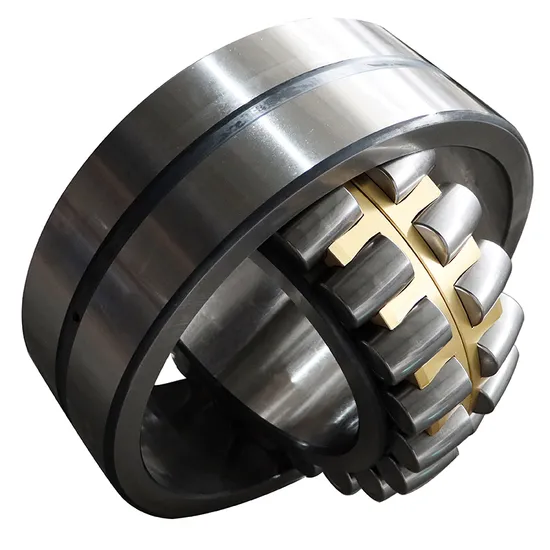
I spent two years stationed at a nickel laterite mine on Sulawesi Island, living alongside crushers and vibrating screens that chewed through spherical roller bearings faster than we could order replacements. The worst batch was a shipment of 22320 units sourced through a local reseller who promised OEM quality. Within one quarter of service, the bearings began shedding cage fragments into the gearbox. The mine’s processing line went down, and the daily revenue loss ran into mid-six figures. When we finally pulled a suspect unit apart, the raceway surface showed grinding chatter marks inconsistent with SKF’s finishing standards, and the cage rivet heads were stamped off-center. We ran the QR code on the box through the SKF Authenticate App—it returned a "not recognized" result. The packaging had been replicated with frightening accuracy, but the bearing inside was a complete fabrication. That failure pattern is far from unique. Counterfeit bearing seizures at major ports across Southeast Asia and the Middle East have been documented repeatedly by customs authorities and industry associations alike [NEED_CITE: annual counterfeit bearing seizure statistics published by customs authorities in Southeast Asian and Middle Eastern ports].
If you are sourcing bearings through e-commerce platforms, understanding how to separate genuine stock from counterfeit is not optional—it is the difference between a routine maintenance swap and an unplanned shutdown.
How Can I Verify SKF Bearing Authenticity Myself?
Use the SKF Authenticate App to scan the QR code on the packaging, then independently confirm the seller against SKF’s authorized distributor directory—neither step alone is sufficient.
The verification workflow is straightforward in principle but frequently skipped or misunderstood by buyers in a hurry. First, download the SKF Authenticate App from the official SKF website or your device’s app store. Each genuine SKF bearing package carries a unique QR code or DataMatrix code on the label. Scanning this code through the app triggers a server-side check against SKF’s production database. A genuine product returns a confirmation screen showing the part number, batch reference, and manufacturing origin. A counterfeit or tampered code returns a warning or no result at all.
However, a passing scan is not the final word. Sophisticated counterfeiters have been known to copy valid QR codes from genuine packaging and print them onto fake boxes in bulk. This means a single legitimate code can appear to validate dozens of counterfeit units. The second verification layer is checking whether the seller—or the entity listed as the shipper—is actually on SKF’s authorized distributor list. SKF maintains a searchable directory on its official website where buyers can enter a company name or location to confirm authorization status [NEED_CITE: SKF authorized distributor verification tool available on the SKF official website].
Here is the complete verification sequence I recommend to every buyer I work with:
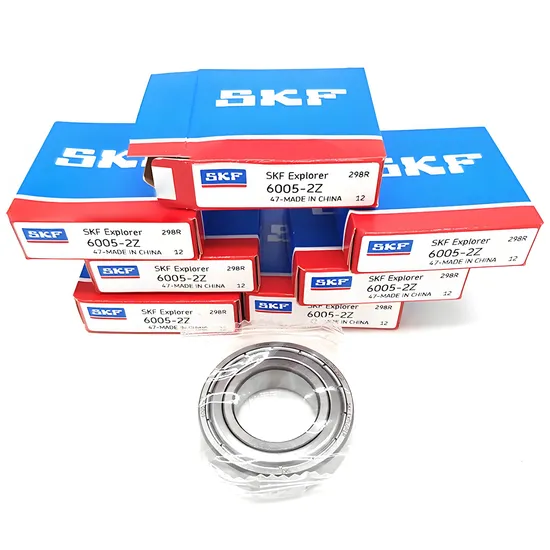
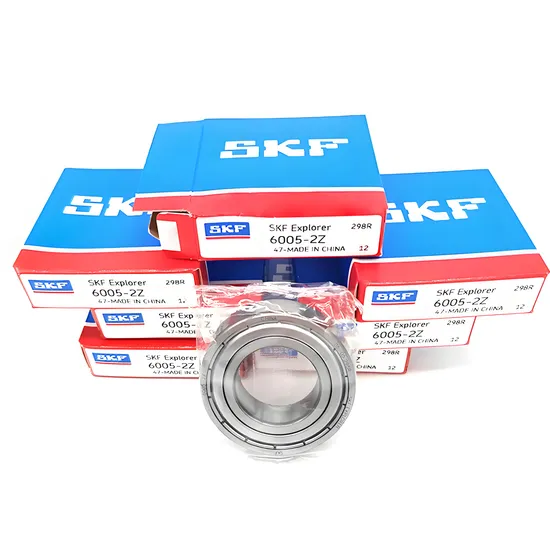
- Inspect the packaging physically. Genuine SKF boxes use specific color tones, font weights, and barcode placements. Counterfeit boxes often show slightly shifted printing, blurred text, or incorrect logo proportions. Compare the box against a known-genuine reference whenever possible.
- Scan the QR or DataMatrix code. Use the SKF Authenticate App—not a generic QR scanner. The app performs cryptographic validation that generic scanners cannot replicate.
- Check the seller against the authorized list. Go to the SKF website, navigate to the distributor search tool, and verify the selling entity’s authorization status. If the seller is not listed, treat the product as unverified regardless of the scan result.
- Inspect the bearing physically if doubt remains. Genuine SKF bearings have laser-etched markings on the inner ring that are clean, evenly spaced, and deeply engraved. Counterfeit markings are often etched with lower-power tools, producing shallower, less uniform characters. The grease inside a genuine SKF sealed bearing has a specific texture and odor that experienced maintenance technicians can identify.
- Cross-reference the manufacturing origin code. SKF produces bearings at facilities in Sweden, China, India, France, and other countries. Each origin has a specific code stamped on the bearing. Verify that the origin code matches what SKF lists for that part number [NEED_CITE: SKF manufacturing origin code identification guide published in SKF technical documentation].
A maintenance team at a copper concentrator in Zambia once ordered a set of tapered roller bearings through an online marketplace. The QR codes on all twelve boxes scanned as valid. But when the team cross-checked the seller’s company name against SKF’s authorized list, they found no match. Further physical inspection revealed that the QR codes had been copied from a single genuine box and printed across the entire batch. The bearings were returned before installation. The cost of those counterfeit units, had they been installed, would have been trivial compared to the downtime from a cone crusher failure at peak throughput.
Why Do Fake SKF Bearings Keep Appearing on Amazon?
Amazon’s third-party marketplace model creates structural conditions where counterfeit bearings thrive—low seller vetting thresholds, high profit margins on industrial components, and buyers who lack immediate verification capability.
The root cause is not unique to Amazon, but Amazon’s scale makes it the most visible channel. The platform allows virtually any registered seller to list industrial products, including precision bearings. Unlike SKF’s authorized distribution network, which requires sellers to meet technical competency standards, maintain proper storage conditions, and submit to periodic audit, Amazon’s marketplace imposes no bearing-specific qualification requirements [NEED_CITE: comparative analysis of authorized distribution requirements versus open marketplace seller standards in the industrial bearing sector].
The economics favor counterfeiters. A genuine SKF 6206 deep groove ball bearing carries a specific wholesale cost determined by SKF’s global pricing structure. A counterfeit version, manufactured with inferior steel and minimal quality control, costs a fraction of that to produce. The seller pockets the difference. Because most buyers cannot distinguish a fake from a genuine unit by visual inspection alone, the counterfeit seller faces minimal risk of immediate detection.
The problem compounds because bearing counterfeiting has become industrialized. Counterfeit operations do not simply stamp fake logos onto random bearings. They reverse-engineer packaging, replicate QR codes, and even produce fake certificates of conformance. Some operations source low-grade bearings from unregistered workshops, repackage them in replicated SKF boxes, and ship them through fulfillment networks that lend an air of legitimacy to the transaction.
A distributor in Dubai received a bulk order of SKF spherical roller bearings from a supplier who had been operating on Amazon’s marketplace for over a year with positive reviews. Upon arrival, the distributor’s quality team noticed that the inner packaging—the protective wraps and grease paper inside the box—used a material grade inconsistent with SKF’s standard packaging specifications. The outer boxes were convincing, but the inner details were wrong. The entire batch was traced back to a single third-party seller whose authorization status could not be confirmed through SKF’s directory. The return and replacement cycle consumed weeks, during which the distributor’s end customers faced equipment downtime.
What Are the Real Costs of Installing Fake Bearings?
The true cost of a counterfeit bearing is not the purchase price—it is the cascading failure cost measured in unplanned downtime, secondary component damage, and production revenue loss.
This is the single most misunderstood aspect of bearing procurement. Buyers focus on the unit price difference between a genuine SKF bearing and a cheaper alternative. But the purchase price is merely the entry cost. The operational cost of a counterfeit bearing failure dwarfs the savings.
Consider the failure sequence. A counterfeit spherical roller bearing in a vibrating screen application may appear to function normally during initial operation. The dimensional tolerances are close enough to pass a basic fit check. But the internal geometry—raceway curvature, roller profile, cage clearance—deviates from the engineered specification. Under load, these deviations generate abnormal stress concentrations. The bearing’s fatigue life, which should extend across multiple maintenance intervals, collapses prematurely.
When the bearing fails, the damage rarely stays contained. A disintegrating bearing sends metallic debris into the housing, contaminating the lubricant and scoring the shaft. The shaft may require re-machining or replacement. Adjacent seals fail from the sudden misalignment. The gearbox connected to the same drive train ingests contaminated lubricant. What began as a bearing replacement escalates into a multi-component overhaul.
A mining operation in West Africa sourced replacement bearings for its conveyor drive system through an online platform. The bearings were installed during a scheduled maintenance window. Within a short service period, multiple units exhibited abnormal vibration signatures. Investigation revealed that the counterfeit bearings had developed spalling on the outer raceway far earlier than predicted by standard L10 life calculations. The conveyor was shut down for unscheduled maintenance. The direct bearing cost was negligible compared to the lost production tonnage and the expedited freight charges for emergency replacement parts sourced through verified channels [NEED_CITE: industrial case studies on economic impact of counterfeit bearing failures in mining and heavy industry].
The cost structure looks like this when expressed qualitatively:
| Cost Category | Genuine SKF Bearing | Counterfeit Bearing |
|---|---|---|
| Unit Purchase Price | Standard OEM pricing | Noticeably reduced |
| Expected Service Life | Full designed L10 life | Substantially shortened |
| Failure Mode | Predictable fatigue | Premature spalling, cage fracture |
| Secondary Damage Risk | Minimal under normal conditions | Noticeably elevated |
| Downtime Cost | Scheduled maintenance window | Unplanned, extended |
| Total Cost of Ownership | Controlled | Multiples of genuine unit cost |
Where Should I Source Genuine SKF Bearings Instead?
Prioritize SKF-authorized distributors or specialized bearing suppliers who provide verifiable authenticity documentation, maintain direct sourcing relationships with manufacturers, and can offer cross-brand interchange guidance when SKF stock is unavailable.
The safest procurement path is purchasing directly from an SKF-authorized distributor. These distributors have been audited by SKF, maintain proper inventory handling procedures, and source through SKF’s official supply chain. The authorization status is verifiable through SKF’s website at any time.
However, authorized distributor networks do not cover every market or every part number equally. In some regions, lead times for specific SKF variants can extend considerably. In these situations, buyers benefit from working with a specialized bearing supplier who maintains relationships across multiple manufacturer channels and can provide verified alternatives.
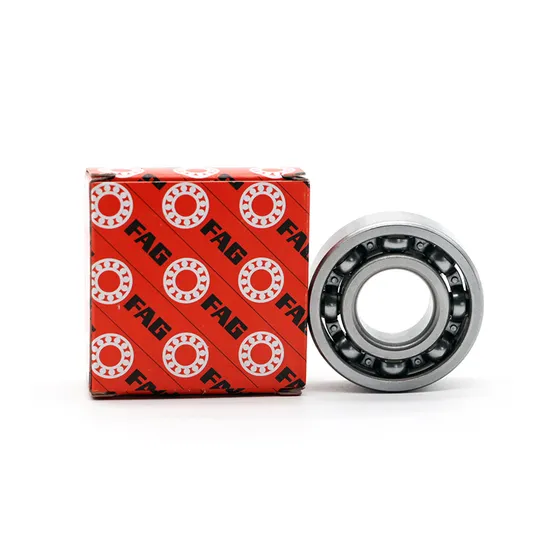
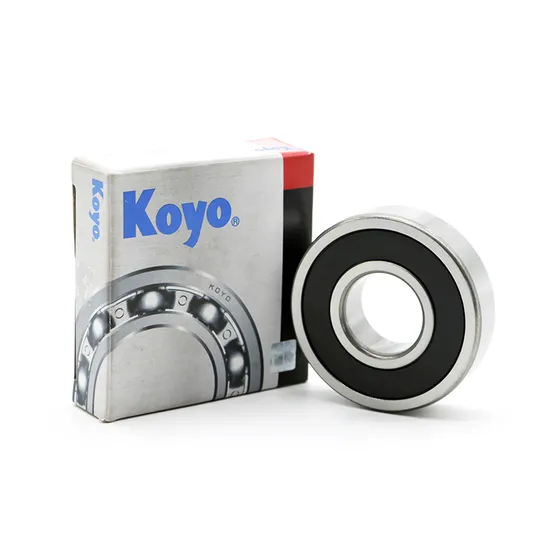
This is where cross-reference capability becomes critical. SKF bearing part numbers often have direct interchange equivalents from NSK, FAG, TIMKEN, NTN, and KOYO. A competent supplier can identify the correct cross-reference, confirm that the alternative bearing meets the same dimensional, load rating, and precision specifications, and source it through a verifiable channel. The cross-reference is not a guess—it follows established dimensional and performance equivalence standards [NEED_CITE: bearing cross-reference methodology based on ISO dimensional standards and manufacturer interchangeability documentation].
For example, if an SKF 22320 spherical roller bearing is on extended lead time, a qualified supplier can identify the corresponding NSK, FAG, or TIMKEN equivalent, verify that the alternative carries the same bore diameter, outer diameter, width, dynamic load rating, and precision class, and source it from a verifiable origin. The buyer avoids downtime without compromising on authenticity or performance.
A steel mill in Southeast Asia faced exactly this situation. Their continuous caster rolls required a specific SKF cylindrical roller bearing that was backordered through official channels. The mill’s maintenance team could not afford to wait. They engaged a specialized supplier who sourced the equivalent FAG bearing from a verified European distribution point, complete with mill test certificates and origin documentation. The bearing was installed, performed to specification, and the caster remained operational. The key was that the supplier did not simply substitute a random bearing—they followed the cross-reference logic, verified the alternative’s origin, and provided documentation that the mill’s quality team could audit.
When sourcing through any channel, the non-negotiable requirements are: verifiable authenticity through SKF Authenticate App or manufacturer documentation, confirmation of the seller’s authorization or direct sourcing relationship, and access to cross-reference support when the specified brand or part number is unavailable. A supplier who meets these criteria functions as a procurement partner, not just a vendor.
Conclusion
Authenticity verification is a buyer’s responsibility, not a platform’s promise. SKF bearings on Amazon require active verification through the SKF Authenticate App and authorized distributor cross-checks before installation. The cost of a counterfeit bearing extends far beyond the unit price into unplanned downtime and secondary equipment damage. Sourcing through authorized channels or specialized suppliers with verified cross-reference capability eliminates the risk entirely.