
How to Remove KOYO and SKF Bearings Without Damage | Wholesale Supplier
Most bearings flagged as "defective" were actually destroyed during removal, not in service.
The correct answer to safe bearing extraction is matching the right puller or heating method to the bearing type and fit, never relying on brute force. Using dedicated extraction tools, controlled induction heating, and proper load alignment preserves shaft and housing integrity while allowing reuse when applicable. A reliable wholesale supplier of genuine KOYO and SKF bearings always emphasizes removal discipline before replacement sourcing.
I still remember the silence on the floor of a cement plant in Riyadh when a spherical roller bearing inner ring shattered mid-shift. The maintenance crew had used a steel hammer and a copper drift to drive out an SKF 22320, assuming the impact would break the interference fit. Instead, the shock load cracked the inner ring into three pieces, sent micro-shards into the roller cage, and forced a full line shutdown that lasted days. A similar scene played out in Dubai, where a KOYO tapered roller bearing on a conveyor head pulley was pried out with a crowbar because no puller was on site. The outer ring stayed locked in the housing, the shaft journal got scored by the crowbar tip, and the repair bill ended up multiplying the original bearing cost several times over. These are not isolated stories. Across multiple regions, maintenance teams consistently underestimate how much damage a single careless strike can cause. [NEED_CITE: root cause distribution of premature bearing failures per ISO 15243]
Once you accept that removal technique decides whether a bearing survives, the rest of the process becomes a matter of tool selection, sequence discipline, and post-removal inspection. Below is a field-tested breakdown that applies to KOYO and SKF deep groove ball, spherical roller, and tapered roller bearings commonly found in industrial gearboxes, conveyors, and motors.
Why Proper Bearing Removal Matters for Equipment Longevity
Violent extraction is the invisible killer of bearing service life, and disciplined removal can meaningfully extend equipment uptime.
Bearings from KOYO and SKF are manufactured to tight dimensional tolerances, with raceways ground to a surface finish that is easily marred by impact or misaligned pulling force. When a hammer blow lands on an outer ring, the shock wave travels through the rolling elements and into the inner ring, creating subsurface micro-cracks that will propagate under load. [NEED_CITE: subsurface fatigue initiation mechanisms in rolling element bearings] These cracks are invisible to the naked eye but drastically shorten the remaining fatigue life if the bearing is reinstalled.
Three patterns repeat across the sites I have visited:
- Hammer-and-drift "shock" removal causes inner ring fractures on spherical roller bearings, especially the larger series where the interference fit is substantial.
- Crowbar or chisel prying on tapered roller bearings scores the shaft journal and leaves burrs that tear the new bearing’s inner ring during the next installation.
- Cold forced extraction without a puller on deep groove ball bearings often bends the cage, misaligns the balls, and renders the bearing unusable even if it comes out intact externally.
A wholesale supplier who deals daily in genuine KOYO and SKF replacements sees the aftermath: buyers order a "full set" because they assumed the original set was defective, when in reality the removal process was the defect. [NEED_CITE: industry survey on bearing failure root causes in heavy industry]
Essential Tools for Safe SKF and KOYO Bearing Extraction
Mechanical pullers, hydraulic pullers, and induction heaters are the three pillars of safe extraction, and each must be matched to the bearing size and fit type.
Choosing the wrong tool is as dangerous as using no tool at all. A puller rated below the required extraction tonnage will slip, gouging the shaft. An induction heater with uncontrolled temperature can overheat the bearing past the tempering threshold, softening the raceway steel.
Mechanical Pullers (Two-Arm and Three-Arm)
Suitable for small to medium deep groove ball bearings such as the 6205, 6206, and 6305 series from KOYO and SKF. The puller jaws must hook behind the inner ring when the inner ring is the tight-fitting component, or behind the outer ring when the outer ring is the interference-fit part. The center screw of the puller should be aligned precisely with the shaft axis to avoid side-loading.
Hydraulic Pullers and Back-Pullers
For larger spherical roller bearings like the 22320 and tapered roller bearings like the 32218 or 30206, hydraulic pullers provide controlled, steady force. Back-pullers (such as the type used when the rear of the ring is inaccessible) grip the ring from behind and pull it off without exposing the shaft end to hammering. [NEED_CITE: SKF and KOYO maintenance manuals on puller selection by bearing size]
Induction Heaters for Removal
Induction heating is the preferred method when a bearing is severely seized or when the inner ring must be expanded off a shaft without any pulling force at all. The heater coil is wrapped around the outer ring, and the bearing is heated until thermal expansion breaks the interference fit. The key is temperature control: the bearing must reach a level sufficient for expansion but must never exceed the tempering limit of the bearing steel. [NEED_CITE: induction heating temperature guidelines for bearing dismounting]
| Tool Type | Typical Application | Force Control | Risk if Misused |
|---|---|---|---|
| Mechanical Puller | Small to medium ball bearings | Manual, moderate | Jaw slip, shaft scoring |
| Hydraulic Puller | Large roller bearings | Controlled, high | Over-pressurization, ring distortion |
| Induction Heater | Seized bearings, tight interference | Temperature-based | Overheating past tempering limit |
| Hammer and Drift | Not recommended for any precision bearing | Uncontrolled | Raceway spalling, cage fracture |
Step-by-Step Removal Process for Different Bearing Types
Each bearing type demands a specific extraction sequence; skipping steps is the fastest way to turn a reusable bearing into scrap.
Deep Groove Ball Bearings (e.g., KOYO 6205, SKF 6206, 6305)
- Isolate the equipment. Lock out and tag out the motor or gearbox. Rotate the shaft by hand to confirm it is free.
- Remove adjacent components. Take off the shaft nut, washer, and any snap rings.
- Position the puller. Place the puller jaws behind the inner ring (if the inner ring is the interference fit). Ensure the center screw sits on the shaft center.
- Apply steady force. Turn the puller screw gradually. If resistance spikes, stop and check for misalignment rather than forcing it.
- Support the shaft. Place a block or jack under the shaft end opposite the puller to prevent bending. [NEED_CITE: bearing dismounting best practices per ISO maintenance guidelines]
- Alternative: induction heating. If the bearing is seized, use an induction heater to expand the inner ring until it slides off freely.
A common mistake I have seen in small repair shops is hooking the puller jaws on the outer ring while the inner ring is the interference-fit component. This pulls the outer ring off first, leaving the inner ring stuck on the shaft, and then the technician resorts to a hammer — defeating the entire purpose of using a puller.
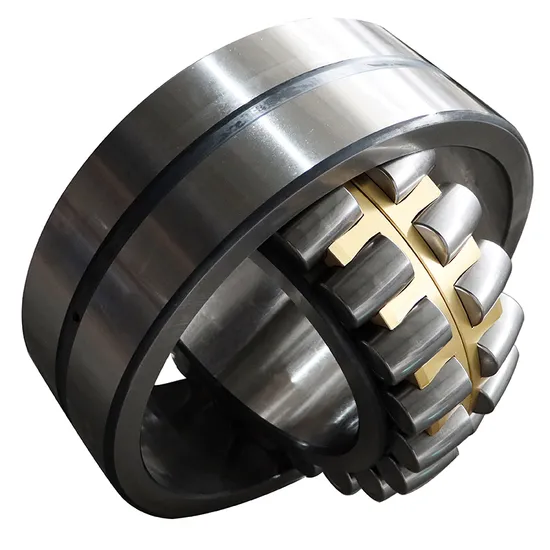
Spherical Roller Bearings (e.g., SKF 22320, KOYO 22320)
- Drain lubricant and remove seals. Clean the area around the housing to prevent contamination ingress.
- Use a hydraulic puller or back-puller. Given the large size and heavy interference fit, a hydraulic setup is almost always required.
- Apply extraction force along the shaft axis. Any angular pull will bind the rollers against the raceway and cause brinelling.
- If the inner ring must remain on the shaft temporarily, wrap it with protective tape to prevent contamination until final removal.
- For severely seized rings, induction heating is the safest option. Heat the inner ring until expansion breaks the fit, then slide it off. [NEED_CITE: thermal expansion coefficients for bearing steel during dismounting]
In the Riyadh cement plant case mentioned earlier, the maintenance team did not have a hydraulic puller on site. They improvised with a hammer. The result was a shattered inner ring, contaminated rollers, and a production line that stood still for days. The replacement bearing had to be sourced urgently, and the cross-reference work to confirm the exact 22320 variant added further delay.
Tapered Roller Bearings (e.g., KOYO 32218, 30206, SKF equivalents)
- Separate the cup and cone if possible. Tapered roller bearings are separable, so the cone (inner ring with rollers and cage) can often be removed first.
- Use a puller on the cone. Hook the jaws behind the inner ring large rib.
- For the cup (outer ring) in the housing, use a blind-hole puller or a drift that contacts the outer ring evenly around its circumference. Never pry from one side.
- Inspect the shaft and housing immediately after removal. Any burr or score mark must be dressed before the new bearing is installed.
The Dubai conveyor incident is a textbook example of what happens when these steps are skipped. The technician used a crowbar on one side of the cup, which tilted the outer ring, jammed it harder into the housing, and then required thermal cutting to free it. The heat from the torch damaged the shaft journal beyond tolerance, and the entire shaft had to be machined down and sleeved — a repair that cost several times the price of a new bearing.
Common Mistakes That Cause Shaft and Housing Damage
Hammer strikes, wrong puller jaw placement, and cold forced extraction are the three most frequent causes of collateral damage during bearing removal.
Hammer and Drift "Shock" Method
This is the most widespread bad habit in field maintenance. The logic seems simple: hit the ring until it moves. The reality is that each hammer blow delivers an impact load far exceeding the bearing’s design capacity, creating subsurface cracks in the raceway and potentially brinelling the rolling elements. Even when a copper or brass drift is used, the energy transfer is uncontrolled and unpredictable. [NEED_CITE: impact load effects on bearing steel microstructure]
Puller Jaw Misplacement
Hooking the puller jaws on the wrong ring is a silent error. If the inner ring is the interference-fit component but the jaws grip the outer ring, the puller will separate the two rings, crush the cage, and scatter the rolling elements — while the inner ring remains stuck on the shaft. The technician then assumes the puller "did not work" and reaches for a hammer. The correct practice is always to pull on the ring that has the interference fit.
Cold Forced Extraction Without Heating
When a bearing is heavily seized due to corrosion, fretting, or extreme interference, pulling without thermal assistance can require forces that exceed the structural strength of the ring. The ring may crack, or the puller jaws may tear through the ring edge. Induction heating or oil injection methods are designed precisely for these situations, allowing the fit to be broken by thermal expansion or pressure rather than brute mechanical force. [NEED_CITE: oil injection method for bearing dismounting on tapered seats]
| Mistake | Typical Consequence | Corrective Action |
|---|---|---|
| Hammer striking | Subsurface raceway cracks, cage deformation | Use puller or induction heater |
| Wrong ring pulled | Cage crush, rolling element scatter | Identify interference-fit ring first |
| Cold forced pull on seized bearing | Ring fracture, shaft scoring | Apply induction heating or oil injection |
| Prying with crowbar | Housing bore damage, shaft journal scoring | Use blind-hole puller or drift with even contact |
Post-Removal Inspection: Can the Bearing Be Reused?
Not every removed bearing is scrap, but reuse requires a disciplined inspection of raceways, cage, and clearance.
If the bearing was removed cleanly — with a puller or induction heater, without impact or misalignment — it may still be serviceable. The decision depends on several checks:
- Raceway visual inspection. Look for brinell marks, spalling, discoloration (indicating overheating), or corrosion. Any visible damage means the bearing must be retired.
- Cage condition. Check for bent pockets, cracked rivets, or worn guide lands. A deformed cage will cause uneven ball or roller spacing and premature failure.
- Rotation feel. Spin the bearing by hand. It should rotate smoothly without gritty spots, tight zones, or audible roughness. Any irregularity indicates internal damage.
- Internal clearance check. If measuring equipment is available, verify that the radial internal clearance is still within the specified range for the bearing type. [NEED_CITE: bearing reuse evaluation criteria per ISO 15243]
For KOYO and SKF spherical roller bearings, the cage is often a critical reuse limiter. The machined brass cages used in many 22320-series bearings are robust but can be bent if the bearing was pulled at an angle. For deep groove ball bearings like the 6205 or 6305, the pressed steel cage is more forgiving but still vulnerable to impact.
If the bearing fails any of these checks, it must be replaced. At this point, sourcing a genuine replacement from an authorized channel becomes essential. Counterfeit bearings in the KOYO and SKF ranges are widespread in certain markets, and visual inspection alone is often insufficient to detect them. A wholesale supplier who provides authenticity verification, country-of-origin identification, and cross-reference support across the KOYO, SKF, NSK, FAG, TIMKEN, and NTN ranges can ensure that the replacement bearing matches the original specification exactly. [NEED_CITE: anti-counterfeit verification methods for major bearing brands]
Conclusion
Safe bearing removal is a discipline, not a shortcut. Matching the correct puller or heating method to the bearing type, applying force along the proper axis, and inspecting the component after extraction are the three non-negotiable steps that protect shafts, housings, and the bearings themselves. When replacement is necessary, sourcing genuine KOYO and SKF bearings through verified channels ensures that the new component performs as the manufacturer intended.