
How to Buy Genuine TIMKEN Bearings: Wholesale Buyer Protection Guide
A complete box with a scannable QR code and a price well below market average is exactly how a container of counterfeit bearings ends up at your warehouse. Buying genuine TIMKEN bearings requires verifying the full authorization chain—not just checking price or packaging—because counterfeiters now replicate packaging with high accuracy.
I first encountered a sophisticated fake TIMKEN at the Hannover Messe, helping a European distributor inspect a shipment. The laser-etched font spacing on the outer ring was off by a fraction of a millimeter, and the internal clearance test failed outright. I had just moved from a quality inspection role into trading, and for a moment I thought I was the one misreading the spec sheet. Later, at the PTE show in Chicago, I came across a batch of relabeled stock—the batch numbers on the cartons could not be traced anywhere in the manufacturer’s system, and the buyer nearly had to reject an entire container. Over the years running trade shows and visiting buyer sites across Europe and North America, I have seen too many cases where fake bearings burned out within months of installation. Authenticity is never about price alone; it is about whether you can trace the product back to the original authorized source [NEED_CITE: ABMA anti-counterfeiting position statement on bearing supply chain integrity].
If you are sourcing in bulk, the steps below walk you through exactly how to protect every order.
Why Are Counterfeit TIMKEN Bearings Harder to Spot Than Ever?
Counterfeit packaging has reached a level where visual inspection alone cannot distinguish real from fake. The counterfeit industry has evolved from crude repackaging to near-exact replication of holographic labels, QR codes, and even ink formulations used on original cartons.
A few years ago, a Middle East-based industrial buyer received a full shipment of tapered roller bearings. The boxes looked pristine—correct color scheme, proper logo placement, even the security tape seemed legitimate. It was only when the warehouse team tried to run the batch numbers through the manufacturer’s traceability portal that the entire order was flagged as unverifiable. The packaging had been produced using materials sourced from the same regional suppliers that the legitimate manufacturer used, making visual differentiation nearly impossible [NEED_CITE: TIMKEN anti-counterfeiting technology overview on packaging replication risks].
The shift in counterfeit sophistication means buyers must abandon single-point checks. Relying on packaging appearance, price comparison, or even a quick QR scan is no longer sufficient. The counterfeit supply has moved upstream—fake bearings now enter the market through seemingly legitimate trading companies that mix authentic and counterfeit stock in the same shipment, making spot checks unreliable.
For wholesale buyers, the financial exposure is significant. A single batch of fake bearings installed in critical rotating equipment can lead to unplanned downtime, secondary damage to shafts and housings, and warranty disputes with end users. The cost of replacement and lost production routinely dwarfs the initial purchase price difference [NEED_CITE: ISO 15243 bearing damage classification and root cause analysis framework].
The takeaway is straightforward: if your verification process stops at the outer carton, you are already behind.
How to Verify TIMKEN Authorized Distributors Before Placing an Order?
You must verify both the authorization status and the supply chain lineage—checking one without the other leaves a gap that counterfeiters exploit.
Start with the manufacturer’s official distributor locator. Enter the supplier’s company name and country, and confirm that the listing matches the legal entity on your purchase order. A common trick among unauthorized traders is to list a slightly different company name that sounds similar to an authorized distributor, hoping the buyer will not cross-check. I have seen cases where the name differed by a single word, and the buyer did not notice until a claim was filed.
Next, contact the regional sales office directly. Authorization certificates can be forged or expired. A quick email or call to the regional team confirming that the supplier holds a current, active authorization for the specific product lines you are ordering adds a layer of protection that no document alone can provide [NEED_CITE: TIMKEN authorized distributor verification protocol and regional office confirmation process].
Then, request the supply chain lineage for the specific order. Ask the supplier to document the path from the manufacturer’s production facility to their warehouse, including any intermediate handlers. A legitimate authorized distributor should be able to provide this without hesitation. If the supplier deflects or says the information is confidential, treat that as a red flag.
| Verification Step | Authorized Distributor | Gray-Market Trader | Unauthorized Reseller |
|---|---|---|---|
| Listed on official locator | Verified | Often absent or name mismatch | Absent |
| Regional office confirmation | Confirmed active | Unconfirmed or expired | Not applicable |
| Supply chain lineage | Full documentation provided | Partial or refused | Not provided |
| Batch traceability | Fully traceable | Partially traceable | Not traceable |
| Anti-counterfeit support | Proactive | Reactive | None |
A European wind farm operator once told me they switched to a slightly more expensive supplier after discovering that their previous vendor—despite offering competitive pricing—could not provide batch-level traceability for a critical spherical roller bearing order. The price difference was minor compared to the risk of a single fake bearing causing a gearbox failure at an offshore site.
What Physical Inspection Methods Reveal Fake TIMKEN Bearings?
Laser marking quality, cage craftsmanship, and grease condition are the three most reliable physical indicators when inspecting genuine TIMKEN bearings.
Begin with the laser marking on the bearing rings. Authentic markings are produced with controlled-depth laser etching that creates consistent character height, spacing, and edge definition. Counterfeit markings often show irregularities: characters that are too shallow, uneven spacing between letters, or a slightly blurred edge that suggests a lower-power laser was used. At the Hannover inspection I mentioned earlier, the font spacing deviation was subtle—visible only when compared side by side with a known genuine sample—but it was enough to confirm the batch was not authentic [NEED_CITE: bearing surface marking quality standards and laser etching specification comparison].
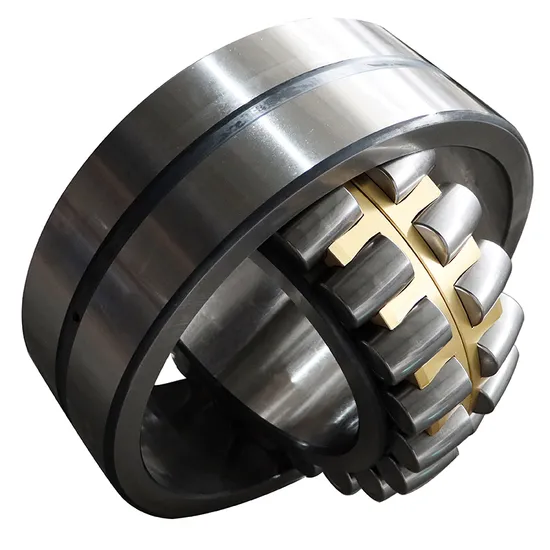
Move to the cage. The cage is one of the most difficult components for counterfeiters to replicate accurately. Genuine TIMKEN cages—whether steel, brass, or polymer—show consistent rivet head formation, uniform pocket geometry, and clean edges with no burrs. Counterfeit cages often have visible tooling marks, uneven rivet heads, or slightly misaligned pockets that affect roller guidance. Under magnification, the difference in surface finish becomes immediately apparent.
The grease inside the bearing is another telling indicator. Authentic TIMKEN bearings are filled with factory-original lubricant that has a specific color, consistency, and odor profile. Counterfeit bearings are often repacked with generic grease that may appear darker, have a different texture, or emit a chemical smell inconsistent with the manufacturer’s specifications. If the grease looks or smells wrong, the bearing is suspect regardless of how the exterior appears.
For buyers receiving large orders, investing in a portable profilometer or a digital microscope for incoming inspection pays for itself quickly. These tools allow you to document marking depth, cage surface finish, and grease characteristics with objective data rather than subjective visual judgment.
How to Trace TIMKEN Bearing Batch Numbers and Prove Authenticity?
Batch number traceability is the final verification line—if the number cannot be traced through the manufacturer’s system, the bearing’s authenticity remains unproven regardless of all other checks.
TIMKEN batch numbers follow a structured format that encodes production date, facility, and product line information. Understanding this format allows you to perform a preliminary validation before even contacting the manufacturer’s support team. The batch number is typically laser-etched on the outer ring and should match the number printed on the individual box label and the master carton.
If any of these three locations show mismatched batch numbers, the product has been repackaged or relabeled. I encountered a shipment in Dubai where the individual boxes carried one batch number, the master carton carried another, and neither matched the etching on the bearings themselves. The supplier claimed it was a "repacking error," but the reality was that the bearings had been sourced from multiple unknown origins and assembled into a single order.
To verify a batch number, submit it through the manufacturer’s official traceability channel. Provide the complete bearing part number, the batch number, and the quantity in question. A genuine product will return a confirmation with production details. A counterfeit or unverifiable product will either return no result or a mismatch in product specification [NEED_CITE: TIMKEN batch code format structure and traceability system query procedure].
Beyond the batch number itself, verify the logistics chain consistency. The shipping documents—commercial invoice, packing list, bill of lading—should reflect a coherent route from the manufacturer’s region to your destination. If the documents show the goods originated from a country or port that does not align with the manufacturer’s known production and distribution footprint, investigate further.
What Should You Do If You Suspect Counterfeit TIMKEN Bearings?
Isolate the suspected stock immediately, document everything, and initiate a formal verification process before contacting the supplier.
The moment you suspect a batch is counterfeit, quarantine it. Do not install any units, do not mix them with verified stock, and do not return them to the supplier without documentation. Photograph every bearing, every box, and every carton label. Record the batch numbers, take close-up images of the laser marking and cage details, and preserve the original packaging intact.
Next, engage an independent third-party testing laboratory. Organizations accredited in metallurgical analysis and bearing inspection can perform material composition testing, hardness verification, and dimensional accuracy checks that go beyond what visual inspection can reveal. The test report becomes your primary evidence if a dispute arises with the supplier [NEED_CITE: independent bearing testing laboratory accreditation standards and metallurgical analysis methodology].
Simultaneously, submit a formal inquiry to the manufacturer’s anti-counterfeiting team. Provide your photographs, batch numbers, and the third-party test report. The manufacturer can confirm whether the product originated from their facilities and, if confirmed counterfeit, may offer guidance on legal recourse and supply chain investigation.
For buyers who discover counterfeits after installation, the situation is more complex. Document the failure in detail—photographs of the damaged bearing, operating conditions at the time of failure, and maintenance records. Cross-reference the failure mode against established damage classification standards to build a technical case that the failure resulted from product quality issues rather than operational misuse [NEED_CITE: ISO 15243 rolling bearing damage modes and failure cause identification guidelines].
When working with a sourcing partner who maintains direct authorization channels and can provide complete documentation for every shipment, the risk of encountering counterfeits drops significantly. A supplier who proactively offers batch traceability, pre-shipment inspection photos, and third-party testing support demonstrates a commitment to authenticity that protects your operation end to end.
Conclusion
Buying genuine TIMKEN bearings is a chain of verification, not a single checkpoint. Counterfeit packaging has become too sophisticated for visual checks alone, authorization must be confirmed through both official listings and direct regional contact, physical inspection requires attention to laser marking, cage quality, and grease condition, and batch traceability serves as the definitive proof of origin. When any link in this chain is weak, the entire order is at risk. Build your procurement process around full-chain verification, and the cost of a single counterfeit incident becomes a cost you never have to absorb.