
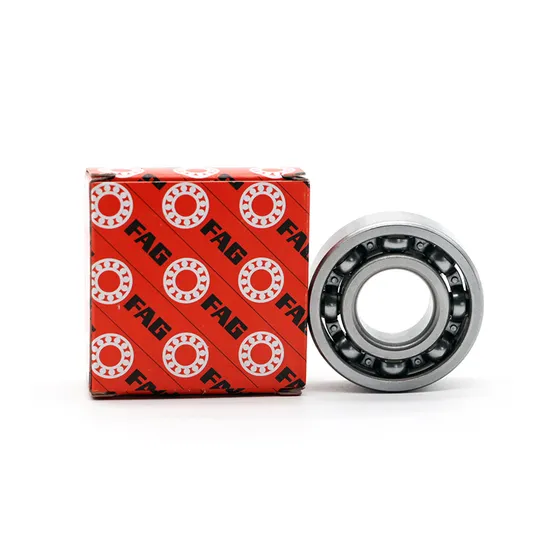
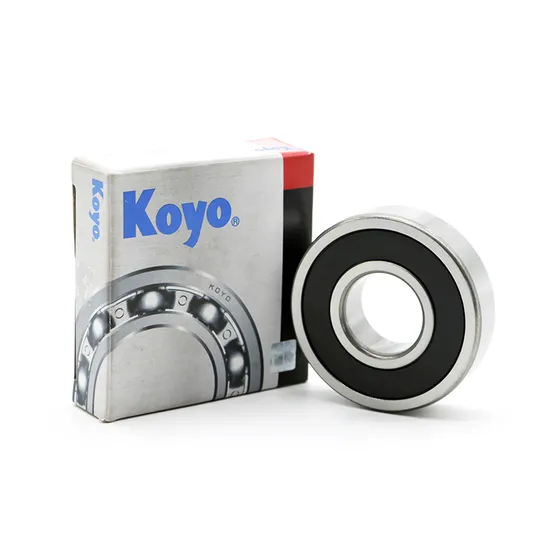
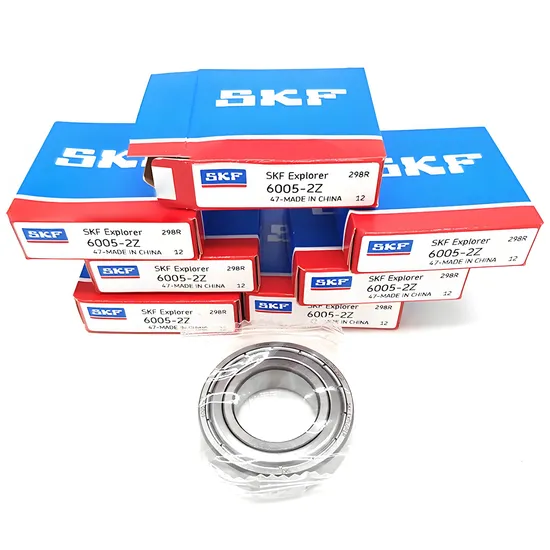
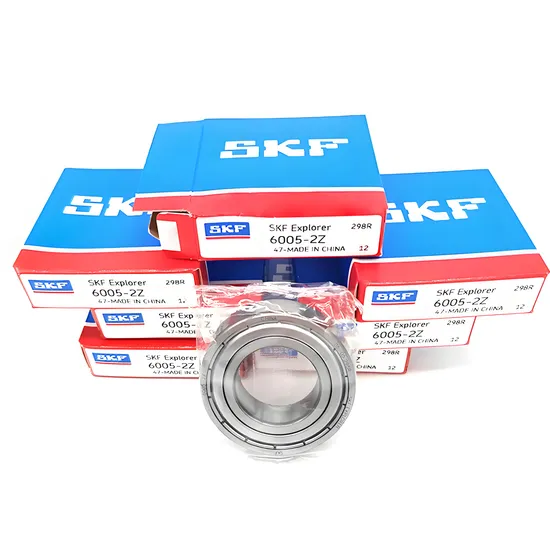
FAG Made in Germany Authenticity Guide Wholesale Supplier
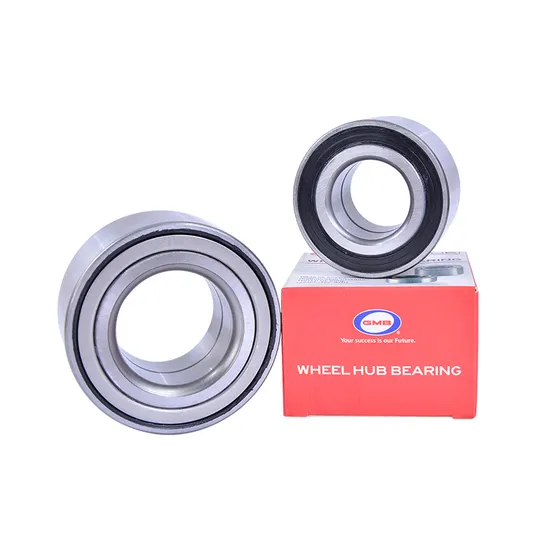
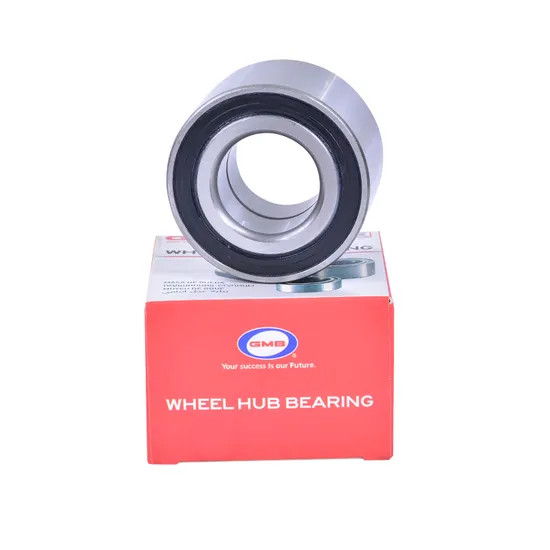
A flawless box does not guarantee a genuine bearing inside. Counterfeiters routinely harvest discarded authentic packaging from industrial sites and repackage inferior replicas, making visual inspection of outer cartons nearly useless for verification.
To verify genuine FAG bearings, cross-check three independent dimensions: laser marking depth uniformity on the inner ring, cage rivet edge finish under magnification, and seal font alignment against the manufacturer’s tolerance standard — then confirm the origin code stamped on the inner ring against the official factory registry. Relying on packaging alone is the single most common sourcing mistake.
I still remember a Las Vegas trade show years ago. A procurement manager from a copper mining operation in Chile handed me a sealed FAG spherical roller bearing and asked point-blank whether it came from the Schweinfurt plant or was a relabeled unit from an Asian subcontractor. Back then, I had only recently transitioned from quality inspection at a domestic import bearing warehouse into trading. I could spot a misaligned seal font by feel, but I could not yet decode the origin stamping system with confidence. That conversation pushed me to systematically study the authentication markers across every major brand we handle. Today, when buyers ask me to confirm origin, I walk through a repeatable verification sequence rather than guess from the label. [NEED_CITE: root cause distribution of bearing failures linked to counterfeit products per industry field studies]
Let me walk you through the verification dimensions that actually separate authentic units from sophisticated counterfeits.
How to Check FAG Laser Marking Depth?
Genuine FAG laser markings exhibit consistent depth across the entire character string, with no visible tapering at stroke endpoints and no micro-splatter along the groove edges. The laser etching process used at authorized production facilities produces a controlled ablation pattern that feels smooth to the fingernail test — you can sense the groove but cannot catch a sharp ridge.
The verification principle is straightforward: industrial laser systems operating within calibrated parameters leave a uniform thermal signature, while handheld or lower-grade marking equipment produces irregular energy distribution. [NEED_CITE: laser marking quality parameters per ISO surface texturing standards]
Here is the step-by-step field check I teach buyers:
- Clean the inner ring bore surface with isopropyl alcohol to remove grease residue that can mask depth irregularities.
- Tilt the bearing under a focused LED light source at roughly forty-five degrees to create shadow contrast inside the character grooves.
- Run a clean fingernail perpendicular across each character — authentic markings register as a smooth, continuous depression; counterfeit markings often show catch points where the beam intensity fluctuated.
- If available, use a portable digital depth gauge to compare readings across multiple characters within the same marking string. Consistent readings across the full string indicate controlled-process equipment.
- Examine the transition zone between the marked area and the untreated surface under magnification. Genuine laser work shows a gradual thermal gradient; counterfeit work often shows an abrupt boundary with micro-chipping.
A European distributor once sent me a batch of FAG deep groove units purchased from a secondary market source. The outer packaging looked pristine — holographic seals, barcodes, even the correct PPE warning text. But under the loupe, the laser marking on the inner ring showed a noticeably uneven groove depth, and the character spacing drifted slightly toward the end of the string. The counterfeiter had used a lower-cost marking head that could not maintain beam focus across the full character width. [NEED_CITE: common counterfeit bearing marking defects documented by industry authentication programs]
The takeaway: laser marking is the first line of defense because it is the hardest feature to replicate at scale without industrial-grade equipment. If the depth fails this check, stop the verification and reject the batch — there is no point examining further details on a unit that already fails the most fundamental authenticity marker.
What Do FAG Origin Codes Mean?
The alphanumeric code stamped on the inner ring bore identifies the specific manufacturing facility, and cross-referencing this code against the official registry confirms whether the claimed country of origin is physically possible for that production batch. Many buyers assume that "Made in Germany" on the outer box means the bearing was produced in Schweinfurt. The reality is more nuanced: the manufacturer operates production facilities across multiple continents, and each facility uses a distinct origin code prefix.
Understanding this system matters because counterfeiters often print generic "Made in Germany" text on packaging while the actual product — if it is a bearing at all — may originate from uncontrolled workshops with no traceable production lineage. [NEED_CITE: FAG global manufacturing facility locations and corresponding origin code assignments per official documentation]
The verification workflow I follow:
- Locate the origin code on the inner ring, typically positioned adjacent to the main part number.
- Record the full code string including any prefix letters and suffix indicators.
- Cross-reference the code against the current factory registry to identify the claimed production site.
- Compare the identified facility against the origin statement on the outer packaging and any accompanying certificate of conformity.
- Flag any mismatch between the physical stamp and the documentation as a rejection trigger.
At a Chicago exhibition, a maintenance director from a large aggregates producer showed me a set of spherical roller bearings he had received from a new vendor. The outer cartons stated "Made in Germany" in clean typography. But the inner ring origin code pointed to a facility in South America — which, by itself, is not suspicious since the manufacturer does operate plants there. The problem was that the vendor’s documentation claimed Schweinfurt origin exclusively. The code and the paperwork contradicted each other. Further inspection revealed that the cage rivet edges showed stamping artifacts inconsistent with the finishing standards of any authorized facility. The entire lot was relabeled stock of uncertain provenance.
Buyers who source through authorized channels receive documentation that aligns with the physical stamps. When you work with a FAG authenticity guide wholesale supplier who maintains direct relationships with tier-one distribution networks, the origin code verification becomes a confirmation step rather than a discovery step — which is exactly how it should function in a mature procurement process.
Why Does Seal Font Position Matter?
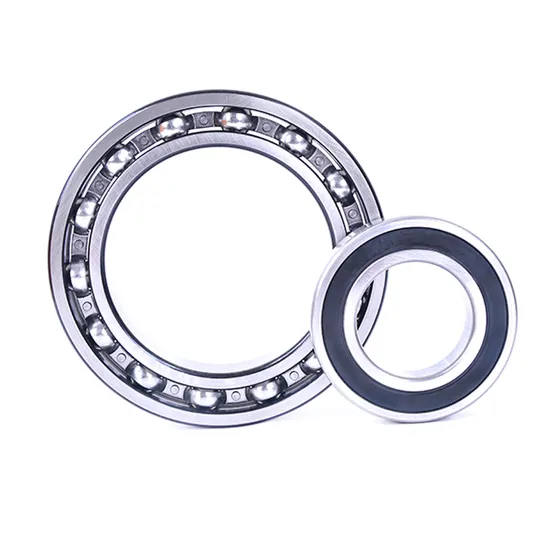
The font positioning on the bearing seal follows strict tooling alignment standards, and any lateral displacement beyond the acceptable tolerance window is a strong indicator of aftermarket resealing or outright counterfeit production. This is one of the most underrated verification dimensions because most buyers never look at the seal closely enough to notice the deviation.
The seal is a rubber or polymer component molded in a precision tool. During original production, the text is either molded into the seal surface during vulcanization or applied through a controlled secondary printing process. Both methods produce characters that sit squarely within defined positional boundaries relative to the seal geometry. [NEED_CITE: seal marking positional tolerance standards per bearing manufacturing specifications]
When counterfeiters attempt to replicate sealed bearings, they face a fundamental challenge: they cannot easily reproduce the original molding tool. Their options are limited to aftermarket printing on generic seals or fabricating entirely new seals with crude tooling. Both approaches introduce positional errors that are detectable under close inspection.
Field verification approach:
- Visually inspect the seal text from a perpendicular angle under consistent lighting.
- Check whether the characters are centered relative to the seal land width on both sides of the bearing.
- Look for uniform spacing between characters and consistent baseline alignment across the full text string.
- Compare the font weight and style against a known authentic reference unit of the same series.
- Note any blurring, ink bleeding, or characters that appear to sit on the surface rather than being integrated into the seal material.
I encountered a revealing case while assisting a Middle East steel mill with a large replacement order. The buyer had received a shipment from an unfamiliar source at a price that seemed attractive. During incoming inspection, one of their technicians noticed that the seal font on several units appeared shifted slightly toward one edge. On its own, a minor shift might be dismissed as normal production variation. But when we lined up a dozen units side by side, the shift direction was identical across every single seal — which is statistically impossible in genuine production, where tooling wear causes random drift patterns rather than uniform displacement. The seals had all been printed using the same misaligned aftermarket fixture. The entire shipment was rejected.
Seal inspection takes seconds per unit and requires no special equipment. It belongs in every incoming quality protocol for critical bearing applications.
How to Verify Cage Rivet Craftsmanship?
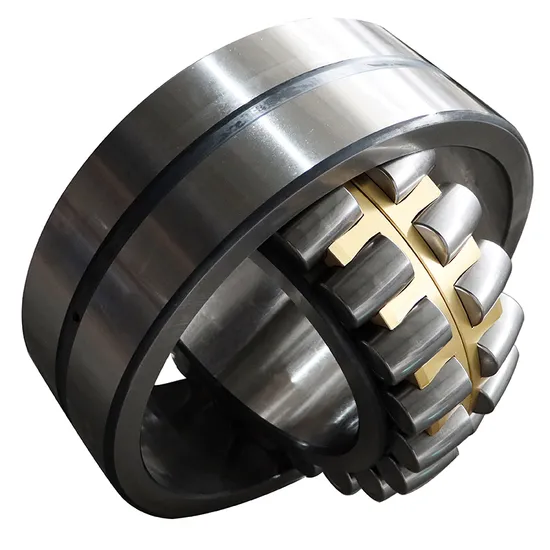
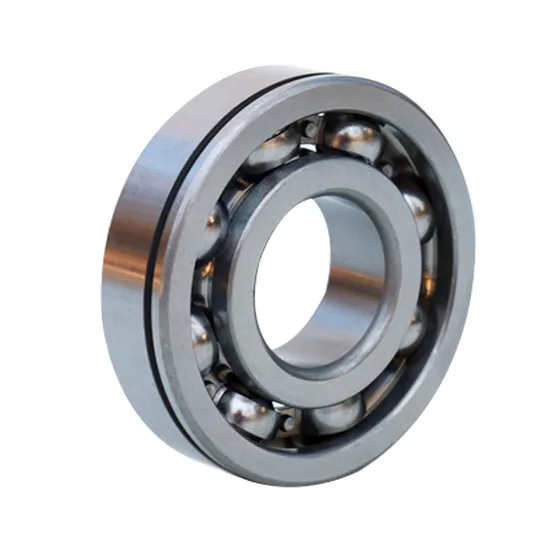
The cage rivet edges on genuine FAG bearings are finished to a smooth, burr-free condition through controlled forming processes, while counterfeit units frequently exhibit rough stamping artifacts, inconsistent head profiles, or visible micro-cracks at the rivet-to-cage junction. The cage is a load-bearing structural component, and its manufacturing quality directly influences bearing performance under operational stress.
Authorized production facilities use precision stamping and finishing equipment that produces rivet heads with uniform geometry and clean edge transitions. The process parameters — force, die alignment, material feed — are tightly controlled. Counterfeit workshops lack this equipment ecosystem, and their riveting operations produce visibly inferior results even to the untrained eye once you know what to look for. [NEED_CITE: cage manufacturing quality requirements per bearing industry standards]
Inspection sequence:
- Examine each rivet head under magnification, checking for symmetry and surface finish consistency.
- Run a fingernail or blunt probe around the rivet edge perimeter — genuine rivets feel smooth; counterfeit rivets often catch due to burrs or micro-flashing.
- Check the interface between the rivet head and the cage pocket for gaps, micro-cracks, or deformation that suggests incomplete forming.
- Compare rivet spacing and alignment across the full cage circumference — genuine cages show uniform pitch; counterfeit cages may show irregular spacing due to imprecise tooling.
- If the cage is machined rather than stamped, inspect the cutting edges for tool marks consistent with precision machining versus rough milling artifacts.
A South American distributor brought me a sample set of tapered roller bearings that they suspected were non-genuine. The outer packaging was convincing. The laser markings looked acceptable at first glance. But the cage rivets told a different story. Under magnification, several rivet heads showed asymmetric deformation — one side of the head was slightly flattened while the other retained a sharper profile. This pattern indicated that the riveting die was misaligned, a defect that would be caught immediately in any controlled production environment. The cage material itself also felt lighter and showed a different surface grain than authentic units. The buyer avoided a substantial loss by catching this before the bearings entered service in heavy-duty conveyor applications.
Cage craftsmanship is a reliable authenticity indicator because it reflects the overall manufacturing capability of the production source. A facility that cannot produce clean cage rivets almost certainly cannot produce bearings that meet the performance standards expected under the brand name.
Where to Source Verified Genuine FAG?
The most reliable path to verified genuine FAG bearings is through authorized distribution channels that maintain documented chain-of-custody records from the manufacturer to the end buyer, combined with proactive origin code verification support at the point of sale. Authentication should not be a burden that falls entirely on the buyer after delivery — it should be integrated into the sourcing process from the initial inquiry.
When you engage a FAG authenticity guide wholesale supplier with established relationships across the global distribution network, several verification advantages come into play automatically:
- Origin code documentation is provided proactively with each shipment, allowing you to cross-check physical stamps against factory records before the goods enter your warehouse.
- Cross-reference support ensures that if your specified brand or model faces availability constraints, you receive validated interchange recommendations across the full portfolio of major manufacturers rather than unverified substitutions.
- Batch traceability information is maintained, enabling you to confirm production dates and facility assignments against your application requirements.
- Technical selection guidance helps you match bearing specifications to actual operating conditions, reducing the risk of premature failure due to specification mismatch — which is a separate but equally common source of operational loss.
The counterfeit bearing market continues to evolve in sophistication. Packaging replication has improved. Laser marking equipment has become more accessible. But the fundamental manufacturing quality gaps — in cage finishing, seal tooling precision, and origin code consistency — remain difficult for counterfeiters to close across large production volumes. The verification methods outlined above work because they target these persistent gaps.
Building a sourcing relationship with a supplier who treats authentication as a standard operating procedure — rather than an afterthought — transforms your procurement from a risk management exercise into a confidence-driven process. You spend less time inspecting for defects and more time deploying bearings that perform as engineered.
Conclusion
Authentic FAG bearing verification rests on physical manufacturing markers, not packaging appearance. Laser marking depth uniformity, cage rivet edge finish, seal font alignment, and origin code consistency form a cross-checkable matrix that exposes counterfeits regardless of how convincingly their outer packaging replicates the genuine article. Source through channels that provide proactive documentation and traceability, and treat authentication as an integrated procurement step rather than a post-delivery inspection chore.