
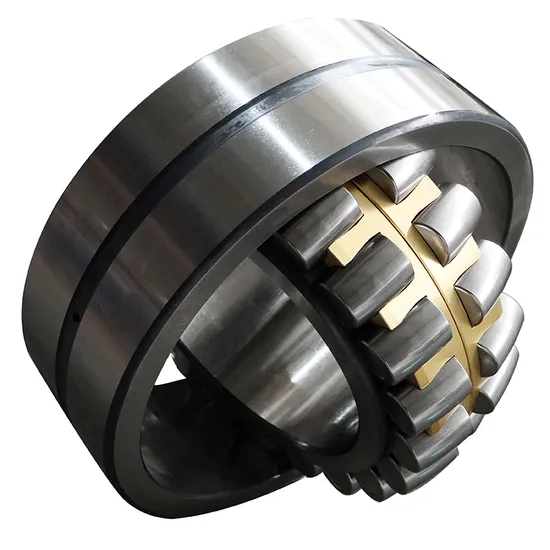
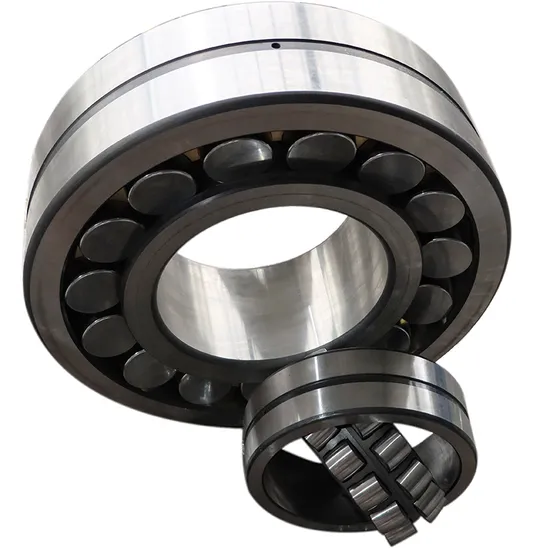
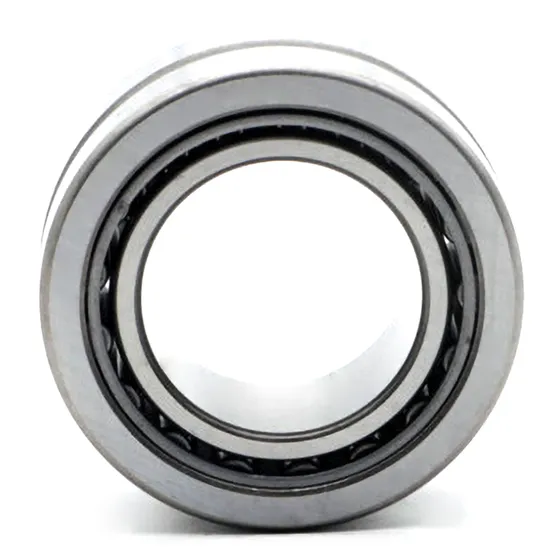
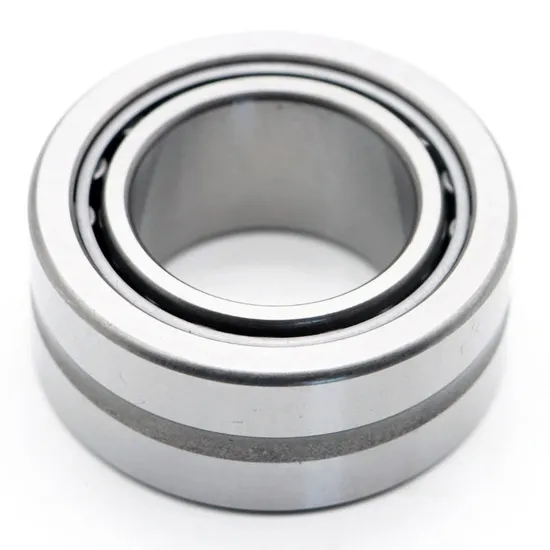
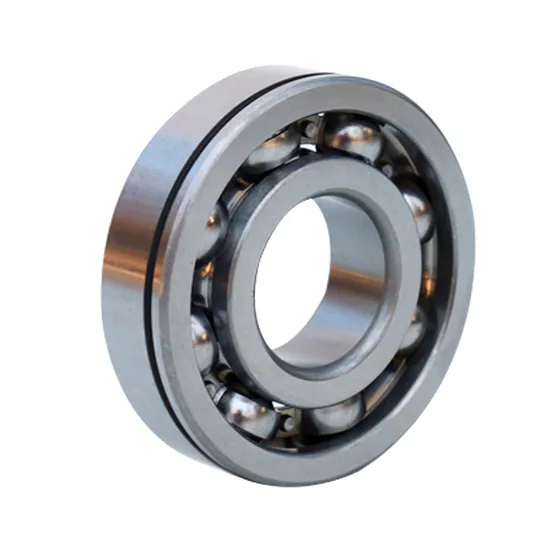
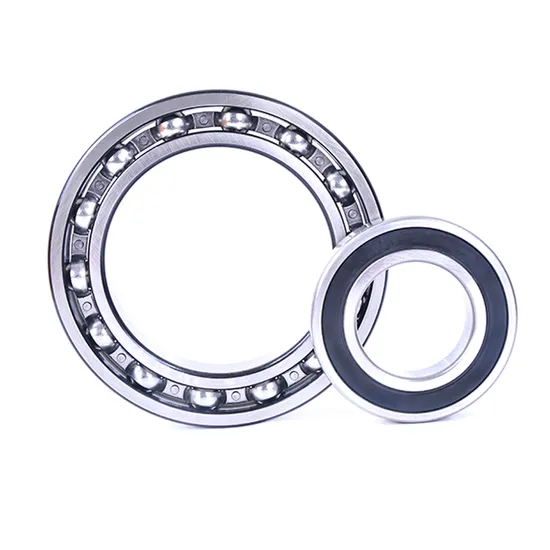
Thrust Roller Bearing for Agricultural Machinery Wholesale Supplier
Bigger is not always better when it comes to axial load capacity in tight agricultural housings.
Selecting the correct thrust roller bearing for agricultural machinery requires prioritizing cage material strength and precise space envelope matching over simply choosing the largest available size to handle shock loads. Proper sizing prevents edge loading and misalignment, which are the primary causes of premature failure in high-dust, high-vibration environments like harvesters and tillers.
I still remember the humidity in the Qingdao port warehouse, stacking crates for a shipment bound for the Middle East. It was a routine order of thrust roller bearings for combine harvesters, but the feedback that came back months later was anything but routine. The client reported widespread cage cracking across an entire batch. At first glance, it looked like a simple overload issue, but digging into the production records revealed a subtle inconsistency in the heat treatment temperature control during manufacturing. That incident shifted my entire approach to technical validation. I stopped looking at bearings as just steel rings and started viewing them as integrated systems where material consistency, cage design, and housing fit are equally critical. [NEED_CITE: common failure modes in agricultural thrust bearings per ISO 15243]
Understanding these nuances is essential for anyone sourcing components for heavy-duty farm equipment. Let’s break down why standard selection methods often fail in the field and how to get it right.
Why Do Thrust Roller Bearings Fail in Agricultural Gearboxes?
Misalignment and shock loads are the primary killers, not just fatigue from continuous operation.
Agricultural machinery operates in some of the harshest conditions imaginable. Unlike industrial fans or pumps that run at steady speeds, a harvester or tiller experiences violent, unpredictable shock loads every time it hits a rock or uneven terrain. Many engineers assume that if a bearing has a high dynamic load rating, it will survive. However, the real weakness often lies in the cage.
In high-vibration environments, the cage must guide the rollers precisely while withstanding significant inertial forces. Standard stamped steel cages may deform under repeated shock, leading to roller skewing and eventual seizure. I have seen cases where reinforced brass or machined steel cages were necessary to maintain integrity, even though the basic load calculations suggested a lighter design would suffice. [NEED_CITE: impact of vibration on bearing cage integrity in heavy equipment]
Furthermore, dust infiltration is a silent destroyer. In sandy conditions, such as those found in many planting operations, open bearings can fail rapidly if the sealing solution is inadequate. The ratio of maintenance intervals drops significantly when fine particulate matter enters the raceway, acting as an abrasive paste. Choosing a sealed thrust roller bearing for agricultural machinery applications where dust is prevalent can extend service life meaningfully, but it requires careful consideration of the seal material’s compatibility with agricultural chemicals and extreme temperatures.
The key takeaway is that durability in agriculture is less about raw steel hardness and more about system resilience against shock and contamination.
How to Calculate the Right Size for Limited Space?
Balance axial capacity with housing constraints to avoid edge stress and misalignment.
A common misconception among buyers is that upsizing a bearing automatically increases reliability. In the confined spaces of agricultural gearboxes, this logic often backfires. An oversized thrust roller bearing may not sit flush against the housing shoulders, leading to misalignment. When the bearing is not perfectly perpendicular to the shaft, the rollers experience edge loading, concentrating stress on a small area of the raceway rather than distributing it evenly.
To select the correct size, you must calculate the equivalent dynamic axial load, factoring in shock coefficients specific to the application. For instance, a planter unit might have a lower average load than a harvester gearbox, but the shock factor could be higher due to ground engagement. [NEED_CITE: methodology for calculating equivalent dynamic load with shock factors]
| Selection Factor | Standard Approach | Optimized Agricultural Approach |
|---|---|---|
| Load Calculation | Basic static load rating | Dynamic load with high shock factor multiplier |
| Space Envelope | Maximize bearing outer diameter | Strict adherence to housing shoulder constraints |
| Alignment Tolerance | General industrial tolerance | Micron-level precision for perpendicularity |
| Cage Material | Standard stamped steel | Reinforced brass or machined steel for shock resistance |
This table highlights the shift in thinking required for agricultural applications. Notice how the focus moves from simple load ratings to dynamic factors and physical constraints. When I review specifications for OEMs, I always check the housing drawings first. If the housing bore or shoulder depth does not allow for perfect seating, no amount of bearing quality will prevent premature failure.
Ensuring that the bearing fits the space exactly, rather than forcing a larger component into a tight spot, is crucial for long-term performance.
What Material Specs Matter for Dusty Environments?
Cage integrity and seal compatibility outweigh raw steel hardness in dusty conditions.
While high-carbon chromium steel is the standard for bearing rings, the materials used for cages and seals determine survival in dusty, chemically aggressive environments. Agricultural machinery is often exposed to fertilizers, pesticides, and fine soil particles. These substances can degrade standard rubber seals and corrode weaker cage materials.
For thrust roller bearings used in planters and tillers, I recommend specifying cages made from materials with high tensile strength and good wear resistance. Machined brass cages, for example, offer better guidance and shock absorption than stamped steel in high-vibration scenarios. Additionally, the seal material must be compatible with both the lubricant and the external contaminants. Nitrile rubber is common, but in extreme chemical environments, fluoroelastomer seals may be necessary to prevent swelling and hardening. [NEED_CITE: chemical compatibility of seal materials in agricultural environments]
Another critical aspect is lubrication viscosity. Agricultural applications often involve slow speeds but very high loads. Using a lubricant with too low viscosity can lead to metal-to-metal contact, while too high viscosity can cause churning losses and heat buildup. The right grease must adhere well to the raceways and resist being washed out by water or mud.
Focusing on these secondary material specs ensures that the bearing system remains intact even when the primary steel components are performing within their limits.
How to Verify Quality Before Bulk Procurement?
Demand batch-specific heat treatment records and dimensional checks over single-sample testing.
Trust but verify is the golden rule in global sourcing. Relying on a single certificate of conformity for an entire container is risky. As I learned from the Middle East incident, batch consistency is paramount. Heat treatment is a critical process that affects the core toughness and surface hardness of the bearing steel. Variations in temperature or quenching speed can create weak spots that only reveal themselves under field conditions.
When procuring a thrust roller bearing for agricultural machinery wholesale supplier orders, request traceability documentation that links each batch to its specific production parameters. This includes records of heat treatment cycles, grinding precision checks, and final assembly inspections. [NEED_CITE: importance of batch traceability in bearing quality assurance]
Additionally, perform random dimensional checks on received goods. Verify the perpendicularity of the washer faces and the uniformity of roller dimensions. Even minor deviations can lead to the misalignment issues discussed earlier. For urgent OEM projects, having a supplier who can provide mixed-brand consolidation with full documentation is invaluable. It allows you to source different components from various premium brands while maintaining a single point of accountability for quality and traceability.
This level of scrutiny ensures that what arrives at your dock matches the engineering specifications required for reliable field performance.
Conclusion
Proper selection hinges on matching cage strength and space constraints to real-world shock loads.
Avoid the trap of oversizing bearings in tight agricultural housings, as this leads to misalignment and edge loading. Prioritize cage material integrity and seal compatibility to withstand dust and vibration. Always verify batch consistency through detailed traceability documentation to ensure reliable performance in demanding farming operations.