KOYO & SKF Motorcycle Aftermarket Bearings: Cross-Reference & Wholesale Guide
Most buyers assume same-dimension bearings from different brands drop straight into the same hub. They do not — not when cage geometry, seal lip profile, and grease fill differ at high RPM.
KOYO and SKF deep groove ball bearings in standard motorcycle sizes (6205, 6206, 6305) share identical boundary dimensions per ISO 15 and can be interchanged mechanically, but their internal designs — cage type, seal construction, and grease specification — create meaningful performance differences in wheel, crankshaft, and gearbox applications. Wholesale buyers must match cross-reference data with seal and cage requirements, verify origin documentation, and align brand declarations on commercial invoices to avoid customs holds.
I once watched a full container of mixed 6205 and 6206 bearings get detained at a Southeast Asian port. The commercial invoice declared one brand; the cartons inside carried another. No cross-reference note, no substitution letter, nothing. The buyer’s mechanics opened the boxes, saw different cage structures and seal colors, flagged the entire shipment as counterfeit, and the cargo sat in customs for weeks. That kind of mistake does not just cost freight — it burns distributor credibility with repair shop chains that depend on consistent supply.
The KOYO SKF motorcycle bearings interchange is not a simple model-number swap. It requires understanding what sits behind the suffix codes, where each factory sources its steel, and how to document substitutions so customs officers and end users both accept the shipment. [NEED_CITE: ISO 15 boundary dimension standards for deep groove ball bearings]
Let me walk through the interchange logic, the verification steps, and the documentation discipline that keeps containers moving.
Can KOYO and SKF Motorcycle Bearings Be Directly Interchanged?
Mechanically yes, functionally it depends on the application.
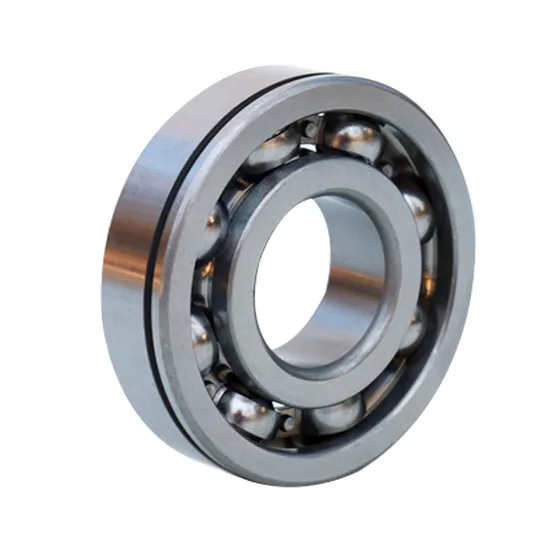
Both KOYO (now part of JTEKT) and SKF manufacture deep groove ball bearings to ISO 15 dimensional standards. A 6205 from either brand will physically fit a shaft and housing designed for that size. The outer diameter, width, and bore are identical. [NEED_CITE: ISO 15 radial bearing boundary dimensions]
Where the interchange gets complicated is inside the bearing.
The cage design differs. KOYO frequently uses stamped steel cages in standard motorcycle applications, while SKF often specifies polyamide (PA66) cages with glass fiber reinforcement in sealed variants. Stamped steel cages tolerate higher temperatures but generate slightly more noise at elevated RPM. Polyamide cages run quieter and lighter but have lower thermal ceilings. In a motorcycle wheel hub that sees continuous braking heat, this difference matters. [NEED_CITE: cage material thermal limits per bearing manufacturer specifications]
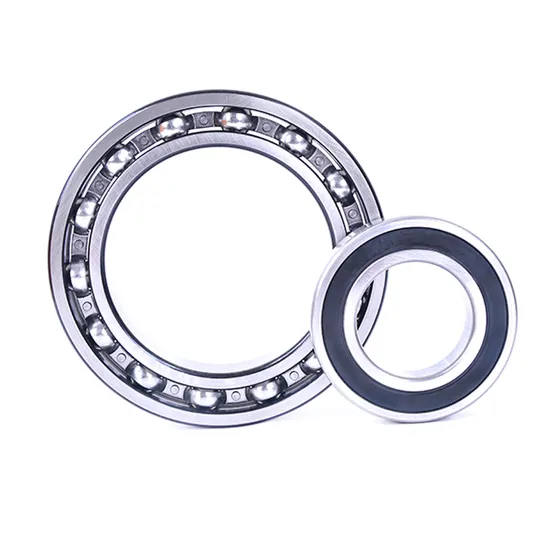
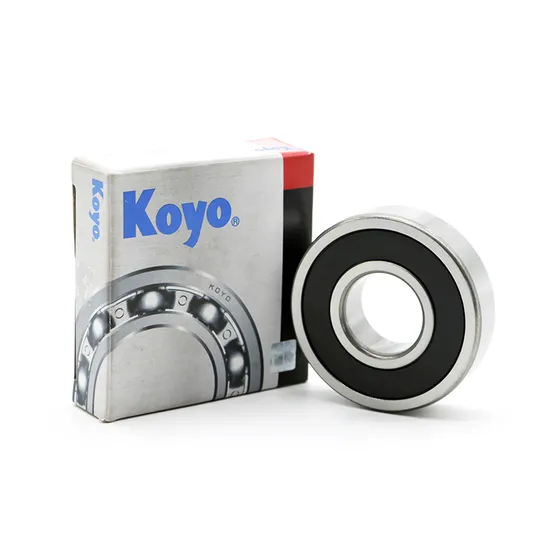
The seal construction also varies. Both brands offer 2RS (double contact rubber seal) and ZZ (metal shield) variants, but the seal lip geometry and grease fill are proprietary. A KOYO 6205-2RS and an SKF 6205-2RS will both keep water and dust out, but the friction torque and grease life differ. In a front wheel application where low rolling resistance matters, one brand may outlast the other depending on riding conditions.
For crankshaft and gearbox applications where rotational speed is highest, the internal clearance (C2, C3, C4) becomes critical. Both brands offer these clearance classes, but the default stock clearance may differ between factories. A buyer who substitutes KOYO for SKF without checking the suffix code for clearance designation risks premature failure from thermal expansion in a tight-fitting gearbox housing.
The bottom line: boundary dimensions guarantee fit, but suffix codes determine whether the bearing survives the application.
KOYO to SKF Cross-Reference Chart: Common Motorcycle Sizes
The cross-reference is straightforward for basic model numbers, but suffix alignment requires line-by-line verification.
Below is a working interchange matrix for the three most common deep groove ball bearing sizes found in motorcycle wheel hubs, crankshafts, and transmissions across Asian, Latin American, and African markets.
| Basic Size | KOYO Model | SKF Model | Seal Type | Cage Type | Clearance |
|---|---|---|---|---|---|
| 6205 | 6205 | 6205 | 2RS / ZZ | Stamped Steel / PA66 | C3 standard |
| 6206 | 6206 | 6206 | 2RS / ZZ | Stamped Steel / PA66 | C3 standard |
| 6305 | 6305 | 6305 | 2RS / ZZ | Stamped Steel / PA66 | C3 standard |
The basic numbers match exactly. The interchange work happens in the suffix.
KOYO’s seal suffix for double contact rubber seal is typically "DDU" or "2RS" depending on the catalog version, while SKF uses "2RSH" or "2RS1" for similar designs. These are not always drop-in equivalents in terms of seal lip pressure and grease retention. [NEED_CITE: bearing seal designation cross-reference between major manufacturers]
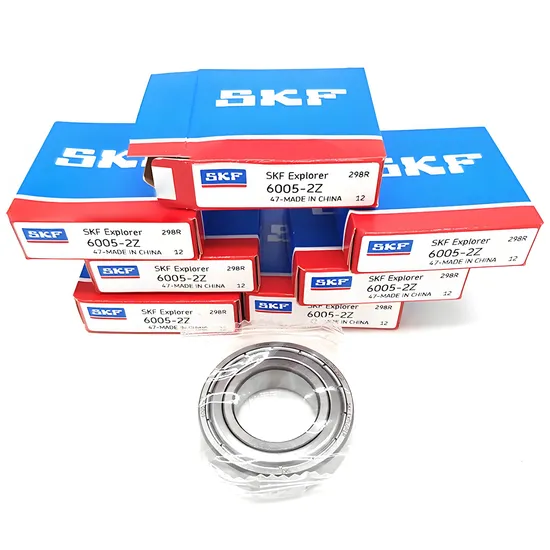
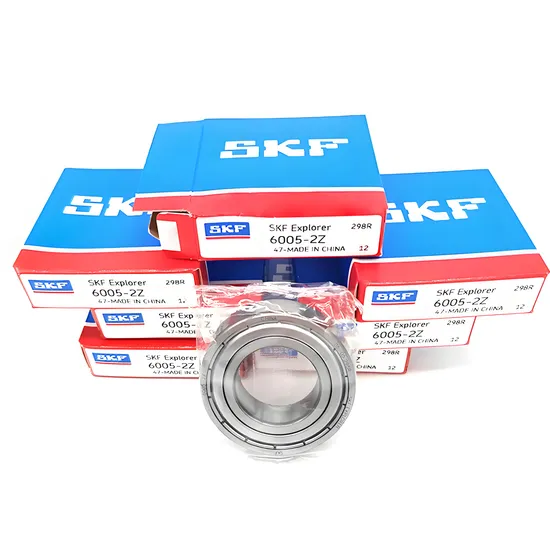
For shielded variants, KOYO uses "ZZ" while SKF may use "2Z" in certain catalog editions. Functionally equivalent, but a buyer reading a purchase order that says "ZZ" needs to confirm the supplier’s SKU maps correctly.
Cage designations also differ. KOYO may mark stamped steel cages with no suffix (default) or specific codes for polyamide variants. SKF uses "TN9" or similar suffixes for polyamide cages. When a repair chain specifies "SKF 6205-2RSH TN9" and the supplier offers KOYO 6205-DDU as a substitute, the cage material must be confirmed — not assumed.
The complete KOYO SKF motorcycle bearings interchange list includes tapered roller bearings for steering head applications and needle roller bearings for gearbox shafts, where the suffix logic becomes even more brand-specific. I keep a full cross-reference matrix available for wholesale buyers who need to map their existing SKF or KOYO SKUs to interchangeable alternatives without breaking their purchasing specs.
How to Verify Genuine KOYO and SKF Bearings in Wholesale Batches
Counterfeit bearings in the motorcycle aftermarket are not a theoretical risk — they are a routine problem in markets where price pressure outweighs documentation discipline.
The verification process has three layers: channel authorization, physical marking inspection, and origin document tracing.
Channel authorization is the first filter. Both KOYO (JTEKT) and SKF maintain authorized distributor networks. A wholesale buyer should request the supplier’s authorization certificate and verify it against the brand’s official distributor list. [NEED_CITE: SKF and KOYO authorized distributor verification procedures] If a supplier cannot produce current authorization, the entire batch carries elevated risk.
Physical marking inspection catches the most obvious fakes. Genuine SKF bearings carry laser-etched branding on the outer ring face, including the SKF logo, country of origin, and production batch code. The font is precise and consistent. Counterfeit markings often show slight font irregularities, uneven depth, or incorrect country codes. KOYO bearings similarly carry the JTEKT or KOYO logo with specific font standards. The seal color and material should also match the brand’s current specification — fakes often use incorrect rubber compounds that appear visually different under close inspection.
Origin document tracing is where many wholesale deals fail. A genuine bearing from an authorized factory in Japan, China, or Poland will have traceable mill certificates, export declarations, and batch numbers that link back to production records. When a supplier offers KOYO SKF motorcycle bearings interchange stock at prices significantly below market, the origin documentation usually reveals the problem — either missing entirely, or showing a country of origin inconsistent with the brand’s known production facilities for that model.
I have seen batches where the outer packaging looked perfect, the bearings were individually boxed in brand-colored cartons, and the laser marks appeared correct — but the inner grease was wrong viscosity and the cage material was stamped steel where the specification called for polyamide. These are high-quality counterfeits that only fail under sustained load, which means the distributor only discovers the problem after repair shops start getting warranty returns.
A practical verification workflow for wholesale buyers:
- Request authorization certificate from the supplier and cross-check with the brand’s official channel list
- Pull random samples from at least three cartons per batch and inspect laser marking font consistency
- Verify country of origin on the bearing matches the documentation provided
- Check seal color and material against known brand specifications for that model and suffix
- Confirm batch codes are present and legible on every bearing, not just the packaging
Documentation Compliance for Brand Substitution in Cross-Border Trade
The cross-reference must appear on the commercial invoice, packing list, and certificate of origin — or the shipment risks customs detention.
This is the lesson from the port detention I mentioned earlier, and it applies to every market with active motorcycle aftermarket import.
When a buyer orders SKF 6205-2RSH and the supplier ships KOYO 6205-DDU as an interchangeable equivalent, the commercial invoice cannot simply list "SKF 6205." Customs officers in many markets check physical goods against declared brands. If the boxes say KOYO and the invoice says SKF, the shipment gets flagged for misdeclaration. The consequences range from inspection delays to outright rejection and fines.
The correct approach is to declare the actual brand being shipped and include a cross-reference note. The invoice line should read something like "KOYO 6205-DDU (interchangeable with SKF 6205-2RSH per ISO 15 boundary dimensions)." The packing list should match. If a certificate of origin is required, it must reference the actual manufacturer — not the brand being substituted.
HS code classification also needs attention. Deep groove ball bearings fall under HS 8482.10, and the code is the same regardless of brand. But some customs authorities require brand declaration on the entry form, and inconsistency between form and physical goods triggers inspection. [NEED_CITE: HS code classification for deep groove ball bearings under 8482.10]
For wholesale buyers who regularly alternate between KOYO and SKF based on availability and pricing, building a standard cross-reference appendix into their purchase agreements prevents this problem entirely. The appendix lists accepted substitutions, specifies that the actual shipped brand will be declared on all shipping documents, and confirms that dimensional and performance equivalence meets ISO standards.
Application-Based Selection: Wheel Hub, Crankshaft, and Gearbox
Not every bearing position in a motorcycle demands the same brand tier — matching brand to application saves cost without sacrificing reliability.
In the motorcycle aftermarket, three bearing positions dominate volume: wheel hubs, crankshafts, and gearbox shafts. Each has different speed, load, and thermal profiles.
Wheel hub bearings (typically 6205, 6206) operate at moderate speed with high shock load from road irregularities. They need good seal performance to keep water and dust out, especially in markets where motorcycles serve as primary transportation in wet or dusty conditions. Both KOYO and SKF offer robust 2RS variants for this application. The interchange is clean here — either brand performs well, and the choice often comes down to wholesale pricing and availability.
Crankshaft bearings (often 6305 or larger deep groove, sometimes angular contact) run at high speed and elevated temperature. Internal clearance and cage material become critical. A polyamide cage with high-temperature grease is preferred. Here, the KOYO SKF motorcycle bearings interchange requires careful suffix matching — a standard clearance variant from one brand may not match a C3 variant from the other, and the difference shows up as premature failure when the crankshaft heats up.
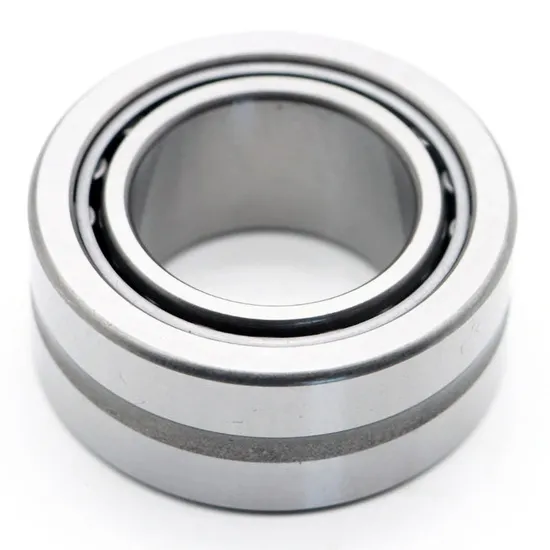
Gearbox shaft bearings operate under heavy radial load with moderate speed. Tapered roller bearings and needle roller bearings appear here, and the interchange logic shifts from deep groove ball bearing suffixes to tapered roller bearing cup and cone matching. KOYO and SKF both manufacture these, but the internal angle and roller profile differ. Substitution in this position requires engineering confirmation, not just a dimension chart.
For wholesale buyers serving repair shop chains, the practical approach is to stock KOYO and SKF interchangeably for wheel hub applications where the substitution risk is lowest, and to maintain brand-specific inventory for crankshaft and gearbox positions where suffix matching matters more.
Conclusion
The KOYO SKF motorcycle bearings interchange works at the dimension level but demands suffix-level discipline at the application and documentation level.
Buyers who treat cross-reference as a simple model-number translation risk customs holds, warranty returns, and end-user distrust. The interchange succeeds when cage material, seal type, and clearance class are matched, when origin documentation supports the physical goods, and when commercial invoices declare what is actually in the container — not what was originally specified.