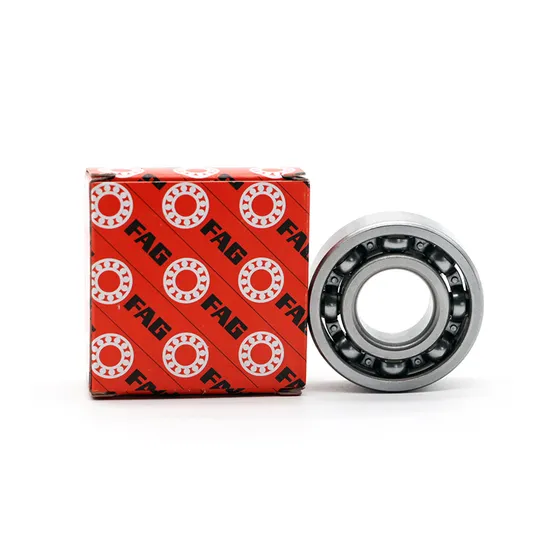
Buy Genuine FAG Bearings Wholesale Supplier with Cross-Reference Support
A model number match does not guarantee a bearing match — internal clearance, cage material, and origin code determine whether a replacement survives the first thermal cycle.
To buy genuine FAG bearings from a reliable China supplier, you must verify three things before placing any order: the supplier’s authorization chain traceable to Schaeffler, the cross-reference interchangeability against your existing OEM specification, and the anti-counterfeit verification pathway using official QR codes or batch-number lookup tools. Price alone is not a sourcing criterion — it is the single most common trap that leads to premature field failure.
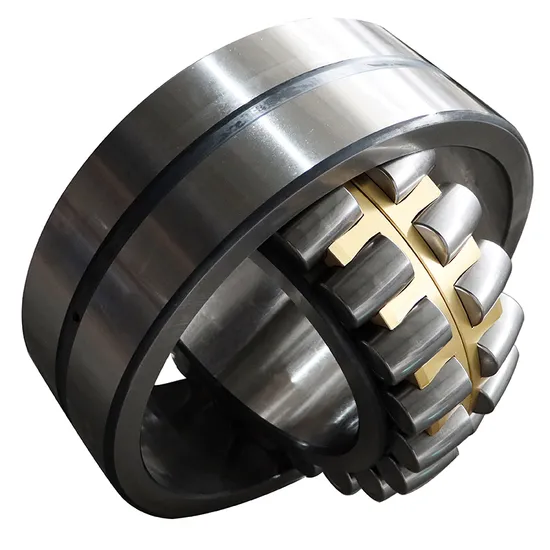
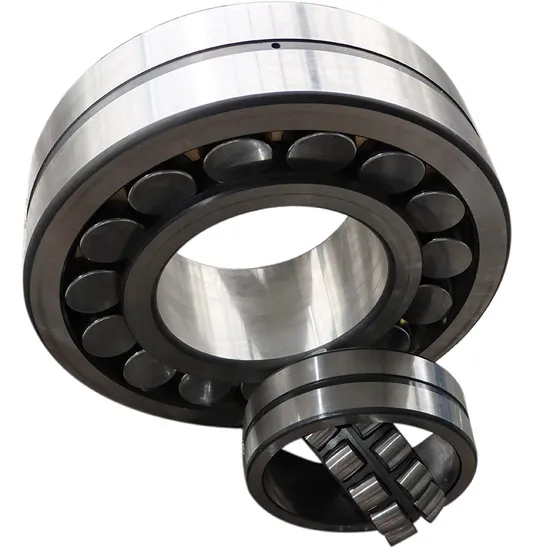
I spent years on the shop floor in Dongguan where grinding machines ran double shifts and the air tasted like cutting fluid. Later, handling export orders from Shenzhen, I watched buyers reject perfectly good quotations because a competing quote came in noticeably cheaper — only to receive shipments that failed inside a single seasonal maintenance window. A Middle East distributor once ordered a full batch of spherical roller bearings for a steel mill conveyor; the price he accepted was substantially below the genuine market level. Within months, the entire installation showed spalling and cage deformation. The root cause was never the application — it was the origin. [NEED_CITE: typical failure mode distribution in counterfeit rolling bearings per ISO 15243]
This guide walks through the verification steps, cross-reference logic, and documentation checks that separate a trustworthy sourcing partner from a risky one — drawn directly from orders I have handled and problems I have helped buyers resolve after the fact.
How to Verify a China Supplier Is Authorized to Sell Genuine FAG Bearings?
Authorization is not a single certificate — it is a traceable chain from the brand principal to the entity issuing your proforma invoice.
Many buyers assume that a stamped letter on company letterhead is enough. In practice, authorization documents circulate, expire, or get borrowed between unrelated trading desks. A legitimate authorization check requires three layers of evidence working together. [NEED_CITE: Schaeffler authorized distributor verification process and certificate validity requirements]
| Verification Layer | What to Request | What a Genuine Supplier Provides | What a Suspicious Supplier Provides |
|---|---|---|---|
| Brand Authorization | Current-year distributor certificate naming the exact legal entity | Verifiable certificate with active status confirmed through brand channel | Expired certificate, or certificate issued to a differently named entity |
| Traceability | Mill test origin reference per batch or shipment | Full batch-level traceability to manufacturer production facilities | Sample-level only, or self-reported origin without supporting documents |
| Anti-Counterfeit Tool Access | Ability to generate or relay QR verification for each unit | Every shipped unit carries scannable code linked to brand database | Codes missing, duplicated across units, or linking to non-brand pages |
A buyer from a West African MRO operation once sent me an authorization letter his previous supplier had provided. The letter looked official — embossed seal, director signature, the works. When I checked the named entity against the brand’s public distributor directory, the company did not appear at all. The letter had been copied from an older authorization granted to a different firm that had since closed. Had the buyer shipped that order, his end users would have received unverified stock.
When I source for buyers through our own channel, every authorization document is cross-checked against the brand’s current distributor listing before any quotation goes out. If the chain breaks at any point, the order does not proceed. That is not a policy slogan — it is the only way to avoid becoming the supplier who shipped a container of unknown origin. [NEED_CITE: industry guidance on verifying authorized bearing distributor credentials]
What Should You Check When Cross-Referencing FAG with Other Brands?
A cross-reference table tells you which dimensions align — it does not tell you whether the bearing will survive your specific load, speed, and temperature combination.
This is the single most misunderstood area in bearing procurement. Buyers routinely assume that because a FAG designation maps to an SKF or NSK designation in a generic chart, the units are fully interchangeable. They are not — not without checking internal clearance class, cage type, and lubrication specification. [NEED_CITE: ISO 15 bearing designation system and internal clearance class definitions C2 C3 C4]
| Parameter | Why It Matters in Cross-Reference | Common Mismatch When Ignored |
|---|---|---|
| Internal Clearance (C2 / C3 / C4) | Determines operating fit under thermal expansion | Standard clearance bearing seizes in high-temperature application requiring C3 |
| Cage Material and Design | Affects speed rating, lubricant compatibility, and vibration | Pressed steel cage substituted for machined brass in heavy-vibration environment |
| Precision Class (P0 / P4 / P5) | Governs running accuracy and noise | P0 unit installed in application requiring P5 leads to premature noise and wear |
| Seal or Shield Type | Controls contamination ingress and grease retention | Open bearing used where sealed unit is specified, leading to grease washout |
A Southeast Asian palm oil mill needed to replace tapered roller bearings originally specified under an OEM code. Their maintenance team pulled a cross-reference chart online and matched the basic dimensions. The replacement units they received — sourced from a supplier who did not perform application-level cross-checking — had standard internal clearance instead of the C3 the application required. The bearings overheated during the first wet-season production peak and had to be pulled within weeks. The cost of that downtime dwarfed any unit-price difference they thought they had saved.
This is exactly where working with a sourcing partner who maintains complete cross-reference charts across all six major brands — SKF, NSK, FAG, TIMKEN, NTN, and KOYO — becomes non-negotiable. When a buyer sends us an OEM part number, we do not just pull the dimensional match. We check the original application conditions, confirm the clearance and cage requirements, and then identify which FAG designation delivers the same operational envelope. If no direct match exists, we flag it before the order is placed — not after the goods arrive at the port. [NEED_CITE: bearing cross-reference methodology and interchangeability limitations per ABMA standards]
How to Spot Fake FAG Bearings Before Shipment?
Counterfeit detection does not require a laboratory — the fastest screening happens at the packaging, marking, and price level before goods ever leave the warehouse.
After years of inspecting incoming and outgoing shipments, I can tell you that most counterfeits reveal themselves through three observable signals. None of them requires destructive testing. All of them should be checked before the container is sealed. [NEED_CITE: Schaeffler official anti-counterfeit identification guidelines and visual inspection criteria]
Signal One — Packaging Inconsistency. Genuine FAG packaging uses specific color tones, font weights, and holographic elements that are difficult for counterfeit operations to replicate accurately. The label printing quality should be sharp, with no blurred characters or misaligned barcodes. The box material itself has a distinct rigidity that cheap reproductions lack.
Signal Two — Batch Number Logic. Every genuine FAG bearing carries a batch number that follows a structured format. The number should be laser-etched or cleanly stamped on the bearing ring — not ink-printed in a way that rubs off with solvent. The format should be consistent with the manufacturer’s known batch coding system. [NEED_CITE: FAG bearing batch number format and date code interpretation]
Signal Three — Price Deviation. If a quotation for a popular model like the 22320 or 6206 series comes in substantially below the prevailing genuine market level, treat it as a red flag regardless of how convincing the supplier’s presentation looks. Counterfeit operations compete almost exclusively on price because they cannot compete on quality documentation.
I once reviewed a shipment destined for a Central Asian mining operation. The bearings looked correct at first glance — right part number on the box, right brand logo. But the batch numbers on the inner ring were ink-stamped rather than laser-etched, and when I rubbed the marking with a solvent-dampened cloth, it smeared. The packaging hologram also lacked the micro-text that genuine FAG boxes carry under magnification. The shipment was held, returned to the origin warehouse, and replaced with verified stock. The buyer later confirmed that the original supplier could not provide any batch-level traceability when pressed.
When we prepare shipments for buyers, every unit undergoes this three-signal check before packing. Any unit that fails even one signal is segregated and does not ship. This is not an optional quality step — it is the baseline that separates a responsible supplier from one that simply moves boxes. [NEED_CITE: bearing counterfeit detection methods recommended by international bearing industry associations]
What Documentation Should a Legitimate FAG Supplier Provide?
A genuine supplier does not just ship bearings — they ship a documentation package that makes authenticity verifiable at every stage from warehouse to installation.
Buyers who have been burned by counterfeit shipments learn quickly that asking for documents after delivery is too late. The documentation must be provided proactively, before the goods are dispatched, and it must cover four categories without exception. [NEED_CITE: required documentation for authentic industrial bearing procurement per international trade standards]
| Document Category | Purpose | What a Legitimate Supplier Provides | What Raises Concern |
|---|---|---|---|
| Certificate of Origin | Confirms manufacturing country and facility | Official CO aligned with batch traceability data | CO issued for a country inconsistent with known production facilities |
| Authorization Letter | Proves the supplier is permitted to resell the brand | Current, entity-specific authorization verifiable through brand channel | Generic letter not tied to the invoicing entity, or expired authorization |
| Inspection and Test Report | Confirms dimensional and material compliance | Batch-level report matching shipped quantities | Report covering different batch numbers or quantities than the shipment |
| Anti-Counterfeit Verification Guide | Enables end-user confirmation of authenticity | Clear instructions for QR scanning, app verification, or batch lookup | No guidance provided, or instructions pointing to non-official verification tools |
A European industrial distributor we work with requires all four documents for every shipment before they will accept delivery at their warehouse. They have been counterfeited twice by previous suppliers who provided only a generic certificate of origin and a self-printed "quality guarantee" letter. Since switching to a documentation-complete sourcing process, they have not received a single questionable unit across multiple container shipments.
Our own documentation process follows this same standard. Before any order is confirmed, we provide the buyer with the authorization reference, the expected origin facility code, and the verification method that will apply to their specific batch. If a buyer’s compliance team needs additional format or legalization — such as chamber of commerce stamping or embassy attestation — we coordinate that before shipment, not as an afterthought. This is not extra service; it is the minimum standard for any buyer who cannot afford to install unverified bearings in critical equipment. [NEED_CITE: documentation requirements for bearing import compliance and authenticity verification]
Conclusion
Buying genuine FAG bearings from China is not a geography problem — it is a verification problem. Confirm the authorization chain, cross-reference beyond basic dimensions into clearance and cage specification, screen every unit against the three counterfeit signals before shipment, and insist on a complete documentation package before goods leave the warehouse. A sourcing partner who treats all four steps as non-negotiable is the difference between an order that runs for its full designed life and one that becomes an expensive lesson.