Where to Buy KOYO and SKF Bearings for Global Aftermarket
Price discounts in the aftermarket often hide forged origin markings and re-sealed packaging, not channel advantages.
The real answer to where to buy KOYO and SKF bearings lies in three verifiable steps: confirming authorized distributor status through the brand’s official registry, requesting origin certificates and batch traceability documents before payment, and using cross-reference charts to validate interchangeability at the dimension-load-speed level rather than model number alone.
I spent years sourcing components for cement plants along the northern coast of Vietnam, handling everything from conveyor rollers to kiln support units. One order for KOYO tapered roller bearings came through a local trader who promised genuine stock at a discount that looked too clean to refuse. The bearings arrived in packaging that passed a surface-level check, but within weeks the cage on a conveyor pulley disintegrated, shutting down the line for days. When the failed units were opened, the laser marks on the seals had been re-etched, and the inner ring surface finish was visibly inconsistent with what a proper KOYO bearing should show. That single incident reshaped how I approach every KOYO SKF bearings buy request today: channel verification always comes before price comparison.
This article walks through the verification logic, interchangeability rules, sourcing channels, and documentation standards that separate reliable aftermarket procurement from costly guesswork.
How Do You Verify a KOYO or SKF Bearing Is Genuine Before Purchase?
Genuine bearing verification must start with authorized channel documentation, not visual inspection of markings alone. Counterfeit operations in the aftermarket have become sophisticated enough to replicate packaging codes, holograms, and even surface laser etching at a level that fools routine visual checks [NEED_CITE: counterfeit bearing failure patterns documented by industry anti-counterfeiting task forces].
The verification process follows a layered approach:
-
Official registry cross-check: Both SKF and KOYO (now under JTEKT) maintain publicly accessible authorized distributor lists. The first step is locating the supplier on these lists and confirming the authorization is current, not expired or regionally restricted.
-
Authorization certificate inspection: Request the supplier’s authorization letter directly from the brand’s regional office. Verify the certificate covers the specific product lines being purchased and matches the legal entity issuing the commercial invoice.
-
Batch-level traceability: Genuine KOYO and SKF bearings carry batch codes that link back to production records. Ask the supplier to provide origin certificates and, where available, factory test reports tied to those batch numbers.
-
Physical inspection protocols: Inner ring surface finish, seal laser mark depth consistency, cage material uniformity, and grease fill volume are telltale indicators. Re-sealed counterfeit units often show inconsistent laser etching depth or cage material that does not match the specification for that series.
A Middle East-based distributor once needed to replenish a large batch of deep groove ball bearings in the 6200 and 6300 series for resale across several countries. The procurement team required full authorization documentation and origin proof before releasing payment. By routing the purchase through a verified tier-one dealer with direct brand authorization, they obtained batch-level traceability documents that matched every carton received. The alternative—a spot buy from an unverified trader offering a lower unit price—would have left them unable to defend product authenticity to their own end customers.
Which KOYO and SKF Models Are Interchangeable in the Aftermarket?
Cross-brand interchangeability requires dimension-load-speed-lubrication matching at every level, not just model number equivalence. Many buyers assume that because a KOYO 6205 and an SKF 6205 share the same basic designation, they are fully interchangeable in any application. The reality is more nuanced.
| Parameter | KOYO 6205 Series | SKF 6205 Series | Interchange Assessment |
|---|---|---|---|
| Boundary dimensions | Identical per ISO 15 | Identical per ISO 15 | Direct fit |
| Basic dynamic load rating | Manufacturer-specific calculation | Manufacturer-specific calculation | Verify application margin |
| Internal clearance class | Standard C0, C3 available | Standard CN, C3 available | Match clearance to operating temperature |
| Cage material and design | Pressed steel or machined brass | Variant-dependent | Confirm compatibility with speed and lubrication |
| Grease fill type and volume | Application-specific | Application-specific | Re-lubrication interval may differ |
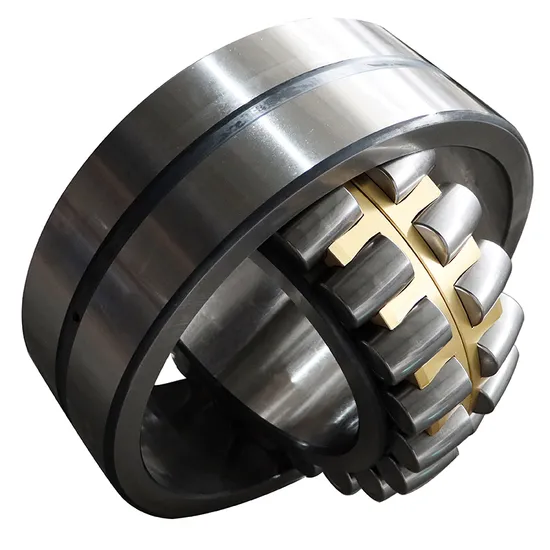
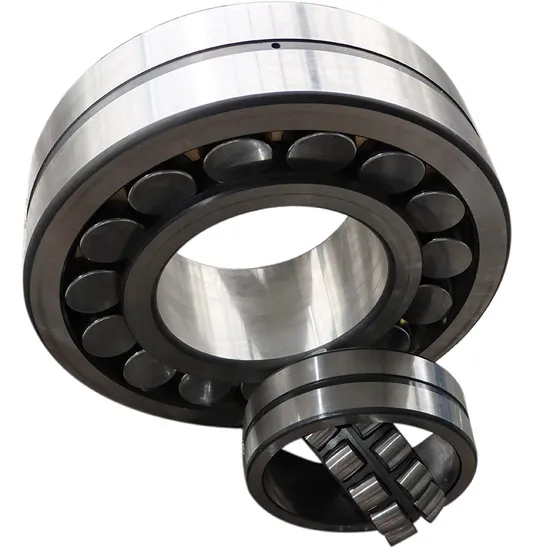
The same logic applies to tapered roller bearings such as the 32218 or 30206 series, and spherical roller bearings such as the 22320. While boundary dimensions follow ISO standards and will physically mount, internal geometry, cage design, and lubrication specifications can differ enough to affect service life under specific operating conditions [NEED_CITE: ISO 15 bearing boundary dimension standards and internal clearance classification].
A maintenance team at a Latin American processing facility faced an equipment rebuild where the OEM-specified SKF spherical roller bearing was unavailable on short notice. They sourced a KOYO equivalent based solely on outer dimension matching, without checking internal clearance class or cage type. The replacement ran initially but failed prematurely because the clearance class was mismatched to the operating temperature range, leading to excessive internal preload and accelerated fatigue.
When evaluating KOYO SKF bearings buy decisions involving cross-reference substitution, the safe approach is to verify interchangeability through a structured comparison: boundary dimensions first, then load ratings, then clearance class, then cage and lubrication compatibility. Our cross-reference support covers the full range of deep groove ball, tapered roller, angular contact, cylindrical roller, spherical roller, and thrust bearing series across SKF, KOYO, NSK, FAG, TIMKEN, and NTN, ensuring that substitution decisions are backed by parameter-level matching rather than model number guesswork.
Where Can Global Buyers Source Authentic KOYO and SKF Bearings?
Authorized distributor networks and tier-one dealers form the backbone of genuine bearing supply; regional stock availability determines delivery speed.
The global aftermarket for KOYO and SKF bearings operates through several channel tiers:
- Brand-owned direct sales: Both SKF and JTEKT/KOYO maintain direct sales offices in major industrial markets, typically serving large OEM accounts and strategic industrial users.
- Tier-one authorized distributors: These dealers hold current authorization certificates, maintain regional stock, and can provide full traceability documentation. They are the primary channel for most industrial and MRO buyers.
- Regional stockists and traders: These operators may hold genuine stock but vary widely in documentation capability and authorization status. Verification is essential before purchase.
- Online marketplaces and spot-buy platforms: Convenience comes with elevated counterfeit risk. Only use platforms that require seller authorization verification and offer buyer protection tied to authenticity claims.
For buyers across Southeast Asia, the Middle East, Latin America, and Central Asia, the practical sourcing challenge is balancing stock availability with documentation integrity. A tier-one dealer with regional warehousing can typically fulfill urgent orders for popular series such as 6205, 6206, 6305, 22320, 32218, and 30206 within days, while also providing the authorization and origin documents that protect the buyer downstream.
When sourcing KOYO SKF bearings buy orders for resale or project supply, the recommendation is to establish relationships with authorized dealers who can demonstrate current brand authorization, maintain verifiable stock, and support cross-reference requests across multiple brands. Our sourcing capability spans the full product lines of SKF, KOYO, NSK, FAG, TIMKEN, and NTN, with authenticity verification and authorized-channel sourcing built into every order, ensuring that buyers receive genuine products with full documentation regardless of origin brand.
What Documents Should You Request When Buying in Bulk?
Authorization certificates, origin proof, and batch-level quality reports form the minimum documentation threshold for any bulk bearing purchase.
When purchasing KOYO SKF bearings buy orders in volume, the documentation package should include:
-
Current authorization certificate: Issued by the brand’s regional office, covering the specific product lines and valid for the transaction period. Verify the certificate holder matches the invoicing entity.
-
Certificate of origin: Confirms the manufacturing country and production facility. This is critical for customs clearance in many markets and serves as a first-line authenticity indicator.
-
Batch-level quality inspection reports: Where available, these reports link specific batch codes to factory test data, including dimensional inspection results and, where applicable, material certification.
-
Commercial invoice with batch code traceability: The invoice should reference batch codes for each line item, allowing the buyer to trace received stock back to the documentation provided.
-
Packing list with carton-level batch marking: Enables physical verification at receiving, confirming that the stock delivered matches the documentation and has not been mixed with unverified inventory.
A European industrial maintenance operator once received a bulk shipment of spherical roller bearings from a new supplier. The documentation package included only a commercial invoice and packing list, with no authorization certificate or origin proof. Upon inspection, several cartons showed inconsistent packaging print quality and batch codes that did not align with the manufacturer’s standard format. The shipment was quarantined and returned, avoiding a potential installation of non-genuine stock into critical rotating equipment.
For buyers building long-term supply relationships, the expectation should be that every bulk order of KOYO SKF bearings buy transactions comes with a complete documentation package as standard practice, not as a special request. Suppliers who resist providing full traceability documentation should be treated as elevated-risk channels, regardless of the price advantage offered.
Conclusion
Authentic KOYO and SKF bearing procurement depends on channel verification, parameter-level cross-reference validation, and complete documentation—not on price comparison alone. By confirming authorized distributor status, matching interchangeability across dimensions, loads, clearance classes, and lubrication specifications, and requiring full traceability documentation on every bulk order, buyers eliminate the majority of counterfeit and misapplication risk in the global aftermarket.