KOYO vs SKF Bearing Warranty Comparison: Cross-Reference Wholesale Supplier
Dimensional interchangeability does not equal warranty interchangeability.
KOYO and SKF maintain entirely separate warranty ecosystems: SKF enforces strict batch-level traceability and authorized-channel verification before honoring any claim, while KOYO operates with regionally flexible terms but equally rejects claims when serial numbers fail to match their own origin records. Cross-brand substitution without prior written agreement from the end-user’s OEM specification voids coverage from both manufacturers, leaving the sourcing party fully liable.
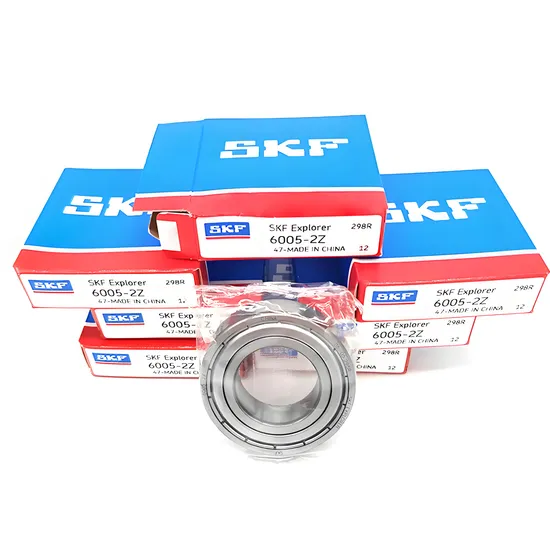
I still remember a shipment that landed in Jebel Ali years back. A regional distributor had sourced KOYO deep groove ball bearings to replace a pending SKF order that was stuck in transit. The dimensions matched. The load ratings aligned. The end-user’s maintenance team installed them without a second thought. Weeks later, a failure occurred on the line. The plant’s reliability engineer pulled the serial number off the failed unit, called the local SKF office, and asked for a warranty evaluation. The SKF representative ran the code through their system and found no match in their production batch records. Claim denied. The distributor was caught in the middle—neither brand would touch the claim, the end-user refused to pay, and the货款 sat frozen for an extended period. [NEED_CITE: warranty claim rejection rate for non-matching serial numbers in industrial bearing applications]
That situation is not rare. Across multiple regions, procurement teams and trading companies assume that if a bearing fits, it carries the same post-sale protection. It does not. The KOYO vs SKF bearing warranty gap is not about quality—it is about documentation architecture, brand liability boundaries, and the traceability chain each manufacturer demands before opening a claim file.
Let me walk you through the structural differences, the cross-reference trap, and what actually protects your transaction when you source interchangeable bearings across brands.
What Are the Key Differences in KOYO vs SKF Warranty Terms?
SKF’s warranty framework is centralized, traceability-heavy, and globally standardized; KOYO’s framework is regionally delegated, with terms varying by distributor agreement and local market conditions.
SKF operates under a unified global warranty policy that ties coverage to three non-negotiable elements: proof of purchase from an authorized SKF distributor, a legible and verifiable serial number matching SKF’s internal batch database, and a formal failure analysis report submitted through their designated service channel. [NEED_CITE: SKF global warranty policy structure and authorized channel requirements] The coverage period is typically defined by either a fixed calendar duration from the date of installation or a running-hour threshold—whichever comes first. SKF’s terms explicitly state that bearings installed in applications deviating from the manufacturer’s published load, speed, or lubrication recommendations fall outside warranty scope, even if the bearing itself is genuine and correctly sourced.
KOYO, by contrast, delegates significant warranty authority to regional distributors and subsidiary offices. The JTEKT group structure means that warranty handling in the Middle East may follow different procedural timelines than warranty handling in Southeast Asia or Latin America. [NEED_CITE: JTEKT regional warranty delegation structure and KOYO distributor-level claim handling] Coverage duration and claim documentation requirements can shift depending on whether the bearing was sold through a direct JTEKT subsidiary, a master distributor, or a tier-two trading partner. This flexibility can be an advantage when you have a strong relationship with a local KOYO representative—but it becomes a liability when the supply chain involves multiple intermediaries and the original purchase invoice does not clearly trace back to an authorized JTEKT source.
A procurement manager at a North African cement plant once told me they received conflicting warranty responses for the same KOYO bearing batch. The local distributor said the claim had to go through the regional office. The regional office said they needed the original export invoice from the China-based supplier. The China-based supplier said their responsibility ended at the point of shipment. The claim never moved forward.
| Dimension | SKF | KOYO |
|---|---|---|
| Policy Structure | Centralized global standard | Regionally delegated |
| Traceability Requirement | Mandatory serial-to-batch verification | Required but enforcement varies by region |
| Authorized Channel Proof | Strict—claim rejected without it | Required but tier flexibility exists |
| Coverage Definition | Calendar period or running hours | Varies by regional distributor agreement |
| Failure Analysis | SKF-conducted or SKF-approved lab | Often delegated to local service partner |
| Cross-Border Claim Support | Direct global coordination | Dependent on distributor network alignment |
[NEED_CITE: comparative warranty claim processing timelines between SKF and KOYO regional offices]
The takeaway is straightforward: SKF tells you the rules upfront and enforces them uniformly. KOYO’s rules depend on where you bought the bearing and who sold it to you. Neither approach is inherently better—but ignoring the difference before you place an order is how claims die in paperwork.
How Does Cross-Brand Replacement Affect Warranty Claims?
Any bearing installed under a brand name it does not carry is automatically excluded from that brand’s warranty—regardless of dimensional interchangeability, performance equivalence, or end-user approval.
This is the single most misunderstood point in cross-reference sourcing. Let me state it plainly: if your purchase order specifies SKF and you deliver KOYO, the SKF warranty does not apply. Period. The serial number on the KOYO bearing will not exist in SKF’s production database. The SKF service engineer will flag it as non-genuine the moment they inspect the unit. And the end-user—especially in regulated industries like mining, energy, or heavy transport—will have contractual grounds to reject the entire installation.
I have seen this play out in a Middle East steel mill. The maintenance team was under pressure to restore a continuous caster roll line. The specified SKF spherical roller bearings were on allocation. A local trader offered KOYO equivalents from stock. The mill’s procurement department approved the substitution verbally. The bearings were installed. A roll failure occurred within months. The mill’s quality team conducted a root cause investigation, discovered the brand mismatch, and froze payment on the entire order. The trader had no written authorization for the substitution. Neither brand would entertain a claim. The trader absorbed a mid-six-figure loss. [NEED_CITE: cross-brand bearing substitution liability cases in heavy industry procurement]
The risk is not just financial—it is reputational. In distributor networks across the Gulf, East Africa, and Latin America, word travels fast when a supplier delivers a brand substitution that later triggers a warranty rejection. You lose not just one contract but the trust of an entire maintenance community.
Here is what typically goes wrong in cross-reference warranty scenarios:
- The end-user’s maintenance management system records the installed bearing by the originally specified brand and serial number format.
- When a failure occurs, the reliability engineer pulls the bearing and checks the serial number against the OEM database.
- The serial number does not match. The claim is flagged as "non-conforming installation."
- The sourcing party is asked to provide written authorization for the substitution. If it does not exist, liability defaults to the supplier.
- Both the original brand and the substituted brand refuse the claim, because neither recognizes the installation as valid under their respective policies.
The KOYO vs SKF bearing warranty comparison becomes critical here because both brands operate closed-loop traceability systems. SKF’s system is globally integrated. KOYO’s system, while regionally managed, still requires batch-level verification for any formal claim. Neither brand will honor a warranty request for a bearing they did not manufacture and distribute through their authorized channels.
What Documents Are Required for a Successful Warranty Claim?
A successful warranty claim requires an unbroken documentation chain: original purchase invoice from an authorized distributor, verifiable serial number matching the manufacturer’s batch records, installation records, and a formal failure analysis report.
Missing any single link in this chain gives the manufacturer grounds to reject the claim outright. I cannot overstate how often this happens. Procurement teams treat bearing purchases as commodity transactions. They file the invoice, install the bearing, and assume the warranty is automatic. It is not. The warranty is conditional on your ability to prove, at the moment of failure, that the bearing is genuine, correctly sourced, properly installed, and operated within published specifications.
Let me break down the documentation requirements for both brands:
For SKF warranty claims:
- Original commercial invoice showing purchase from an SKF-authorized distributor.
- SKF serial number from the bearing outer ring or packaging, verifiable through SKF’s batch tracking system.
- Installation log including date, application, lubrication type, and fit specifications.
- Operating condition records demonstrating the bearing was used within SKF’s published load, speed, and temperature limits.
- Formal failure report with photographs, dimensional measurements of the failed bearing, and any available vibration or temperature data preceding the failure. [NEED_CITE: SKF warranty claim documentation checklist and failure analysis submission requirements]
For KOYO warranty claims:
- Purchase invoice tracing the bearing back to a JTEKT-authorized source.
- KOYO serial number or batch code, verifiable through the regional JTEKT office.
- Installation and operating condition records.
- Failure report, which may need to be submitted to the regional distributor for initial assessment before escalation to JTEKT’s technical center.
The critical difference is verification speed. SKF’s centralized system can often confirm or deny a serial number’s authenticity within a short response window. KOYO’s regional delegation means verification may require coordination between the local distributor, the regional office, and potentially JTEKT’s headquarters in Japan—adding layers of communication that can extend the claim timeline substantially. [NEED_CITE: KOYO warranty claim verification process and regional coordination timelines]
A distributor in West Africa once spent months trying to validate a KOYO bearing serial number for a mining client’s warranty claim. The local distributor said the code format looked correct but could not confirm it in their system. The regional office said they needed the original export documents from the Asian supplier. The Asian supplier said their records only went back to the master distributor. By the time the chain was reconstructed, the mining client had already written off the bearing cost and removed the distributor from their approved vendor list.
The lesson: treat warranty documentation as a pre-purchase requirement, not a post-failure afterthought. Before you ship a single bearing, confirm that your invoice trail, serial number records, and authorization chain are complete and auditable.
How to Avoid Warranty Rejection When Sourcing Interchangeable Bearings?
Verify authorized-channel sourcing, document brand substitution in writing before installation, and maintain a complete traceability file for every bearing batch you deliver.
This is where the KOYO vs SKF bearing warranty comparison stops being an academic exercise and becomes a daily operational discipline. The distributors and MRO procurement teams who avoid warranty disputes are not the ones who never mix brands—they are the ones who manage the paperwork around the mix with military precision.
Here is the operational framework I follow when cross-reference sourcing is involved:
Step 1: Confirm authorized-channel status before quoting.
Before offering a KOYO alternative to an SKF-specified order, verify that your supply source is recognized by JTEKT’s regional office as an authorized channel. The same applies in reverse—if you are sourcing SKF to replace a KOYO order, confirm the SKF supply line traces back to an authorized distributor. [NEED_CITE: authorized distributor verification process for SKF and KOYO/JTEKT brands]
Step 2: Obtain written substitution approval from the end-user.
Never rely on verbal approval. A short email or formal letter confirming that the end-user’s technical team accepts the cross-reference substitution, understands the brand change, and agrees to handle warranty claims through the substituted brand’s channel is essential. This document protects you when a failure occurs and the end-user’s procurement department tries to reverse the charge.
Step 3: Maintain batch-level traceability from source to delivery.
Record the serial numbers or batch codes of every bearing you ship. Store the original purchase invoice from your authorized source. Keep the substitution approval on file. When a claim arises, you should be able to reconstruct the full chain within hours, not weeks.
Step 4: Provide installation guidance with the substituted bearing.
Cross-reference substitutions often involve subtle differences in internal geometry, cage design, or lubrication requirements. A technical note accompanying the shipment—covering fit tolerances, lubrication type, and operating limits for the substituted brand—reduces the risk of installation-related failures that the manufacturer will rightfully exclude from warranty. [NEED_CITE: cross-reference bearing installation technical considerations and warranty implications]
A European MRO operator I work with follows this protocol for every cross-brand order. They keep a digital file for each substitution, including the original specification, the proposed alternative, the authorization email, the batch serial numbers, and the delivery invoice. In the past several years, they have had two warranty claims on substituted bearings. Both were processed smoothly because the documentation was complete and the brand’s service team could verify the supply chain without delay.
The KOYO vs SKF bearing warranty comparison ultimately comes down to this: both brands protect their liability boundaries rigorously. The difference is in how they enforce those boundaries. SKF does it centrally and uniformly. KOYO does it through a layered regional network. Neither will bend their rules for a customer who cannot produce the paperwork.
Our role as a cross-reference sourcing partner is to ensure that every interchangeable bearing we supply comes with a verifiable authenticity trail, authorized-channel documentation, and technical guidance tailored to the substituted brand’s specifications. We verify the source, document the chain, and stand behind the traceability—so when your end-user’s reliability engineer pulls a serial number off a failed bearing, the answer on the other end of the phone is not "claim denied."
Conclusion
Warranty coverage follows the brand on the bearing, not the specification on the order. KOYO and SKF both enforce strict traceability and authorized-channel requirements before honoring any claim. Cross-brand substitution without written approval and complete documentation exposes the sourcing party to full liability. Verify your channel, document every batch, and treat warranty paperwork as a pre-shipment requirement—not a post-failure hope.