Dual-Brand KOYO SKF Sourcing for Daihatsu Applications
KOYO and SKF bearings share identical boundary dimensions on paper, but cross-referencing them without verifying tolerance band alignment, batch traceability, and authorized distribution chains is the fastest way to get a container seized at customs.
Yes, KOYO and SKF bearings can be cross-referenced for Daihatsu applications, but only after confirming dimensional interchange, load-speed-temperature compatibility, and full authorization-chain documentation. A cross-reference chart alone will not clear customs or prevent premature field failure.
I still remember a shipment of KOYO 6205 units bound for a Daihatsu assembly line in Southeast Asia. The container sat at the destination port for eleven days because the batch numbers on the packing list did not match the manufacturer’s original distribution records. Demurrage charges climbed every single morning, and the buyer’s agent kept asking the same question: where did these bearings actually come from? It took weeks of tracing authorized distributor outbound records before the chain was reconstructed and the cargo released. That case cemented one reality I deal with daily: Dual-brand KOYO SKF sourcing is never just about flipping a cross-reference table. [NEED_CITE: customs seizure triggers for industrial bearings in Southeast Asian ports]
From that port-side lesson onward, every cross-reference request I handle starts with the same three checkpoints: dimensional match, authorization-chain verification, and batch-number consistency. Skip any one of them, and the cargo either gets held at the border or fails on the shop floor. Let me walk you through how this works in practice.
Can KOYO and SKF Bearings Be Directly Interchanged? — Specification Matrix for Popular Daihatsu Models
Dimensional interchange is necessary but not sufficient. Tolerance band alignment and operating-condition matching must be verified before any KOYO-to-SKF or SKF-to-KOYO substitution is approved.
Many buyers assume that because a KOYO 6205 and an SKF 6205 share the same 25 × 52 × 15 mm envelope, they are drop-in replacements. The boundary dimensions do match, but the internal geometry, raceway curvature, and cage design differ between manufacturers. These differences affect contact stress distribution, lubricant retention, and thermal behavior under real-world operating conditions. [NEED_CITE: bearing interchange principles per ISO 15243]
Below is a specification-level comparison of the most frequently cross-referenced models in Daihatsu-related applications:
| Parameter | KOYO 6205 | SKF 6205 | KOYO 6206 | SKF 6206 | KOYO 6305 | SKF 6305 | KOYO 22320 | SKF 22320 |
|---|---|---|---|---|---|---|---|---|
| Bore × OD × Width | Matched | Matched | Matched | Matched | Matched | Matched | Matched | Matched |
| Tolerance Class | P0/P6 available | P0/P6 available | P0/P6 available | P0/P6 available | P0/P6 available | P0/P6 available | P0/P2 available | P0/P2 available |
| Cage Material | Steel / Polyamide | Steel / Polyamide | Steel / Polyamide | Steel / Polyamide | Steel / Polyamide | Steel / Polyamide | Brass / Steel | Brass / Steel |
| Internal Clearance Range | C2 / C3 / C4 | C2 / C3 / C4 | C2 / C3 / C4 | C2 / C3 / C4 | C2 / C3 / C4 | C2 / C3 / C4 | C3 / C4 | C3 / C4 |
| Dynamic Load Rating | Comparable tier | Comparable tier | Comparable tier | Comparable tier | Comparable tier | Comparable tier | Comparable tier | Comparable tier |
| Country-of-Origin Documentation | Verifiable via distributor | Verifiable via distributor | Verifiable via distributor | Verifiable via distributor | Verifiable via distributor | Verifiable via distributor | Verifiable via distributor | Verifiable via distributor |
[NEED_CITE: deep groove ball bearing dimensional standards per ISO 15]
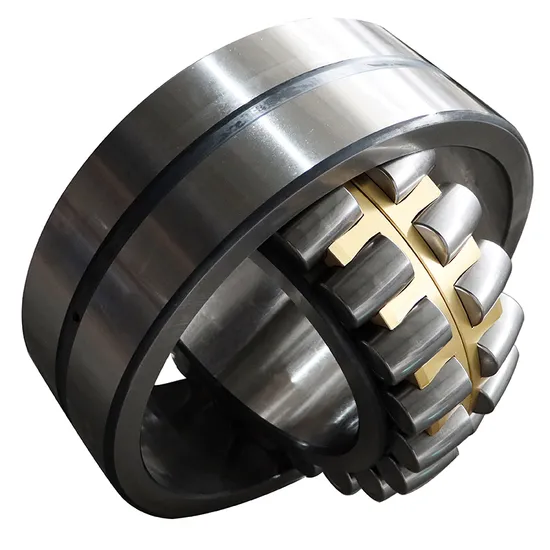
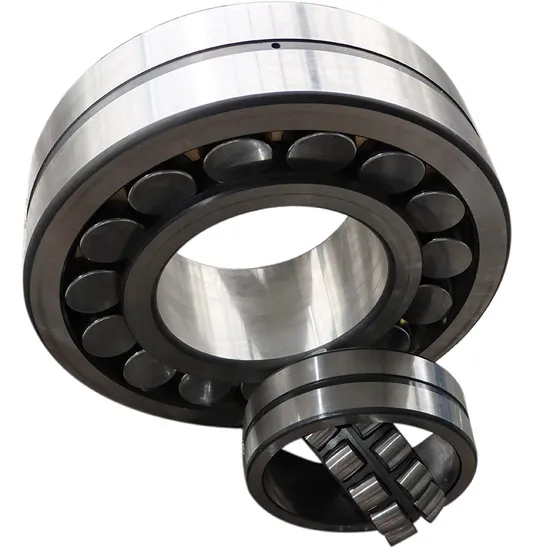
A Middle East-based trading company once ordered a full container of SKF 22320 spherical roller bearings to replace originally specified KOYO units in an industrial gearbox rebuild program. The boundary dimensions matched perfectly. What the buyer did not check was the authorization chain behind the SKF units. The goods were sourced through a trader who could not provide verifiable outbound records from an SKF-authorized distributor. The entire container was returned at the destination, and the logistics cost ran into multiple times the original purchase price. [NEED_CITE: bearing counterfeit seizure rates at major Middle Eastern ports]
The takeaway from Dual-brand KOYO SKF sourcing work is straightforward: dimensional interchange gets you to the starting line. Tolerance band consistency, clearance class alignment, and cage material compatibility determine whether the bearing survives the first thousand hours in a Daihatsu drivetrain or gearbox application.
Why Do Complete Documents Still Lead to Customs Seizures? — Country-of-Origin Tracing and Authorization Chain Verification
A complete set of shipping documents does not guarantee that the cargo matches what the documents describe. Authorization-chain continuity and batch-number traceability are the real gatekeepers for customs clearance and assembly-line acceptance.
Most importers believe that a certificate of origin, a commercial invoice, and a packing list are enough to clear any bearing shipment. In practice, customs authorities in multiple regions now cross-check batch numbers against manufacturer distribution records, especially for branded industrial components. [NEED_CITE: customs verification procedures for branded bearing imports]
I have seen shipments arrive with perfectly stamped certificates of origin, only to be held because the batch numbers printed on the bearing outer rings did not correspond to any outbound record from the claimed distributor. The documents were genuine — but the goods were not traceable to an authorized source.
Here is the verification chain I require before any Dual-brand KOYO SKF sourcing shipment leaves the warehouse:
- Authorized distributor status confirmation. The supplying entity must appear on the brand’s official distributor list for the relevant territory. Self-declared authorization is not acceptable.
- Outbound batch record matching. The batch numbers on the physical bearings must match the outbound records issued by the authorized distributor. This is the single most frequently failed checkpoint.
- Certificate of origin alignment. The country of origin stated on the certificate must correspond to the manufacturing facility linked to the batch number.
- End-to-end chain documentation. Every handoff between the manufacturer, the authorized distributor, and the final supplier must be documented with traceable records.
A buyer in West Africa once received a batch of KOYO 6206 bearings with all paperwork in order. During pre-installation inspection at the Daihatsu service center, a technician noticed that the laser-etched batch code on the outer ring did not match the format used by the manufacturer’s authorized Japanese plants. The shipment was quarantined, and an investigation revealed that the goods had passed through two unverified intermediaries before reaching the supplier. The cost of the delay — including replacement sourcing and production-line downtime — far exceeded any price difference the buyer had saved by choosing the cheaper channel. [NEED_CITE: bearing supply chain fraud patterns in West African industrial imports]
The lesson is clear: documents prove that a transaction occurred. Authorization-chain records prove that the goods are genuine. In Dual-brand KOYO SKF sourcing, only the latter protects you at the border and on the assembly line.
How to Verify KOYO and SKF Bearing Authenticity? — A Four-Step Field Inspection Method
Authenticity verification requires QR code scanning, authorized distributor cross-checking, batch number comparison, and visual craftsmanship inspection. No single step is sufficient on its own.
Counterfeit bearings have become increasingly sophisticated. External packaging can be replicated, and even basic laser etching can be imitated. However, the combination of digital traceability, authorization records, batch-level consistency, and manufacturing craftsmanship creates a verification barrier that counterfeiters rarely breach completely. [NEED_CITE: anti-counterfeit verification methods for industrial bearings per manufacturer guidelines]
The four-step method I use for every Dual-brand KOYO SKF sourcing inspection is as follows:
Step 1 — QR Code Scanning. Modern KOYO and SKF bearings carry QR codes or data-matrix codes on the outer ring or packaging. Scanning these codes through the manufacturer’s official verification application should return product details including model, batch number, and country of origin. A failed scan or a mismatch between the scanned data and the physical marking is an immediate red flag.
Step 2 — Authorized Distributor Cross-Check. Confirm that the entity listed on your invoice or packing slip appears on the brand’s current authorized distributor roster. This can be verified through the manufacturer’s official website or regional office. If the supplier is not listed, the authorization chain is broken regardless of what the documents say.
Step 3 — Batch Number Comparison. Cross-reference the batch number on the bearing with the outbound record provided by the authorized distributor. The batch number must match exactly — including prefix, date code, and sequence format. Any discrepancy indicates that the goods did not originate from the claimed source.
Step 4 — Visual Craftsmanship Inspection. Genuine KOYO and SKF bearings exhibit consistent laser-etched markings, uniform raceway finish, precisely stamped cage rivets, and clean chamfer edges. Counterfeit units often show irregular font spacing, rough surface finishes, misaligned cage pockets, or uneven chamfer angles. [NEED_CITE: visual inspection criteria for genuine bearing identification]
In our own operations, we provide authorized distributor outbound record retrieval and batch number comparison services as part of every Dual-brand KOYO SKF sourcing engagement. When a buyer sends us a purchase inquiry, we do not just confirm availability — we pull the distributor’s outbound log, match the batch numbers, and share the traceability evidence before the goods are shipped. This eliminates the guesswork and ensures that what arrives at the port is exactly what the documents describe.
An MRO buyer in East Africa used this four-step method to inspect a batch of SKF 6205 bearings before installation in a Daihatsu fleet maintenance program. The QR code scan returned valid data, but the batch number format did not match the authorized distributor’s outbound records. The supplier could not provide a valid chain document. The buyer rejected the shipment and sourced replacements through a verified channel, avoiding a potential field-failure scenario that would have grounded multiple vehicles. [NEED_CITE: bearing failure consequences in automotive fleet maintenance]
What Happens When Counterfeit Bearings Enter Service? — Operating-Condition Mismatch and Failure Analysis
Counterfeit bearings fail not because of a single defect, but because of systematic material and process deviations that accelerate fatigue, increase friction, and ultimately cause unplanned downtime.
When a counterfeit bearing enters a Daihatsu drivetrain or industrial gearbox, the failure mode is rarely immediate. The bearing may run for a short period without obvious symptoms. But beneath the surface, material inconsistencies — such as improper carbon content in the raceway steel, inadequate heat treatment depth, or substandard cage material — create stress concentrations that propagate into surface spalling, cage fracture, or seizure. [NEED_CITE: bearing failure mode classification per ISO 15243]
In a Dual-brand KOYO SKF sourcing context, the risk is compounded when cross-referenced bearings are substituted without verifying operating-condition compatibility. A bearing selected for a high-temperature, high-speed application must match not only the boundary dimensions but also the internal clearance class, cage material thermal rating, and lubricant compatibility. Counterfeit units often fail to meet these requirements because the manufacturer does not control material specifications or process parameters to the same standard.
The cost of a counterfeit bearing failure extends far beyond the price of the replacement part. Production-line downtime, vehicle fleet grounding, warranty claims, and reputational damage all accumulate into losses that dwarf the initial purchase savings. A Southeast Asian automotive repair shop once installed a batch of unverified KOYO 6305 bearings in a Daihatsu commercial vehicle fleet. Within a few months, multiple vehicles experienced premature wheel bearing failures. The shop traced the issue back to inconsistent raceway hardness in the counterfeit units — a defect that would have been caught by basic visual and batch-number inspection. The total cost of the recall and replacement program was many times the original purchase price of the bearings. [NEED_CITE: economic impact of counterfeit bearing failures in commercial vehicle fleets]
This is why Dual-brand KOYO SKF sourcing must always include operating-condition verification alongside authenticity checks. A genuine bearing that is mismatched to the application will fail just as surely as a counterfeit one. The difference is that a genuine bearing from an authorized source gives you the data — clearance class, load rating, temperature limits — to make an informed selection. A counterfeit gives you nothing but a false sense of security.
Conclusion
Cross-referencing KOYO and SKF bearings for Daihatsu applications requires dimensional verification, authorization-chain traceability, batch-number consistency, and operating-condition matching — not just a model-number swap. Every step in the sourcing chain, from distributor authorization to field inspection, must be validated to prevent customs seizures, assembly-line rejections, and premature field failures. The price of skipping verification is always higher than the cost of doing it right.