

Pillow Block Bearing Alignment & Calibration Standards Wholesale Supplier
Tightening bolts firmly does not ensure stability; it often destroys the bearing.
Proper alignment of pillow block bearings is not an optional refinement but the primary determinant of service life in heavy-load applications. Achieving correct installation requires verifying base flatness, ensuring shaft parallelism relative to the mounting surface, and applying a staged torque sequence to prevent housing distortion. These steps translate ISO precision requirements into actionable field procedures that prevent premature failure caused by angular misalignment and edge loading.
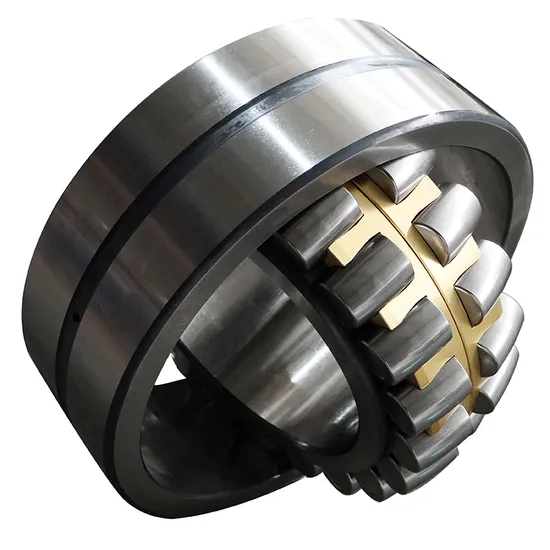
I still recall the dust-choked air of a quarry site near Riyadh, where a batch of high-capacity spherical roller bearings failed within weeks of installation. The maintenance team had followed the manual’s bolt-tightening instructions to the letter, yet the vibration levels remained critically high. Upon disassembly, the cast iron housings showed clear signs of distortion, pulled out of shape by uneven torque on an uneven foundation. The insert bearings, despite their self-aligning design, could not compensate for the severe angular deviation forced upon them by the warped housing. This incident underscored a critical reality: even genuine products from premium brands like SKF or FAG will underperform if the foundational alignment standards are ignored. [NEED_CITE: root cause distribution per ISO 15243]
Understanding these mechanical realities is essential for distributors and MRO managers who face the brunt of warranty claims when installations go wrong. The following guide breaks down the technical necessities of Pillow block bearing alignment standards into practical steps, ensuring that the quality of the supplied components is matched by the precision of their installation.
Why Does My Pillow Block Fail So Soon?
Misalignment accounts for the majority of premature bearing failures in industrial settings, yet it is frequently overlooked during routine maintenance. Many operators assume that the self-aligning capability of insert bearings is sufficient to correct any mounting errors. This is a dangerous misconception. While insert bearings can accommodate minor static misalignments, they cannot compensate for the dynamic stresses caused by severe angular or parallel deviations in the housing base.
When a pillow block is mounted on an uneven surface, tightening the base bolts forces the housing to conform to the irregularities of the foundation. This process induces internal stress in the cast iron or steel housing, which then transfers directly to the bearing outer ring. The result is a loss of internal clearance and uneven load distribution across the rolling elements. In heavy-load applications such as crushers or conveyor systems, this leads to rapid fatigue, overheating, and eventual seizure.
A cement plant operator in North Africa once reported repeated fan bearing failures despite using top-tier brands. The issue was not the bearing quality but the thermal expansion gap miscalculation during installation. The housing was rigidly fixed without allowing for longitudinal expansion, causing the shaft to bind as temperatures rose. Correcting this required a precise shim calibration during a hot-alignment check, which resolved the issue entirely. This case highlights that Pillow block bearing alignment standards are not just about initial placement but also about accounting for operational dynamics. [NEED_CITE: thermal expansion effects on mounted units]
For distributors, educating end-users on these failure modes is crucial. Supplying bearings with certified dimensional consistency reduces variable errors, making it easier for field technicians to achieve proper alignment. However, no amount of product quality can overcome fundamental installation errors.
What Are the Critical Alignment Tolerances?
Defining acceptable angular and parallel deviations is the first step toward reliable installation. International standards provide clear guidelines, but these are often abstract for field technicians. The key is to translate these ISO requirements into measurable field checks. Angular misalignment occurs when the shaft axis is not parallel to the housing bore axis, while parallel misalignment happens when the shaft is offset laterally.
| Alignment Parameter | Acceptable Threshold (General Industrial) | Verification Method |
|---|---|---|
| Angular Misalignment | < 0.05 degrees | Dial indicator or laser alignment tool |
| Parallel Misalignment | < 0.1 mm | Feeler gauge or straight edge |
| Base Flatness | < 0.05 mm per 100 mm | Precision straight edge and feeler gauges |
| Shaft Runout | < 0.05 mm total indicated runout | Dial indicator at coupling |
These values are general guidelines and may vary based on specific manufacturer recommendations and application severity. For high-speed or heavy-load applications, tighter tolerances are necessary. [NEED_CITE: ISO 10816 vibration severity classes]
In a recent agricultural conveyor overhaul, a mixed-brand housing tolerance mismatch caused significant runout. The technician had assumed all pillow blocks adhered to the same dimensional standards, but slight variations in base hole positioning led to misalignment. Verifying ISO dimensional standards before assembly resolved the issue. This underscores the importance of sourcing from a Pillow block bearing alignment standards compliant supplier who provides full traceability and dimensional certification.
Using genuine products from brands like NSK, NTN, or TIMKEN ensures that the housing dimensions are consistent with international standards. This consistency simplifies the alignment process, as technicians can rely on the geometric accuracy of the component.
How to Prepare the Mounting Surface Correctly?
Base preparation is the most critical yet neglected step in bearing installation. A perfectly aligned bearing will fail if mounted on a warped or uneven surface. The goal is to create a flat, stable foundation that supports the housing without inducing stress.
- Clean the Mounting Surface: Remove all rust, paint, and debris. Any particle trapped between the housing and the base can cause significant misalignment.
- Check Flatness: Use a precision straight edge and feeler gauges to verify the flatness of the mounting surface. The maximum deviation should not exceed the thresholds mentioned earlier. If the surface is uneven, use shims to level it. Do not rely on tightening bolts to pull the housing flat.
- Verify Shaft Parallelism: Ensure the shaft is parallel to the mounting surface. Use a dial indicator to measure the shaft’s position relative to the base. Adjust as necessary using shims under the housing.
- Dry Fit the Housing: Place the housing on the prepared surface without tightening. Check for gaps between the housing base and the mounting surface. If gaps exist, add shims until the contact is uniform.
A Middle East steel mill experienced repeated crusher bearing failures due to "hard bolting" on an uneven concrete foundation. The housing was distorted, leading to premature wear. After correcting the base flatness with precise shimming, vibration levels dropped noticeably. This case illustrates that Pillow block bearing alignment standards begin with the foundation, not the bearing itself.
Supplying bearings with certified dimensional consistency, such as those from SKF or FAG, reduces the risk of variable errors. However, the responsibility for surface preparation lies with the installer. Distributors can add value by providing shimming kits and alignment tools alongside their products.
What Is the Correct Bolting Sequence?
Uneven torque application is a common cause of housing distortion. Many technicians tighten bolts sequentially or fully tighten one side before moving to the other. This practice pulls the housing out of alignment, destroying internal clearance.
The correct procedure involves a staged torque application:
- Hand Tighten All Bolts: Ensure all bolts are engaged and the housing is seated evenly.
- Initial Torque: Apply approximately 30% of the final torque to all bolts in a cross-pattern. This helps seat the housing uniformly.
- Intermediate Torque: Increase to 70% of the final torque, again following a cross-pattern.
- Final Torque: Apply the full specified torque in a cross-pattern. Verify that the housing has not shifted during tightening.
Using a calibrated torque wrench is essential. Impact wrenches should be avoided as they do not provide consistent torque control. [NEED_CITE: torque sequence protocols for cast iron housings]
In a mining application, a technician used an impact wrench to install pillow blocks, resulting in inconsistent torque and housing distortion. Switching to a calibrated torque wrench and following the staged sequence eliminated the issue. This highlights the importance of proper tools and techniques in adhering to Pillow block bearing alignment standards.
Distributors can support customers by including torque specifications and sequence diagrams in their technical documentation. This simple addition can prevent costly installation errors.
How to Verify Alignment Post-Installation?
Verification is the final step to ensure the installation meets the required standards. Visual inspection is insufficient; quantitative measurements are necessary.
- Vibration Analysis: Measure vibration levels using a portable analyzer. High vibration indicates misalignment or imbalance. Compare readings against ISO 10816 standards.
- Temperature Monitoring: Monitor bearing temperature during initial operation. A rapid rise in temperature suggests friction due to misalignment or over-tightening.
- Runout Measurement: Use a dial indicator to measure shaft runout at the coupling. Excessive runout indicates residual misalignment.
A European wind farm operator used vibration analysis to detect subtle misalignment in gearbox bearings. Early detection allowed for corrective action before catastrophic failure occurred. This proactive approach aligns with best practices in Pillow block bearing alignment standards.
Regular monitoring extends service life meaningfully and reduces unplanned downtime. Distributors who offer technical support for failure analysis and application guidance provide significant value to their clients.
Conclusion
Alignment is not a suggestion; it is a requirement for reliability.
Ignoring Pillow block bearing alignment standards leads to premature failure, regardless of bearing quality. Proper base preparation, precise torque application, and post-installation verification are essential steps that transform a standard component into a reliable asset. By focusing on these fundamentals, maintenance teams can maximize equipment uptime and minimize costly repairs.