
Pillow Block Bearing Sample Terms for Bulk Order
Free samples often cost more than paid ones.
Clear sample terms for pillow block bearings define who pays for freight, how costs are credited against bulk orders, and what technical criteria constitute a valid test, preventing hidden logistical losses before commitment.
Sitting in the Jebel Ali Free Zone, I watch containers arrive daily from all over the world. The most common dispute I see isn’t about the price of the bearing itself, but about the paperwork and payments attached to the single unit sent for testing. A procurement manager in Riyadh once ordered a UCF209 pillow block bearing sample to check fitment on a cement crusher. The supplier sent it "free," but didn’t specify Incoterms. The carrier charged express air freight rates, and local customs assessed duties based on the declared value of a full retail box rather than a sample. The clearance fees alone exceeded the cost of ten bulk units. The buyer rejected the shipment due to unexpected costs, leaving the supplier with stranded inventory and the buyer with no test data. This happens because many buyers assume sample terms are administrative formalities. In reality, they are risk management tools. [NEED_CITE: common pitfalls in international sample shipments per ICC guidelines]
Understanding these terms prevents financial leakage and ensures that the quality validation process moves smoothly into mass procurement.
Who Pays for What? Breaking Down Sample Costs and Freight
The product cost is negligible; the logistics liability is the real risk.
When requesting a pillow block bearing sample, the primary friction point is not the unit price but the allocation of shipping and duty responsibilities. Many suppliers offer the bearing unit at zero cost to demonstrate goodwill. However, this "free" offer often shifts the entire logistical burden to the buyer without clear warning. If the terms are not defined as DDP (Delivered Duty Paid) or similar, the buyer may face surprise invoices from courier services for handling fees and import taxes.
A robust sample agreement separates three distinct cost components: the product value, the express freight charge, and the potential customs duty. For industrial components like insert bearings or housed units, the weight-to-value ratio can make air freight disproportionately expensive. A heavy cast-iron housing shipped via express courier can incur freight costs several times higher than the bearing’s intrinsic value. [NEED_CITE: impact of volumetric weight on express shipping costs for industrial parts]
Consider a scenario where a distributor in Lagos requests samples of spherical roller bearings for a mining project. The supplier sends them via a standard courier service under DAP (Delivered at Place) terms. The goods arrive, but the local customs authority requires a formal import license for industrial machinery parts, even for samples. The buyer cannot clear the goods without paying additional brokerage fees and penalties for missing documentation. The sample sits in a bonded warehouse, accruing storage fees until it is abandoned.
To avoid this, the sample request must specify the Incoterm. For urgent MRO tests, DDP is ideal but rare for single units. More commonly, buyers should expect to pay freight upfront or agree to a refundable deposit. This ensures that both parties are committed. If the supplier bears the freight, they are less likely to prioritize the shipment. If the buyer pays, they have leverage to demand faster dispatch and proper commercial invoicing that matches local customs requirements.
Clarifying these responsibilities upfront transforms the sample from a logistical gamble into a controlled procurement step.
How to Convert Sample Costs into Bulk Order Credits?
Paid samples with clear deduction clauses signal serious intent and secure future pricing.
A common misconception is that free samples are always better for the buyer. In practice, suppliers often deprioritize free requests or send older stock. A paid sample, coupled with a written agreement for cost deduction upon bulk purchase, aligns incentives. It proves the buyer’s seriousness and allows the supplier to allocate resources for proper inspection and packaging.
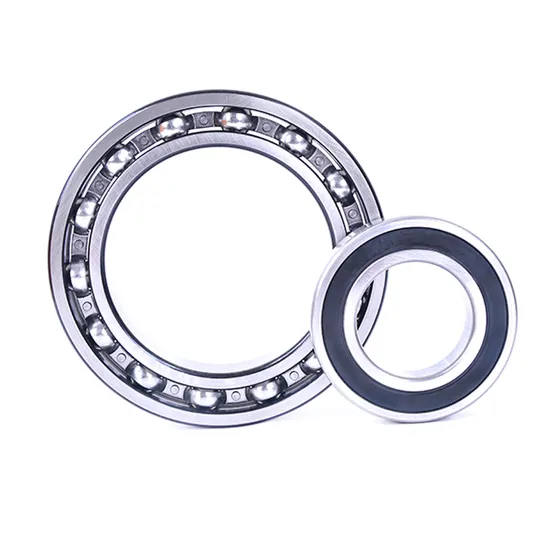
The credit mechanism should be straightforward. Typically, the total cost of the sample—including the unit price and freight—is credited against the first bulk order that meets a specified Minimum Order Quantity (MOQ). For example, if a buyer purchases a container load of deep groove ball bearings and pillow block units, the sample cost is deducted from the final invoice. This policy encourages conversion from trial to volume. [NEED_CITE: best practices for sample-to-order conversion rates in B2B industrial sales]
In one case, a distributor in Southeast Asia requested mixed-brand samples to test market response. The supplier charged for the samples but provided a tiered deduction structure. If the buyer placed an order within three months, 100% of the sample cost was credited. If the order was placed within six months, 50% was credited. After six months, no credit applied. This structure created urgency and helped the supplier forecast demand. Without such terms, the sample cost becomes a sunk expense, and the buyer loses leverage in subsequent negotiations.
It is crucial to document this agreement in writing, preferably in the proforma invoice or a separate email confirmation. Verbal promises are difficult to enforce across borders. The agreement should specify which products qualify for the credit. Often, suppliers restrict credits to the same SKU or brand family. For multi-brand sourcing, ensure the credit applies to the total order value, not just specific lines. This flexibility supports distributors who need to consolidate various bearing types—such as tapered roller bearings and insert bearings—into a single shipment to optimize freight costs.
This approach turns the sample fee into a deposit, reducing the perceived risk for the buyer while securing commitment from the supplier.
What Defines a "Failed" Sample in Industrial Applications?
Subjective dissatisfaction is not a valid reason for rejection; technical parameters are.
Defining what constitutes a "failed" sample is critical to avoiding disputes. Buyers often reject samples based on subjective feelings, such as "it feels rough" or "the noise seems high." However, without objective criteria, these rejections are arbitrary and can damage supplier relationships. Industrial bearings must be evaluated against specific technical standards.
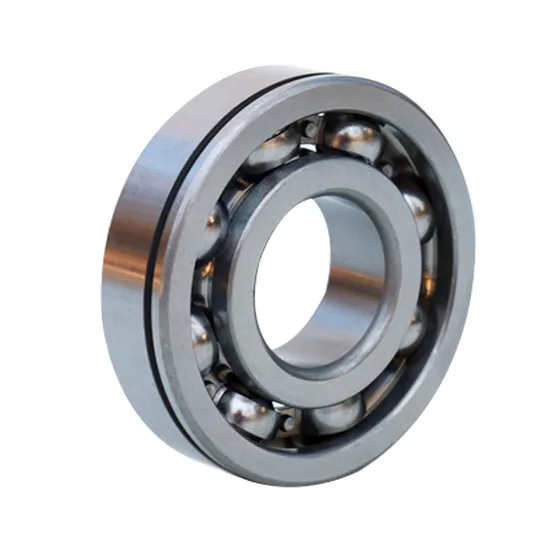
For pillow block bearings, key acceptance criteria include dimensional accuracy, vibration levels, and noise ratings. The inner diameter tolerance, outer diameter tolerance, and width tolerance must match the ISO standards for the specified precision class, typically P0 or P6 for general industrial use. [NEED_CITE: ISO 492 standards for radial rolling bearing tolerances] Vibration measurements should be taken using a calibrated sensor, comparing the sample against the manufacturer’s baseline data. Excessive vibration indicates internal defects, poor assembly, or contamination.
A mining operator in Australia once rejected a batch of spherical roller bearing samples because they produced a humming sound during initial rotation. Upon investigation, the sound was due to the grease viscosity being optimized for high temperatures, which is thicker at room temperature. Once the bearings reached operating temperature, the noise disappeared, and performance was normal. Had the acceptance criteria included a thermal run-in test, the rejection would have been avoided.
Another common issue is seal integrity. For applications in dusty or wet environments, such as cement plants or agricultural machinery, the sealing system must withstand specific pressure differentials. A simple visual inspection is insufficient. Buyers should request test reports or conduct simple leak tests if possible. If the sample fails to meet these objective parameters, it is a valid rejection. If it passes, subjective preferences should not override technical compliance.
Establishing these criteria before receiving the sample ensures that the evaluation is fair, technical, and focused on operational suitability.
Checklist for Your Next Bearing Sample Request
Standardize your request to eliminate ambiguity and accelerate approval.
To streamline the sampling process, buyers should include specific clauses in their request emails or purchase orders. This checklist ensures that all critical aspects of the transaction are covered, reducing back-and-forth communication and preventing misunderstandings.
First, specify the exact part number and brand preference. For pillow block bearings, include the housing type (e.g., square flange, take-up unit) and the insert bearing series. Mention if equivalent brands are acceptable for comparison. Second, define the Incoterm clearly. State whether you expect DDP, DAP, or if you will arrange your own courier account. Third, outline the credit policy. Ask explicitly if the sample cost can be deducted from future bulk orders and what the MOQ threshold is.
Fourth, request traceability documentation. Even for samples, ask for the original packing list and any available quality certificates. This helps verify authenticity and prepares your customs broker for the eventual bulk shipment. Fifth, set a timeline for feedback. Inform the supplier when you plan to complete the testing and make a decision. This shows professionalism and helps the supplier manage their inventory.
Finally, confirm the packaging requirements. Industrial bearings are sensitive to moisture and shock. Ensure that the supplier uses anti-rust paper and sturdy boxing, especially for air freight. A damaged sample due to poor packaging wastes time and delays the project. By including these points in your initial request, you demonstrate expertise and reduce the likelihood of logistical errors.
Using a standardized checklist transforms the sample request from a casual inquiry into a professional procurement action.
Conclusion
Sample terms are the foundation of a trustworthy supply chain.
Clear agreements on costs, freight, and technical criteria protect both buyers and suppliers. They prevent hidden expenses, ensure objective quality validation, and facilitate smoother transitions to bulk orders. By treating sample requests with the same rigor as large contracts, industrial buyers can minimize risk and build stronger partnerships with global bearing suppliers.