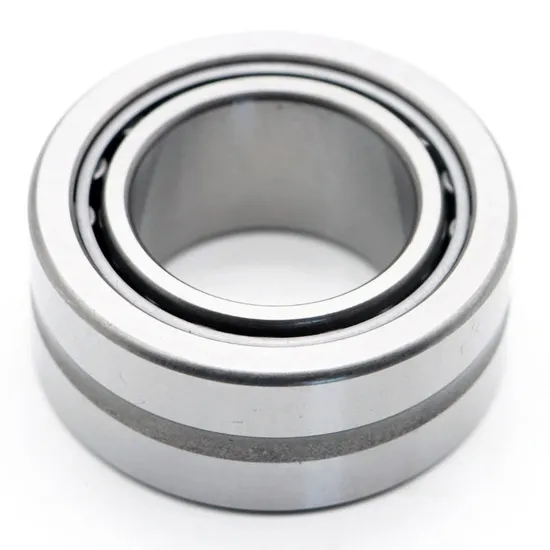
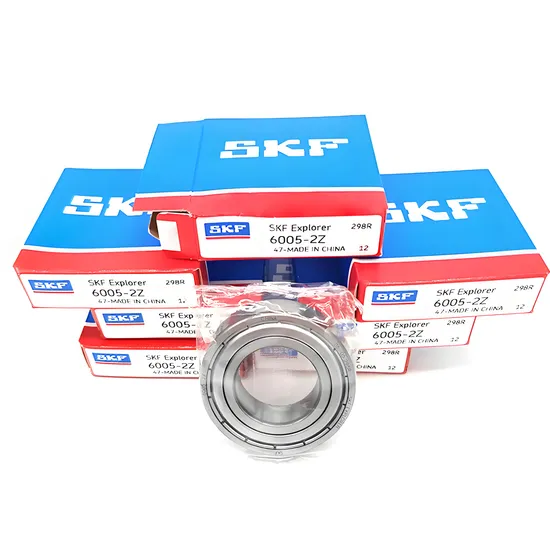
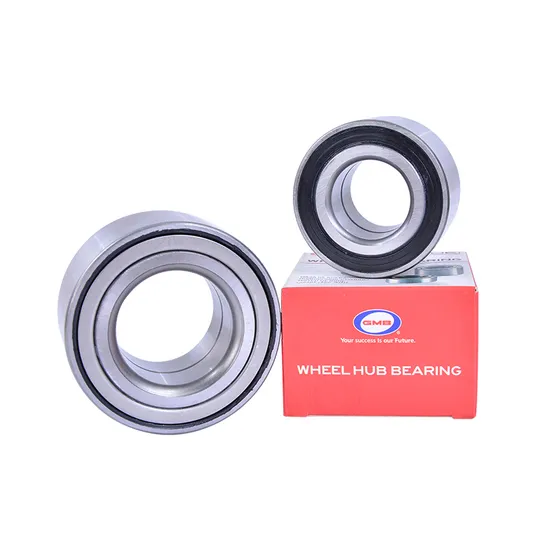
OEM Needle Roller Bearing Wholesale Supplier for Austria Market
Most buyers assume OEM means lower quality, but the real issue is often a lack of standardized inspection processes rather than the manufacturing capability itself.
Sourcing an OEM needle roller bearing supplier Austria requires a shift in focus from unit price to process control. Austrian industrial standards demand rigorous dimensional tolerance management, full material traceability, and batch consistency. The core solution lies in selecting a partner who provides verifiable CPK reports, heat treatment logs, and ISO-compliant documentation, ensuring that custom bearings meet or exceed original equipment specifications without the premium brand markup.
Having spent years on the assembly floors of machinery plants in the Yangtze River Delta before moving into supply chain management, I learned that European buyers do not just buy parts; they buy risk mitigation. I recall a specific incident where a batch of needle bearings for an agricultural gearbox caused severe noise issues after installation. The problem was not the steel quality, but a keeping cage clearance that exceeded the drawing by a fraction of a millimeter. The Austrian engineer did not accept a replacement promise; he demanded the process capability index reports for that specific production run. This experience highlighted that for the Austrian market, transparency in manufacturing data is as critical as the physical product. [NEED_CITE: importance of statistical process control in bearing manufacturing]
Why Do Austrian Buyers Struggle with OEM Needle Bearings?
The primary friction point for Austrian distributors and OEMs sourcing from abroad is not language, but the divergence in quality execution standards. While many Chinese factories can produce bearings that look identical to premium brands, the internal consistency often varies between batches. Austrian engineering culture, deeply influenced by DIN standards, expects zero deviation from specified tolerances. When this expectation meets a supplier who relies on final random inspection rather than inline process control, failures occur.
A common misconception is that needle roller bearings are simple components that do not require complex testing. In reality, their high load-carrying capacity relative to their size makes them extremely sensitive to surface roughness and hardness uniformity. A slight variation in the heat treatment cycle can lead to premature spalling under heavy loads. [NEED_CITE: failure modes of needle roller bearings under high load]
I have observed that many suppliers fail to provide detailed feedback on why a specific batch failed. They might offer a refund, but they rarely share the root cause analysis. For an OEM needle roller bearing supplier Austria, the ability to explain the "why" behind a defect is what builds long-term trust. It shows that the manufacturer understands the metallurgy and mechanics, not just the machining process.
Key Technical Specifications for Custom Needle Roller Bearings
When defining requirements for custom needle bearings, vague descriptions like "high quality" are insufficient. Buyers must specify exact technical parameters that align with international standards. The selection of radial internal clearance, cage material, and tolerance class dictates the performance and lifespan of the bearing in its application.
| Specification Parameter | Standard Commercial Grade | Precision OEM Grade for Austria | Verification Method |
|---|---|---|---|
| Tolerance Class | Normal (PN) | P6 or P5 equivalent | Micrometer measurement report |
| Radial Internal Clearance | CN (Normal) | C2 or C3 based on application | Clearance gauge check |
| Cage Material | Stamped Steel | Machined Brass or Polymer | Material certification |
| Surface Roughness | Standard grind | Super-finish raceways | Profilometer data |
| Hardness Uniformity | Batch average | Individual piece verification | Hardness tester logs |
Choosing the correct radial internal clearance is critical. For applications with significant thermal expansion, such as gearboxes in heavy machinery, a C3 clearance is often necessary to prevent seizing. Conversely, precision machine tools may require C2 clearance for higher rigidity. [NEED_CITE: guide to selecting radial internal clearance for roller bearings]
The cage material also plays a vital role. While stamped steel cages are cost-effective, machined brass cages offer better guidance and durability in high-speed or high-vibration environments. For corrosive environments, polymer cages might be the preferred choice. An experienced OEM needle roller bearing supplier Austria will guide the buyer through these trade-offs based on the specific operating conditions rather than pushing the cheapest option.
How to Verify Supplier Quality Control Capabilities?
Verifying a supplier’s quality control system requires more than reviewing a generic ISO certificate. It involves examining the actual records generated during production. The "three-document match" method is a reliable way to assess authenticity: cross-referencing the purchase order, the quality inspection report, and the logistics packing list. If the batch numbers do not align across these documents, the traceability chain is broken.
In one case, an Austrian automotive tier-2 supplier conducted a remote audit of a potential partner. They focused specifically on the heat treatment furnace temperature curves. The supplier was asked to provide the actual temperature logs for the last three months, not just a summary certificate. The ability to produce these granular records demonstrated a mature quality management system. [NEED_CITE: importance of heat treatment process monitoring in bearing steel]
Another critical aspect is the handling of non-conforming products. A robust supplier will have a clear quarantine procedure for rejected parts. During a virtual factory tour, look for designated red-tag areas and segregated waste bins. If defective parts are mixed with good inventory, the risk of accidental shipment increases significantly.
As a supplier who values long-term partnerships, we ensure that every batch of needle rollers undergoes strict dimensional and hardness testing. We provide detailed inspection reports that include actual measured values, not just pass/fail stamps. This level of transparency allows Austrian buyers to perform their own incoming quality control with confidence, reducing the time spent on verification.
Logistics and Documentation for Seamless Import to Austria
Importing bearings into Austria involves strict customs regulations and documentation requirements. Incomplete or inaccurate paperwork can lead to delays, storage fees, and even seizure of goods. For an OEM needle roller bearing supplier Austria, understanding these logistical nuances is part of the service offering.
Key documents include the commercial invoice, packing list, certificate of origin, and material test certificates. For certain industrial applications, CE conformity declarations may also be required. It is essential that the description of goods on the invoice matches exactly with the HS code used for customs clearance. Discrepancies in weight or quantity between the packing list and the actual cargo can trigger inspections.
Packaging integrity is another often-overlooked factor. Needle bearings are susceptible to corrosion if exposed to moisture during transit. Using vacuum-sealed packaging with desiccants and robust outer cartons can prevent rust formation. Additionally, clear labeling with barcodes facilitates easy identification upon arrival, reducing the risk of mixing up similar-looking models in the warehouse.
A previous client faced issues when a shipment arrived with damaged outer boxes, leading to concerns about internal contamination. By switching to reinforced packaging and adding shock indicators, we eliminated this risk. This attention to detail ensures that the bearings arrive in pristine condition, ready for immediate use or stock. [NEED_CITE: best practices for packaging and shipping precision mechanical components]
Conclusion
Quality in OEM needle bearings is defined by consistency and traceability, not just initial performance.
Selecting the right OEM needle roller bearing supplier Austria involves verifying technical capabilities through data-driven evidence rather than marketing claims. Focus on suppliers who provide detailed process controls, transparent documentation, and robust logistical support. By prioritizing these factors, buyers can secure a reliable supply chain that meets the high standards of the Austrian industrial market.