
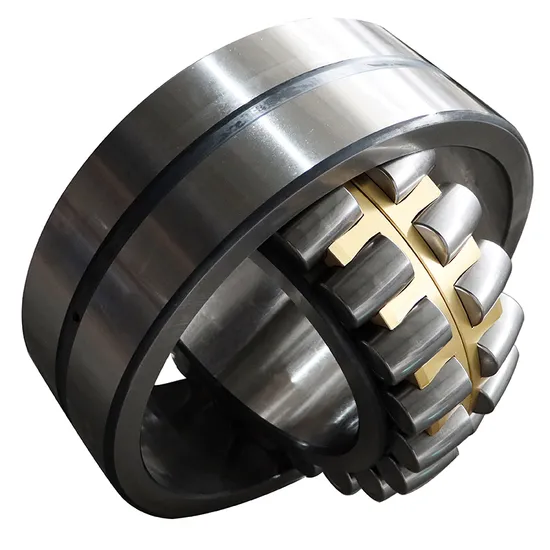
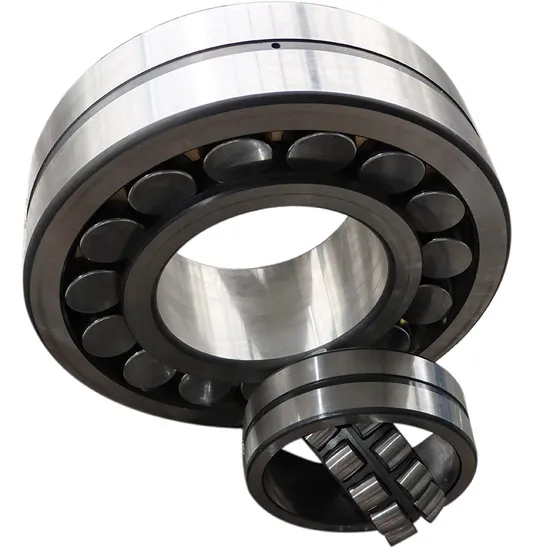
KOYO & SKF Bearing Installation Tooling Requirements Wholesale Supplier
Hammering an inner race onto a shaft feels solid until the first micro-crack propagates under load.
Proper KOYO SKF bearing installation demands three non-negotiable tooling categories: hydraulic pullers sized to the shaft’s interference fit, induction heaters capped at controlled temperature thresholds, and laser alignment instruments for post-mount verification. Skipping any one of them in high-dust, high-temperature environments routinely cuts service life in half.
I remember a shipment of spherical roller bearings heading to a Saudi cement plant years ago. The site crew had no hydraulic puller on hand, so they drove the inner race home with a steel hammer. Two days later the line stopped, the customer walked in holding a fractured inner ring, and the blame landed squarely on the bearing. It was not the bearing’s fault — it was the tooling gap. Since that day, every quotation I send includes a tooling checklist, and I do not release the shipment until the buyer confirms puller tonnage and heater specs in writing. [NEED_CITE: ISO 15243 damage classification for improper mounting]
Let me walk you through the tooling requirements, the calculation logic behind them, and the field mistakes that keep showing up across continents.
What Are the Essential Tools for KOYO SKF Bearing Installation?
Three tool families form the baseline for any professional mounting operation: mechanical or hydraulic pullers, induction or oil-bath heaters, and precision alignment gauges.
The reasoning is straightforward. Interference-fit bearings require controlled axial force, not impact. Heated expansion must be uniform and measurable, not guessed. Post-installation alignment must be verified, not assumed. Each tool addresses a distinct failure mode documented in mounting guidelines. [NEED_CITE: SKF mounting and dismounting guidelines for rolling bearings]
Here is the minimum toolkit for a maintenance team handling medium to large spherical roller bearings, tapered roller bearings, and deep groove ball bearings:
| Tool Category | Function | Specification Range |
|---|---|---|
| Hydraulic puller | Controlled axial extraction of inner ring | Tonnage matched to interference fit |
| Induction heater | Uniform thermal expansion of inner ring | Temperature capped below material transformation threshold |
| Mechanical press | Controlled press-fit for smaller bore sizes | Force capacity exceeding mounting load |
| Laser alignment kit | Shaft-to-housing coaxiality check | Micron-level readout |
| Mounting sleeve | Force distribution during press-fit | Hardened steel, bore-matched |
| Feeler gauge set | Internal clearance verification | Standard metric set |
A maintenance engineer at a Latin American mining operation once told me they relied on a torch to heat bearings before sliding them onto shafts. The localized overheating created uneven expansion, and the bearing seated cocked. Vibration readings spiked within weeks. Switching to a properly calibrated induction heater brought the vibration baseline back to acceptable levels. [NEED_CITE: ABMA standard for bearing mounting practices]
How to Select the Right Hydraulic Puller Tonnage?
Puller tonnage must exceed the axial force required to overcome the interference fit, with a safety margin that prevents the tool from stalling mid-stroke.
The calculation starts with the interference fit class. For a standard shaft-to-inner-ring fit in the range of transition to light interference, the axial mounting force depends on bore diameter, fit length, and the coefficient of friction between the mating surfaces. Manufacturers publish force curves for common fit classes, and the puller must be rated above the peak of that curve. [NEED_CITE: ISO tolerance classes for shaft and housing fits]
Here is the logic chain I follow when specifying a puller for a KOYO SKF bearing installation job:
- Identify the bearing bore diameter and the shaft fit class from the engineering drawing.
- Calculate the contact area between the inner ring bore and the shaft journal.
- Apply the friction coefficient for steel-on-steel dry or lightly oiled contact.
- Derive the peak axial force required to initiate movement.
- Select a puller rated at least one tier above that peak force.
The mistake I see most often is undersizing the puller. A puller operating near its maximum rating will stall, and the operator will resort to side-loading or prying — both of which damage the shaft journal and the inner ring bore. I once watched a crew in a West African processing plant use a puller rated for half the required tonnage. The jaws slipped, gouged the shaft, and the entire rotor had to be re-machined. The downtime cost dwarfed the price difference between the correct puller and the one they bought.
A second mistake is ignoring jaw geometry. Three-jaw pullers distribute force evenly; two-jaw pullers create asymmetric loading that can tilt the inner ring during extraction. For precision applications, always specify a three-jaw or, better yet, a hydraulic puller with a centering mandrel.
What Temperature Settings Prevent Damage During Heating?
Induction heater temperature must stay below the threshold where the bearing steel’s microstructure begins to change — typically around the lower transformation point of the alloy.
The metallurgical reasoning is critical. Bearing rings are through-hardened or case-hardened to achieve the surface hardness needed for rolling contact fatigue resistance. Heating beyond the tempering temperature — or worse, approaching the austenitizing range — will soften the raceway, reduce load-carrying capacity, and accelerate spalling. The exact threshold depends on the steel grade, but the general rule is to keep expansion heating well below any transformation point. [NEED_CITE: bearing steel heat treatment and tempering temperature guidelines]
The procedure I recommend for KOYO SKF bearing installation heating is:
- Set the induction heater to a target temperature that provides sufficient expansion for the fit clearance, typically in the range of moderate thermal expansion.
- Use a contact pyrometer or integrated temperature sensor — never rely on time-based estimates.
- Heat the inner ring uniformly; rotate the bearing if the heater design requires it.
- Slide the bearing onto the shaft promptly and hold axial pressure until the ring cools and contracts.
- Allow the assembly to reach ambient temperature before applying load.
In a Middle East oilfield environment where ambient temperatures already push the upper limit, I have seen crews crank the heater setting higher to compensate for faster heat dissipation. The result was overheating. The bearing’s dimensional stability degraded, and the internal clearance shifted out of specification. The replacement cycle shortened noticeably. [NEED_CITE: induction heater operating parameters for bearing mounting]
A related point: oil-bath heating remains valid for smaller bearings, but the oil must be clean and the temperature controlled with a thermostat. Contaminated oil introduces particulate into the bearing during the expansion window, and uncontrolled oil temperature risks the same metallurgical damage as an unregulated induction heater.
Why Do Field Mistakes Halve Bearing Life?
The three most common field errors — impact mounting, uncontrolled heating, and misaligned press-fit — each attack a different failure mechanism, and their combined effect is multiplicative rather than additive.
Impact mounting introduces micro-cracks in the inner ring bore and the raceway. These cracks are invisible at installation but propagate under cyclic loading, leading to early subsurface-originated spalling. The damage pattern matches the classification for mounting-induced defects in failure analysis standards. [NEED_CITE: ISO 15243 rolling bearing damage categories]
Uncontrolled heating, as discussed above, alters the metallurgical structure. The raceway softens, micro-pitting initiates earlier, and the bearing’s fatigue life drops substantially.
Misaligned press-fit — where the force is applied through the wrong ring or at an angle — creates brinelling on the raceway and uneven contact stress distribution. The bearing may appear to run smoothly at first, but the localized stress concentration becomes a fatigue initiation site.
I reviewed a failure case from a Southeast Asian paper mill where all three errors were present in a single installation. The maintenance team hammered the bearing onto the shaft, heated it with a torch on one side only, and did not check alignment afterward. The bearing failed within months, and the root cause analysis listed mounting damage as the primary factor. The mill’s maintenance manager estimated that proper tooling and procedure would have extended service life substantially. [NEED_CITE: bearing failure root cause distribution per industry surveys]
The takeaway is that tooling is not optional overhead — it is load-bearing infrastructure for the bearing’s service life.
How to Verify Tooling Specs Before Deployment?
Before any KOYO SKF bearing installation begins, the procurement and maintenance teams must confirm puller tonnage, heater temperature range, and alignment instrument calibration against the bearing manufacturer’s published requirements.
The verification process I follow involves a short but structured document exchange. It prevents the kind of mismatch that leads to the field mistakes described above. Here are the steps:
- Request the bearing manufacturer’s mounting force calculation for the specific bore and fit class.
- Compare the required puller tonnage against the available tool inventory.
- Confirm the induction heater’s maximum temperature setting and verify it stays below the steel’s transformation threshold.
- Check the calibration certificate for the laser alignment instrument.
- Document the tooling confirmation in writing — an email trail is sufficient — before authorizing the installation.
This last step matters more than it sounds. I have lost count of the times a tooling confirmation email saved a deployment from going sideways. A buyer in Central Asia once received a batch of tapered roller bearings without verifying the puller spec. The puller on site was rated for a fraction of the required force. The installation stalled, the inner ring cracked, and the replacement cycle added weeks to the project timeline. A two-email exchange confirming the puller tonnage would have caught the gap before the bearing left the warehouse.
When sourcing from a KOYO SKF bearing installation tooling wholesale supplier, ask for the tooling specification sheet alongside the bearing quotation. Reputable suppliers will provide the mounting force data, recommended heater settings, and alignment tolerances as part of the technical package. If they do not, treat it as a red flag. [NEED_CITE: bearing manufacturer technical documentation standards]
Conclusion
Tooling is not an accessory — it is the foundation of bearing reliability.
Proper KOYO SKF bearing installation requires hydraulic pullers sized to the interference fit, induction heaters with controlled temperature limits, and alignment instruments verified by calibration. Field shortcuts — impact mounting, torch heating, unverified press-fits — introduce damage that compounds across the bearing’s service life. Confirming tooling specifications before deployment costs nothing compared to the price of a premature failure.