
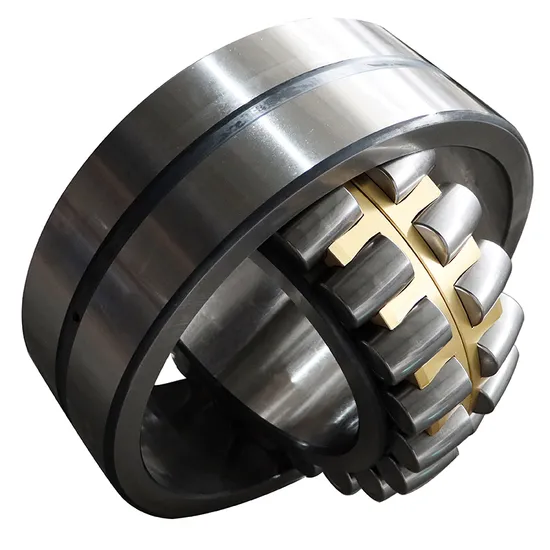
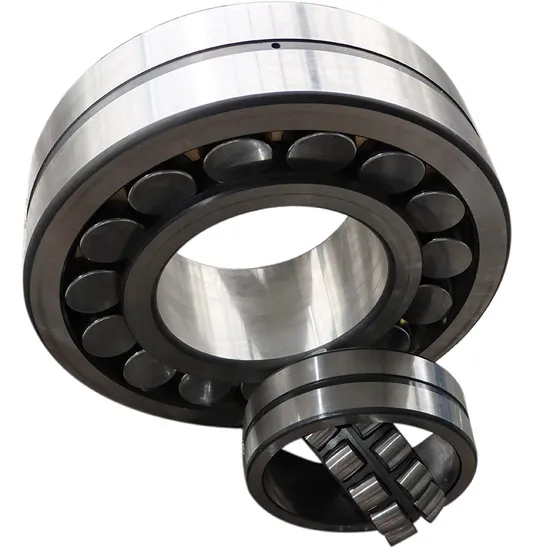
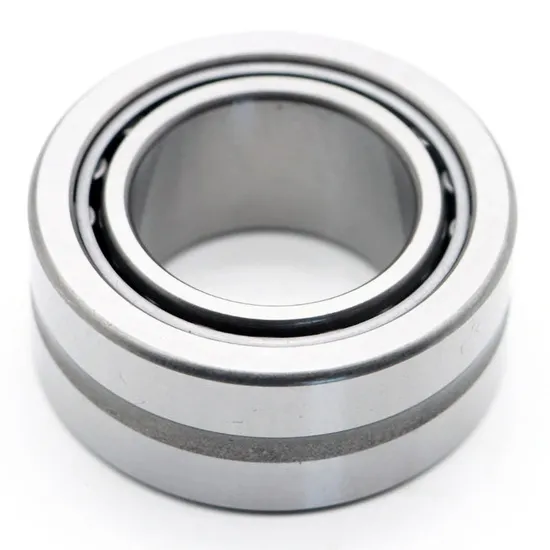
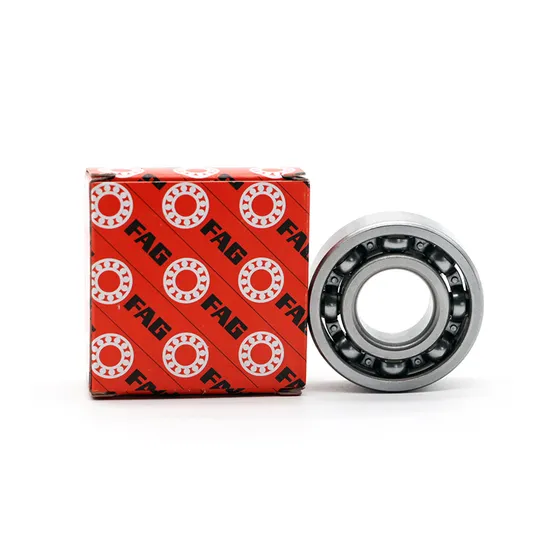
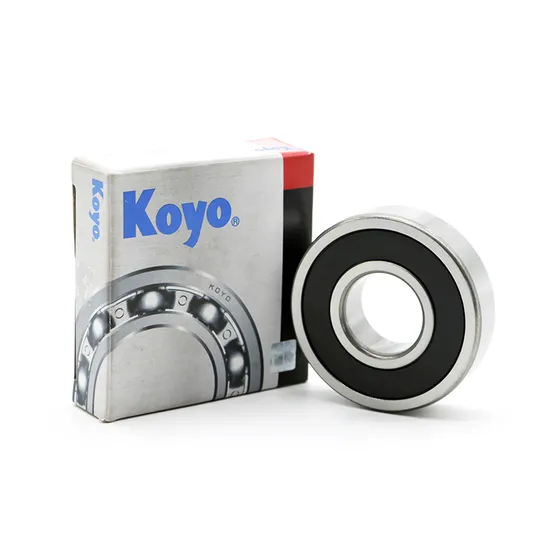
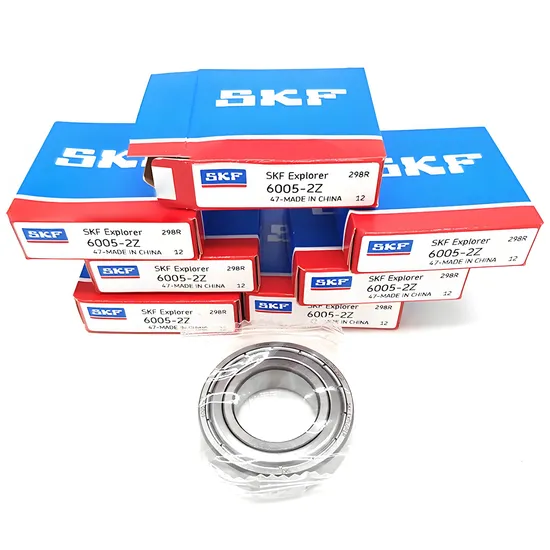
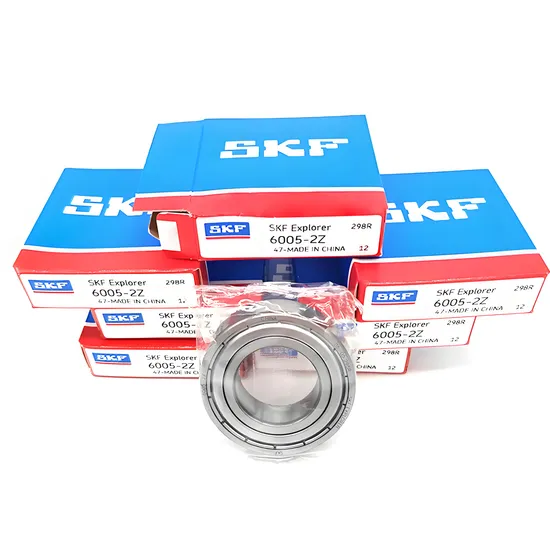
KOYO and SKF Bearings for Japanese HVAC OEM Applications Wholesale Supplier
Same nominal dimensions do not guarantee same field performance.
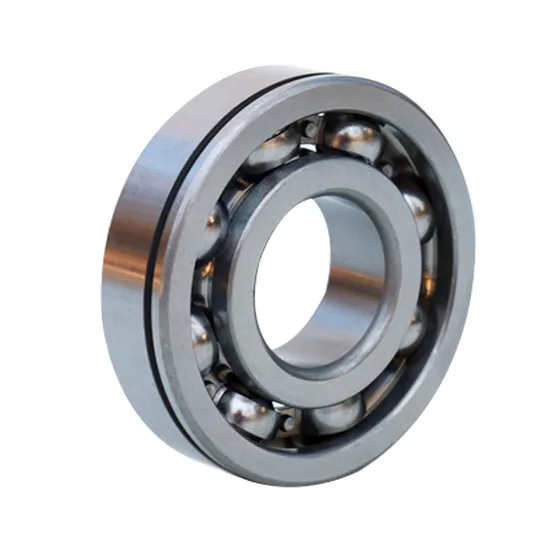
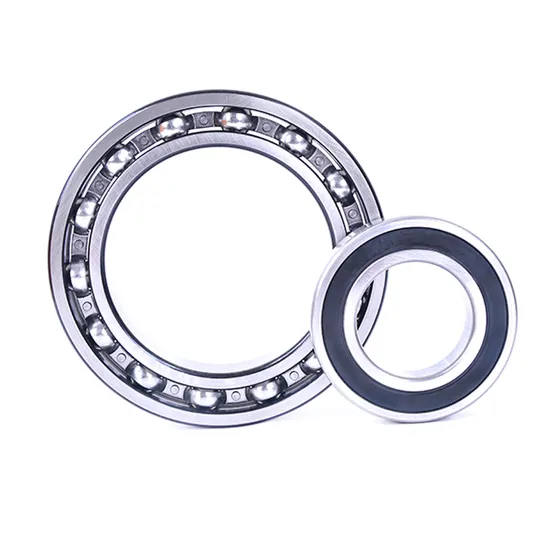
KOYO and SKF bearings share dimensional interchangeability in deep groove ball series (6205, 6206, 6305) widely used in Japanese HVAC OEM systems, but cage material, internal clearance class, and grease fill determine real-world compatibility. Procurement must verify cross-reference beyond bore/OD/width, and authenticate sourcing through authorized channels to avoid batch failure.
Working across Southeast Asian HVAC assembly lines for years, I have seen compressors and fan motors fall silent within months—not because the bearing was the wrong size, but because the cage melted under continuous high-speed rotation or the grease dried out in tropical heat. A Japanese-brand air handling unit assembled in Jakarta once returned an entire batch of commercial fan coils after three months; the bearings installed were stamped with a familiar logo, yet the polyamide cages showed visible deformation. Tracing the shipment revealed a middleman had substituted domestically produced replicas. The rework cost ran into mid-six-figure figures in local currency, far exceeding any procurement savings. That incident reinforced a hard rule: KOYO and SKF bearings in HVAC OEM demand cross-reference discipline and origin verification before a single unit reaches the assembly floor [NEED_CITE: ISO 15243 damage classification for rolling bearing failures].
Cross-referencing is not merely matching numbers—it is matching engineering intent. Let us walk through how Japanese HVAC OEMs select between these two brands, how to build a reliable interchange table, and how to keep counterfeit units out of your warehouse.
Why Do Japanese HVAC OEMs Specify Both KOYO and SKF Bearings?
Japanese HVAC manufacturers source from both KOYO and SKF because each brand offers complementary strengths in deep groove ball bearing series, yet neither is universally superior across all compressor and fan motor positions.
KOYO, part of JTEKT Corporation, has long supplied OEM bearings for Japanese automotive and industrial equipment, including HVAC compressors and blower motors. Their production facilities emphasize tight batch consistency and cage designs optimized for high-speed, low-torque operation typical of inverter-driven fan motors [NEED_CITE: JTEKT corporate product lineage and HVAC application history]. SKF, headquartered in Gothenburg, brings decades of global HVAC experience, particularly in large commercial rooftop units and chillers where thermal stability and extended relubrication intervals matter.
In practice, a Japanese OEM’s engineering team may specify KOYO for high-volume residential split-system compressors—where cost efficiency and compact envelope are priorities—while selecting SKF for commercial AHU fan arrays that run continuously at elevated ambient temperatures. The two brands’ 6205 and 6206 deep groove ball bearings share identical bore, outer diameter, and width per ISO 15 dimension standards [NEED_CITE: ISO 15 rolling bearing boundary dimensions]. Yet internal design diverges: cage material (pressed steel vs. polyamide vs. machined brass), internal clearance class (C2 vs. C3), and grease type (lithium-based vs. synthetic ester) differ between brands and even between sub-series within the same brand.
A Southeast Asian distributor once told me his customers kept requesting "the SKF equivalent" for KOYO 6206 bearings used in Daikin-style fan coils. When he simply matched bore and OD without checking clearance class, the replacement bearings ran hotter and failed prematurely. The root cause was not the brand—it was the clearance. The original KOYO units used C3 clearance for thermal expansion in tropical conditions; the SKF units he sourced were standard CN clearance, too tight for the operating environment.
The takeaway is straightforward: Japanese HVAC OEMs do not treat KOYO and SKF as interchangeable labels. They assign each brand to specific duty cycles, and procurement teams must understand the engineering rationale behind each selection.
How to Build a Reliable KOYO and SKF Bearing Cross-Reference for HVAC
A valid cross-reference must match bore, outer diameter, width, cage type, internal clearance class, and seal/shield configuration—skipping any of these risks field failure.
Building a cross-reference table for KOYO and SKF bearings in HVAC applications requires more than copying numbers from a catalog. The process follows a structured sequence:
-
Confirm boundary dimensions per ISO 15. Both brands adhere to this standard, so a KOYO 6205 and SKF 6205 share the same 25 mm bore, 52 mm OD, and 15 mm width. This is the baseline, not the finish line.
-
Identify cage material and design. KOYO often uses pressed steel cages (suffix CR or no suffix in certain series) for general HVAC fan motors, while SKF may offer polyamide PA66 cages (suffix TN9) for higher-speed applications. In compressor positions where temperatures exceed 120°C, machined brass cages (KOYO suffix M, SKF suffix M) become necessary. Substituting a polyamide cage in a high-heat compressor position leads to cage softening and ball skidding [NEED_CITE: bearing cage material temperature limits per ISO 10446].
-
Match internal clearance class. HVAC fan motors operating in tropical or high-ambient environments typically require C3 clearance to accommodate thermal expansion of inner and outer rings. Using standard CN clearance in these conditions creates excessive preload, raising operating temperature and shortening grease life. Always verify the clearance suffix: KOYO uses C3, SKF uses C3—same notation, but confirm the drawing specifies it.
-
Check seal or shield type. Open bearings (no suffix) are used in oil-lubricated compressor sumps. Shielded bearings (KOYO ZZ, SKF 2Z) suit fan motors where dust ingress is a concern but relubrication is planned. Sealed bearings (KOYO 2RS, SKF 2RSH) are for life-lubricated, maintenance-free positions. Mixing shielded and sealed types in the same application can cause overheating if the seal creates excessive friction at high RPM.
-
Verify grease fill type and quantity. Even if all mechanical parameters match, incompatible grease can cause channelling or oxidation. Japanese OEMs often specify low-torque synthetic greases for inverter-driven motors.
| Parameter | KOYO Example (6206) | SKF Example (6206) | HVAC Match Check |
|---|---|---|---|
| Bore × OD × Width | 30 × 62 × 16 mm | 30 × 62 × 16 mm | Verified per ISO 15 |
| Cage Material | Pressed steel (standard) / Polyamide (TN) / Brass (M) | Pressed steel (standard) / Polyamide (TN9) / Brass (M) | Must match application speed and temperature |
| Internal Clearance | C3 for tropical HVAC | C3 for tropical HVAC | Confirm drawing specifies C3 |
| Shield/Seal | ZZ (shielded) / 2RS (contact seal) | 2Z (shielded) / 2RSH (contact seal) | Match lubrication strategy |
| Grease Fill | Standard lithium or custom synthetic | Standard lithium or custom synthetic | Verify compatibility with OEM spec |
A maintenance team at a commercial complex in Manila once replaced failed KOYO 6305 fan motor bearings with SKF 6305 units sourced from a local trader. The dimensions matched, but the SKF units had standard CN clearance and polyamide cages. Within weeks, the motors drew higher current and tripped thermal protectors. The clearance was too tight for the outdoor ambient temperature, and the polyamide cage generated additional friction. Switching to C3 clearance with pressed steel cages resolved the issue.
When building your cross-reference library, treat each bearing position as a unique application. The same bearing number can have multiple valid cross-references depending on cage, clearance, and seal requirements.
How to Identify Counterfeit KOYO and SKF Bearings in HVAC Procurement
Authenticity verification requires three layers of evidence: authorized distributor status, country-of-origin documentation, and physical packaging inspection—relying on any single layer leaves gaps.
Counterfeit KOYO and SKF bearings are a persistent threat in HVAC procurement, particularly when buyers chase the lowest unit price. The fakes look convincing: correct part numbers, similar packaging colors, even engraved markings on the outer ring. But under the hood, the steel quality, heat treatment, and cage materials fall far short of OEM specifications.
The first verification layer is the authorized distributor chain. Both KOYO (through JTEKT) and SKF maintain published lists of authorized distributors by country. A legitimate supplier should provide verifiable proof of their position in this chain—either a direct authorization certificate or a traceable purchase record from an authorized tier-one dealer [NEED_CITE: SKF authorized distributor verification process]. If a supplier cannot or will not show this documentation, walk away.
The second layer is country-of-origin identification. KOYO bearings for the global market are manufactured in Japan, Thailand, and China, depending on the series and destination. SKF produces in Sweden, France, Germany, China, India, and Brazil, among other locations. The origin marking on the bearing outer ring and packaging must match the documented origin for that specific part number and batch. A bearing marked "Made in Japan" for a KOYO 6206 that should originate from KOYO’s Thai facility is a red flag. Request mill certificates or import customs documents that tie the batch to its declared origin [NEED_CITE: bearing country-of-origin marking standards per ISO 15].
The third layer is physical and packaging inspection. Authentic KOYO and SKF bearings feature laser-etched part numbers with consistent font depth and spacing. The packaging boxes use specific holographic seals, QR codes, or tamper-evident tape that can be verified through the manufacturer’s official app or website. Counterfeit packaging often has slightly off-color printing, blurred logos, or missing security features. Open the box and inspect the bearing: genuine units have a uniform, bright metallic finish on the rings and balls, with no visible grinding marks or rust preventive that smells unusual. The cage should be cleanly stamped or machined, with no burrs or flash.
A bearing distributor in the Middle East once showed me a batch of SKF 6205-2RSH bearings he had intercepted before delivery to an HVAC contractor. The packaging looked correct at first glance, but the QR code on the box led to a generic website, not SKF’s official verification portal. The bearings inside had a slightly dull finish, and the grease smelled of cheap mineral oil rather than the specified synthetic. Had those bearings been installed in a commercial AHU, they would have failed within months, taking the contractor’s reputation and the distributor’s relationship with the client.
Build a standard operating procedure for incoming inspection: verify authorization, check origin documents, inspect packaging security features, and sample-open bearings for visual and tactile inspection. Document every step. This discipline costs time but prevents catastrophic field failures.
What Failure Modes Do Counterfeit Bearings Cause in HVAC Equipment?
Counterfeit bearings in HVAC systems fail through cage deformation, premature grease degradation, and raceway spalling—failure patterns that differ from genuine bearing wear-out and often cause collateral damage to motors and compressors.
When a counterfeit KOYO and SKF bearing fails in an HVAC unit, the failure is rarely a clean end-of-life event. The substandard materials and poor manufacturing quality produce specific, recognizable damage patterns that experienced maintenance teams can identify during teardown.
The most common failure mode in HVAC fan motors is cage deformation. Counterfeit bearings often use inferior polyamide compounds or thin pressed-steel cages that cannot withstand continuous high-speed operation. As the cage deforms, the balls lose their proper spacing, leading to skidding, increased friction, and localized overheating. The motor draws more current, the insulation degrades, and eventually the motor burns out—often blamed on the motor itself rather than the bearing that caused the cascade.
In compressor applications, counterfeit bearings exhibit premature raceway spalling. The bearing steel in fakes typically has higher inclusion content and inconsistent hardness, leading to subsurface fatigue cracks that break through to the raceway surface far earlier than the designed L10 life [NEED_CITE: rolling bearing fatigue life calculation per ISO 281]. The spalling generates metallic debris that circulates through the compressor oil, damaging other components and contaminating the entire refrigeration circuit. The repair cost escalates from a simple bearing replacement to a full compressor overhaul or system flush.
A commercial HVAC service provider in Southeast Asia reported a pattern of compressor failures across multiple rooftop units within a single cooling season. The units had been retrofitted with replacement bearings sourced from a low-cost supplier. Teardown analysis revealed that the counterfeit bearings had developed spalling on both inner and outer raceways within months, while the original genuine bearings in identical units showed only normal, even wear after years of service. The metallic debris from the spalling had scored the compressor scroll plates and damaged the shaft seal, leading to refrigerant leaks. The total repair cost—compressor replacement, system flush, refrigerant recharge—ran into mid-six-figure figures across the fleet, dwarfing the small per-unit savings on the counterfeit bearings.
Genuine bearings, by contrast, fail predictably. The grease gradually degrades over extended service life, the raceways develop uniform, shallow wear patterns, and the bearing reaches the end of its calculated fatigue life without catastrophic collateral damage. The difference is not just in bearing longevity—it is in the total cost of ownership and the risk of unplanned downtime.
Conclusion
Dimensional interchangeability is necessary but insufficient; cage, clearance, seal, and origin determine real HVAC performance. Procuring KOYO and SKF bearings for Japanese HVAC OEM applications demands disciplined cross-referencing across all design parameters, rigorous authenticity verification through authorized channels, and incoming inspection that catches counterfeits before they reach the assembly line. The cost of verification is always less than the cost of a fleet-wide field failure.