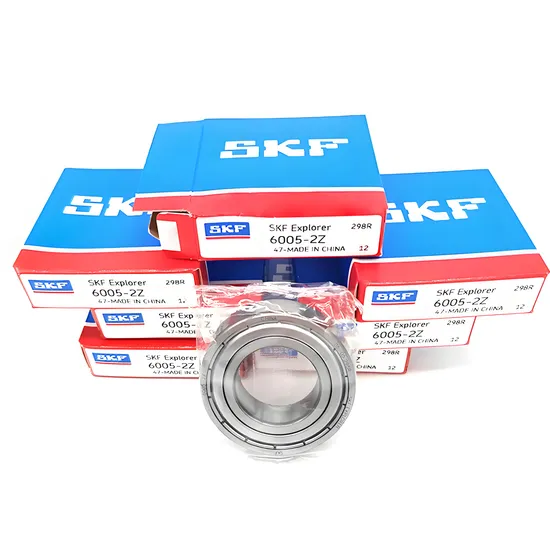
Genuine SKF Supplier for UK: China Factory Direct Wholesale
Price alone never guarantees authenticity; a genuine SKF supplier from China must prove authorization lineage, physical label consistency, and batch-level traceability before any bearing reaches UK soil.
UK buyers sourcing from China secure genuine SKF bearings by demanding tier-1 authorization certificates, verifying physical anti-counterfeit features on packaging and bearing rings, and cross-checking batch numbers against SKF’s global database — a three-layer verification process that eliminates grey-market and counterfeit risk.
I still remember a full container of deep groove ball bearings that arrived at Tilbury a few years back. The buyer, a UK industrial distributor, opened the cartons and immediately flagged the SKF label color as slightly off — a pale blue instead of the standard deep tone. They refused the entire shipment. We spent weeks going back and forth, eventually bringing in SKF’s technical team in Shanghai for formal authentication. The labels had been printed by a subcontractor using non-standard ink batches, not a counterfeit operation, but the color deviation alone was enough to trigger rejection at the port. That case reshaped how I approach every order. Now, when UK buyers ask me how to confirm they are working with a genuine SKF supplier, I walk them through authorization chain verification, physical anti-counterfeit inspection, and batch traceability — three layers that separate real sourcing from guesswork [NEED_CITE: SKF anti-counterfeit verification protocol for global distribution channels].
Securing authentic bearings from a genuine SKF supplier requires systematic verification at every stage — here is how each layer works in practice.
How to Verify SKF Supplier Authorization from China?
A valid SKF authorization certificate is the single most important document any buyer should request before placing an order, and it must be cross-checked for validity period, covered product range, and geographic scope.
The SKF distribution structure operates through clearly defined tiers — manufacturer to authorized national distributor, then to sub-distributors or export traders. Each handoff should leave a documented trail. When I source from a genuine SKF supplier in China, the first thing I pull is the authorization letter issued directly by SKF’s regional office. This document specifies which product categories the supplier is permitted to sell, the certificate’s expiration date, and whether export to specific regions like Europe is explicitly covered [NEED_CITE: SKF authorized distributor network structure and tier verification requirements].
Here is what authorization documentation looks like across different supply scenarios:
| Authorization Level | Certificate Source | Export Coverage | Traceability to SKF | Risk for UK Buyer |
|---|---|---|---|---|
| Tier-1 Authorized Distributor | SKF regional office directly | Explicitly stated | Full batch traceability | Minimal |
| Sub-distributor with valid chain | Tier-1 distributor re-issues | Inherited from parent | Verifiable through parent | Low if chain is complete |
| Trader without authorization | Self-declared or absent | Not applicable | Broken or unverifiable | High — no recourse |
| Multi-layer middleman | Documents missing at intermediate levels | Unknown | Severed at unknown point | Very high — common failure |
A European maintenance operator once came to me after purchasing a batch of 6205 bearings through an online trader. The trader claimed to be authorized but could only produce a certificate from a different brand’s distributor — not SKF. The authorization chain had at least three intermediate hands, and by the time the goods reached the UK, paperwork for the middle layers was simply missing. The buyer had no way to confirm whether the bearings were genuine or whether they had been stored under proper conditions. This is the exact scenario that turns a routine procurement into a liability [NEED_CITE: risks of broken authorization chains in industrial bearing procurement].
When evaluating a genuine SKF supplier, ask for the original authorization certificate — not a photocopy, not a screenshot. Verify that the company name on the certificate matches the commercial invoice exactly. Check whether the authorized product scope includes the specific bearing types you need. And confirm that the geographic coverage explicitly permits export to the United Kingdom.
What Anti-Counterfeit Details Should UK Buyers Check?
Physical inspection of packaging labels, security threads, QR codes, and bearing ring markings reveals counterfeits that documentation alone cannot catch — every genuine SKF bearing carries multiple verifiable physical features.
Even with perfect paperwork, physical verification remains essential. Counterfeit operations have become sophisticated enough to replicate authorization documents, but replicating SKF’s layered physical anti-counterfeit features across every unit in a batch is considerably harder. As a genuine SKF supplier, we run through a physical inspection checklist on every shipment before it leaves the warehouse — and UK buyers should replicate this process upon receipt.
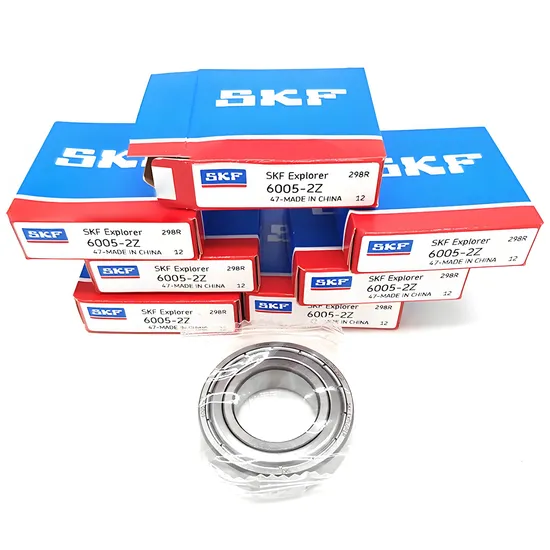
The outer packaging label is the first checkpoint. SKF uses specific color tones, font weights, and layout proportions that are difficult for counterfeiters to match precisely. In my experience at the port in Haiphong, the case I mentioned earlier involved exactly this — the label color was subtly wrong. Genuine SKF labels use a defined blue shade with sharp, clean printing. Counterfeit labels often show slightly blurred edges, inconsistent color saturation, or font spacing that does not match SKF’s standard [NEED_CITE: SKF packaging label physical anti-counterfeit feature specifications].
The security thread embedded in SKF packaging is another critical feature. This thread is visible when held against light and carries micro-printed text that must align correctly. Counterfeit packaging either omits this thread entirely or uses a superficial printed imitation that does not change appearance under different angles.
The QR code on SKF packaging links to SKF’s verification system. Scanning this code should return product information consistent with the bearing model, batch number, and packaging details. However — and this is a point many buyers miss — a successful QR scan alone does not prove authenticity. Sophisticated counterfeiters have been known to copy valid QR codes from genuine packaging and print them onto fake boxes. The QR result must be cross-referenced with the batch number printed on the bearing itself.
Speaking of the bearing itself, the markings on the inner and outer rings carry essential verification data. SKF engraves the brand name, bearing designation, and origin code with precise depth and font characteristics. Counterfeit bearings often show shallower engraving, inconsistent font styles, or markings that can be rubbed off with moderate friction. The material finish also differs — genuine SKF bearing rings have a specific surface quality that counterfeit products, typically made from inferior steel, cannot replicate [NEED_CITE: SKF bearing ring marking and engraving authentication criteria].
For high-volume orders of popular models like 6205, 6206, or 22320, I recommend that UK buyers request pre-shipment photos showing close-ups of the packaging label, security thread, QR code, and bearing ring markings for a random sample from each batch. A reliable genuine SKF supplier will provide these without hesitation.
How to Trace Bearing Origin and Batch Consistency?
Batch number verification against SKF’s global tracking system confirms whether bearings originated from authorized production facilities and whether they have been diverted from their intended market — this step catches regional grey-market goods that pass document and physical checks.
Authorization certificates and physical features verify that a supplier is legitimate and that individual bearings look correct. But neither of these steps catches a subtler problem: genuine SKF bearings that have been diverted from their intended regional market. These are real bearings, produced in SKF’s own facilities, but they were originally allocated for a different geographic region — and importing them into the UK may violate SKF’s distribution agreements, leaving the buyer without warranty support or technical recourse.
This is where batch number tracing becomes essential. Every SKF bearing carries a batch or lot number that encodes production facility, production date, and originally intended distribution region. A genuine SKF supplier should be able to provide batch documentation that traces each shipment from the manufacturer’s production facilities through the authorized distribution chain to the final export point [NEED_CITE: SKF batch number decoding and regional allocation verification process].
I once handled a case involving a batch of spherical roller bearings — 22320 series — where the QR codes scanned successfully and the physical markings appeared correct. But when we cross-referenced the batch numbers, the system indicated these bearings had been originally allocated for a Southeast Asian market, not for European export. The supplier had acquired them through a regional distributor who was not authorized to resell outside their territory. The bearings were technically genuine, but the supply chain was broken. The UK buyer faced a situation where SKF would not honor warranty claims because the bearings were outside their intended distribution zone.
For UK buyers, the practical step is straightforward: request the batch numbers before shipment, and verify them either through SKF’s customer service channels or through your authorized distributor’s documentation system. Confirm that the batch origin aligns with European or global export allocation. If a genuine SKF supplier cannot or will not provide batch-level traceability, that is a significant red flag — regardless of how convincing the authorization certificates or physical features appear.
Batch consistency also matters within a single order. If you receive a batch of 6305 bearings where some units carry batch numbers from one production period and others from a completely different period, this suggests the supplier has consolidated stock from multiple sources — and not all of those sources may be authorized. A reputable genuine SKF supplier maintains batch consistency within each order and can explain any variation.
What Documents Prove Genuine Supply Chain?
A complete documentation package — authorization certificate, commercial invoice, packing list, certificate of origin, and batch traceability records — forms the evidentiary chain that UK customs and end customers require to confirm genuine sourcing.
Physical verification and batch tracing confirm the product. Documentation confirms the process. For UK buyers importing from China, having the right paperwork serves two purposes: it satisfies customs requirements, and it provides the end customer with auditable proof of authenticity. A genuine SKF supplier should provide a complete documentation package without being asked — and UK buyers should treat any supplier who cannot produce these documents as unreliable.
The authorization certificate, as discussed, is the foundation. The commercial invoice must match the certificate holder’s registered company name exactly. The packing list should detail bearing models, quantities, and batch numbers in a format that allows cross-referencing with the physical goods. The certificate of origin confirms the country where the bearings were manufactured — SKF produces bearings in multiple countries, and the origin must be consistent with SKF’s known production facilities [NEED_CITE: SKF global manufacturing facility locations and certificate of origin requirements].
Beyond these standard trade documents, a genuine SKF supplier should also provide batch traceability records that link specific batch numbers to specific SKF production runs. Some suppliers also provide a supplier declaration of conformity, which states that the goods meet SKF’s quality standards and were sourced through authorized channels.
UK buyers should be particularly careful about certificates of origin. These documents must be issued by an authorized body — typically a chamber of commerce or equivalent trade organization in China. A self-issued certificate of origin carries no weight. And the origin stated must match the actual manufacturing location of the bearings. If the certificate says the bearings were made in one country but the batch numbers indicate production in a different country, the documentation is either fraudulent or the supplier has made an error — neither scenario is acceptable.
I have seen cases where buyers received complete-looking documentation packages, only to discover during customs inspection that the certificate of origin had been altered. The bearing model numbers on the certificate did not match the models on the commercial invoice. This kind of inconsistency triggers customs holds and can result in shipment seizure. A genuine SKF supplier maintains strict consistency across all documents because their reputation within SKF’s authorized network depends on it.
How to Handle Suspected Counterfeit Cases?
When UK buyers suspect they have received counterfeit SKF bearings, immediate quarantine of the goods, photographic evidence collection, and formal engagement with SKF’s anti-counterfeit team are the critical steps that protect both the investment and the supply chain.
Even with thorough pre-shipment verification, problems can surface after delivery. A UK buyer once contacted me after receiving a shipment of tapered roller bearings where the packaging looked correct, the QR codes scanned properly, but the bearings felt unusually light in hand. The weight difference was subtle — not something most people would notice without direct comparison — but this buyer had genuine reference units on hand and the discrepancy was clear.
The first step in any suspected counterfeit situation is to quarantine the entire batch immediately. Do not install any of the bearings, do not mix them with existing stock, and do not return them to the supplier before gathering evidence. Photograph every aspect of the packaging — outer cartons, inner labels, security threads, QR codes, and the bearings themselves including all ring markings. Weigh a sample of the bearings and compare against known genuine units of the same model. Document any visual differences in surface finish, engraving depth, or material color [NEED_CITE: SKF counterfeit reporting procedure and evidence collection requirements].
The next step is to contact SKF’s anti-counterfeit team directly. SKF maintains dedicated resources for investigating suspected counterfeit products globally. They can authenticate the bearings based on the evidence provided and, if counterfeiting is confirmed, issue a formal report that the buyer can use for insurance claims, customs notifications, or legal action against the supplier.
For UK buyers working with a genuine SKF supplier, this process should be straightforward because the supplier has nothing to hide. A legitimate supplier will cooperate fully with the investigation, provide additional documentation to support authenticity, and work with SKF’s team to resolve the matter. If a supplier becomes defensive, refuses to provide additional documentation, or pressures the buyer to accept the goods without investigation, that response itself is a strong indicator of problems.
The bearing industry faces a persistent counterfeit problem, and the sophistication of fake products continues to evolve. SKF invests significantly in anti-counterfeit technology and monitoring, but the responsibility for verification ultimately falls on the buyer and their chosen supplier. Working with a genuine SKF supplier who maintains transparent documentation, consistent batch traceability, and cooperative authentication support is the most effective defense against counterfeit risk [NEED_CITE: industrial bearing counterfeit prevalence and industry anti-counterfeit initiatives].
Conclusion
Authentic SKF sourcing from China demands authorization verification, physical inspection, and batch traceability — three layers that together eliminate counterfeit and grey-market risk. UK buyers who systematically check supplier credentials, inspect packaging and bearing markings, and cross-reference batch numbers against SKF’s global records will consistently receive genuine products. A genuine SKF supplier welcomes every one of these verification steps because their business depends on maintaining trust within SKF’s authorized distribution network.