
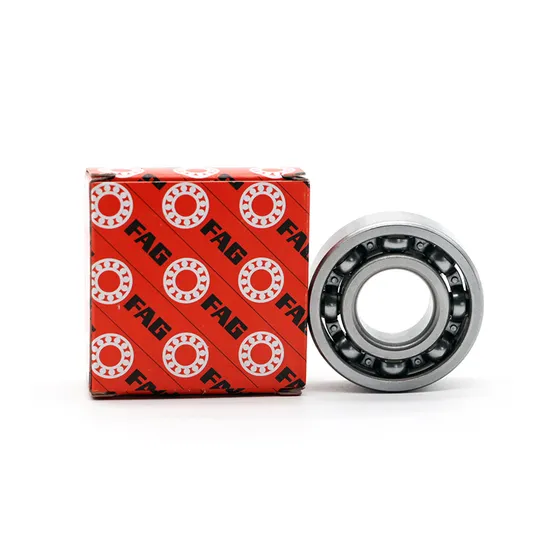
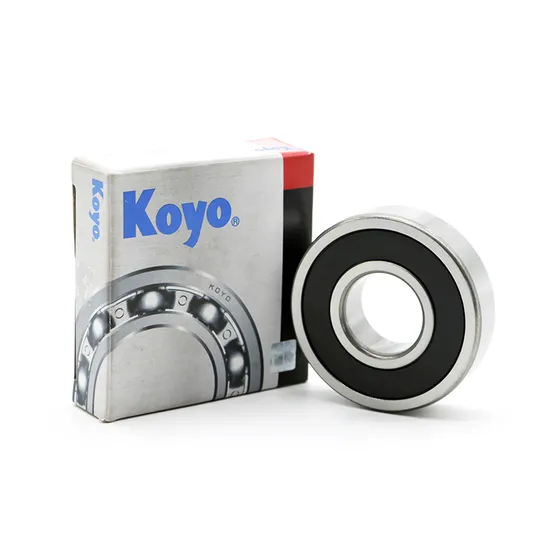
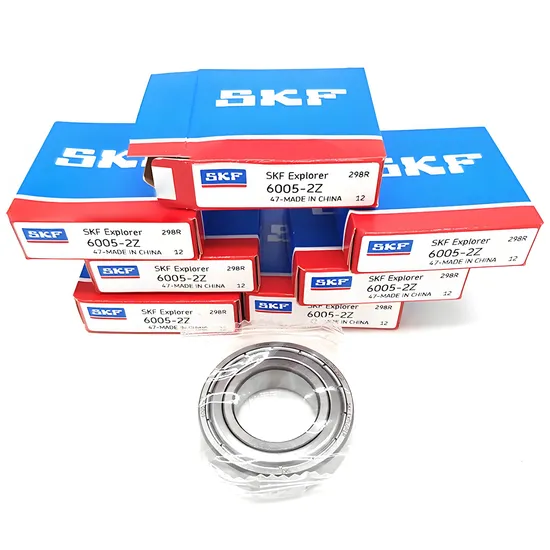
KOYO vs SKF Housing Units: Design Comparison for Sale
KOYO and SKF housing units are not drop-in replacements for each other — even when the bearing insert size matches, bolt circle diameters, flange thicknesses, and seal groove depths differ by brand.
If you are sourcing KOYO vs SKF housing units for interchange, the core answer is: never assume dimensional equivalence based on bearing model alone. You must compare full housing drawings — including bolt patterns, center heights, seal types, and grease fitting positions — before placing an order.
I once had a South American mining client who ordered KOYO pillow block units as direct replacements for worn SKF units on a conveyor line. The bearing inserts fit, but the housing bolt holes were offset by a fraction of a millimeter, and the seal groove was shallower than what the SKF design required. The units could not be mounted without modifying the base plates, and the seals failed within weeks due to inadequate lip contact. The entire shipment had to be pulled, inspected, and re-sorted. That kind of mismatch happens more often than buyers expect, because KOYO vs SKF housing units follow similar functional principles but diverge in critical mounting and sealing details [NEED_CITE: ISO 1132 bearing dimension tolerances and housing mounting standards].
The rest of this guide walks through the specific design differences you need to verify before treating one brand as a substitute for the other.
What Are the Key Dimensional Differences Between KOYO and SKF Housing Units?
Bolt circle diameter, flange thickness, and center height are the three dimensions that most often cause interchange failures between KOYO vs SKF housing units — even when the bearing insert is nominally identical.
When buyers request cross-reference sourcing, the first thing I pull up is not the bearing catalog but the housing drawing. The bearing OD and ID may match perfectly, but the housing that surrounds it tells a different story.
Consider a typical pillow block application. Both KOYO and SKF offer square-base and round-base pillow blocks for the same shaft sizes. But the bolt hole spacing on the base can differ noticeably. In some sizes, the KOYO housing uses a wider bolt circle, meaning the mounting holes do not align with the SKF base pattern. The flange thickness also varies — SKF housings in certain series use a heavier flange profile, which affects the center height and the clearance needed for the shaft to sit at the correct elevation above the mounting surface.
| Dimension Feature | KOYO Housing Design | SKF Housing Design |
|---|---|---|
| Bolt circle pattern | Brand-specific spacing | Brand-specific spacing |
| Flange thickness | Standard profile | Noticeably heavier in select series |
| Center height | Follows JIS-aligned conventions | Follows ISO-aligned conventions |
| Mounting hole diameter | Standard metric | Standard metric |
| Base machining flatness | Controlled per spec | Controlled per spec |
The key takeaway is that "same bearing size" does not mean "same housing footprint." A buyer who only checks the bearing model number and ignores the housing drawing is asking for trouble on the installation floor [NEED_CITE: JIS B 1559 and ISO 3228 mounted bearing dimension standards].
I recall a European MRO team that was replacing pillow blocks on a grain conveyor. They ordered KOYO units to replace SKF units based on the bearing insert size alone. When the units arrived on site, the bolt holes did not line up with the existing base plates. The team had to drill new holes and re-tap the bases — adding unplanned downtime and labor cost. The bearings themselves were fine; it was the housing geometry that caused the problem.
For buyers doing KOYO vs SKF housing units interchange, the rule is simple: always request the full housing dimensional drawing from both brands and overlay them before confirming the order.
How Do Seal Designs Compare and Why Does It Matter?
Seal type, groove depth, and lip contact pressure differ between KOYO and SKF housing units — and these differences directly affect contamination resistance and relubrication intervals.
The seal is where a housing unit earns its keep in dirty environments. A housing with a poor seal design will let dust, moisture, and abrasive particles reach the bearing, regardless of how good the bearing itself is.
KOYO and SKF use different seal philosophies in their housing units. KOYO commonly employs labyrinth seal designs in its standard housing series, which rely on a tortuous path to block contaminants without physical lip contact. SKF, in many of its housing series, uses lip seal designs with defined contact pressure against the shaft or inner ring surface. Both approaches work, but they behave differently in practice.
Labyrinth seals tolerate higher speeds and generate less friction heat, but they are less effective at blocking fine dust in extremely contaminated environments. Lip seals provide tighter sealing but generate more friction and require careful attention to shaft surface finish — if the shaft is scored or undersized, the lip will not seat properly and contamination will bypass the seal.
| Seal Characteristic | KOYO Housing Approach | SKF Housing Approach |
|---|---|---|
| Primary seal type | Labyrinth design common | Lip seal design common |
| Contact pressure | Non-contact or light contact | Defined lip contact pressure |
| Groove depth | Shallower in standard series | Deeper groove in many series |
| Contamination resistance | Good for moderate environments | Robust for heavy contamination |
| Relubrication interval | Standard | Noticeably extended in select designs |
A Middle East steel mill once reported premature bearing failures in a roller table application. The original equipment used SKF housing units with lip seals. During a cost-reduction exercise, a replacement order was placed for KOYO housing units with labyrinth seals — based on the assumption that the bearing inserts were identical. Within a short period, the bearings began failing from scale and coolant ingress. The labyrinth seals were not providing the same level of protection as the original lip seals in that specific environment [NEED_CITE: bearing failure mode classification per ISO 15243].
The lesson here is that seal design is not a secondary detail — it is a primary factor in housing unit performance. When evaluating KOYO vs SKF housing units, always check the seal type, groove dimensions, and the manufacturer’s recommended relubrication interval for your specific operating conditions.
Can You Swap Bearing Inserts Between KOYO and SKF Housings?
Bearing OD and ID may match between KOYO and SKF, but housing bore finish, fit tolerance, and internal clearance must be verified before swapping inserts.
This is one of the most common questions I get from buyers: "If the bearing fits, can I just drop it into the other brand’s housing?" The short answer is: not always.
The housing bore — the inner diameter of the housing where the bearing outer ring sits — must match the bearing OD within specified tolerances. Both KOYO and SKF manufacture their bearings to international tolerance standards, but the housing bore finish and tolerance can vary between brands. If the housing bore is too loose, the bearing outer ring can creep or spin under load, causing fretting corrosion and premature failure. If the bore is too tight, the bearing may not seat properly, leading to internal clearance issues and overheating.
Another factor is the fit tolerance. KOYO and SKF may specify slightly different fits for the same nominal bearing size, depending on the housing series and the intended application. A bearing designed for a light press fit in one brand’s housing may require a different fit class in the other brand’s housing.
Internal clearance is also affected. When a bearing is mounted in a housing with a different bore tolerance, the effective internal clearance of the bearing can change. This is especially critical for bearings operating at elevated temperatures or under heavy loads, where internal clearance directly affects fatigue life.
| Fit and Clearance Factor | KOYO Housing Bore | SKF Housing Bore |
|---|---|---|
| Bore finish | Controlled per spec | Controlled per spec |
| Fit tolerance class | Standard | Standard |
| Internal clearance impact | Application-dependent | Application-dependent |
| Bearing outer ring seating | Verified per series | Verified per series |
A distributor in Southeast Asia once received a cross-reference order for spherical roller bearing housings. The bearing inserts matched in OD and ID, but when the customer attempted to install the KOYO bearings into the SKF housings, the fit was noticeably tighter than expected. The bearings had to be heated to higher temperatures for mounting, and the internal clearance was reduced after installation. The customer had to reorder with bearings specified for the correct fit class in the SKF housing [NEED_CITE: bearing fit and clearance guidelines per ISO 5753].
The takeaway for buyers working with KOYO vs SKF housing units is clear: never assume that a bearing insert is interchangeable between brands without verifying the housing bore tolerance, fit class, and resulting internal clearance.
Load Ratings and Application Suitability: Which Brand Fits Your Conditions?
Housing wall thickness and rib design influence the real-world load capacity of KOYO and SKF housing units — and the difference can be significant for heavy-duty applications.
Load rating is one of the most misunderstood aspects of housing unit selection. Buyers often look only at the bearing’s dynamic and static load ratings, assuming that the housing is just a passive shell. But the housing itself carries load — especially in applications with heavy radial loads, shock loads, or misalignment.
KOYO and SKF use different housing wall thicknesses and rib geometries in their standard series. In some sizes, the SKF housing features a thicker wall and more substantial ribbing, which provides higher rigidity and better load distribution under heavy loads. KOYO housings, in certain series, use a lighter design that is sufficient for moderate loads but may deflect under extreme conditions.
This does not mean one brand is universally better than the other. It means that the housing design must be matched to the actual operating conditions. A KOYO housing may be perfectly adequate for a conveyor application with steady loads, while an SKF housing may be preferred for a mining screen with heavy shock loads.
| Load Capacity Factor | KOYO Housing Design | SKF Housing Design |
|---|---|---|
| Wall thickness | Standard profile | Noticeably heavier in select series |
| Rib geometry | Optimized for moderate loads | Robust for heavy-duty conditions |
| Load distribution | Adequate for standard applications | Enhanced for shock and heavy radial loads |
| Application suitability | Conveyors, fans, pumps | Mining, vibrating screens, heavy industry |
A mining operation in Australia once compared the load ratings of KOYO and SKF spherical roller bearing housings for a vibrating screen application. The bearing inserts were the same size, but the SKF housing had a noticeably higher static load capacity due to its thicker wall and rib design. The KOYO housing, while less expensive, was not rated for the shock loads generated by the screen. The operation chose the SKF housing to avoid premature fatigue failures [NEED_CITE: bearing housing load capacity and fatigue life principles per ISO 281].
The lesson for buyers is that housing load capacity is not just about the bearing — it is about the entire unit. When evaluating KOYO vs SKF housing units, always consider the housing wall thickness, rib design, and the manufacturer’s load ratings for the complete assembly.
How to Verify Cross-Reference Before Placing an Order
Always compare full dimensional drawings, accessory specifications, and seal designs — not just bearing model numbers — before treating KOYO and SKF housing units as interchangeable.
Cross-reference sourcing is a core part of the bearing supply business. Buyers often need to replace one brand with another due to availability, cost, or lead time constraints. But cross-referencing housing units requires more than just matching the bearing model.
The first step is to obtain the full dimensional drawing for both the original and replacement housing units. This includes bolt circle diameter, flange thickness, center height, mounting hole spacing, and base machining dimensions. Overlay the two drawings to identify any differences.
The second step is to verify the seal design. Check the seal type, groove depth, and lip contact pressure. If the original housing used a lip seal and the replacement uses a labyrinth seal, evaluate whether the labyrinth seal provides adequate protection for your operating environment.
The third step is to check the accessory specifications. Grease fitting thread size, position, and channel routing can differ between brands. A grease fitting that is too large or too small will not fit the existing lubrication system, and a misrouted grease channel may not deliver lubricant to the correct location.
The fourth step is to verify the bearing fit and clearance. As discussed earlier, the housing bore tolerance and fit class must be compatible with the bearing insert. If the replacement housing has a different bore tolerance, you may need to specify a bearing with a different fit class or internal clearance.
| Verification Step | Action Required |
|---|---|
| Dimensional drawing comparison | Overlay bolt patterns, flange thickness, center height |
| Seal design verification | Check seal type, groove depth, contact pressure |
| Accessory specification check | Verify grease fitting size, position, channel routing |
| Bearing fit and clearance | Confirm housing bore tolerance and fit class compatibility |
A distributor in Latin America once handled a cross-reference order for a large industrial fan application. The original equipment used SKF pillow block units, and the buyer wanted to replace them with KOYO units to reduce cost. The distributor performed a full dimensional comparison and discovered that the KOYO housing had a different bolt circle diameter and a shallower seal groove. The distributor communicated these differences to the buyer, who decided to proceed with the SKF units to avoid installation and sealing issues [NEED_CITE: bearing housing interchange verification best practices].
The takeaway for buyers is that cross-reference sourcing requires due diligence. When working with KOYO vs SKF housing units, always request full dimensional drawings, verify seal designs, check accessory specifications, and confirm bearing fit and compatibility before placing an order.
Conclusion
KOYO and SKF housing units are functionally similar but dimensionally distinct — interchange requires full drawing comparison, not just bearing model matching.
Buyers evaluating KOYO vs SKF housing units must verify bolt patterns, seal designs, housing bore tolerances, and load capacity before treating one brand as a substitute for the other. Cross-reference sourcing is viable, but only when the complete housing unit — not just the bearing insert — is confirmed to be compatible with the application.