KOYO vs SKF Tapered Roller Bearings: Automotive Wheel Hub Wholesale Analysis
Cross-reference charts say KOYO and SKF tapered roller bearings are dimensionally interchangeable. The real market says otherwise.
KOYO vs SKF tapered roller bearings share identical boundary dimensions under ISO 355, meaning a KOYO 32218 physically drops into the same hub housing as an SKF 32218. Yet wholesale buyers across the Middle East, Africa, and Southeast Asia routinely discover that dimensional interchangeability does not equal commercial interchangeability. Brand perception, original packaging, country-of-origin markings, and terminal mechanic loyalty determine whether a cross-referenced shipment gets accepted or returned.
I spent time on the shop floor at a bearing factory in the Pearl River Delta before moving into export trade, handling SKF, KOYO, and NSK tapered roller bearings on a daily basis. On one shipment bound for Dubai, a client asked for SKF 32218 units for automotive wheel hub assemblies. I quoted the KOYO equivalent at a noticeably lower price point, and the buyer was pleased with the savings. When the containers arrived, the workshop mechanics refused to install anything that did not carry the SKF original box. The entire order sat in a warehouse for months before being returned and reordered under the SKF brand. That episode crystallized a lesson that applies across every emerging market I source for: cross-reference tables work on paper, but brand recognition, packaging integrity, and origin labels are the real gatekeepers at the installation site [NEED_CITE: brand preference patterns in aftermarket bearing procurement across GCC markets].
Let me walk through what actually separates these two brands when you are buying in bulk for wheel hub applications.
How Do KOYO and SKF Compare on Key Specifications?
Both KOYO and SKF manufacture single-row tapered roller bearings to ISO 355 boundary dimensions and ABMA/BCMA tolerance classes, so the outer diameter, bore, and width of an equivalent part number will match within standard limits. The divergence appears in load rating methodology, cage material preferences, and the precision grades each brand emphasizes in its catalog.
| Parameter | KOYO (JTEKT) | SKF |
|---|---|---|
| Dimensional Standard | ISO 355 compliant | ISO 355 compliant |
| Tolerance Class Range | Normal / Class 6X / Class 4 | Normal / Class 6X / Class 4 |
| Explorer-Class Equivalent | Standard catalog range | SKF Explorer series with optimized internal geometry |
| Cage Material (typical) | Steel pressed cage / machined brass | Steel pressed cage / machined brass / polymer options |
| Surface Treatment | Standard carburizing per JIS | Case-carburizing with controlled case depth |
| Clearance Options | CN / C3 / C4 per ISO 5753 | CN / C3 / C4 per ISO 5753 |
| Origin Traceability | Japan / Thailand / China plants | Sweden / France / China / India plants |
The SKF Explorer designation represents a product tier with refined internal geometry and cleaner steel, aimed at extended fatigue life under heavy loads [NEED_CITE: SKF Explorer tapered roller bearing design principles and metallurgical specifications]. KOYO does not use an identical tier name, but its catalog includes equivalent precision grades that reach Class 4 and beyond for demanding applications.
A distributor in Vietnam once ordered KOYO 30206 units to replace SKF equivalents in a local wheel hub remanufacturing line. The dimensions matched perfectly. The problem emerged when the end-user’s quality team checked the dynamic load rating values printed on the KOYO catalog versus the SKF catalog. Although both sets of values are calculated under ISO 281, the rounding conventions and reference conditions differ slightly between the two manufacturers’ documentation. The buyer’s engineering department flagged the discrepancy, delayed the order for weeks, and eventually demanded a side-by-side load calculation report before releasing payment [NEED_CITE: ISO 281 dynamic load rating calculation methodology differences between bearing manufacturers].
The takeaway is straightforward: on paper, KOYO vs SKF tapered roller bearings are dimensionally and functionally equivalent for most wheel hub applications. In practice, the catalog details, load rating presentation, and available precision tiers create friction points that buyers must anticipate before placing a bulk order.
Can You Substitute KOYO for SKF in Wheel Hub Applications?
Technically yes, a KOYO tapered roller bearing of the same ISO 355 part number will fit and function in a wheel hub designed for the SKF equivalent. Commercially, substitution depends entirely on the target market’s brand expectations.
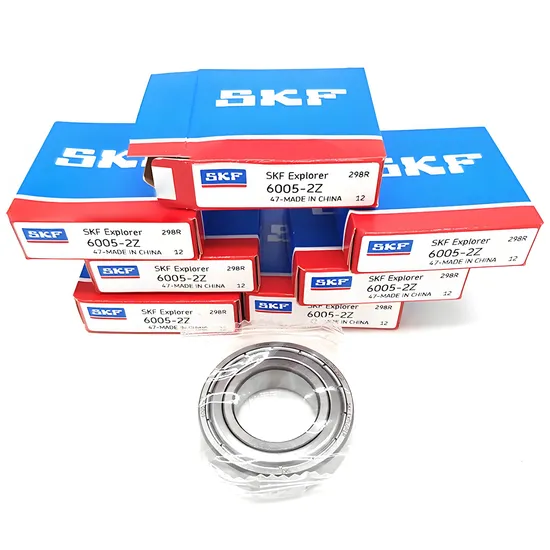
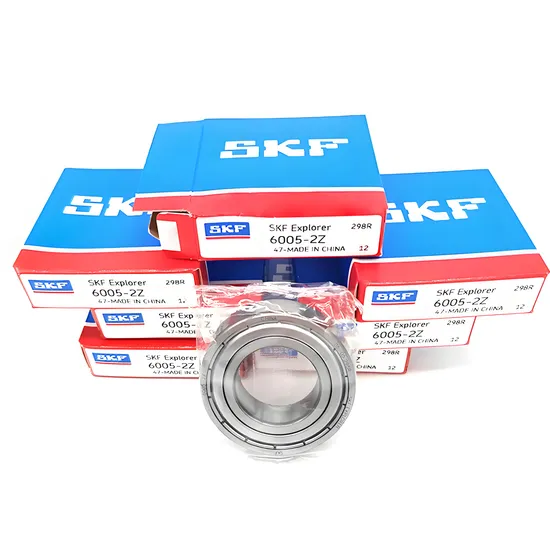
In the Middle East, particularly across the Gulf Cooperation Council countries, SKF enjoys deep recognition among workshop mechanics and fleet maintenance managers. The blue SKF box is treated almost as a quality certificate. I have seen shipments of perfectly genuine KOYO bearings rejected at the dock because the receiving inspector was instructed to accept only SKF-branded goods, regardless of dimensional compatibility. The rejection had nothing to do with bearing quality and everything to do with procurement specifications written years earlier and never updated.
In Southeast Asia, the picture shifts. Japanese vehicle platforms, which dominate markets in Indonesia, Thailand, Vietnam, and the Philippines, frequently roll out of OEM factories with KOYO or NSK bearings installed. Aftermarket workshops servicing these vehicles are often more comfortable with KOYO part numbers and may view SKF as the unfamiliar alternative. A repair chain in Manila once mixed KOYO and SKF tapered rollers across the same axle during a trial period; the KOYO units matched the original equipment specification more closely, while the SKF units required different preload adjustments to achieve the same end-play reading [NEED_CITE: OEM bearing brand fitment patterns across Japanese and European vehicle platforms in ASEAN markets].
In Sub-Saharan Africa, price sensitivity dominates. Wholesale buyers there routinely compare KOYO vs SKF tapered roller bearings on a per-unit landed-cost basis. KOYO typically carries a lower price tag at equivalent specifications, but buyers must budget for additional documentation costs, including certificates of origin and authenticity verification letters, because customs authorities and discerning end-users demand proof that the goods are not counterfeit.
The substitution decision matrix looks like this:
- Markets with strong SKF brand loyalty (GCC, parts of North Africa): Substitution to KOYO is risky unless the buyer controls the end-user relationship and can educate the workshop.
- Markets with Japanese OEM dominance (ASEAN, parts of South America): KOYO substitution into SKF positions is natural and often welcomed.
- Price-driven markets (Sub-Saharan Africa, parts of Central Asia): KOYO offers a cost advantage, but authenticity documentation becomes a mandatory line item.
What Should Wholesale Buyers Watch for When Sourcing These Brands?
When sourcing KOYO vs SKF tapered roller bearings for wheel hub applications, wholesale buyers must treat price comparison as only one layer of the evaluation. Origin verification, cross-reference documentation, and anti-counterfeit safeguards form the other critical layers.
Price spreads between KOYO and SKF at equivalent specifications fluctuate based on manufacturing origin, batch availability, and currency movements. A common misconception is that SKF always carries a fixed premium over KOYO. In reality, the gap narrows or widens depending on which plant produced the batch and whether the goods are sourced through authorized distribution channels or secondary market traders [NEED_CITE: wholesale price spread dynamics between major bearing brands across authorized and secondary distribution channels].
A buyer in Lagos once sourced a large batch of SKF 32218 bearings at a price that seemed unusually attractive. Upon arrival, the packaging showed minor printing inconsistencies, and the batch codes did not resolve when checked against the manufacturer’s traceability system. Lab testing confirmed the bearings were counterfeit. The financial loss was substantial, but the reputational damage with the buyer’s own customers was worse. The same buyer later switched to a sourcing approach that required authorized-channel verification and batch-level documentation before release of payment, and the problem never recurred.
For KOYO vs SKF tapered roller bearings, the sourcing checklist should include:
- Authorized channel confirmation: Verify that the supplier holds current authorization from the brand principal or operates within the brand’s verified distribution network.
- Cross-reference documentation: When substituting one brand for another, request a formal cross-reference sheet showing dimensional equivalence under ISO 355, load rating comparison under ISO 281, and any application-specific notes.
- Origin certificates: Ensure the commercial invoice and packing list clearly state the country of manufacture, and that this matches the brand’s known production footprint.
- Batch traceability: Confirm that batch codes on the bearing rings and packaging are legible, consistent, and can be verified through the brand’s official traceability tools.
- Packaging integrity: Original brand packaging includes specific printing quality, holographic elements, and labeling conventions that counterfeit operations frequently fail to replicate accurately.
How to Verify Authenticity and Avoid Counterfeit Risks?
The counterfeit bearing market targets high-recognition brands like SKF and KOYO with increasing sophistication, making authenticity verification a non-negotiable step for any wholesale buyer handling KOYO vs SKF tapered roller bearings.
Counterfeit bearings are not merely a pricing problem; they are a safety and liability problem. A fake tapered roller bearing in a wheel hub application can lead to premature fatigue spalling, cage failure, or catastrophic hub seizure, with consequences ranging from vehicle downtime to serious accidents. The majority of counterfeit bearings entering global trade originate from unauthorized workshops that replicate packaging with varying degrees of accuracy but cannot replicate the metallurgical quality, heat treatment precision, and surface finish controls of legitimate manufacturing [NEED_CITE: global counterfeit bearing seizure data and failure mode analysis per industry investigations].
Verification starts at the sourcing stage. Reputable suppliers maintain direct relationships with authorized distributors or operate as verified tier-one dealers. They can provide purchase trail documentation linking the goods back to the brand’s production facility. When a supplier cannot or will not provide this trail, the risk level increases substantially.
At the goods-receiving stage, buyers should implement a structured inspection process:
- Packaging examination: Compare the received packaging against known genuine samples. Look for printing sharpness, color accuracy, holographic label placement, and barcode readability. Counterfeit packaging often shows slight color shifts, blurred text, or misaligned holograms.
- Marking inspection: Genuine bearings carry laser-etched or stamped markings on the rings, including the brand logo, part number, and origin code. The font, depth, and positioning should match the brand’s official marking specifications.
- Dimensional spot-check: Use calibrated measurement tools to verify bore, outer diameter, and width against ISO 355 tolerances. Counterfeit bearings frequently fall outside standard tolerance bands.
- Hardness and material verification: For high-value orders, send sample units to a metallurgical lab for hardness testing and material composition analysis. Genuine bearing steel meets specific carbon, chromium, and inclusion control requirements that counterfeit operations rarely achieve.
A distributor in Dubai implemented a three-tier verification protocol for all SKF and KOYO tapered roller bearing inbound shipments: visual packaging check at the dock, dimensional spot-check in the warehouse, and quarterly random sampling sent to an external lab. After the first year of implementation, the distributor identified and returned two shipments that failed the lab verification stage, both of which had passed the visual and dimensional checks. The protocol cost time and money to establish, but it prevented counterfeit goods from reaching end-users and protected the distributor’s reputation in a market where trust is the primary currency.
Conclusion
KOYO vs SKF tapered roller bearings are dimensionally interchangeable under international standards, but commercial interchangeability depends on market-specific brand perception, documentation requirements, and authenticity verification. Wholesale buyers sourcing for wheel hub applications must look beyond cross-reference charts and evaluate the full commercial and technical landscape of the target market, including brand loyalty patterns, OEM fitment history, and counterfeit risk exposure. Sourcing through verified channels, maintaining rigorous inbound inspection protocols, and investing in traceability documentation are not optional overhead; they are the foundation of a sustainable bearing supply business.