Third-Party Inspection for KOYO SKF Bearing Shipments
Counting cartons and checking model numbers is not inspection—it is an invitation for counterfeit and reconditioned bearings to reach your warehouse undetected.
A proper third-party inspection for KOYO SKF bearing shipments must go far beyond box counts and label matching. It requires systematic verification of stamp depth and font conformity, cage rivet spacing, internal radial clearance measurement, packaging seal integrity, and full cross-referencing of certificates of origin against customs declarations. Skipping any of these dimensions leaves the door wide open for reconditioned units or outright fakes to pass as genuine, turning a routine delivery into a costly port dispute.
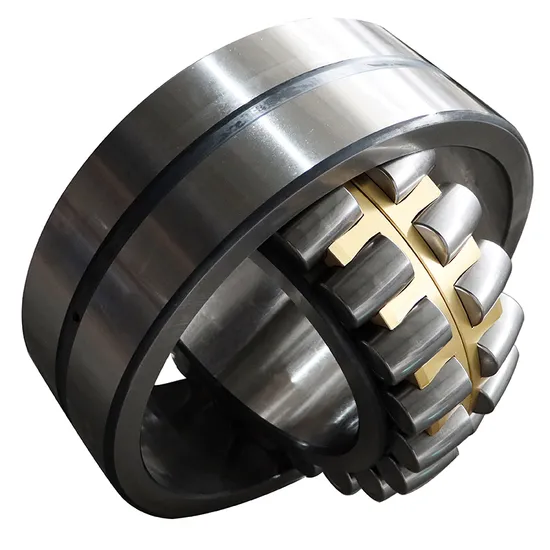
I have stood inside warehouses in Riyadh and Doha more times than I can count, watching buyers open cartons only to find polished raceways where mirror-finish surfaces should be. One Middle East industrial client once hired their own inspector who simply ticked off carton quantities and model codes on the packing list. By the time the container reached Jeddah, multiple pallets of spherical roller bearings showed clear signs of secondary polishing on the raceways and inconsistent cage rivet spacing. The entire shipment was rejected, and the container sat at the port for over a month. Demurrage charges alone consumed a significant portion of the order margin. [NEED_CITE: port demurrage cost impact on bearing import profitability] That incident reinforced a principle I have followed ever since: no shipment leaves without a structured third-party inspection for KOYO SKF bearing shipments, regardless of how long the buyer-seller relationship has existed.
The lesson is simple but often ignored. Counterfeiters and reconditioners have become remarkably skilled at replicating outer packaging. Boxes, labels, and even holographic stickers can be duplicated with unsettling accuracy. The real differences hide inside—on the bearing rings, inside the cage structure, and in the clearance values that only measurement tools can confirm. This is why a thorough third-party inspection for KOYO SKF bearing shipments must treat every verification dimension as non-negotiable.
Why Is Third-Party Inspection Critical for KOYO/SKF Bearing Shipments?
The financial and operational consequences of receiving counterfeit or reconditioned bearings at destination far exceed the cost of pre-shipment inspection, often by multiples.
When a container of bearings arrives at a Middle Eastern or African port and the consignee discovers non-genuine products, the problems multiply rapidly. The goods cannot be cleared through customs under the declared specifications. The buyer faces rejection, return shipping, or forced disposal. Meanwhile, demurrage and storage fees accumulate daily. [NEED_CITE: cumulative cost structure of rejected bearing shipments at destination ports] I have seen cases where the total port-related charges ended up exceeding the original product value.
Beyond direct financial loss, there is the reputational damage. A distributor who supplies reconditioned bearings to an end user in a steel mill or cement plant loses trust that takes years to rebuild. In critical applications—mining conveyors, paper machine rolls, wind turbine gearboxes—bearing failure caused by substandard products can lead to unplanned downtime costing far more than the bearing itself.
The supply chain for branded bearings involves multiple intermediaries. Even when a buyer deals with a familiar supplier, goods may pass through secondary traders, consolidation warehouses, or freight forwarders who have no incentive to verify authenticity. [NEED_CITE: supply chain intermediary risks in bearing distribution networks] This is precisely why a third-party inspection for KOYO SKF bearing shipments serves as the last reliable checkpoint before goods enter the international freight stream.
Another misconception is that inspection reports are mere formalities. In reality, the photographs of stamp markings, the recorded clearance measurements, and the scanned certificates of origin included in a professional inspection report become the primary evidence chain if a dispute arises at destination. Without this documentation, the buyer has no objective basis to claim replacement or refund.
What Should a Bearing Pre-Shipment Inspection Cover?
A credible pre-shipment inspection must systematically address five verification dimensions: stamp font and depth, cage construction, radial clearance, packaging seal integrity, and document consistency.
Most buyers assume that checking the model number on the box is sufficient. This is the single biggest mistake in bearing procurement. Reconditioned and counterfeit bearings routinely arrive in packaging that looks identical to genuine products at first glance. The differences emerge only when the inspector opens the boxes and examines the physical product.
Stamp Font and Depth. Genuine SKF and KOYO bearings use laser-etched or stamped markings with specific font profiles, character spacing, and depth consistency. [NEED_CITE: SKF and KOYO official marking specification standards for bearing identification] Reconditioned units often show re-stamped markings that appear slightly shallower, with uneven character alignment. An experienced inspector compares the font against reference samples and uses magnification tools to assess depth uniformity across the ring surface.
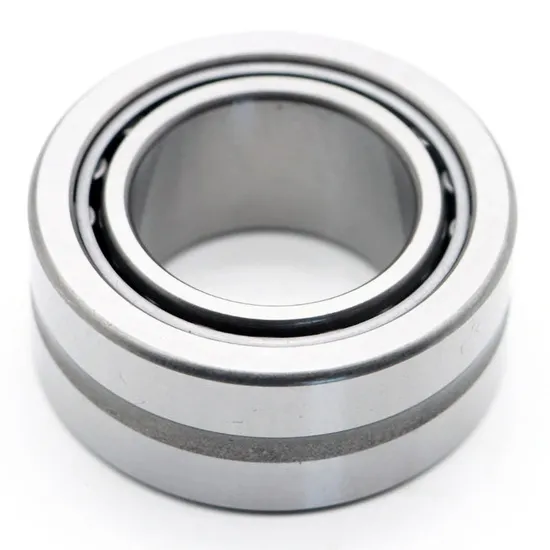
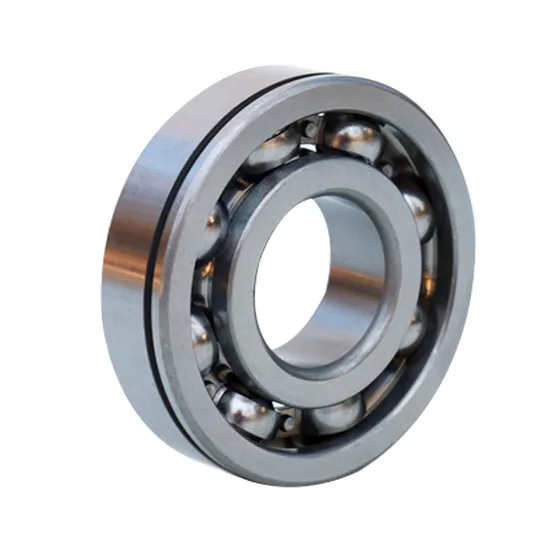
Cage Construction. The cage—or retainer—holds the rolling elements in position. Genuine cages from major manufacturers follow precise rivet spacing and material specifications. Counterfeit or reconditioned bearings frequently display irregular rivet patterns, inconsistent spot-weld quality, or cage materials that do not match the original specification. [NEED_CITE: bearing cage manufacturing quality indicators per ISO standards] Measuring rivet spacing with calipers and comparing against known standards is a routine step in any thorough third-party inspection for KOYO SKF bearing shipments.
Radial Clearance Measurement. Internal radial clearance directly affects bearing performance and service life. Inspectors use dial indicators or electronic measurement devices to verify that clearance values fall within the specified range for the bearing class—whether standard, C3, C4, or other designations. [NEED_CITE: radial clearance measurement methodology per ISO 1132] A deviation beyond acceptable tolerance is a strong indicator of non-genuine or improperly reconditioned stock. As a supplier working directly with authorized distribution channels, we provide buyers with the reference clearance tables for each SKF and KOYO model we supply, giving inspectors a verifiable benchmark.
Packaging Seal Integrity. Original manufacturer packaging includes specific seal types, tape patterns, and anti-counterfeit features such as QR codes or holographic labels. [NEED_CITE: SKF and KOYO anti-counterfeit packaging feature specifications] Inspectors verify that seals are intact, labels match the correct product codes, and any scannable codes resolve to valid product information when checked against the manufacturer’s verification system.
Document Cross-Reference. The certificate of origin, commercial invoice, packing list, and any brand authorization letters must be internally consistent and match the physical goods. Discrepancies in country of origin, model numbers, or quantity declarations are red flags that require immediate investigation.
How to Set Inspection Sampling Standards for Bearing Orders?
Sampling ratios must be scaled to order volume and risk profile, with higher-value and higher-risk categories requiring deeper coverage.
There is no universal sampling percentage that fits every bearing order. The appropriate approach depends on the total quantity, the value of the shipment, the criticality of the application, and the buyer’s familiarity with the supplier.
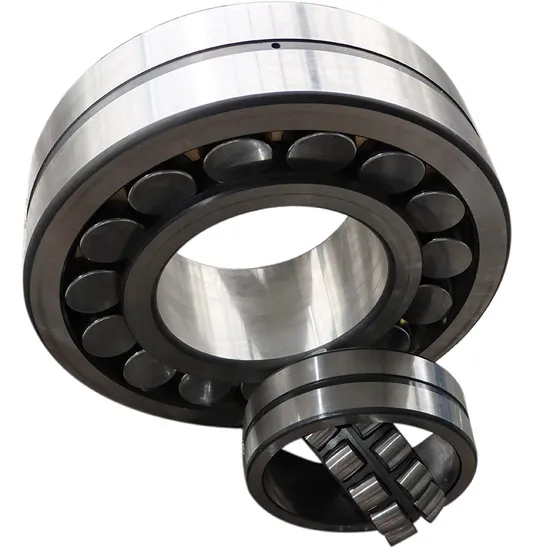
For small orders—typically a few cartons—a full inspection of every unit is practical and advisable. When the order involves a single container or multiple containers of mixed models, a structured sampling approach based on recognized inspection standards becomes necessary. [NEED_CITE: ISO 2859-1 sampling inspection procedures for acceptance quality limits] The general principle is to increase sampling intensity for high-value models such as large spherical roller bearings or tapered roller sets used in heavy industry, and to apply random sampling across multiple pallets rather than concentrating on a single location in the container.
A common mistake is to inspect only the top layers of cartons. Experienced inspectors request that cartons be selected from different positions within the container—front, middle, rear, top, and bottom—to reduce the risk that only the visible layers contain genuine products while hidden positions hold substituted stock.
For critical applications—such as bearings destined for continuous-process industries like steel, cement, or power generation—some buyers require piece-by-piece verification of clearance values and stamp markings on all units of the most critical models. This level of inspection is more time-consuming but provides the highest confidence that no non-conforming unit enters service.
As a supplier, we support buyers in defining appropriate sampling plans by providing model-by-model breakdowns, clearance specification sheets, and marking reference images before shipment. This transparency allows the third-party inspector to work with verified benchmarks rather than guessing at acceptable parameters.
What Documentation Must Be Verified Before Shipment Release?
Complete and internally consistent documentation—certificate of origin, brand authorization, commercial invoice, packing list, and inspection report—forms the evidentiary backbone of any legitimate bearing shipment.
Documentation verification is not a bureaucratic afterthought. It is a critical component of the third-party inspection for KOYO SKF bearing shipments because discrepancies in paperwork often correlate with discrepancies in the physical goods.
Certificate of Origin. This document confirms the country where the bearings were manufactured. It must match the brand’s known production facilities and be consistent with the information on the commercial invoice and packing list. [NEED_CITE: certificate of origin requirements and verification procedures for bearing imports] Any mismatch—such as a certificate stating one country while the bearing markings suggest another—warrants immediate suspension of the shipment.
Brand Authorization Letters. For SKF and KOYO products, buyers should request evidence that the supplier operates within an authorized distribution chain. While authorization documents alone do not guarantee product authenticity, their absence is a significant risk indicator. [NEED_CITE: authorized distributor verification channels for SKF and KOYO bearing brands] We maintain direct sourcing relationships with authorized distribution channels and provide buyers with verifiable documentation supporting the provenance of every shipment.
Commercial Invoice and Packing List. These documents must align precisely with the physical goods in terms of model numbers, quantities, unit prices, and country of origin. Inspectors cross-check every line item against the cartons and the bearing markings inside.
Inspection Report with Photographic Evidence. A professional inspection report must include timestamped photographs of stamp markings, cage details, clearance measurement readings, packaging seals, and shipping marks. These images serve as the objective record that protects both buyer and seller in the event of a destination dispute.
How to Choose a Qualified Third-Party Inspection Service for Bearings?
Not all inspection companies possess the specialized knowledge required to identify bearing counterfeits and reconditioned units—selecting one with proven bearing-category experience is essential.
General-purpose inspection agencies may be competent at checking dimensions on machined parts or verifying garment quality, but bearing inspection demands specific technical knowledge. The inspector must understand the difference between genuine and re-stamped markings, recognize cage construction anomalies, operate clearance measurement instruments correctly, and interpret anti-counterfeit packaging features.
When evaluating an inspection service, buyers should ask whether the company has dedicated experience with rotating equipment components, particularly branded bearings. [NEED_CITE: qualification criteria for third-party bearing inspection service providers] Request sample reports from previous bearing inspections to assess the depth of their verification process. A report that only lists carton counts and external label photos is insufficient.
The inspection company should also be willing to coordinate directly with the supplier to obtain reference materials—such as marking specification sheets and clearance tables—before the inspection date. This preparation ensures that the inspector has the correct benchmarks for comparison.
Transparency in reporting is another critical factor. The inspection company should provide unedited raw data, including all photographs and measurement readings, rather than a summarized conclusion. This level of detail allows the buyer to make an informed acceptance or rejection decision.
We routinely cooperate with buyer-appointed inspection agencies and provide full access to goods, documentation, and technical reference materials. Our objective is to ensure that every third-party inspection for KOYO SKF bearing shipments concludes with a clear, evidence-based confirmation that the goods match the order specifications in every respect.
Conclusion
Pre-shipment inspection of branded bearings is not an optional expense—it is a non-negotiable safeguard against counterfeit infiltration, reconditioned product mixing, and documentation fraud. A rigorous third-party inspection for KOYO SKF bearing shipments that covers stamp verification, cage inspection, clearance measurement, packaging integrity, and document cross-referencing protects buyers from port disputes, financial losses, and operational failures downstream. Sampling must be scaled to risk, documentation must be internally consistent, and the inspection provider must possess genuine bearing-category expertise. The cost of skipping these steps is always far greater than the cost of doing them right.