SKF vs Chinese Mining Bearing: Cost & Wholesale Supplier
Saving money on the invoice often costs a fortune in downtime.
For critical, high-load mining applications, genuine premium brands like SKF remain superior due to metallurgical consistency and fatigue resistance. However, for non-critical auxiliary equipment, verified Chinese alternatives offer a viable cost-saving strategy. The optimal approach is not choosing one over the other, but implementing a hybrid sourcing model that balances upfront capital expenditure with total cost of ownership.
I still remember the smell of burnt grease and panic in a warehouse near Qingdao port years ago. A client from an African copper mine had rushed an order for spherical roller bearings, bypassing standard verification channels to secure a lower price. The savings were immediate and visible on the purchase order. Three months later, the primary crusher seized. The bearing cage had fractured under load, sending metal shards through the housing. The cost of that single failure—measured in lost production hours, emergency air freight, and reputational damage—dwarfed the initial savings by orders of magnitude. That incident reshaped how I view procurement. It is not about finding the cheapest part; it is about understanding where quality variance matters and where it does not. [NEED_CITE: impact of unplanned downtime in mining operations]
This reality drives the ongoing debate between premium international brands and domestic Chinese manufacturing. While the gap in material science has narrowed, the difference in quality control consistency remains a critical factor for heavy industry. Understanding this distinction is key to making informed decisions when evaluating a Chinese mining bearing supplier.
Is the Price Difference Worth the Risk?
Upfront savings can be completely erased by a single day of unplanned downtime.
The sticker price of a bearing is merely the entry fee. The real cost lies in its lifecycle performance. Premium brands invest heavily in steel purification processes, such as vacuum degassing, to reduce non-metallic inclusions. These microscopic impurities are the starting points for fatigue cracks. In high-stress environments like mining crushers or vibrating screens, these cracks propagate rapidly, leading to premature spalling. [NEED_CITE: relationship between steel cleanliness and bearing fatigue life]
Chinese manufacturing has evolved significantly. Major domestic producers now utilize advanced heat treatment and grinding technologies that rival global standards. However, the challenge lies in batch-to-batch consistency. A premium brand guarantees that every bearing leaving the factory meets strict tolerance classes, such as P0 or P6. With lesser-known Chinese manufacturers, quality can fluctuate between production runs. This variability introduces risk. For a procurement manager, the question is whether the 30-50% lower unit cost justifies the potential for higher failure rates.
Consider a scenario in a Southeast Asian cement plant. The conveyor system operates continuously under moderate load. Here, the stress levels are predictable. Switching to a verified Chinese alternative for these non-critical rollers resulted in noticeable cost reductions without compromising operational stability. Conversely, in the main kiln drive, where temperature fluctuations and heavy loads are extreme, sticking with a premium brand ensured reliability. The key is distinguishing between critical path equipment and auxiliary systems.
When sourcing from a Chinese mining bearing supplier, it is essential to look beyond the unit price. Evaluate the supplier’s ability to provide traceability documentation. Can they prove the steel origin? Do they have independent test reports for hardness and dimensional accuracy? Without this data, you are buying a mystery, not a component.
Where Can You Safely Switch to Chinese Alternatives?
Non-critical, low-load, and easily accessible components are ideal candidates for cost-effective alternatives.
Not every bearing in a mining operation faces the same brutal conditions. Identifying which applications can tolerate a different quality tier is the first step in optimizing your budget. Auxiliary equipment, such as ventilation fans, water pumps, and light-duty conveyors, typically operates at lower speeds and loads. In these scenarios, the advanced metallurgy of premium brands may be over-engineered.
A practical approach involves categorizing equipment by criticality. Critical assets are those whose failure stops production or poses safety risks. Non-critical assets have redundant systems or can be repaired quickly without halting the entire operation. For non-critical assets, verified Chinese brands like ZWZ, HRB, or LYC offer robust performance. These manufacturers have established reputations for producing reliable standard bearings that meet ISO standards. [NEED_CITE: ISO standards for rolling bearings]
In a recent project for a Latin American mining operator, we helped them transition their spare parts inventory. They replaced premium bearings in their workshop overhead cranes and general utility pumps with high-quality Chinese equivalents. The result was a significant reduction in inventory holding costs. Since these components are easy to access and replace, the slightly shorter lifespan of the alternative bearings did not impact overall productivity. The maintenance team appreciated the faster availability of local stock compared to waiting for imported premium parts.
However, "verified" is the operative word. Not all Chinese bearings are created equal. Sourcing from a reputable Chinese mining bearing supplier ensures that you receive products from established factories with consistent quality control. Avoid unknown brands that lack transparency in their manufacturing processes. The goal is to achieve value, not just low cost.
When Must You Stick with SKF or Premium Brands?
Critical path, high-speed, and extreme environment applications demand proven reliability.
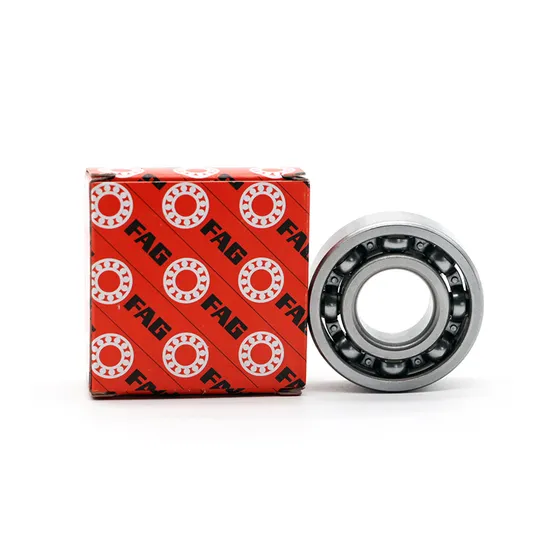
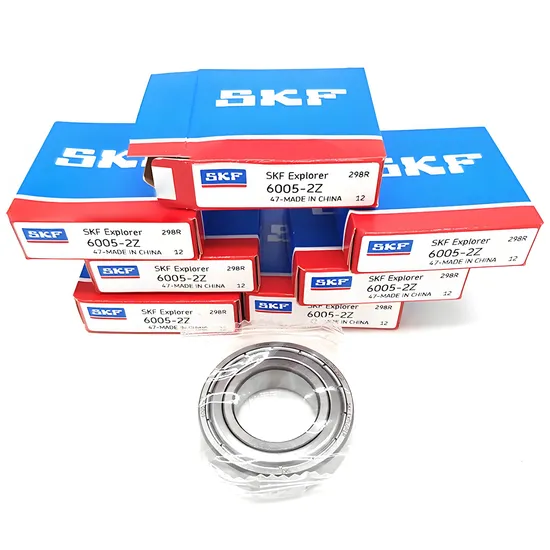
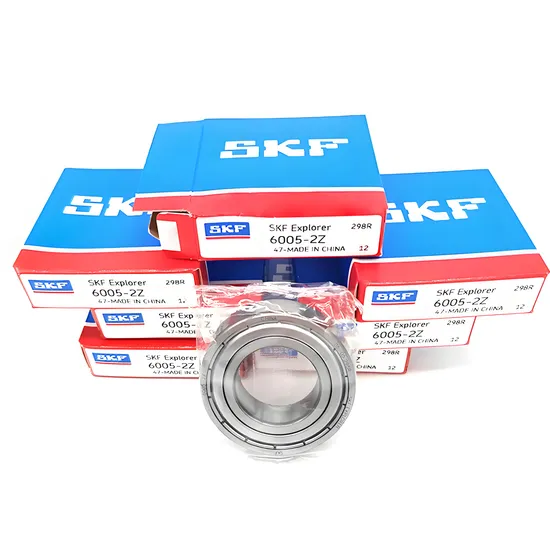
There are situations where compromise is not an option. Primary crushers, grinding mills, and heavy-duty excavators operate under extreme radial and axial loads. These machines subject bearings to severe shock loads and contamination. In such environments, the superior fatigue resistance and sealing technology of premium brands like SKF, FAG, or TIMKEN become indispensable.
Premium brands invest in proprietary sealing solutions that protect against dust and moisture ingress. In a dusty mining environment, a compromised seal leads to rapid lubricant contamination and bearing failure. While some Chinese manufacturers offer sealed bearings, the precision of the seal fit and the durability of the rubber compound often lag behind top-tier international standards. [NEED_CITE: importance of sealing effectiveness in contaminated environments]
Consider the case of a large-scale iron ore processing plant. The main gyratory crusher operates continuously, handling massive rocks. A bearing failure here would require days of disassembly and result in substantial production losses. The plant operator chose to stick with premium bearings for this application. The higher initial cost was justified by the extended service life and the peace of mind that came with predictable performance. The consistency of premium brands allows maintenance teams to plan replacements based on historical data, reducing the risk of unexpected breakdowns.
Furthermore, premium brands offer extensive technical support and failure analysis services. If a bearing fails prematurely, the manufacturer can analyze the debris and provide insights into root causes, such as misalignment or lubrication issues. This level of support is rarely available from generic suppliers. When sourcing from a Chinese mining bearing supplier, ensure they can facilitate similar technical consultations if needed, or partner with experts who can provide this value.
How to Verify Quality Regardless of Brand?
Essential documentation and inspection steps help avoid counterfeit or substandard parts.
Whether you choose a premium brand or a Chinese alternative, verification is crucial. The market is flooded with counterfeits and substandard products that mimic reputable brands. Protecting your operation requires a rigorous verification process. Start with traceability. Genuine bearings come with unique identification codes that can be traced back to the production batch. Request material certificates and heat treatment records from your supplier. [NEED_CITE: importance of traceability in bearing supply chain]
Physical inspection is also vital. Check the packaging for signs of tampering. Genuine products usually have high-quality printing and secure sealing. Examine the bearing itself for smooth rotation, precise machining marks, and consistent labeling. Poorly finished surfaces or rough edges are red flags. For critical applications, consider conducting independent laboratory tests on sample batches to verify hardness and dimensional accuracy.
Working with a trusted Chinese mining bearing supplier simplifies this process. Reputable suppliers maintain strict quality control protocols and provide full documentation with every shipment. They understand the importance of authenticity and have systems in place to prevent counterfeit products from entering their inventory. Ask for references and case studies from other industrial clients. A supplier with a proven track record in the mining sector is more likely to deliver consistent quality.
Additionally, pay attention to storage conditions. Bearings are sensitive to humidity and temperature. Ensure that your supplier stores products in controlled environments to prevent corrosion before delivery. Proper packaging during transit is equally important to avoid damage from vibration and moisture.
Building a Hybrid Sourcing Strategy
Optimizing your inventory mix balances cost-efficiency with operational security.
The most effective procurement strategy is not binary. It involves a hybrid approach that leverages the strengths of both premium and Chinese brands. By categorizing your equipment based on criticality, you can allocate your budget where it matters most. Use premium brands for critical, high-load applications where failure is costly. Use verified Chinese alternatives for non-critical, low-load, or easily replaceable components.
This strategy requires a deep understanding of your equipment’s operating conditions. Collaborate with your maintenance engineers to identify which bearings are truly critical. Review historical failure data to understand the performance of different brands in your specific environment. This data-driven approach allows you to make informed decisions rather than relying on general assumptions.
Partnering with a versatile Chinese mining bearing supplier enables this hybrid model. Look for suppliers who offer a wide range of brands, including both premium international lines and reliable domestic options. This one-stop sourcing solution simplifies procurement, reduces administrative overhead, and ensures consistent quality across your inventory. It also provides flexibility in responding to urgent maintenance needs, as a diverse inventory increases the likelihood of having the right part in stock.
Ultimately, the goal is to minimize total cost of ownership while maintaining operational reliability. By balancing upfront costs with long-term performance, you can achieve significant savings without compromising safety or productivity. The key is diligence in verification and strategic planning in sourcing.
Conclusion
Smart procurement balances risk and reward through strategic brand selection.
Choosing between SKF and Chinese alternatives is not about picking a winner, but about matching the right product to the right application. Critical equipment demands the reliability of premium brands, while auxiliary systems can benefit from the cost-effectiveness of verified Chinese manufacturing. A hybrid sourcing strategy, supported by rigorous quality verification, offers the best path to optimizing maintenance budgets and ensuring operational continuity.