
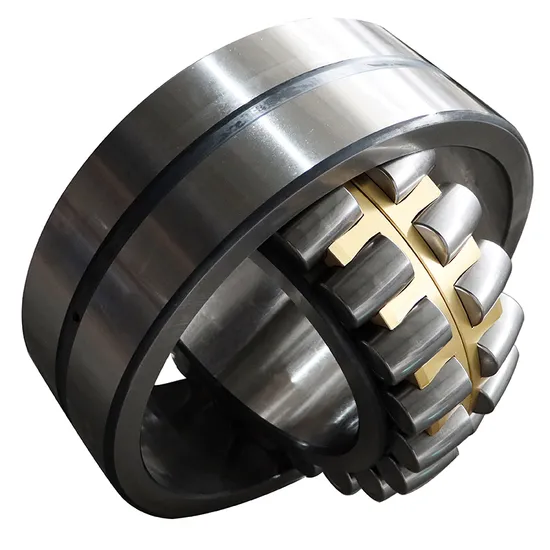
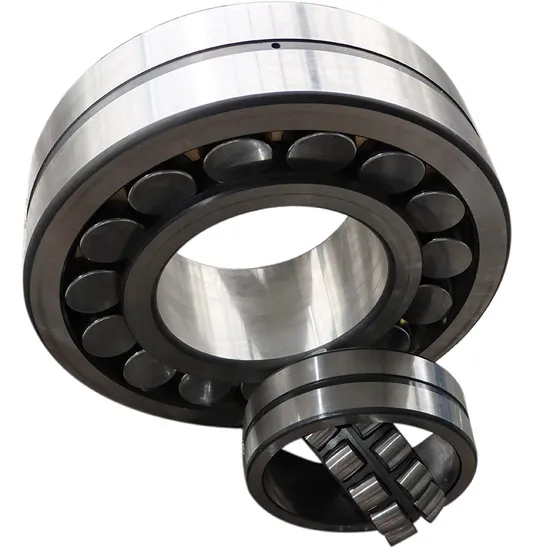
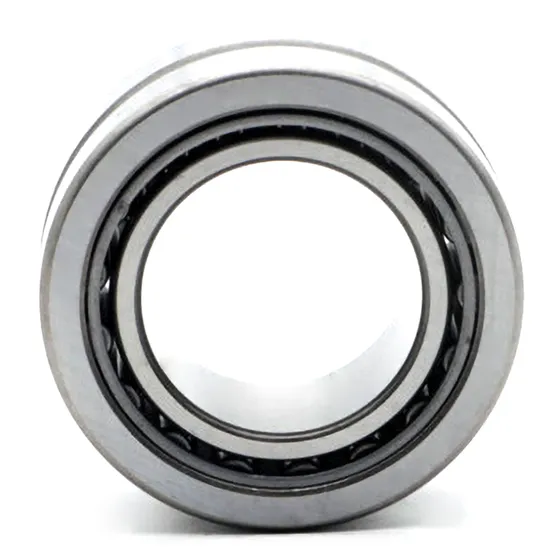
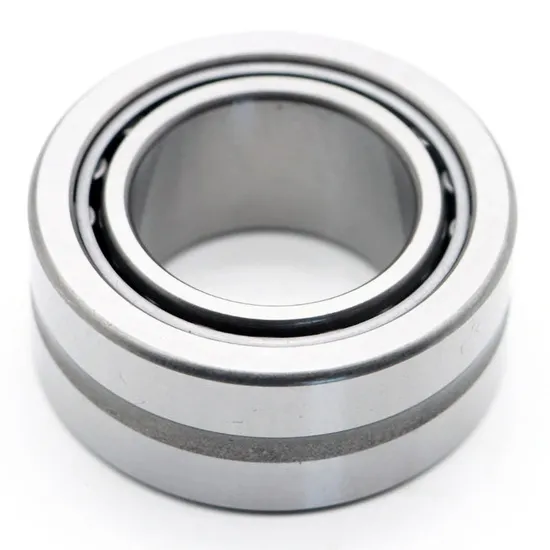
China Factory-Direct Angular Contact Ball Bearing Supplier
Brand authenticity is often a distraction from the real cost driver in spindle performance.
When sourcing a China factory-direct angular contact ball bearing supplier, the primary value proposition is not merely a lower unit price, but the ability to verify pairing precision, pre-load consistency, and material traceability that major brands obscure behind premium pricing. Buyers who focus strictly on technical validation of DB/DF mounting configurations and contact angle accuracy can achieve significant cost reductions without compromising spindle rigidity or service life.
The misconception that "factory direct" equates to inferior quality stems from a failure to distinguish between unbranded generic stock and verifiable premium steel production. In my early years handling logistics at Yantian Port, I learned that a bill of lading proves nothing about internal metallurgy. Later, when transitioning into bearing procurement, a specific incident with a Fuzhou-based machine tool manufacturer reshaped my approach entirely. They required seven sets of high-precision angular contact bearings for a spindle retrofit. I sourced a domestic alternative that offered substantial savings compared to the original European specification. However, upon installation, the spindle experienced excessive temperature rise. Disassembly revealed that the bearings were not matched for pre-load or paired correctly in a back-to-back (DB) configuration as required by the design. The resulting return shipping and compensation costs erased any initial savings. This experience dictated a new protocol: regardless of the brand name, every angular contact bearing must be verified for contact angle, pre-load grade, and pairing method against the client’s technical drawings before shipment. The advantage of a reliable China factory-direct angular contact ball bearing supplier lies not in the absence of a logo, but in the willingness to provide full traceability documentation and video-inspected shipments that prove these critical parameters.
This shift from brand reliance to parameter verification allows industrial distributors and OEMs to make informed decisions. The following analysis breaks down the technical necessities of sourcing these components directly from manufacturing sources.
Why Do Spindles Fail When Switching to Cost-Effective Alternatives?
Failure rarely occurs due to material weakness; it occurs due to mismatched assembly parameters.
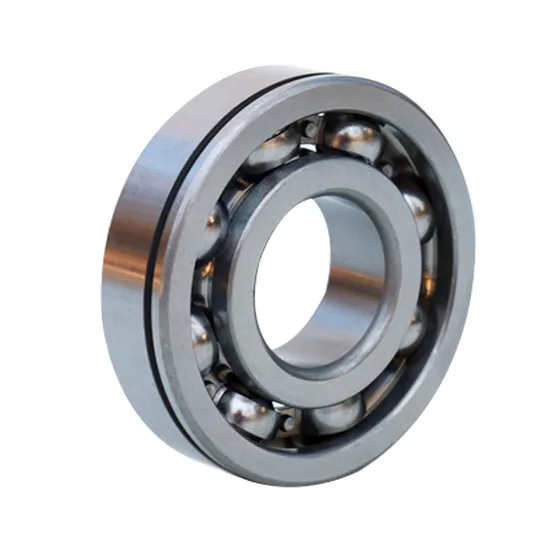
Angular contact ball bearings are distinct from deep groove types because they are designed to handle combined radial and axial loads. Their performance in high-speed spindles depends entirely on how they are mounted. A common error in procurement is treating these bearings as single units rather than matched sets. When buyers source from a China factory-direct angular contact ball bearing supplier, they must specify whether the application requires back-to-back (DB), face-to-face (DF), or tandem (DT) mounting. Each configuration offers different rigidity and moment load characteristics. [NEED_CITE: ISO standards for bearing mounting configurations]
Consider the case of a Middle Eastern industrial distributor who supplied bearings for a textile machinery upgrade. The end-user reported premature noise and vibration. Upon review, the issue was not the bearing steel quality, but the inconsistency in grease filling and the lack of matched pairing. The bearings were shipped as individual units from different production batches, leading to uneven load distribution within the spindle housing. By contrast, a verified factory-direct source provides matched sets where the inner and outer ring dimensions are controlled within micron-level tolerances to ensure uniform pre-load.
| Parameter | Premium Branded Sourcing | Unverified Factory Direct | Verified Factory Direct |
|---|---|---|---|
| Pairing Accuracy | Certified Matched Sets | Random Single Units | Verified Matched Sets (DB/DF) |
| Pre-load Consistency | Standardized Grades (L, M, H) | Uncontrolled/Unknown | Tested & Documented Grades |
| Traceability | Full Batch Documentation | Minimal/None | Material Certs & Inspection Reports |
| Cost Structure | High Brand Premium | Low Unit Price | Moderate Price with High Value |
The table above illustrates that the risk is not inherent to Chinese manufacturing, but to the lack of verification. A reputable China factory-direct angular contact ball bearing supplier will provide dimensional inspection reports and video evidence of the packing process, ensuring that the matched sets remain intact during transit. This level of transparency replaces the brand name as the guarantee of quality.
How to Verify Precision Without a Brand Name
Traceability documents are more valuable than marketing brochures.
When evaluating a China factory-direct angular contact ball bearing supplier, the request for documentation should be specific. General certificates of conformity are insufficient for precision applications. Buyers need to see material certification that confirms the use of premium bearing steel, such as GCr15 or equivalent high-carbon chromium steel, with verified heat-treatment logs. [NEED_CITE: ASTM or ISO standards for bearing steel composition]
A European wind farm operator once faced urgent downtime due to gearbox bearing failure. They needed a rapid replacement but were hesitant to switch from their specified premium brand due to fear of counterfeits. The solution was not to match the brand, but to match the specifications. We provided a factory-direct alternative with complete traceability: raw material batch numbers, heat-treatment temperature curves, and final dimensional inspection data. The key was verifying the contact angle—whether 15°, 25°, or 40°—and ensuring it matched the original design. A mismatch in contact angle alters the axial load capacity and can lead to catastrophic slip under heavy loads.
Verification steps should include:
- Requesting Sample Testing: Before bulk orders, test samples for noise levels and rotational smoothness.
- Checking Pre-load Grades: Ensure the supplier can distinguish between light (L), medium (M), and heavy (H) pre-load classes.
- Reviewing Packing Videos: Ask for video evidence of the bearings being measured and packed in matched sets.
This process transforms the procurement decision from a gamble on brand reputation to a calculated engineering choice. A competent China factory-direct angular contact ball bearing supplier will welcome these requests, as they demonstrate a commitment to technical integrity rather than just volume sales.
Real-World Scenarios: When to Switch and When to Stay
Context determines the viability of factory-direct sourcing.
Not every application is suitable for switching from premium brands. Critical high-speed spindles in aerospace or ultra-precision medical equipment may still require the extensive R&D backing of established global manufacturers. However, for general industrial machinery, mining equipment, and standard machine tools, factory-direct options offer a compelling balance of cost and performance.
A Latin American mining company faced recurring downtime due to bearing failures in their crusher gearboxes. The original equipment manufacturer specified a premium brand, but lead times were long and costs prohibitive. By switching to a verified China factory-direct angular contact ball bearing supplier, they reduced procurement costs significantly while maintaining supply continuity. The key was focusing on the robustness of the sealing and the consistency of the heat treatment, rather than the brand logo. The supplier provided detailed documentation on the carburizing depth and hardness profiles, which met the rigorous demands of the mining environment.
Conversely, a German automotive parts manufacturer attempted to source high-precision spindle bearings for their CNC lines from a low-cost vendor without verifying the pairing precision. The result was a high rate of rejection during final assembly due to runout issues. This highlights the importance of selecting a supplier who understands the technical nuances of angular contact bearings, not just one who offers the lowest price.
Making the Decision: A Checklist for Procurement Managers
Balance cost savings with technical risk mitigation.
Procurement managers must move beyond simple price comparisons. The total cost of ownership includes the risk of downtime, the cost of returns, and the efficiency of the supply chain. When engaging with a China factory-direct angular contact ball bearing supplier, use the following checklist to ensure quality and reliability:
- Technical Alignment: Does the supplier understand the difference between DB, DF, and DT mounting? Can they provide bearings with specific contact angles and pre-load grades?
- Documentation: Are material certificates, heat-treatment logs, and dimensional inspection reports available for each batch?
- Verification: Is there a process for sample testing and video-inspected shipments?
- Support: Does the supplier offer technical consultation for model selection and failure analysis?
By adhering to these criteria, buyers can leverage the cost advantages of direct manufacturing without sacrificing performance. The goal is not to find the cheapest bearing, but the most verifiable one. A reliable China factory-direct angular contact ball bearing supplier acts as a technical partner, providing the data and transparency needed to make confident engineering decisions.
Conclusion
Verification outweighs branding in modern industrial procurement.
Sourcing angular contact bearings directly from Chinese factories offers significant cost benefits, but only when buyers prioritize technical validation over brand recognition. By focusing on pairing precision, pre-load consistency, and complete traceability, industrial distributors and OEMs can secure high-performance components at a fraction of the traditional cost. The key is to partner with a China factory-direct angular contact ball bearing supplier who provides transparent documentation and technical support, ensuring that every bearing meets the specific demands of the application.