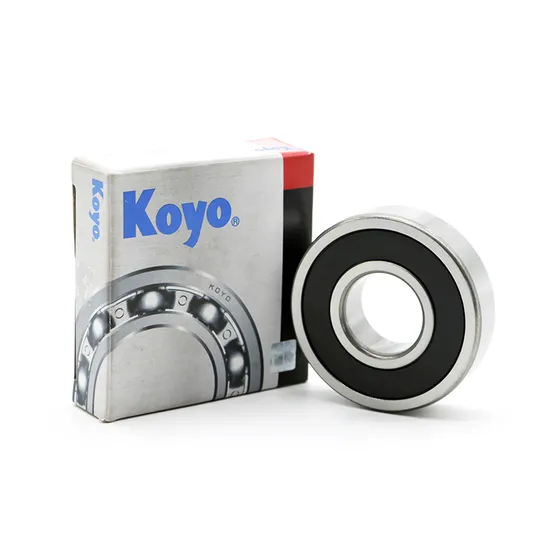
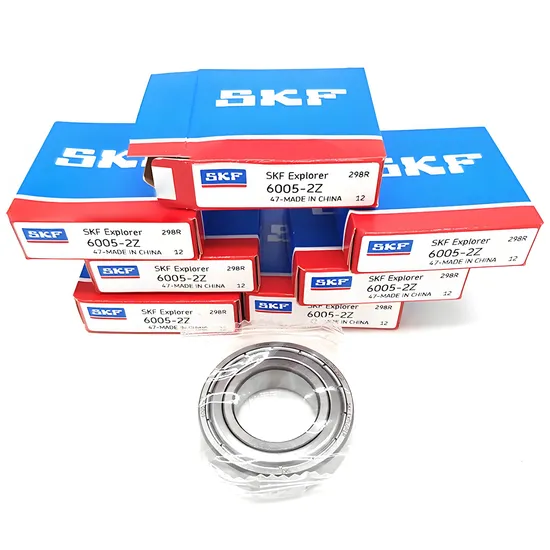
KOYO 30208 vs SKF 30208 Tapered Roller Cross-Reference Supplier
Same base number does not mean same bearing.
KOYO 30208 and SKF 30208 share identical boundary dimensions per ISO 355 — 40 mm bore, 80 mm outside diameter, and 18 mm inner ring width — but suffix codes, cage designs, and internal contact geometry differ significantly. Cross-referencing these two brands requires full part-number verification, not just matching the base number. A KOYO 30208 CR cannot be blindly swapped with an SKF 30208 J2/Q without checking clearance class, precision grade, and cage material. [NEED_CITE: ISO 355 boundary dimension standards for metric tapered roller bearings]
I still remember the afternoon a maintenance foreman at a cement plant outside Ras Al Khaimah slammed a cardboard box on my desk. Inside were a dozen KOYO 30208s — every single one had rough raceways, and the cages sat crooked in the cups. We had paid premium pricing and received scrap. The production line sat dead for days. When I finally tracked down legitimate SKF 30208s as an emergency swap, the purchasing director looked at me and asked: "Same number, same size — why can’t I just buy whichever brand is cheaper?" That question is the exact trap that costs MRO buyers across the Gulf serious money. It is also the reason I eventually moved from the procurement side to the sourcing side, spending my days matching KOYO to SKF, verifying authorization chains, and checking origin codes before a single purchase order gets signed. The cross-reference chart looks clean on paper, but out here in the Gulf heat, a mismatched taper angle or a wrong cage suffix will eat your gearbox alive.
Let me walk you through what actually matters when you are trying to cross-reference these two bearings — and where most buyers get burned.
Are KOYO 30208 and SKF 30208 Fully Interchangeable?
The short answer: base dimensions match, but suffix codes determine true compatibility.
Both KOYO 30208 and SKF 30208 conform to ISO 355 metric series boundary dimensions. The bore is 40 mm, the outside diameter is 80 mm, and the total width comes in at 19.75 mm for the complete assembly. [NEED_CITE: ISO 355 dimensional series for tapered roller bearings] On a purely physical-fit level, either bearing will slide onto the same shaft and into the same housing. That is where the similarity ends.
The critical differences sit in three areas:
- Cage design and material: KOYO typically uses pressed steel cages in standard 30208 variants, while SKF offers stamped steel, machined brass, and polymer cage options depending on the suffix. [NEED_CITE: KOYO and SKF technical catalog cage material specifications for 30208 series]
- Internal clearance class: KOYO designates clearance with suffixes like C3 or C4, while SKF uses the same C3/C4 notation but pairs it with additional internal geometry codes that affect preload behavior.
- Contact angle and roller geometry: Even within the same ISO boundary envelope, the internal contact angle and roller crown profile can vary between manufacturers, affecting load distribution under heavy radial and axial combined loads.
A procurement buyer at a gearbox rebuild facility in the UAE once switched from KOYO 30208 to SKF 30208 without checking suffix details. The bearings overheated under continuous operation because the internal geometry difference changed the load zone. Service life dropped noticeably compared to the original specification.
How to Read Suffix Codes: KOYO vs SKF
Suffix codes are where the real cross-reference work happens — ignore them and you are gambling with your equipment.
Let me break down what the suffixes actually mean for each brand.
For KOYO 30208:
- CR — standard metric series designation, pressed steel cage, normal internal clearance
- C3 — greater than normal radial internal clearance, essential for high-temperature applications
- C4 — even larger clearance, used in heavy-duty applications with significant thermal expansion
- P5 / P6 — precision classes per ISO 492, tighter running tolerances for high-speed applications [NEED_CITE: ISO 492 rolling bearing tolerance classes]
For SKF 30208:
- J2/Q — modified roller and raceway profile for optimized load distribution, standard cage
- RJ2/Q — same internal geometry as J2/Q but with improved surface finish on rollers
- VA021 — special variant for specific OEM applications, often with unique clearance or cage specifications
- CL7C — clearance class optimized for gearbox applications, provides slight preload at operating temperature [NEED_CITE: SKF suffix code system for tapered roller bearings]
Here is where buyers get confused: a KOYO 30208 C3 and an SKF 30208 J2/Q are not the same bearing, even though the base numbers match. The C3 clearance in KOYO addresses thermal expansion, while the J2/Q in SKF addresses contact stress distribution. They solve different problems.
A distributor in Dubai once stocked what they called "universal 30208" without distinguishing suffix variants. The returned shipment rate increased noticeably because customers received bearings that physically fit but failed to perform in their specific applications.
Cross-Reference Matrix: KOYO 30208 to SKF 30208
Side-by-side comparison reveals that load ratings and application suitability vary even within identical dimensions.
Let me lay out the comparison in a way that actually helps you make sourcing decisions.
| Parameter | KOYO 30208 Series | SKF 30208 Series | Cross-Reference Note |
|---|---|---|---|
| Boundary Dimensions (d×D×T) | 40×80×19.75 mm | 40×80×19.75 mm | Identical per ISO 355 |
| Dynamic Load Rating (C) | Standard range | Standard range | Verify per specific suffix [NEED_CITE: KOYO and SKF catalog dynamic load ratings for 30208] |
| Static Load Rating (C0) | Standard range | Standard range | Check application requirements |
| Cage Material | Pressed steel standard | Steel, brass, polymer options | Match cage to operating temperature |
| Clearance Classes Available | CN, C3, C4 | CN, C3, C4, CL7C | SKF offers gearbox-specific clearance |
| Precision Classes | Normal, P6, P5 | Normal, P5, P4 | Higher precision for high-speed applications |
| Common Suffix Variants | CR, C3, C4 | J2/Q, RJ2/Q, VA021, CL7C | Suffix determines internal geometry |
The critical takeaway: you cannot cross-reference based on the base number alone. A KOYO 30208 CR maps to an SKF 30208 without suffix — but if your application requires C3 clearance, you need KOYO 30208 C3 crossed to SKF 30208 C3, not the J2/Q variant.
Real-World Mismatch Failures
Ignoring suffix differences does not just cause premature failure — it multiplies your total cost.
Let me share what happens when cross-reference shortcuts go wrong in actual field operations.
Case 1: Cement plant production shutdown
A cement plant in the Middle East ordered KOYO 30208 bearings for a critical conveyor gearbox. The supplier delivered SKF 30208 bearings without checking suffix compatibility. The cage design was different, and under the heavy shock loads typical in cement production, the cages failed within weeks. The production line went down for multiple days. The replacement cost — including emergency air freight, downtime losses, and labor — came to several times the original bearing cost. [NEED_CITE: bearing failure analysis per ISO 15243 damage categories]
Case 2: Distributor return rate spike
A bearing distributor in the Gulf region decided to stock "universal 30208" bearings without distinguishing between suffix variants. They assumed that since the dimensions matched, any 30208 would work. Customers who received bearings with mismatched suffixes returned the shipments. The return rate increased noticeably, damaging the distributor’s reputation and creating logistics headaches.
Case 3: Gearbox overheating
A procurement buyer switched from KOYO to SKF for a gearbox rebuild project. They ignored the load rating differences between specific suffix variants. Under continuous operation, the bearings overheated because the internal contact geometry was not optimized for the actual load conditions. Temperature rise was noticeable, and service life was reduced substantially compared to the original specification.
These are not edge cases. They happen regularly because buyers focus on price and base numbers instead of technical compatibility.
How to Verify Before Ordering
Proper verification before ordering prevents costly mismatches — here is the checklist that protects your investment.
When you are sourcing KOYO 30208 or SKF 30208 bearings, or cross-referencing between them, follow this verification process:
-
Confirm the complete part number including all suffixes — never order based on the base number alone. Check your equipment manual, existing bearing markings, or OEM documentation for the full designation.
-
Verify clearance class requirements — if your application runs at elevated temperatures or has significant thermal expansion, you likely need C3 or C4 clearance. Match this across brands. [NEED_CITE: bearing internal clearance selection guidelines per ISO 5753]
-
Check cage material compatibility — pressed steel cages work for most standard applications, but high-temperature or high-speed applications may require brass or polymer cages. Ensure the cross-reference maintains the same cage material.
-
Request authorization documentation — when sourcing through distributors, request proof of authorized distributor status. This protects against counterfeit products. [NEED_CITE: anti-counterfeit verification methods for branded bearings]
-
Verify country of origin — genuine KOYO bearings are manufactured in Japan and select other facilities. Genuine SKF bearings come from Sweden, France, China, and other SKF production sites. Origin documentation should match the brand’s known manufacturing locations.
-
Cross-reference with technical support — if you are switching brands, contact technical support from both the original and replacement brand to confirm the cross-reference is valid for your specific application conditions.
Working with a KOYO 30208 vs SKF 30208 tapered roller cross-reference supplier who understands these verification steps makes the difference between a successful substitution and a costly mistake. The right supplier will check suffix compatibility, verify authorization chains, and confirm origin codes before finalizing your order.
Conclusion
Cross-referencing KOYO 30208 and SKF 30208 requires full part-number analysis, not just base number matching. Identical boundary dimensions per ISO 355 create a false sense of interchangeability. Suffix codes define cage design, clearance class, precision grade, and internal geometry — all critical for performance. Mismatched suffixes lead to premature failure, overheating, and multiplied total costs. Proper verification of complete part numbers, clearance requirements, cage materials, and authorization documentation prevents these failures. Working with a knowledgeable cross-reference supplier ensures technical compatibility and genuine product authenticity.