KOYO SKF Cross-Reference Bearings Wholesale Supplier for Industrial Buyers
Matching basic model numbers is not enough—clearance groups, cage materials, and seal suffixes must align simultaneously, or field failures follow within weeks.
KOYO and SKF bearings can be interchanged at the basic model level, but a reliable cross-reference requires matching internal clearance class, cage design, and seal/shield suffixes one by one. Skipping any of these fields is the primary cause of abnormal temperature rise, noise, and premature breakdown after swap-in. [NEED_CITE: interchange failure root cause distribution per ISO 15243]
I still remember a batch of twenty-odd tapered roller units shipped to a buyer in Mexico. The basic numbers matched the KOYO originals perfectly, but the machine ran hot within days. When the housing was opened, the inner rings showed scuffing marks typical of excessive preload. The local dealer had supplied SKF equivalents with a tighter clearance class than the original KOYO spec, and nobody checked the suffix. From that job onward, every quotation I send out now carries a full cross-reference sheet with clearance notes attached, because re-opening a housing twice costs far more than printing two extra lines on a proforma invoice.
This is where a structured KOYO SKF cross-reference guide stops being a catalog exercise and starts protecting your production line.
Can KOYO and SKF Bearing Numbers Be Swapped Directly?
Yes for the basic number, no for the full suffix string. The first three to five digits of a bearing code (such as 32218 for a tapered roller, 6206 for a deep groove ball, or 22320 for a spherical roller) describe geometry that is standardized across brands. Beyond that, each manufacturer builds its own suffix language for internal design, clearance, cage, seals, and special treatments. [NEED_CITE: SKF and KOYO official designation system documentation]
When a maintenance engineer reads "KOYO 32218" on a nameplate, the direct SKF counterpart in basic form is also 32218. But the original KOYO unit may carry a C3 clearance, a pressed-steel cage, and no seals, while the available SKF stock could be C0 (normal), with a machined brass cage, and 2RS seals on both sides. Drop that unit into a gearbox designed for C3 clearance and free-end float, and the rollers are preloaded from day one.
A paper mill in Southeast Asia once replaced a set of KOYO spherical rollers on a dryer roll with SKF units of the same basic size. The original KOYO parts used a specific high-temperature cage variant; the SKF substitutes arrived with a standard phenolic cage. Within a few months, cage fragments were found in the lubricant sump. The basic number was correct; the cage suffix was not.
The rule that works on the shop floor is simple:
- Basic number: geometry match—yes.
- Clearance suffix (C2, C3, C4, etc.): must match exactly.
- Cage suffix (steel, brass, polymer): must match the operating temperature and speed range.
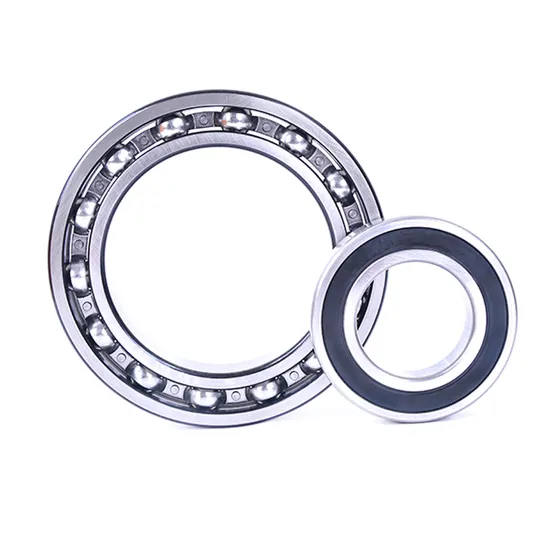
- Seal/shield suffix (2RS, ZZ, open): must match the lubrication scheme of the housing.
Only when all four fields line up can you call the swap a true KOYO SKF cross-reference. [NEED_CITE: ABMA/AFBMA bearing interchange practice notes]
What Is the Most Common Mistake During Cross-Reference?
Clearance class mismatch is the single biggest source of post-swap failures. Most buyers assume that if the numbers look the same, the bearing will behave the same. In reality, internal clearance controls how much the rings can move relative to each other under thermal expansion, and getting it wrong changes the entire load pattern inside the bearing. [NEED_CITE: ISO bearing clearance standards and application guidance]
Consider a typical deep groove ball bearing in the 62 or 63 series used on a conveyor drive. The OEM specified KOYO with C3 clearance because the shaft runs warm and expands. A maintenance team sources SKF stock locally, finds the same basic number, but the available batch is normal clearance (CN). Once the machine reaches operating temperature, the inner ring expands more than the outer, clearance collapses, and the balls start running with negative clearance. The result is a noticeable temperature rise, audible noise, and a service life that drops sharply.
The same pattern repeats with tapered rollers. A KOYO 30206 or 32218 in a paired arrangement relies on a specific axial preload set by the original clearance class. Substituting with a tighter SKF clearance changes the preload, pushes contact stresses higher, and accelerates surface fatigue on the raceways.
A short risk checklist helps avoid this trap before the parts leave the warehouse:
- Confirm the original clearance class from the OEM drawing or old bearing marking, not from memory.
- Match the replacement clearance class exactly; do not accept "close enough."
- Check whether the application runs hot, because thermal expansion makes C3 or C4 mandatory in many cases.
- Verify that paired tapered roller setups keep the same clearance class on both units, otherwise one bearing takes most of the load.
- Record the clearance class on the purchase order and on the incoming inspection sheet.
When these points are treated as non-negotiable, the majority of field complaints after a brand swap simply disappear. [NEED_CITE: field failure analysis reports on clearance-related bearing damage]
How Do You Get a Reliable Cross-Reference Chart?
A trustworthy chart must list basic model, clearance class, cage code, and seal or shield suffix as separate columns, not just model numbers side by side. Many "interchange tables" circulating online only match the basic number and leave the rest blank. That is not a cross-reference; it is a geometry list, and it is exactly what causes the failures described above.
A practical KOYO SKF cross-reference sheet for industrial buyers should contain at least these fields:
- Basic model number (e.g., 32218, 6206, 22320).
- Bearing type (tapered roller, deep groove ball, spherical roller, etc.).
- Internal clearance class (C2, CN, C3, C4, and so on).
- Cage material and design (pressed steel, machined brass, polymer, specific KOYO and SKF suffixes for each).
- Seal or shield configuration (open, ZZ, 2RS, and the exact suffix each brand uses).
- Special treatment notes if applicable (stabilization, specific lubrication fill).
When I prepare an offer for a distributor or an MRO buyer, the quotation package always includes this full matrix for every line item, together with a short note explaining which field is the most sensitive for that specific application. For example, on a high-temperature fan using 223-series spherical rollers, the cage column gets highlighted because a wrong cage material at elevated temperature shortens life noticeably. On a sealed-for-life deep groove ball bearing, the seal suffix column is the one that matters most.
This approach turns the KOYO SKF cross-reference from a static PDF into a working tool that the buyer, the warehouse clerk, and the fitter can all read without guessing. [NEED_CITE: SKF and KOYO technical selection guides for industrial applications]
How Should You Verify the Replacement Bearings on Arrival?
Visual check, clearance check, and marking check are the three minimum steps before any cross-referenced bearing goes into storage or onto the machine. Even with a perfect cross-reference sheet on paper, a wrong batch can still arrive if the supplier picked from the wrong shelf or relabeled the boxes.
A practical incoming inspection routine looks like this:
- Step one, visual inspection. Check the outer packaging for brand logos, part numbers, and country-of-origin markings. Open the box and confirm that the bearing marking on the ring matches the box label in basic number and suffix. Look for signs of repackaging, such as mixed languages on the label or smeared ink.
- Step two, suffix verification. Read the suffix string on the bearing itself and compare it line by line with the cross-reference sheet. Pay special attention to the clearance code and cage code, because these are the fields most often misread or ignored.
- Step three, clearance spot check. For critical applications, use a feeler method or a dedicated clearance measuring device to confirm that the actual internal clearance falls within the expected range for the stated class. [NEED_CITE: ISO procedures for measuring radial internal clearance of rolling bearings]
- Step four, documentation trace. Keep the supplier’s test certificate or declaration of conformity together with the cross-reference sheet used for that order, so that any future field issue can be traced back to the exact batch and the exact interchange decision.
A maintenance team at a cement plant in the Middle East once received a batch of KOYO tapered rollers labeled as C3. The cross-reference sheet they used specified C3 for the SKF equivalent as well. During incoming inspection, one box was opened at random and the ring marking showed a clearance code corresponding to normal clearance. The rest of the batch was checked and a mixed situation was found. The shipment was returned before any unit was installed, avoiding a situation where half the housings would have run with wrong preload.
Treating these four steps as standard practice turns the KOYO SKF cross-reference from a theoretical exercise into a controlled process that protects both the machine and the reputation of the buyer. [NEED_CITE: bearing incoming inspection best practices per industry maintenance guidelines]
Conclusion
A KOYO SKF cross-reference is a multi-field match, not a single-number lookup. Basic model alignment is only the starting point; clearance class, cage design, and seal suffix must all be verified against the original specification before any swap is approved. When the cross-reference sheet is complete, the incoming inspection is disciplined, and the application conditions are respected, brand interchange becomes a reliable tool rather than a gamble, and the machine keeps running long after the paperwork is forgotten.