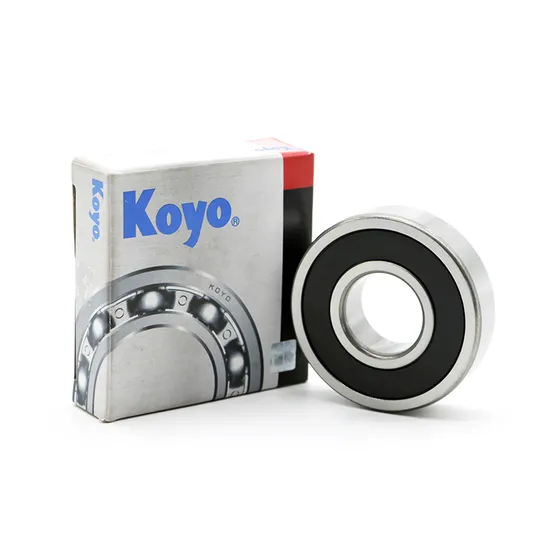
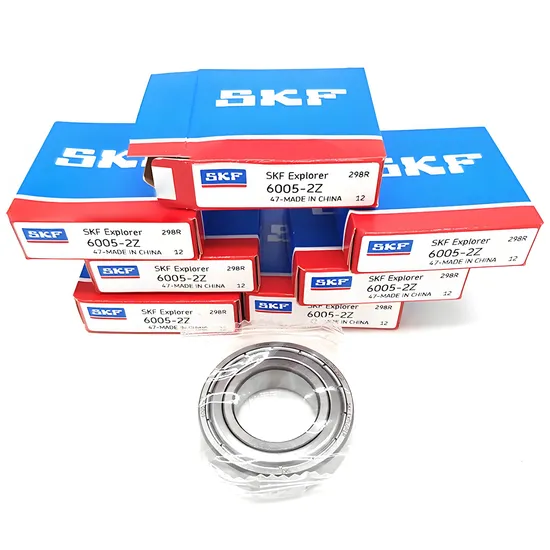
Blanket Orders Covering Both KOYO and SKF Bearings Wholesale Supplier
Blanket orders spanning multiple bearing brands look efficient on paper — until delivery day exposes the gaps in origin, substitution, and MOQ clauses that no one bothered to specify.
A blanket order covering both KOYO and SKF bearings is a single framework agreement that schedules periodic releases of multiple bearing brands under unified commercial terms, while keeping brand-specific technical specifications, lead-time expectations, and origin requirements as separate, non-interchangeable line items.
I have spent long hours at the Tanjung Priok port watching containers get held because a framework agreement treated KOYO and SKF as if they were the same product family. A palm oil processing plant in Sumatra signed a blanket order mixing both brands, and the cross-reference clause was left vague — the supplier shipped a batch of SKF spherical roller bearings with an origin that did not match the end-user’s approved vendor list. The entire container sat at the port for weeks while documentation was scrambled. That single oversight affected a significant percentage of the SKUs in that release and delayed the plant’s maintenance shutdown schedule [NEED_CITE: ISO 15243 damage classification and root cause distribution in industrial bearing applications].
The lesson was clear: a blanket order is only as strong as the clauses that differentiate what cannot be treated the same. Let me walk through the structural elements that keep multi-brand framework agreements functional.
What Is a Blanket Order for Multi-Brand Bearings?
A multi-brand blanket order is a procurement framework where a buyer commits to a total annual volume across several bearing brands, with individual release calls scheduled against that volume — each release specifying exact brand, model, quantity, and origin.
Unlike a standard purchase order, a blanket order does not require the buyer to take delivery of everything at once. Instead, the buyer issues periodic release calls — monthly, quarterly, or per maintenance window — against the pre-agreed total. This structure is common in MRO procurement for plants that run mixed fleets of equipment: some machines specify KOYO bearings in their OEM documentation, others call for SKF, and a few may require NSK or NTN depending on the original design.
The commercial terms — payment structure, Incoterms, validity period, price adjustment mechanisms — sit at the framework level. But the technical terms must be split by brand, because KOYO and SKF operate different production facilities, follow different internal quality protocols, and maintain different distribution authorization structures [NEED_CITE: authorized distributor verification protocols across major bearing manufacturers].
A Southeast Asian mining operation once set up a blanket order covering KOYO tapered roller bearings for their haul truck wheel ends and SKF spherical roller bearings for their conveyor pulleys. The framework treated all items as a single product category with one lead-time assumption. When KOYO’s production schedule shifted due to raw material sourcing adjustments, the buyer expected SKF to fill the gap — but SKF’s internal clearance specifications and cage designs for equivalent dimensional sizes did not match the OEM requirements. The result was a stock imbalance: slow-moving KOYO inventory piled up while fast-moving SKF positions ran short.
The structural fix was to build per-brand release thresholds into the framework, with independent stock-rebalancing triggers for each manufacturer’s product line.
Why Can’t KOYO and SKF Share the Same Line-Item Terms?
Because lead-time windows, minimum order quantities, and origin documentation requirements differ fundamentally between manufacturers — merging them into shared line items creates compliance failures and delivery disputes.
Most procurement managers assume a blanket order simplifies administration by consolidating everything under one set of terms. In reality, KOYO and SKF operate on different production planning cycles, serve different regional distribution priorities, and enforce different country-of-origin documentation standards.
Consider the lead-time dimension. KOYO’s typical production and shipping window for standard deep groove ball bearings and tapered roller bearings follows a pattern tied to their Japanese and regional manufacturing facilities. SKF’s lead times for spherical roller bearings and cylindrical roller bearings are governed by their European and Asian production network scheduling [NEED_CITE: typical lead-time variance ranges between major bearing manufacturers for standard industrial series]. When a blanket order assigns a single lead-time expectation to both brands, one brand will inevitably fall outside that window during peak demand periods.
The MOQ structure creates a second fracture point. KOYO’s minimum order quantities for certain bearing series — particularly their precision-grade angular contact bearings and specific tapered roller configurations — differ from SKF’s MOQ tiers for equivalent application categories. A blanket order that sets a uniform MOQ across both brands either forces the buyer to over-order slow-moving KOYO items or prevents them from releasing SKF quantities that match actual consumption rates.
Origin documentation is the third divergence. SKF maintains strict country-of-origin traceability tied to their manufacturing facility codes, and their authorized distributor network requires specific documentation chains. KOYO’s origin verification follows a parallel but separate system. A blanket order that does not specify origin requirements per brand line item leaves room for substitution — and substitution in the bearing industry is not a simple swap of identical parts.
A construction equipment distributor in the Middle East learned this when their quarterly blanket order allowed brand substitution without explicit approval thresholds. A batch of bearings arrived with a different origin than specified, and the end-user’s quality team rejected the shipment. The substitution rate for that quarter exceeded acceptable limits, and the distributor had to absorb expedited shipping costs to replace the rejected inventory.
| Framework Element | KOYO-Specific Requirement | SKF-Specific Requirement | Risk if Merged |
|---|---|---|---|
| Lead-Time Window | Tied to Japanese and regional facility scheduling | Governed by European and Asian production network | One brand consistently misses delivery targets |
| MOQ Tier Structure | Varies by precision series and application category | Structured around European product line classifications | Overstock on one brand, shortage on the other |
| Origin Documentation | Separate facility code and traceability system | Distinct manufacturing facility codes and authorization chains | Substitution disputes and shipment rejection |
| Authorization Verification | Brand-specific authorized distributor validation | Independent authorized distributor network requirements | Counterfeit exposure through mixed sourcing |
How to Structure Cross-Reference Clauses in a Blanket Order?
A cross-reference clause in a multi-brand blanket order must distinguish between dimensional interchange and full application interchange, and must lock a formal substitution approval process before any brand swap is executed.
Dimensional interchange means two bearings from different brands share the same outer diameter, inner diameter, and width — they physically fit the same housing and shaft. Full application interchange means they also match in internal clearance class, cage design, load rating, and lubrication compatibility under the specific operating conditions of the machine.
The mistake most buyers make is assuming dimensional interchange equals functional interchange. A KOYO deep groove ball bearing and an SKF deep groove ball bearing with the same bore and outside diameter may differ in internal clearance group — one might be C3 while the other is standard CN — and that difference matters enormously in high-temperature conveyor applications or precision spindle applications [NEED_CITE: ISO bearing dimension standards and internal clearance classification systems].
A robust cross-reference clause in a blanket order should include the following structural elements:
First, a defined interchange methodology. The clause must state whether cross-references are based purely on dimensional equivalence per ISO standards, or whether they extend to application-level matching that accounts for internal clearance, cage material, and load capacity under specified operating parameters.
Second, a substitution approval workflow. Before any brand substitution is executed against a release call, the supplier must submit a formal cross-reference request identifying the proposed alternative brand, the specific model number, the dimensional comparison, and the application-level compatibility assessment. The buyer’s technical team approves or rejects before shipment.
Third, a substitution rate cap. The framework should set a maximum percentage of total release volume that can be fulfilled through cross-reference substitution within any given period. This prevents the supplier from quietly shifting the entire order to whichever brand is easiest to source rather than honoring the buyer’s brand-specific requirements.
Our cross-reference interchange service operates exactly within this framework. When a buyer issues a release call against a blanket order and the specified brand is experiencing extended lead times, we generate a formal cross-reference comparison covering dimensional data, internal clearance compatibility, cage material specifications, and application suitability — then submit it for buyer approval before any substitution ships. This process protects the buyer from receiving bearings that fit physically but fail prematurely under operating conditions.
What Authenticity Safeguards Should a Blanket Order Include?
A multi-brand blanket order must embed origin documentation requirements, authorized-source verification protocols, and batch-level traceability mandates for every brand line item — treating authenticity as a per-release obligation, not a one-time framework assumption.
The bearing industry faces a persistent counterfeit problem, and framework agreements are particularly vulnerable because they span long periods and multiple release cycles. A buyer may verify the supplier’s authorization status when signing the framework, but that status can change — a distributor may lose authorization, a production batch may be diverted through unauthorized channels, or a supplier may blend genuine and non-genuine inventory across release calls.
The safeguards that belong in a blanket order include:
Certificate of Origin per release. Every release call against the framework must be accompanied by a Certificate of Origin that identifies the specific manufacturing facility, the production batch, and the export documentation chain. This is not a one-time document submitted at framework signing — it must accompany every shipment.
Authorized distributor verification at release level. The framework should require the supplier to confirm their active authorization status with each brand at the time of each release, not just at the time of framework execution. Authorization statuses change, and a supplier who was authorized for SKF when the framework was signed may not hold that authorization twelve months later [NEED_CITE: authorized distributor verification protocols and brand-level authorization databases].
Batch-level traceability with QR or serial code verification. Modern bearing manufacturers embed traceability codes on their products and packaging. The blanket order should require the supplier to provide these codes at the time of shipment, enabling the buyer to verify authenticity through the manufacturer’s verification system before accepting delivery.
Origin-locking clauses. The framework must specify which countries of origin are acceptable for each brand line item, and must prohibit substitution of origin without formal buyer approval. This prevents the supplier from sourcing the same brand from a different regional market where pricing may be lower but authenticity documentation may be incomplete.
A palm oil processing plant in Southeast Asia — the same operation I mentioned earlier — now requires every release call under their framework to include origin documentation and batch traceability codes. Their authorized-distributor sourcing verification process checks our authorization status against each brand’s current distributor registry before every release ships. This level of diligence eliminated their previous exposure to origin mismatches and documentation gaps.
How to Balance MOQ Flexibility Across Brands?
A multi-brand blanket order must set per-brand release thresholds and independent stock-rebalancing triggers, allowing the buyer to adjust quantities for each brand based on actual consumption patterns rather than forcing uniform release volumes.
The fundamental problem with applying a single MOQ structure across KOYO and SKF in a blanket order is that consumption patterns for different brands rarely move in sync. A plant may consume SKF spherical roller bearings rapidly in their conveyor systems while KOYO tapered roller bearings in their gearboxes turn over much more slowly. A uniform release schedule creates overstock on the slow-moving brand and shortage on the fast-moving brand.
The solution is to build per-brand flexibility into the framework:
Independent release thresholds per brand. Each brand line item in the framework should have its own minimum and maximum release quantities, calibrated to that brand’s typical consumption rate and lead-time profile. This allows the buyer to release larger quantities of fast-moving SKF items while keeping KOYO releases smaller and more frequent.
Stock-rebalancing triggers. The framework should define trigger points — such as when inventory of one brand exceeds a specified coverage period while another brand drops below a minimum coverage threshold — that allow the buyer to adjust future release quantities without penalty. This prevents the accumulation of dead stock on slow-moving items while maintaining supply continuity for fast-moving ones.
Cross-brand volume flexibility. Some frameworks allow the buyer to shift a portion of the total annual volume commitment from one brand to another within defined limits. For example, if KOYO consumption drops due to equipment changes, the buyer may be permitted to redirect a portion of that volume toward SKF — provided the total annual commitment is maintained.
An African mining MRO buyer once operated a blanket order without per-brand MOQ flexibility. Over several release cycles, their KOYO inventory built up to levels that tied up working capital, while their SKF positions repeatedly fell short — creating emergency spot-buy situations at premium pricing. The stock imbalance ratio between the two brands widened with each quarter until the framework was restructured with independent release thresholds and rebalancing triggers.
After restructuring, the buyer gained the ability to release SKF quantities aligned with their actual conveyor maintenance schedule while keeping KOYO releases proportional to their gearbox overhaul cycle. The framework still covered both brands under unified commercial terms, but the technical and quantity parameters operated independently.
Conclusion
A blanket order covering both KOYO and SKF bearings works only when the framework treats each brand as a distinct line item with its own lead-time assumptions, MOQ structure, origin requirements, cross-reference rules, and release flexibility. Unified commercial terms simplify the paperwork — but unified technical terms create delivery failures, substitution disputes, and authenticity gaps. The discipline of separating what must be separated is what turns a framework agreement from a liability into a reliable procurement tool.