
URB Spherical Roller Bearing Cross-Reference OEM Supplier
Matching the part number is not enough; matching the suffix is what keeps your plant running.
When replacing a URB spherical roller bearing equivalent, you must verify that the cage material and internal clearance match the specific operational stresses of your machinery, not just the dimensional specifications. A direct cross-reference based solely on the base number often leads to premature failure in high-vibration or high-temperature environments because critical design variations are hidden in the suffixes.
I still keep a copy of an email from a frustrated procurement manager in Hamburg. He had sourced what he believed was a perfect substitute for a URB 22308 CC/W33 unit intended for a vibratory screen. Relying on a standard cross-reference table, he ordered a model with a CA suffix, assuming the machined brass cage was a premium upgrade over the pressed steel original. The result was catastrophic. Within months, the brass cage fragmented under the high-frequency shock loads, causing a complete shutdown of the crushing line. The downtime cost far exceeded the savings from the substitution. This incident underscores a fundamental truth in heavy industry maintenance: the suffix dictates performance, and ignoring it is a gamble with production continuity.
Understanding these nuances is essential for anyone seeking a reliable URB spherical roller bearing equivalent. It requires moving beyond simple part number matching to a deeper technical verification process.
Why Part Number Matching Isn’t Enough?
The base part number of a spherical roller bearing defines its boundary dimensions and basic load capacity. However, it does not define how the bearing behaves under dynamic conditions. The suffixes attached to the part number contain critical information about internal geometry, cage design, and lubrication features. [NEED_CITE: ISO standard suffix definitions for rolling bearings]
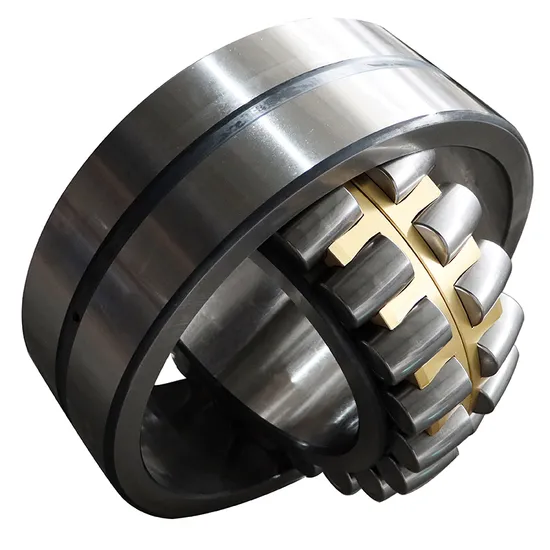
In the case of URB bearings, common suffixes like CC, CA, and W33 indicate specific design choices. CC denotes a pressed steel cage, while CA indicates a machined brass cage. W33 refers to lubrication holes and grooves in the outer ring. While these may seem like minor details, they have profound implications for application suitability. A buyer who ignores these suffixes risks installing a component that is dimensionally correct but functionally incompatible.
For instance, in a high-vibration environment such as a vibratory screen, the inertia forces acting on the cage elements are significant. Pressed steel cages are generally more robust against shock loads due to their higher strength-to-weight ratio and flexible design. Machined brass cages, while offering better guidance at high speeds and lower friction, are more susceptible to fatigue fracture under severe vibration. Therefore, substituting a CC cage with a CA cage in a vibratory application is a technical error, not an upgrade.
When sourcing a URB spherical roller bearing equivalent, it is crucial to request the full technical datasheet of the proposed substitute. Verify that the suffixes align with the original equipment manufacturer’s specifications. If the original bearing has a CC suffix, the substitute should ideally also have a CC suffix unless a thorough engineering analysis confirms that a different cage type is suitable for the specific operating conditions.
Cage Material: The Hidden Failure Point?
The choice of cage material is often overlooked during the procurement process, yet it is a primary determinant of bearing life in demanding applications. The two most common cage materials for spherical roller bearings are pressed steel and machined brass. Each has distinct advantages and limitations.
Pressed steel cages are lightweight and strong. They are designed to withstand high acceleration and deceleration forces, making them ideal for applications with significant vibration or shock loads. The steel material can absorb impact energy without fracturing, providing a safety margin in harsh environments.
Machined brass cages offer superior guiding properties and lower friction. They are typically used in high-speed applications where heat generation and wear are primary concerns. Brass is also more resistant to certain types of corrosion and provides better compatibility with some lubricants. However, brass is softer and more brittle than steel, making it vulnerable to fatigue failure under cyclic shock loading.
| Feature | Pressed Steel (CC) | Machined Brass (CA) |
|---|---|---|
| Shock Resistance | Robust | Vulnerable |
| Speed Capability | Standard | High |
| Weight | Light | Moderate |
| Best Application | Vibratory screens, crushers | Fans, high-speed motors |
| Failure Mode | Deformation | Fragmentation |
[NEED_CITE: Comparative performance data of bearing cage materials under shock load]
A European wind farm operator once reported repeated failures in the main shaft bearings of their turbines. The original specification called for a pressed steel cage, but the replacement bearings supplied by a third-party vendor featured machined brass cages. The vendor argued that brass was a "higher quality" material. However, the variable wind loads created intermittent shock conditions that the brass cages could not withstand. The cages cracked, leading to rolling element misalignment and eventual bearing seizure. Switching back to a verified URB spherical roller bearing equivalent with the correct pressed steel cage resolved the issue.
This case highlights the importance of selecting cage material based on operational dynamics rather than perceived material value. When evaluating alternatives, always confirm the cage type specified in the original design. If the application involves vibration, impact, or variable loads, pressed steel is usually the safer choice.
How to Select the Right Internal Clearance?
Internal clearance is another critical parameter that affects bearing performance, particularly in applications involving temperature variations. Standard clearance is suitable for normal operating conditions, but many industrial applications require increased clearance to accommodate thermal expansion.
The C3 and C4 clearance classes are commonly specified for heavy industrial machinery such as crushers, conveyors, and kilns. These machines often operate at elevated temperatures, causing the inner ring to expand more than the outer ring. If the internal clearance is insufficient, this expansion can lead to preload, increased friction, and overheating. In extreme cases, it can cause the bearing to lock up and fail catastrophically.
Selecting the wrong clearance class is a frequent error in cross-referencing. A buyer might match the part number but overlook the C3 or C4 suffix, resulting in the supply of a standard clearance bearing. In a high-temperature environment, this mismatch can reduce bearing life significantly.
To avoid this, determine the operating temperature range of the application. For temperatures above 80°C, C3 clearance is typically recommended. For even higher temperatures or where significant shaft expansion is expected, C4 clearance may be necessary. Consult the equipment manufacturer’s guidelines or perform a thermal analysis to determine the appropriate clearance class.
When sourcing a URB spherical roller bearing equivalent, ensure that the supplier can provide bearings with the required clearance class. Verify this through the product documentation and, if possible, request inspection reports that confirm the measured internal clearance. This step is essential for ensuring that the substitute bearing will perform reliably under the specific thermal conditions of your application.
Verifying Genuine Equivalents from China OEMs?
The market for bearing substitutes is flooded with products of varying quality. While many Chinese manufacturers produce high-quality bearings that meet international standards, there are also suppliers who offer inferior products with misleading labeling. Distinguishing between genuine equivalents and substandard copies requires diligence.
One key indicator of quality is traceability. Reputable suppliers provide complete documentation, including material certificates, heat treatment records, and dimensional inspection reports. This documentation allows buyers to verify that the bearings meet the specified standards and requirements. [NEED_CITE: Importance of traceability in industrial supply chains]
Another factor is consistency. In large projects, it is essential that all bearings in a batch have consistent quality and performance. Mixed-batch sourcing from unreliable suppliers can lead to variability in bearing life and reliability. A professional supplier will ensure that all products in a container load come from verified production runs with consistent quality control.
| Verification Aspect | Genuine Equivalent | Gray-Market Substitute |
|---|---|---|
| Documentation | Full traceability | Limited or none |
| Material Certs | Provided | Not provided |
| Batch Consistency | High | Variable |
| Packaging | Professional, branded | Generic or copied |
| Price | Competitive | Suspiciously low |
A mining company in South America experienced issues with a batch of substitute bearings that appeared identical to the original URB products. However, upon installation, several bearings failed prematurely. Investigation revealed that the bearings were from different production batches with inconsistent heat treatment. The lack of proper documentation made it difficult to identify the root cause initially. Switching to a supplier who provided full traceability and batch consistency guarantees resolved the problem.
When evaluating a URB spherical roller bearing equivalent, demand full transparency from the supplier. Ask for material certificates and inspection reports. Verify the supplier’s reputation and experience in supplying heavy industry clients. A reliable partner will welcome these requests and provide the necessary evidence to support their product claims.
Conclusion
Suffixes are not optional details; they are critical performance specifications.
Replacing a URB spherical roller bearing equivalent requires a comprehensive approach that goes beyond simple part number matching. By verifying cage material, internal clearance, and supplier credibility, you can ensure that the substitute bearing meets the demands of your application. This attention to detail minimizes the risk of premature failure and unplanned downtime, protecting your operational efficiency and bottom line. Always prioritize technical compatibility over perceived cost savings.