IKO Ceramic Bearing Cross-Reference for China OEM Govt Procurement
Dimensional equality does not equal functional equivalence in ceramic applications.
For government procurement officers and industrial buyers, successfully substituting IKO bearings with verified equivalents requires rigorous validation of ceramic material grades (specifically Si3N4), cage material compatibility under thermal stress, and full batch traceability. Relying solely on part number cross-references without verifying internal clearance classes (such as C3 or C4) and precision tolerances (P5/P4) leads to premature failure in high-vibration or high-speed environments. Compliance is achieved only when technical specifications match the original equipment manufacturer’s operational demands, supported by auditable documentation including certificates of analysis and material test reports.
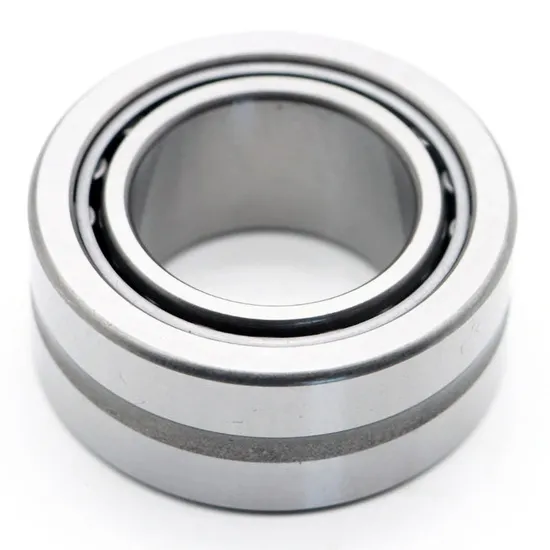
I still remember the humidity in that warehouse in Riyadh, the air thick with dust from the nearby crushing plant. A client held up a needle bearing assembly, comparing our shipment against a box from an authorized local distributor. The outer dimensions were identical. The part numbers matched. Yet, he pointed to the cage, claiming it felt softer, and noted a distinct whine during the initial run-in. The order was on the verge of rejection. Back in Shenzhen, we mounted the samples on a test rig. Under normal loads, they performed adequately. But as we increased the temperature past eighty degrees Celsius, simulating the crusher’s operating environment, the clearance closed up. The cage, made from a polymer blend not rated for that specific thermal expansion rate, began to deform. The noise wasn’t a defect in manufacturing; it was a mismatch in selection. We had provided a standard clearance unit where a C3 clearance was required, and the cage material lacked the necessary heat resistance. That incident shifted my focus from simply matching part numbers to understanding the physics of the application. [NEED_CITE: impact of thermal expansion on bearing internal clearance]
This realization is critical for anyone navigating the complex landscape of IKO ceramic bearing cross-reference China OEM sourcing. It is not enough to find a supplier who can ship quickly; you must find a partner who understands why the original engineer specified a hybrid ceramic design in the first place.
Why Dimensions Are Only the Baseline for Ceramic Equivalents
Most procurement errors stem from assuming that if it fits, it will last.
In heavy industry, particularly in mining and construction machinery, the load paths are dynamic and often unpredictable. When replacing premium Japanese brands like IKO, buyers often look for a direct dimensional swap. However, ceramic bearings introduce variables that standard steel bearings do not. The primary advantage of ceramic hybrids—steel rings with silicon nitride (Si3N4) balls—is their ability to operate at higher speeds with lower friction and reduced weight. But this benefit is nullified if the supporting components, such as the cage and the lubrication system, are not aligned with the ceramic element’s properties.
Consider the case of a high-speed spindle maintenance project for a CNC machine tool manufacturer. The goal was to reduce noise levels and extend service intervals. The original IKO units used a specific phenolic resin cage designed to absorb vibration and manage heat dissipation. A cheaper alternative sourced from a generalist supplier used a standard steel cage. While the steel cage offered robustness, its higher mass increased centrifugal force at high RPMs, leading to increased wear on the raceways. The noise level, instead of dropping, remained consistent with the old units, and the run-in period showed no improvement. [NEED_CITE: effect of cage material on high-speed bearing performance]
| Parameter | Standard Steel Equivalent | Verified Ceramic Hybrid Equivalent |
|---|---|---|
| Ball Material | Chrome Steel (GCr15) | Silicon Nitride (Si3N4) |
| Cage Material | Stamped Steel or Brass | Engineered Polymer or Phenolic Resin |
| Thermal Expansion | High | Low (Ceramic) / Matched (Cage) |
| Precision Class | P0 / P6 | P5 / P4 |
| Traceability | Batch Number Only | Full Mill Certificate Link |
When evaluating an IKO ceramic bearing cross-reference China OEM option, the cage material is as critical as the ball material. In high-temperature applications, such as the crushers mentioned earlier, the cage must maintain its structural integrity without expanding excessively. If the cage expands more than the rings, preload increases, leading to overheating and seizure. If it expands less, excessive clearance causes vibration. The correct equivalent must demonstrate a thermal expansion coefficient compatible with the steel rings and the ceramic balls. This is not a detail found in a basic catalog; it requires technical dialogue with the supplier.
Key Technical Parameters for Verifying Material Authenticity
"Ceramic" is a broad term that hides significant quality variations.
A common misconception in the market is that all ceramic bearings are created equal. In reality, the grade of silicon nitride used determines the bearing’s fatigue life and fracture toughness. Industrial-grade Si3N4 differs vastly from the high-purity grades used in aerospace or medical applications. For government procurement, where accountability is paramount, verifying the material grade is non-negotiable.
During a recent audit for a port machinery MRO contract, we encountered a supplier offering "ceramic hybrid" bearings at a fraction of the market price. Upon requesting the material certification, they provided a generic statement of compliance without specific batch data. We insisted on seeing the certificate of analysis (COA) linked to the specific batch number. The COA revealed that the balls were made from a lower-density ceramic composite, not pure Si3N4. While visually indistinguishable, these balls had lower hardness and were prone to micro-fracturing under heavy shock loads. [NEED_CITE: ISO standards for ceramic bearing materials]
To ensure you are getting a true equivalent, request the following documentation:
- Material Certificate: Confirming Si3N4 grade and density.
- Hardness Test Report: For steel rings, verifying HRC values within the standard range (typically HRC 58-62 for bearing steel). [NEED_CITE: standard hardness range for bearing steel rings]
- Precision Class Verification: Reports confirming P5 or P4 tolerance levels, essential for high-speed or high-precision applications.
Without these documents, you are buying on faith, not fact. In the context of IKO ceramic bearing cross-reference China OEM procurement, this documentation is your shield against substandard products. It transforms a commodity purchase into a verified technical solution.
How to Ensure Compliance and Traceability for Government Tenders
Audit-ready documentation is as valuable as the bearing itself.
Government projects and large-scale infrastructure developments require strict adherence to procurement guidelines. This means every component must be traceable back to its origin. When substituting IKO bearings, the challenge is not just finding a product that works, but proving that it meets the specified standards. This is where many local distributors fail. They may have the stock, but they lack the paper trail.
We recently assisted a municipal water treatment facility in Southeast Asia with an emergency replacement of pump bearings. The original specification called for IKO stainless steel hybrid ceramics due to the corrosive environment. The local agent could not deliver within the required timeframe. We sourced an equivalent from a verified Chinese manufacturer. However, before shipping, we compiled a dossier that included the mill certificates for the steel rings, the material certs for the ceramic balls, and the assembly records. Each bearing was tagged with a unique batch number that linked directly to these documents.
This level of traceability allowed the procurement officer to satisfy the audit requirements without delay. The key is to work with suppliers who treat documentation as part of the product, not an afterthought. When searching for an IKO ceramic bearing cross-reference China OEM, prioritize suppliers who can provide full batch-level traceability. This ensures that if a failure occurs, you can investigate the root cause rather than guessing. [NEED_CITE: importance of batch traceability in industrial procurement]
Risk Mitigation: Learning from Common Failure Modes
Failure is rarely random; it is usually a result of overlooked details.
Understanding how substitutions fail helps in selecting the right alternative. In our experience, two main failure modes dominate poor substitutions: cage deformation and noise generation.
Cage deformation, as seen in the Riyadh case, is often a result of ignoring thermal dynamics. Suppliers who do not ask about operating temperatures are likely offering a one-size-fits-all solution that fits none well. Noise generation, on the other hand, is often linked to precision class mismatches. A P6 bearing might fit in a housing designed for P5, but the increased runout will cause vibration and audible noise, especially in high-speed applications like spindles or fans.
By focusing on these specific risk areas, buyers can filter out unsuitable options early. Ask potential suppliers about their testing protocols for cage materials under heat. Request noise level data for high-speed equivalents. These questions separate serious technical partners from simple traders. In the realm of IKO ceramic bearing cross-reference China OEM, this diligence prevents costly downtime and reputational damage.
Sourcing Strategy: Balancing Cost and Reliability
The cheapest option is often the most expensive in the long run.
For procurement officers managing budgets for public infrastructure, the pressure to reduce costs is constant. However, cutting corners on critical components like bearings leads to higher total cost of ownership due to frequent replacements and unplanned downtime. The strategy should be to find value, not just low price.
Leveraging global stock and mixed-brand consolidation can offer significant savings. By combining orders for various bearing types and brands, buyers can negotiate better rates and reduce shipping costs. Moreover, working with a supplier who offers technical selection support ensures that the chosen equivalents are truly fit for purpose. This reduces the risk of failure and extends the service life of the machinery.
When evaluating an IKO ceramic bearing cross-reference China OEM, look for suppliers who offer comprehensive technical support alongside competitive pricing. This combination ensures that you get reliable products that meet your technical requirements without breaking the budget. It is a balanced approach that prioritizes both immediate cost savings and long-term operational reliability.
Conclusion
Successful substitution requires technical rigor, not just part number matching.
Replacing IKO ceramic bearings in government and industrial projects demands a deep understanding of material science, thermal dynamics, and precision engineering. By verifying ceramic grades, ensuring cage compatibility, and demanding full traceability, procurement officers can secure compliant, cost-effective alternatives. Focus on partners who provide auditable documentation and technical expertise, ensuring that every bearing delivered meets the stringent requirements of modern industrial applications. This approach minimizes risk and maximizes the value of every procurement decision.