
Flanged Housing Bearing Mfg Contracts: Trade Assurance Wholesale Supplier
Trade Assurance does not cover "it broke." It covers "it did not match the signed specification."
For global distributors and procurement managers, relying on a generic payment protection platform without a technically rigorous contract is a financial gamble. Trade Assurance for flanged housing bearing contracts only triggers a refund or resolution if the buyer can prove a verifiable breach of agreed-upon technical parameters, such as dimensional tolerance, brand authenticity, or material certification. Subjective dissatisfaction with performance, when the physical goods match the datasheet, is rarely a valid claim. To secure your supply chain, you must treat the technical annex as the legal backbone of the transaction, defining load ratings, clearance classes, and lubrication types with ISO-level precision before funds are released.
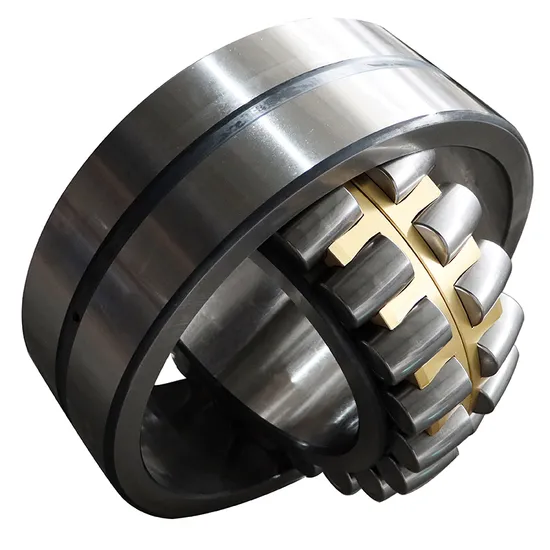
I still remember the smell of burnt grease in a workshop in Riyadh. A mining client had received a shipment of spherical roller bearings that looked perfect on the outside. The boxes were intact, the logos were crisp, and the paperwork seemed in order. But within months, the keepers started cracking. When I reviewed the failure photos, the issue was obvious to anyone who has spent time with a micrometer and a grease gun: the internal clearance was standard (CN), but the operating temperature and shock loads required a C3 or C4 clearance. The lubricant had carbonized because it wasn’t rated for the thermal environment. The supplier had delivered exactly what was ordered—a standard bearing. The buyer had failed to specify the operational reality. This gap between "ordered item" and "required performance" is where most trade disputes die, and where Trade Assurance offers no shelter unless the contract explicitly bridges that gap.
Understanding this distinction is critical for anyone sourcing industrial components. The platform provides a safety net, but it is not a substitute for engineering due diligence.
What Does Trade Assurance Actually Cover for Bearings?
It protects against non-delivery and objective specification deviation, not subjective performance issues without prior agreement.
Many buyers assume that if a bearing fails prematurely, they are automatically entitled to a refund under their payment protection plan. This is a dangerous misconception. Trade Assurance frameworks are designed to resolve disputes based on evidence of non-compliance with the contract terms. If the contract states "SKF Brand Deep Groove Ball Bearing 6205," and the supplier delivers a genuine SKF 6205, the obligation is met—even if that bearing fails in a high-vibration application because the buyer did not specify a reinforced cage or higher precision grade.
The coverage typically includes:
- Non-Delivery: The goods never arrive.
- Quantity Discrepancy: You ordered 1,000 units, received 800.
- Specification Mismatch: The item delivered differs from the description in the contract (e.g., wrong size, wrong brand, missing certifications).
It generally excludes:
- Performance Failure: The bearing works but wears out faster than expected due to improper installation or unlisted operating conditions.
- Subjective Quality: "It feels lighter than the last batch" without measurable data.
[NEED_CITE: standard dispute resolution criteria for B2B trade assurance platforms]
A European machinery builder once faced a production halt because a batch of inserted bearings had inconsistent outer diameters. Because their contract included a specific tolerance range for the housing fit (e.g., h6 tolerance for the shaft seat), they could provide third-party inspection reports proving the parts were out of spec. The claim was approved quickly. In contrast, a distributor who simply claimed "poor quality" without referencing a specific ISO standard or agreed-upon tolerance found their claim stalled indefinitely. The difference was not the severity of the loss, but the precision of the contract.
To make Trade Assurance for flanged housing bearing contracts effective, you must move beyond part numbers. You must define what "conformance" looks like in measurable, testable terms.
How to Define "Quality" in Your Contract Annex?
Specify dynamic load ratings, clearance classes, and lubrication types explicitly to create an enforceable standard.
"High quality" is a marketing term, not a legal one. In the world of rolling element bearings, quality is defined by adherence to international standards such as ISO 199 or ABMA Std 20. When drafting your purchase agreement, the technical annex should read like an engineering specification sheet, not a catalog summary.
Key parameters to include:
- Clearance Class: Do not just ask for "standard clearance." Specify C2, CN, C3, or C4 based on your thermal and load analysis. For flanged housings, which often operate in dirty or hot environments, C3 is frequently the minimum requirement to prevent seizure.
- Precision Grade: Define whether P0 (Normal), P6, or P5 precision is required. This affects noise, vibration, and running accuracy.
- Lubrication: Specify the grease type (e.g., Lithium Complex, Polyurea) and the fill percentage. Generic "grease" can vary wildly in base oil viscosity and additive packages.
- Material Certification: Require mill certificates for the steel used, ensuring it meets standards like AISI 52100 or equivalent, with verified hardness levels (typically HRC 58-62 for raceways).
[NEED_CITE: ISO standards for bearing internal clearance and precision grades]
In our practice, we provide full traceability documents and technical selection support to ensure these contract clauses are realistic and compliant. This prevents the scenario where a buyer requests an impossible combination of features, leading to inevitable dispute. By aligning the contract with engineering reality, both parties are protected.
| Parameter | Vague Contract Term | Enforceable Contract Term |
|---|---|---|
| Clearance | Standard internal clearance | Internal Clearance Class C3 per ISO 5753-1 |
| Precision | High precision | Precision Class P6 per ISO 492 |
| Material | Good quality steel | AISI 52100 Chrome Steel with Hardness HRC 58-62 |
| Brand | Genuine Brand X | New, original packaging with verifiable batch codes and QR traceability |
This level of detail transforms a vague promise into a verifiable fact. When a dispute arises, you do not argue about "quality"; you measure the clearance. If it is CN instead of C3, the breach is objective, and the resolution is straightforward.
Why Technical Due Diligence Prevents Disputes?
Pre-shipment inspection of dimensions and branding reduces claim rejection rates significantly.
Waiting until the goods arrive at your warehouse to check them is too late. Once the container is sealed and shipped, the cost of returning defective goods often exceeds their value. Technical due diligence shifts the verification point upstream, to the manufacturer’s facility or a third-party inspection agency before the final payment is released.
A robust due diligence process includes:
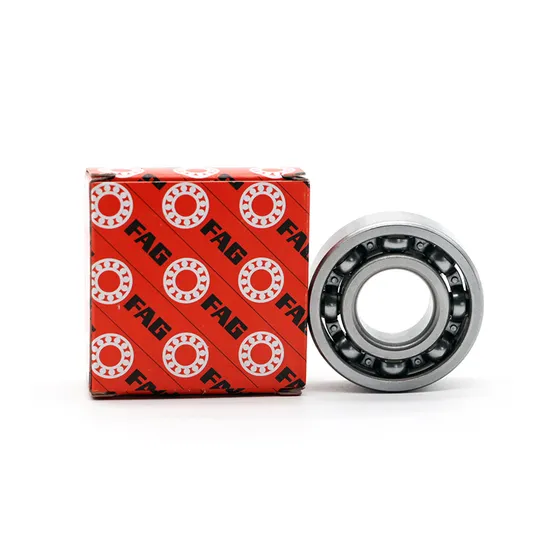
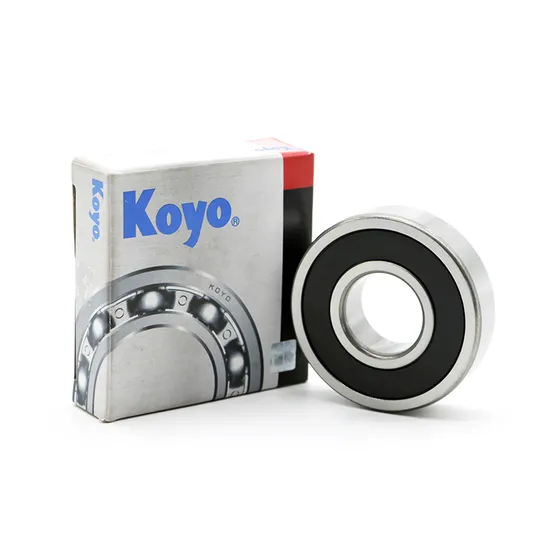
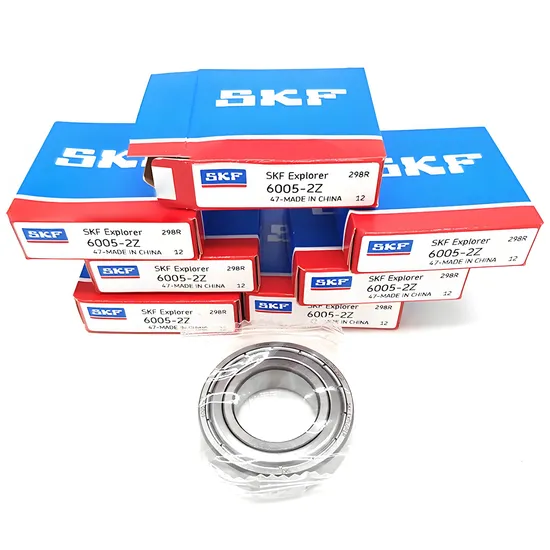
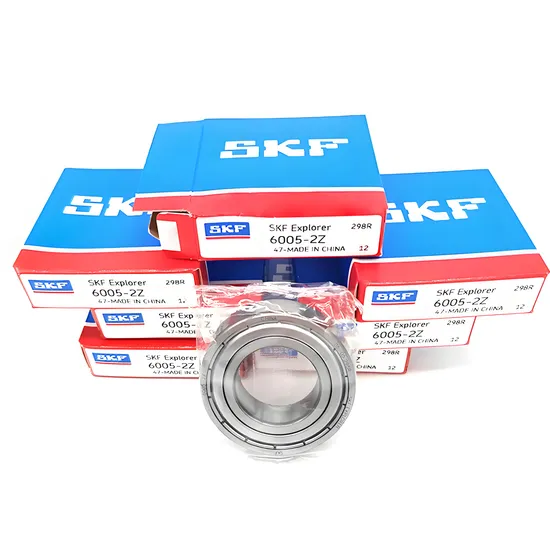
- Visual Inspection: Checking for rust, damage to packaging, and correct labeling. Counterfeit bearings often have poor printing quality or misspelled words on the box.
- Dimensional Check: Using calibrated micrometers and bore gauges to verify inner diameter, outer diameter, and width against the specified tolerance.
- Brand Authentication: Verifying holographic labels, batch numbers, and QR codes against the manufacturer’s database. [NEED_CITE: industry best practices for counterfeit bearing detection]
- Hardness Testing: Spot-checking the raceway hardness to ensure proper heat treatment.
Consider the case of an agricultural distributor who sourced a mixed-brand container. Without pre-shipment inspection, they discovered upon arrival that thirty percent of the bearings were repackaged lower-tier products with fake labels. Because they had not mandated a third-party inspection report as a condition for the final payment release, they had little leverage. Had they required a detailed inspection report confirming brand authenticity and dimensional accuracy, the supplier would have been forced to rectify the issue before shipping, or the platform would have withheld funds based on the failed inspection.
This proactive approach saves time, money, and reputation. It ensures that the goods leaving the factory are the same goods described in your contract.
Common Pitfalls in Flanged Housing Bearing Procurement?
Ignoring housing fit tolerances and environmental factors leads to unclaimable failures.
Flanged housing bearings present unique challenges compared to standard split or solid block bearings. The integral flange simplifies mounting but introduces specific risks related to alignment and fit. A common mistake is assuming that any bearing will fit any housing of the same nominal size. In reality, the tolerance of the housing bore and the flatness of the mounting surface are critical.
If the housing bore is out of round or the mounting surface is not flat, the bearing outer ring can distort. This distortion reduces internal clearance, leading to premature heating and failure. Since this is often an installation or housing manufacturing issue, not a bearing defect, it is rarely covered under warranty or Trade Assurance.
Another pitfall is neglecting the sealing environment. Flanged units are often used in agriculture, mining, and food processing, where contamination is a major threat. Specifying a standard rubber seal when a heavy-duty labyrinth or triple-lip seal is required will result in rapid contamination. If the contract did not specify the seal type, the supplier is not liable for the resulting failure.
[NEED_CITE: mechanical engineering principles regarding housing fit and bearing distortion]
To avoid these traps, always include housing drawings in your technical annex. Specify the required fit (usually a loose fit for the outer ring in housed units to allow for thermal expansion) and the seal type appropriate for your environment. This ensures that the bearing system, not just the bearing itself, is designed for success.
By addressing these mechanical realities in your contract, you protect yourself from failures that are technically "not the supplier’s fault" but are entirely preventable through precise specification.
Conclusion
Secure your orders by treating the technical annex as the primary legal document.
Trade Assurance for flanged housing bearing contracts is a powerful tool, but only when paired with rigorous technical definitions. By specifying clearance, precision, and material standards, and by enforcing pre-shipment verification, you transform a risky transaction into a controlled procurement process. Do not rely on generic descriptions; demand engineering-grade specificity.