KOYO vs SKF Cross-Reference Sheets: Wholesale Supplier for Genuine Bearings
Matching bore and outside diameter is not enough — clearance codes, cage suffixes, and seal designations differ completely between KOYO and SKF, and ignoring them is the single most common cause of cross-brand replacement failures on industrial sites.
KOYO and SKF bearings share identical boundary dimensions per ISO standards, making them mechanically interchangeable in most cases; however, their internal clearance codes, cage material suffixes, and seal designations follow entirely different naming systems, so a direct model-number swap without suffix verification will almost certainly lead to premature failure or immediate line shutdown.
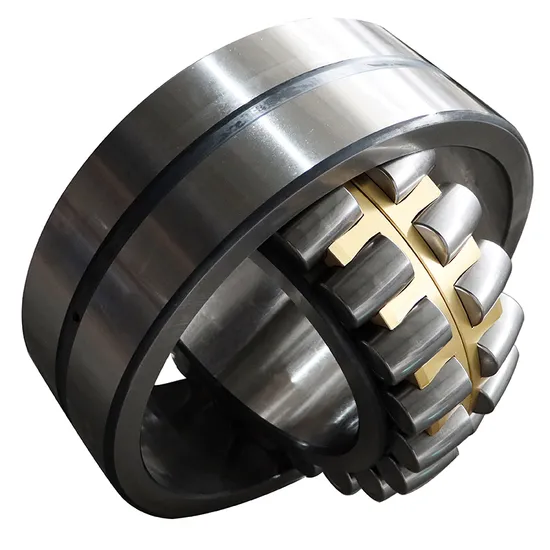
I still remember a shipment of spherical roller bearings that landed at a cement plant in West Africa. The buyer had ordered KOYO 22320 units to replace worn SKF equivalents on a kiln support roller. The bore, OD, and width all matched perfectly. What nobody checked was the internal clearance — the KOYO units arrived with standard CN clearance while the original SKF units on-site were C4. The mill ran for less than a shift before thermal expansion locked the rollers solid. The line sat idle for weeks, and the cost of rework — air freight for the correct stock, customs re-entry, crane re-mobilization — ran into multiples of the bearing price itself. [NEED_CITE: root cause distribution of bearing failures linked to incorrect internal clearance per ISO 15243]
That kind of headache is why I now treat every cross-brand inquiry as a suffix-to-suffix audit, not a basic-dimension check. Whether you are sourcing from China, the Middle East, or Latin America, a reliable KOYO SKF cross-reference is the only thing standing between a smooth installation and a mid-six-figure write-off.
The rest of this guide walks through the exact mapping logic, the traps that catch even experienced buyers, and a repeatable three-step verification method you can apply to any inquiry.
Do KOYO and SKF Bearings Really Interchange by Size Alone?
No — boundary dimensions match, but suffix systems diverge, and suffix mismatches account for the majority of cross-brand field failures.
Both KOYO and SKF manufacture their bearings to ISO 15 and ISO 5753 boundary dimensions, so a KOYO 22320 and an SKF 22320 share the same 100 mm bore, 215 mm OD, and 73 mm width. [NEED_CITE: ISO 15 rolling bearing boundary dimension standardization] That dimensional identity is why buyers assume the parts are drop-in substitutes. The problem is that the bearing inside the envelope — the clearance, the cage, the seals — is governed by each manufacturer’s own suffix code, and those codes do not translate one-to-one.
A Middle East distributor once called me about a return claim on tapered roller bearings. The customer had handed over an old, half-worn nameplate with "32218" written on it. The distributor shipped KOYO units with standard clearance and stamped-steel cages. The original equipment, it turned out, had been running SKF units with C3 clearance and machined brass cages. The KOYO replacements ran hot within days and were pulled out. The return freight alone consumed a large chunk of the order margin. [NEED_CITE: bearing failure modes caused by cage material incompatibility in high-vibration applications]
Here is the core risk matrix buyers should keep at hand:
| Verification Layer | What It Covers | Typical KOYO Code | Typical SKF Code | Risk If Skipped |
|---|---|---|---|---|
| Boundary Dimensions | Bore, OD, Width | Per ISO 15 | Per ISO 15 | Low — standardized |
| Internal Clearance | Radial play class | CN, C3, C4 | CN (no suffix), C3, C4 | High — thermal lock or skidding |
| Cage Material | Retainer type | M, EA, C | M, MA, J | Medium — premature cage fracture |
| Seal / Shield | Contact or non-contact | 2RS, ZZ | 2RZ, 2Z | High — contamination ingress |
| Special Tolerance | P5, P4 class | P5, P4 | P5, P4 | Medium — fit mismatch |
The takeaway is simple: dimension is the starting point, not the finish line. Every cross-brand swap must clear all five layers before a purchase order goes out.
How Do You Map KOYO and SKF Clearance Codes Correctly?
KOYO and SKF use overlapping but non-identical clearance designations — assuming equivalence without checking the suffix table is a guaranteed way to spec the wrong part.
Internal radial clearance is the single most misunderstood parameter in cross-brand interchange. Both manufacturers follow ISO 5753 for the actual clearance values, but their suffix naming conventions differ in subtle ways that cause real confusion on the shop floor. [NEED_CITE: ISO 5753 internal clearance group definitions for radial bearings]
In the KOYO system, standard clearance is marked explicitly as "CN" or sometimes left without a suffix depending on the product series. Larger clearance groups are marked C3, C4, and C5. In the SKF system, standard clearance is indicated by the absence of any suffix — there is no "CN" marking on most SKF catalog entries — while C3, C4, and C5 carry the same numeric meaning. The trap is that a KOYO part number showing "CN" and an SKF part number showing no suffix at all are functionally equivalent, but a buyer reading a KOYO catalog may not realize that the SKF equivalent will look different on paper.
For spherical roller bearings in high-temperature environments such as cement kilns or steel mill conveyors, C4 clearance is typically required. A KOYO 22320 E C4 and an SKF 22320 E C4 will perform identically — but only if the C4 is explicitly present on both sides. If the KOYO order is placed without the C4 suffix because the buyer assumed "standard" was safe, the bearing will be too tight once the shaft expands under operating heat. [NEED_CITE: relationship between operating temperature, shaft expansion, and required internal clearance class]
A practical rule I follow: never accept a clearance code by memory. Always pull the current KOYO and SKF catalog pages for the exact model and confirm that the numeric clearance range in micrometers matches, regardless of what the suffix letter says. Catalogs get updated, suffix conventions shift, and the only safe reference is the actual tabulated value.
How Do Cage Material and Seal Suffixes Differ Between KOYO and SKF?
Cage and seal suffixes are brand-specific — a KOYO EA cage is not the same designation as an SKF J cage, even when the underlying material family is similar.
Cage material directly affects bearing life in vibrating or high-speed applications. KOYO commonly uses suffixes such as "M" for machined brass cage, "EA" for stamped steel cage with specific guidance features, and "C" for certain polyamide designs. SKF uses "M" for machined brass as well, but its stamped-steel cage designs carry suffixes like "J" or "J2," and its polyamide cages are marked "TN" or "TN9." The materials may be functionally comparable, but the suffixes do not cross-reference automatically. [NEED_CITE: cage material selection guidelines for high-vibration industrial applications]
Consider a Southeast Asian mining operation that ordered KOYO 32218 tapered roller bearings to replace a worn batch of SKF equivalents on conveyor head pulleys. The original SKF units had machined brass cages suited for heavy shock loads. The KOYO order was placed with the basic model number only — no cage suffix specified — and the factory default was stamped steel. Within a short operating period, cage fractures appeared. The replacement cost, including downtime and re-shipping, far exceeded what a careful suffix check would have taken.
Seal and shield suffixes follow a similar pattern. KOYO uses "2RS" for contact rubber seals and "ZZ" for metal shields. SKF uses "2RZ" for low-friction contact seals and "2Z" for shields. The difference between "2RS" and "2RZ" is not cosmetic — the contact pressure, friction torque, and temperature limits differ. Substituting one for the other in a high-speed motor application can push operating temperature past the seal material’s limit. [NEED_CITE: seal type friction torque and temperature limit comparison across major bearing manufacturers]
The lesson: treat every suffix as a separate verification item. Do not assume that because two bearings share a model number, their cages and seals are equivalent.
What Is the Reliable Three-Step Cross-Reference Method?
Verify boundary dimensions first, then clearance class, then every remaining suffix — in that exact order, with catalog data in hand.
After years of untangling cross-brand mismatches, I have settled on a three-step method that eliminates the guesswork. It works for KOYO SKF cross-reference checks and applies equally to NSK, FAG, TIMKEN, and NTN substitutions.
Step One: Confirm boundary dimensions against ISO 15. Pull the bore, OD, and width from both the KOYO and SKF catalogs for the target model. If any dimension differs by even a fraction of a millimeter, stop — the bearings are not interchangeable regardless of what the model number suggests. [NEED_CITE: ISO 15 boundary dimension tolerance classes for rolling bearings]
Step Two: Match internal clearance by numeric value, not by suffix letter. Open both catalogs to the clearance table for the specific bearing series. Compare the micrometer range for the KOYO designation and the SKF designation. If the ranges overlap, the clearance is compatible. If they do not, do not proceed until you have confirmed with the manufacturer’s technical team which class the application actually requires.
Step Three: Audit every remaining suffix — cage, seal, snap-ring groove, special tolerance, lubrication fill. Go line by line through the KOYO suffix list and the SKF suffix list. Map each one. If a KOYO suffix has no direct SKF equivalent, flag it and request a technical data sheet from the supplier before ordering.
A buyer from a Latin American sugar mill once sent me a nameplate photo showing a KOYO 6305 with a C3 clearance and a specific cage suffix. I ran the three-step check against the SKF catalog and found that the SKF equivalent required a different cage suffix to match the same material grade. We adjusted the order before it was packed. The mill avoided what would have been a costly mismatch during the crushing season shutdown.
This method is not complicated, but it does require discipline. The biggest risk is not technical ignorance — it is the assumption that a quick visual check is enough. It is not.
How Do You Source a Reliable Cross-Reference Chart and Verify Authenticity?
Use a complete, multi-brand cross-reference table maintained by a supplier with authorized sourcing channels — and always demand authenticity documentation before shipment.
The market is full of partial cross-reference charts that cover basic model numbers but ignore suffix mapping entirely. Those charts create a false sense of security. What procurement teams actually need is a KOYO SKF cross-reference tool that covers clearance codes, cage materials, seal types, and special tolerance classes side by side, and ideally extends to NSK, FAG, TIMKEN, and NTN as well — because in practice, substitutions rarely stay within a two-brand universe.
Our cross-reference database was built from years of field returns and catalog audits, covering the full suffix logic across all six major brands we stock. It is not a marketing document — it is the same internal tool our technical team uses to verify every outbound order. When a buyer sends us a KOYO part number and asks whether an SKF equivalent will work, we run the three-step check against this database before we quote. If the suffixes do not align cleanly, we tell the buyer upfront and offer the correct alternative from whichever brand can fulfill the spec.
Authenticity verification is the other half of the equation. A correct cross-reference means nothing if the bearing itself is counterfeit. Every unit we ship goes through origin verification, and we provide documentation traceable to the manufacturer’s production batch. [NEED_CITE: bearing counterfeit detection methods recommended by the Anti-Counterfeit Federation] For buyers in regions where fake bearings are prevalent, this is not a luxury — it is a baseline requirement.
Conclusion
Dimensional equivalence is necessary but never sufficient — clearance, cage, and seal suffixes are where cross-brand bearing substitutions succeed or fail. A disciplined three-step verification process, supported by a complete cross-reference database and backed by authenticity documentation, is the only reliable way to avoid costly field mismatches. Treat every suffix as a separate checkpoint, and the bearing will perform as intended regardless of which brand name is on the box.