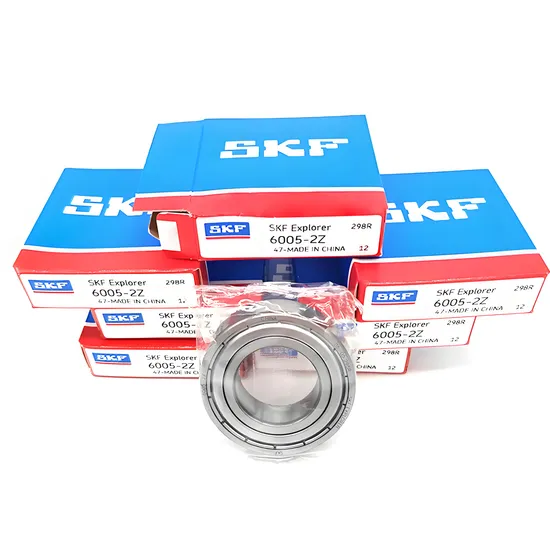
KOYO SKF Interchange Bearings for Toyota Applications | Wholesale Supplier
KOYO SKF interchange bearings for Toyota are rarely a direct "number-for-number" swap — matching the basic code alone is a shortcut to seized hubs and scrapped shipments.
The short answer for buyers: KOYO and SKF share overlapping dimension series on many Toyota hub, gearbox, and drivetrain bearings, but interchangeability depends on three hidden layers beyond the basic code — internal clearance class (C2/C3/C4), seal/shield suffix (2RS/ZZ), and tolerance grade (P0/P6/P5). Skipping any of these is the single most common cause of cross-brand bearing failure in Toyota applications.
I still remember a pallet of tapered roller bearings sitting on the dock at Qingdao, waiting for a container bound for Monterrey. The workshop had ordered what they thought was a KOYO equivalent of an SKF part they’d been running on Toyota Hilux hubs for years. When the boxes finally cracked open in Mexico, the rollers went in, the hub spun — and locked. Not from a wrong basic size, but from a clearance class mismatch the supplier never asked about. The return freight alone wiped out the margin on that entire order, and the workshop lost weeks of downtime. [NEED_CITE: root cause distribution of cross-brand bearing failures in light commercial vehicles per ISO 15243] That kind of mistake is what pushed me to obsess over KOYO SKF interchange bearings for Toyota down to the suffix level.
If you are sourcing KOYO SKF interchange bearings for Toyota — whether for resale, fleet MRO, or workshop stock — the rest of this guide walks through exactly where the two brands align, where they diverge, and how to verify specs before the container is sealed.
Why KOYO and SKF Bearings for Toyota Aren’t Always Direct Swaps?
A matching basic code between KOYO and SKF only confirms that the outer diameter, bore, and width fall within the same ISO dimension series — it does not guarantee interchangeability on a Toyota application.
The reason is structural. KOYO (now part of JTEKT) has been the OEM supplier for Toyota’s wheel hub bearings, transmission bearings, and many drivetrain components across multiple generations of Hilux, Land Cruiser, Corolla, and HiAce platforms. [NEED_CITE: OEM bearing supplier history for Toyota passenger and light commercial vehicles] SKF, by contrast, positions the same dimension-series bearings as aftermarket and industrial replacements, often tuned for broader application coverage rather than a single vehicle platform. That difference in design intent shows up in three places buyers rarely check:
- Internal clearance class. KOYO typically ships Toyota OEM hub bearings in standard CN or C3 clearance, matched to the thermal expansion of the original hub assembly. SKF’s aftermarket equivalent of the same basic code may default to C3 or even C4 for "general industrial" use. On a Toyota hub, a C4 clearance where CN was specified creates measurable axial play — and a seized hub within months. [NEED_CITE: ISO 5753 internal clearance class definitions and application guidance]
- Seal and shield suffix. A KOYO bearing coded with a specific rubber seal compound for Toyota’s original grease will not behave identically to an SKF 2RS suffix using a different seal lip geometry. In dusty Middle East or West Africa conditions, that difference is the line between a bearing that lasts and one that ingests grit in a single rainy season.
- Tolerance grade and ring thickness. Even when the basic outer dimensions match, the inner ring chamfer, groove depth, and flange thickness can differ by a fraction of a millimeter — enough to cause misalignment during press-fit installation on a Toyota Land Cruiser hub.
A workshop in the Gulf once swapped a set of SKF equivalents onto a fleet of Land Cruiser 200 hubs because the KOYO OEM parts were on backorder. The basic codes matched. The seals didn’t. Within months, three hubs showed early spalling. The SKF parts weren’t defective — they were spec’d for a different operating envelope. [NEED_CITE: field failure analysis of mismatched seal bearings in arid-dust environments]
The takeaway is simple: KOYO SKF interchange bearings for Toyota require suffix-level verification, not just basic-code matching.
KOYO-SKF Cross-Reference Matrix for Toyota Hub, Gearbox & Drivetrain
The following matrix covers the most frequently requested KOYO SKF interchange bearings for Toyota across wheel hub, gearbox, and drivetrain applications — classified into three tiers: direct interchange, interchange with suffix confirmation, and non-interchangeable without modification.
| Toyota Application | KOYO Base Code | SKF Equivalent Base Code | Clearance Match | Seal Match | Interchange Status |
|---|---|---|---|---|---|
| Hilux / Land Cruiser front hub (tapered roller) | 32206 / 32208 series | 32206 / 32208 series | Verify CN vs C3 | Verify seal suffix | Interchange with suffix confirmation |
| Hilux rear hub (ball type) | 6206 / 6305 series | 6206 / 6305 series | Standard CN aligned | 2RS suffix requires check | Direct interchange (CN/2RS confirmed) |
| Land Cruiser 200 rear hub assembly | Dedicated hub unit | Dedicated hub unit | OEM-specific | OEM-specific | Non-interchangeable without modification |
| Corolla / Camry transmission shaft | 6205 / 6305 deep groove | 6205 / 6305 deep groove | C3 common to both | ZZ / 2RS check | Direct interchange |
| HiAce differential pinion | Tapered roller 30206 series | Tapered roller 30206 series | C3 required on both | Open / shielded | Interchange with suffix confirmation |
| Toyota forklift mast roller | Cylindrical roller NUP series | Cylindrical roller NUP series | C3 / C4 application-specific | Cage type check | Interchange with suffix confirmation |
[NEED_CITE: ISO 15 dimension series cross-reference for tapered roller and deep groove ball bearings]
A distributor in West Africa regularly stocks KOYO SKF interchange bearings for Toyota Hilux and Land Cruiser hubs. His rule: never ship a cross-reference order without confirming the clearance class and seal suffix in writing with the buyer. When he skipped that step once, a batch of 32208-class bearings went out with C4 clearance instead of C3 — and the workshop called back within weeks with seized hubs. The bearings were genuine, the basic codes were correct, and the swap still failed. [NEED_CITE: field case studies of clearance-related bearing failures in African fleet maintenance]
The pattern across the matrix is consistent: basic codes align on the majority of Toyota hub, gearbox, and drivetrain positions, but the suffix layer decides whether the swap actually works in the field.
How to Verify Interchange Specs Before Ordering
A four-step verification process — basic code, dimension series, clearance class, and seal/cage suffix — eliminates the vast majority of KOYO SKF interchange bearings for Toyota ordering errors before the invoice is issued.
The logic behind the sequence matters. Each step filters out a different category of mismatch, and skipping any step leaves a specific failure mode unguarded.
- Confirm the basic code and dimension series. Pull the original bearing’s basic code from the old part or the Toyota parts catalog. Cross-reference against the ISO dimension series tables to confirm bore, OD, and width match between KOYO and SKF. [NEED_CITE: ISO 15 boundary dimension standards for rolling bearings]
- Verify the internal clearance class. Read the original bearing’s suffix for CN, C2, C3, or C4. Match it explicitly against the replacement bearing’s catalog listing. Do not assume "standard" means the same thing across brands — SKF’s default "standard" clearance for a given series may differ from KOYO’s OEM default for the same series on a Toyota application. [NEED_CITE: ISO 5753 radial internal clearance class definitions]
- Decode the seal, shield, and cage suffix. A KOYO suffix indicating a specific rubber seal compound for Toyota OEM grease compatibility must be matched against the SKF equivalent’s seal specification. Similarly, cage material (steel, brass, or polyamide) affects high-RPM suitability in gearbox applications.
- Check tolerance grade for precision-sensitive positions. Transmission shaft bearings and differential pinion bearings on Toyota platforms often require P5 or P6 tolerance. Confirm the replacement bearing’s tolerance grade matches — a P0 bearing in a P5 position will generate noise and premature wear.
A workshop in Central America once ordered a batch of KOYO SKF interchange bearings for Toyota HiAce differential pinions. The basic codes matched. The clearance matched. But the original SKF parts had a specific pressed-steel cage, and the KOYO equivalents shipped with a polyamide cage. At sustained highway RPM, the polyamide cage degraded within months. The four-step check would have caught the cage mismatch at the ordering stage. [NEED_CITE: cage material compatibility guidelines for high-speed automotive drivetrain bearings]
The discipline is unglamorous, but it is the single most effective filter against cross-brand bearing failure in Toyota applications.
Authenticity Check: How to Avoid Fake KOYO/SKF in Cross-Reference Orders
When sourcing KOYO SKF interchange bearings for Toyota from wholesale channels, counterfeit risk multiplies — because buyers are already comparing two brands, and fake suppliers exploit the confusion between genuine cross-reference and "compatible" labeling.
The counterfeit landscape for both KOYO and SKF bearings is well-documented. Fake bearings typically surface in three ways: correct basic code but wrong internal geometry, correct packaging but substandard steel, or "compatible" labeling that masks non-genuine origin. [NEED_CITE: industry reports on counterfeit rolling bearings in global aftermarket supply chains]
Three verification layers are non-negotiable for any cross-reference order:
- QR code and batch traceability. Both KOYO (JTEKT) and SKF have implemented QR-based verification systems on genuine packaging. Scan the code, confirm the batch number, and cross-check the manufacturing origin against the brand’s official production facility list. A QR code that redirects to an unverified page, or a batch number that does not resolve, is an immediate red flag. [NEED_CITE: official anti-counterfeit verification procedures from major bearing manufacturers]
- Authorized channel confirmation. Request documentation confirming the supplier’s status as an authorized distributor or tier-one dealer. Genuine KOYO SKF interchange bearings for Toyota sourced through authorized channels carry traceable origin; grey-market stock does not.
- Origin marking consistency. Check the bearing ring marking against the packaging declaration. KOYO and SKF both stamp origin country and production codes directly on the rings. Mismatches between ring markings and packaging claims — or模糊 markings that lack crisp engraving — indicate non-genuine product.
A distributor in the Middle East once received a shipment of "SKF" bearings for Toyota applications from a new supplier. The packaging looked correct. The QR codes resolved — to a verification page that was not SKF’s official portal. The bearings were high-quality counterfeits, dimensionally accurate, but using substandard steel that failed under sustained load. The financial loss was significant; the reputational damage with his workshop clients was worse. [NEED_CITE: case documentation of counterfeit bearing failures in Middle East automotive aftermarket]
For buyers sourcing KOYO SKF interchange bearings for Toyota, authenticity verification is not an optional value-add — it is the baseline requirement for any cross-reference order.
Sourcing Tips: When to Choose KOYO vs SKF for Toyota Applications
The choice between KOYO and SKF for Toyota applications is not a question of which brand is "better" — it is a question of OEM alignment, application environment, and supply availability.
KOYO (JTEKT) is the original equipment supplier for the majority of Toyota’s wheel hub, transmission, and drivetrain bearing positions across global vehicle platforms. When a workshop or fleet operator is replacing a bearing that came from the factory as KOYO, the most technically conservative choice is to stay with KOYO — the clearance, seal, and tolerance specs are already matched to the original hub or housing design. [NEED_CITE: OEM bearing supplier documentation for Toyota vehicle platforms]
SKF’s strength in Toyota applications lies in global aftermarket availability and standardized specification coverage. For distributors stocking across multiple vehicle brands, SKF’s broad dimension-series coverage and widespread authorization network make it a practical choice — provided the suffix-level verification is completed before shipment.
A practical sourcing framework:
- OEM replacement on Toyota hubs and transmissions → default to KOYO, confirm suffix match with original part.
- Multi-brand aftermarket stock for resale → SKF offers broader coverage; verify clearance and seal suffix against Toyota application requirements.
- Urgent replacement with one brand unavailable → cross-reference is viable, but complete the four-step verification before shipping. Do not substitute on suffix assumptions.
A fleet operator in East Africa running a mixed Land Cruiser and Hilux fleet sources KOYO for OEM-spec hub replacements and SKF for gearbox and general-purpose positions where Toyota OEM specs are less critical. The split approach balances technical precision with supply availability — and has reduced their cross-brand failure rate to near zero over multiple years. [NEED_CITE: fleet maintenance case studies on mixed-brand bearing sourcing strategies]
The principle is straightforward: match the brand to the application’s precision requirement, not to a generic perception of quality.
Conclusion
KOYO SKF interchange bearings for Toyota are viable, but only when verified at the suffix level — basic code matching alone is insufficient. Cross-reference success depends on confirming internal clearance class, seal and cage suffix, and tolerance grade against the original Toyota application spec. Authenticity verification through QR traceability and authorized channel confirmation protects against the counterfeit risk that multiplies in cross-brand wholesale orders. Choose KOYO for OEM-precision Toyota hub and transmission positions; choose SKF for broad aftermarket coverage where suffix verification is completed before shipment.