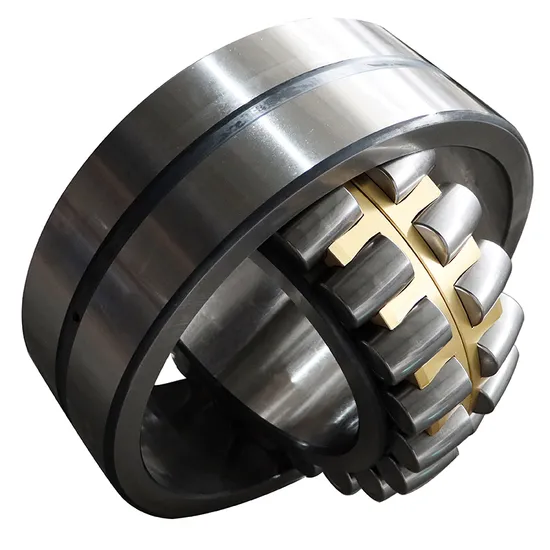
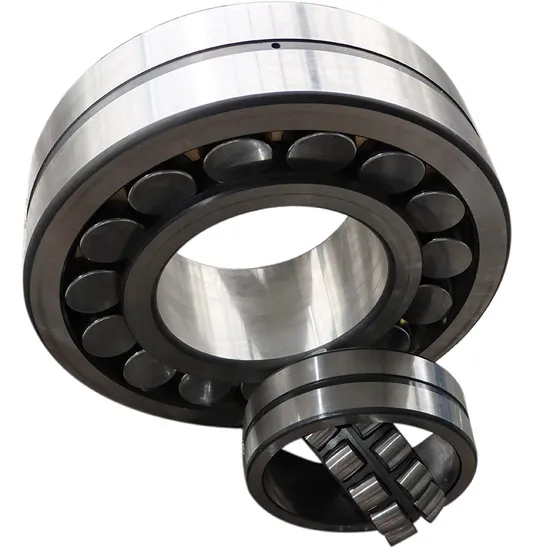
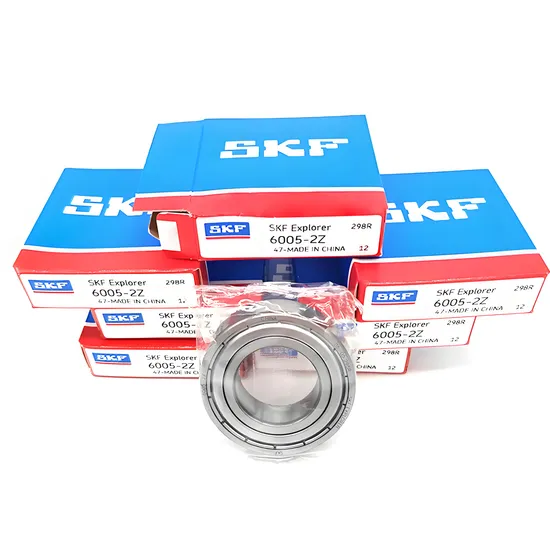
Self-Aligning Ball Bearing OEM Customization Wholesale Supplier
OEM customization for self-aligning ball bearings is not merely a packaging change; it is a legal and technical compliance exercise.
Successful private labeling requires valid brand authorization documentation to prevent customs seizures and precise internal clearance selection to avoid premature mechanical failure. Many buyers mistakenly believe that applying their logo to standard bearing boxes constitutes the entirety of OEM service, ignoring the critical risks of intellectual property infringement at destination ports and the engineering mismatch of standard clearances in heavy-load applications. To execute a compliant and functional order, one must secure a Letter of Authorization from the original manufacturer and match the bearing internal clearance (such as C3 or C4) to the specific operating temperature and load conditions of the machinery.
The distinction between a smooth transaction and a seized container often lies in the paperwork prepared before the goods leave the factory floor. In my early days handling customs documentation at Ningbo Beilun Port, I witnessed countless shipments delayed because traders treated branding as a superficial marketing task rather than a legal obligation. A single missing signature on a brand registry form can halt an entire container at the border, leaving industrial clients without critical spare parts. This reality demands a rigorous approach to both the legal and technical aspects of sourcing.
What Are the Legal Risks of Bearing OEM Customization?
Customs authorities treat unauthorized branded packaging as counterfeit goods, regardless of the authenticity of the internal product.
The primary risk in self-aligning ball bearing OEM customization is not quality failure but intellectual property violation. When a distributor requests their own logo on boxes containing genuine SKF, FAG, or NSK bearings, they are effectively creating a new commercial identity for a protected trademark. Without explicit written permission from the brand owner, this act is classified as trademark infringement in most jurisdictions. [NEED_CITE: World Customs Organization guidelines on trademark infringement and counterfeit goods]
I recall a specific incident involving a infrastructure project in West Africa. The client, a regional distributor, ordered a full container of self-aligning ball bearings with their company name printed on the packaging. The bearings themselves were genuine, sourced directly from authorized channels. However, the distributor had not secured a formal Letter of Authorization from the bearing manufacturer to use their brand in conjunction with the distributor’s private label. Upon arrival at the destination port, customs officials flagged the shipment. The lack of documented brand authorization led to the seizure of the entire container. The construction site waited weeks for replacement parts, incurring costs far exceeding the value of the bearings themselves.
To avoid such scenarios, buyers must implement a strict documentation protocol. This includes obtaining a verified Letter of Authorization that explicitly permits the use of the original brand’s trademarks in combination with the distributor’s private label for specific regions. Additionally, the brand registry must be updated in the customs systems of the destination country. [NEED_CITE: International Trademark Association best practices for licensed manufacturing]
The process involves more than just printing. It requires aligning the commercial invoice, packing list, and certificate of origin with the authorized branding details. Any discrepancy between the physical goods and the declared documents can trigger inspections. For wholesalers managing mixed-brand orders, this complexity multiplies. Each brand—whether SKF, FAG, or NSK—has its own licensing requirements. Failing to distinguish these in the documentation can lead to partial seizures, where only the non-compliant brands are held, disrupting the entire supply chain.
How to Select the Right Internal Clearance for Your Application?
Standard internal clearance is often insufficient for self-aligning ball bearings operating under high vibration or elevated temperatures.
A common misconception among buyers is that all self-aligning ball bearings are interchangeable regarding internal play. In reality, the internal clearance—defined as the total distance through which one ring can be moved relative to the other in a radial direction—must be matched to the application’s thermal and mechanical conditions. [NEED_CITE: ISO 5753-1 standards for radial internal clearance of rolling bearings]
In mining applications, such as crusher maintenance, bearings are subjected to significant shock loads and heat generation. If a standard clearance bearing is used in such an environment, the expansion of the inner ring due to heat can eliminate the internal play, leading to preloading. This causes rapid temperature rise, lubricant breakdown, and eventual seizure. I once consulted on a case where a cement plant experienced repeated failures in their conveyor pulleys. The investigation revealed that the OEM-supplied bearings had standard clearance, while the operating temperature exceeded the design limit. Switching to bearings with C3 or C4 clearance allowed for thermal expansion without compromising the running fit, significantly extending the service life.
Selecting the correct clearance involves analyzing three factors: operating temperature, shaft and housing fit, and load type. Higher operating temperatures require larger initial clearances to compensate for thermal expansion. Similarly, interference fits on the shaft or housing reduce the internal clearance when mounted. [NEED_CITE: ABMA standard practices for bearing mounting and clearance selection]
| Operating Condition | Recommended Clearance Class | Thermal Compensation Need | Load Type Suitability |
|---|---|---|---|
| Normal Temperature & Light Load | Standard (C0) | Low | Steady, Light |
| Elevated Temperature & Moderate Load | C3 | Medium | Variable, Moderate |
| High Temperature & Heavy Shock Load | C4 | High | Shock, Heavy |
| Precision High-Speed Applications | C2 | Low | Steady, Precise |
For distributors offering self-aligning ball bearing OEM customization, it is crucial to ask clients about their specific operating environments. Providing a bearing with the wrong clearance, even if the branding is perfect, results in technical failure. This undermines the distributor’s reputation and leads to costly warranty claims. Technical datasheets should clearly indicate the clearance class, ensuring that end-users install the correct component for their machinery.
What Packaging Standards Prevent Damage During Global Shipping?
Moisture-proof and anti-corrosion packaging is essential for preserving bearing integrity in tropical and maritime climates.
Self-aligning ball bearings are precision components susceptible to corrosion during transit, especially when shipped to regions with high humidity or salt exposure. Standard cardboard boxes offer minimal protection against moisture ingress. For OEM orders destined for Southeast Asia, Latin America, or coastal African ports, enhanced packaging standards are non-negotiable.
The packaging must include vapor-corrosion inhibitor (VCI) paper or bags that wrap each bearing individually. This creates a micro-environment that neutralizes corrosive agents. Additionally, the outer cartons should be sealed with moisture-resistant tape and, if possible, placed on pallets with shrink wrap to prevent direct contact with damp container floors. [NEED_CITE: ISO 9001 guidelines for packaging and preservation of product]
In a previous consolidation project for a mixed-brand container, we noticed that several bearings arrived with surface rust despite being genuine and new. The root cause was inadequate sealing of the OEM boxes, which allowed humid air to penetrate during the long sea voyage. By switching to double-layer VCI packaging and adding desiccant packs inside each carton, we eliminated corrosion complaints entirely. This adjustment is particularly important for private-label orders, where the distributor’s brand is associated with the product’s condition upon arrival.
Furthermore, the structural integrity of the packaging must withstand stacking pressures in crowded warehouses. Reinforced corners and double-walled cartons prevent crushing, which can deform the bearing rings or damage the seals. For wholesalers managing inventory, durable packaging reduces handling losses and maintains the professional appearance of the private-label brand.
How to Manage Mixed-Brand Orders Efficiently?
Accurate SKU labeling and traceability systems are critical for preventing inventory chaos in mixed-brand consolidations.
Distributors often source self-aligning ball bearings from multiple manufacturers like SKF, FAG, NSK, and domestic Chinese brands to offer competitive pricing and availability. Consolidating these into a single container for OEM customization introduces a high risk of labeling errors. Mixing up part numbers or brands can lead to incorrect installations by end-users, resulting in equipment failure and liability issues.
Effective management requires a robust SKU system that distinguishes not only by part number but also by brand and clearance class. Each box should carry a unique barcode linked to the batch certification and origin data. In my experience, implementing a scan-before-pack protocol ensures that the physical item matches the documentation. This is vital for maintaining traceability, especially when dealing with genuine products that require proof of origin for warranty purposes.
For example, a European wind farm operator once received a mixed container where several self-aligning ball bearings were mislabeled as having C3 clearance when they were actually standard. The error was caught during incoming inspection, but it delayed the maintenance schedule. By adopting strict repacking efficiency measures and double-checking SKU accuracy rates, suppliers can prevent such mix-ups. This level of diligence supports the distributor’s claim of providing reliable, genuine products, reinforcing trust in their private-label brand.
Conclusion
Compliance and precision define the success of self-aligning ball bearing OEM customization.
Avoiding customs seizures requires rigorous brand authorization documentation, while ensuring operational reliability demands precise internal clearance selection. By adhering to these legal and technical standards, distributors can deliver high-quality, private-label bearings that meet the demanding needs of global industrial applications.