
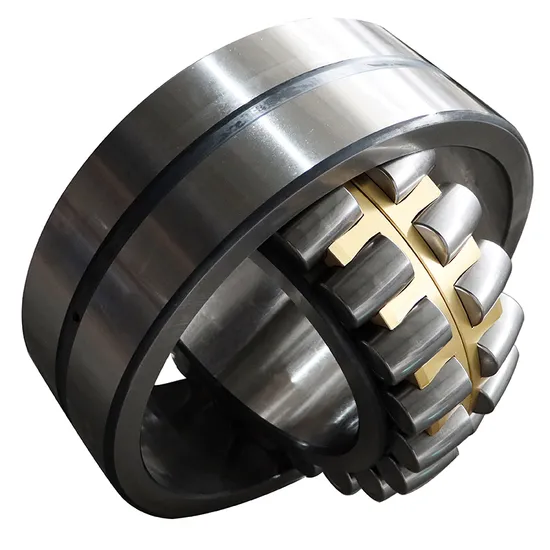
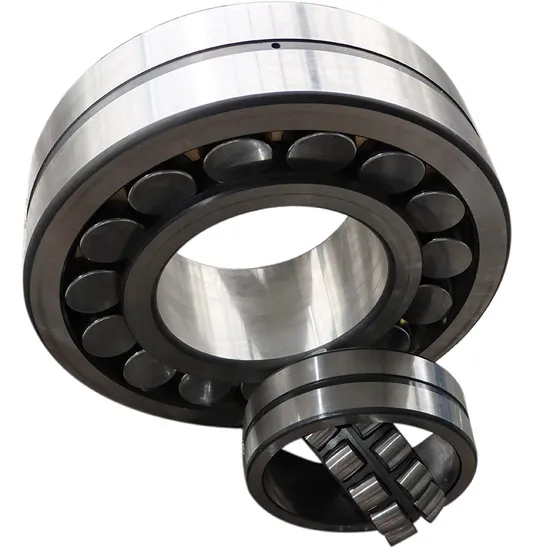
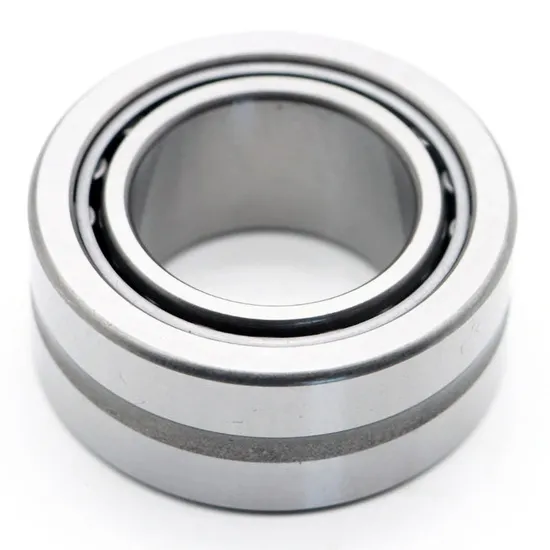
Bulk Mining Equipment Bearings from China Wholesale Supplier
Letter of Credit is not always the safest option for standard bearing imports.
For high-value bulk mining bearing orders, standard Telegraphic Transfer is risky; a hybrid approach combining a deposit with Letter of Credit at sight, or staged payments tied to inspection milestones, offers the best balance of trust and cash flow protection.
I still remember the silence on the other end of the line when a procurement director from a North American copper mine called me. He had just received a container of spherical roller bearings intended for a ball mill main shaft. The paperwork was perfect. The packaging was intact. But when his maintenance team tried to install them, the fit was wrong. Not dimensionally, but internally. He had specified C4 clearance for high-temperature operation, but half the batch arrived with C3 clearance. The mill was down. Every hour of downtime cost his operation a mid-six-figure loss. He wasn’t angry about the money initially; he was furious about the assumption that "same model number" meant "same internal specification." That incident reshaped how I approach Payment Terms for Bulk Mining Equipment Bearings. It taught me that payment security isn’t just about protecting funds; it’s about ensuring the technical integrity of what those funds buy. [NEED_CITE: importance of technical specification alignment in industrial procurement]
When you are sourcing from a global market, the transaction structure must reflect the technical complexity of the product. Mining equipment does not tolerate ambiguity. Therefore, understanding the nuances of Payment Terms for Bulk Mining Equipment Bearings is as critical as selecting the right brand or clearance group.
Why Standard Payment Terms Fail for Mining Bearings?
Standard payment terms often assume a commodity transaction. You pay, you receive, you verify. This works for fasteners or generic steel plates. It fails catastrophically for precision components like tapered roller bearings or cylindrical roller bearings used in heavy crushers and excavators. The failure point is rarely fraud; it is misalignment of expectations regarding technical parameters.
In the mining sector, a bearing is not just a part number. It is a specific combination of cage material, lubricant type, seal configuration, and radial internal clearance. A standard 100% Telegraphic Transfer (TT) upfront removes all leverage from the buyer once the goods leave the factory floor. Conversely, demanding 100% payment after delivery is unrealistic for suppliers who must secure genuine stock from manufacturers like SKF, FAG, or TIMKEN, which requires significant capital outlay.
The core issue is that standard terms do not account for the verification gap. Between the time the supplier packs the container and the time the buyer inspects it at the mine site, weeks can pass. If the goods are non-compliant—for example, if a deep-groove ball bearing has standard grease instead of the required high-temperature synthetic lubricant—the buyer is left negotiating a refund while facing production stoppages. [NEED_CITE: risks of pre-payment in complex industrial supply chains]
This is why many experienced procurement managers move away from binary payment models. They seek structures that allow for verification before the final financial commitment is released. When discussing Payment Terms for Bulk Mining Equipment Bearings, the goal is to create a mechanism where payment release is contingent on verifiable quality milestones, not just shipping documents.
TT vs. LC: Which Suits Your Bulk Order?
The debate between Telegraphic Transfer (TT) and Letter of Credit (LC) is perennial. Most buyers assume LC is inherently safer because a bank intermediates the transaction. However, for standard industrial bearings, this assumption can be costly. LCs are document-heavy instruments. Banks check documents, not physical goods. If the bill of lading has a typo or the certificate of origin is formatted incorrectly, the bank can refuse payment, causing delays that disrupt supply chains. For urgent maintenance stock-ups, these delays are unacceptable.
On the other hand, TT is fast but exposes the buyer to full performance risk. The middle ground is often a hybrid model or a carefully structured LC.
| Feature | Telegraphic Transfer (TT) | Letter of Credit (LC) at Sight | Hybrid (Deposit + LC/TT Balance) |
|---|---|---|---|
| Speed | Fast | Slow (document preparation) | Moderate |
| Cost | Low bank fees | High bank charges | Moderate |
| Buyer Risk | High (pre-payment) | Low (if documents correct) | Balanced |
| Supplier Risk | Low | Low | Low |
| Best For | Small urgent spares | Large new project tenders | Annual maintenance stock-ups |
A US-based distributor once shared how they shifted their strategy. For small emergency orders, they used TT for speed. But for their annual container-load restocking of spherical roller bearings, they negotiated a 30% deposit via TT and the remaining 70% against a copy of the Bill of Lading. This reduced their upfront cash exposure while giving the supplier enough confidence to allocate premium stock. [NEED_CITE: common payment structures in global bearing distribution]
However, the "copy of B/L" method has its own pitfalls. It proves the goods have shipped, not that they are correct. To mitigate this, savvy buyers insist on pre-shipment video verification or third-party inspection reports as a condition for the final payment. When evaluating Payment Terms for Bulk Mining Equipment Bearings, consider whether the term allows for such verification steps. If the term is rigidly tied only to shipping documents, you may need to add contractual clauses that link payment to technical compliance.
How to Structure Staged Payments for Security?
Staged payments transform a financial transaction into a quality assurance process. Instead of viewing payment as a single event, view it as a series of milestones. This approach is particularly effective for large-volume orders involving mixed brands like NSK, NTN, and KOYO, where consistency across batches is crucial.
The first stage is the deposit. This secures the order and covers the supplier’s initial procurement costs. A common mistake is pushing for the lowest possible deposit. Suppliers may interpret a minimal deposit as low commitment and allocate lower-priority stock or older inventory. A substantial deposit signals serious intent and often prioritizes your order in the warehouse queue.
The second stage is tied to pre-shipment inspection. Before the goods are crated, the buyer or their agent verifies key parameters. For mining bearings, this includes checking the clearance group (C2, C3, C4), seal type, and brand authenticity markers. Only upon approval of this inspection is the next payment tranche released. This step prevents the "wrong clearance" scenario I encountered with the copper mine client. [NEED_CITE: benefits of pre-shipment inspection in reducing claims]
The final stage is released against shipping documents. This ensures the supplier has fulfilled their logistical obligations. By tying payments to these physical and documentary milestones, you create a system where both parties are incentivized to get it right the first time. This structure is increasingly common among MRO operators in sectors like steel plants and cement production, where downtime costs far exceed the value of the bearings themselves.
When negotiating Payment Terms for Bulk Mining Equipment Bearings, propose this staged approach. It demonstrates professionalism and reduces the perceived risk for both sides. It also aligns with international best practices for high-value industrial procurement.
What Clauses Must Be in Your Proforma Invoice?
The Proforma Invoice (PI) is not just a billing document; it is the technical contract. Ambiguity in the PI leads to disputes during payment. For mining applications, the PI must explicitly list more than just the part number and quantity.
First, specify the internal clearance. Do not just write "6220 Bearing." Write "6220 C3 Clearance." If the application involves high loads or vibrations, specify the cage material, such as brass or steel. Second, define the lubrication. Is it greased? If so, what type? Lithium-based? Synthetic? For open bearings, specify if they are supplied dry or oiled. Third, include brand authenticity guarantees. With the prevalence of counterfeits in the global market, the PI should state that all goods are genuine original products with full traceability documentation. [NEED_CITE: anti-counterfeiting measures in bearing supply chain]
Additionally, include a clause for currency fluctuation if the lead time is long. Bearing prices can shift with raw material costs and exchange rates. A fixed-price PI with a long validity period may expose the supplier to risk, leading them to cut corners. A reasonable adjustment clause protects both parties.
Finally, define the inspection criteria. Reference international standards such as ISO 15243 for failure analysis or ISO 492 for dimensional tolerances. By embedding these technical details into the commercial document, you ensure that the payment terms are enforced against a clear technical benchmark. This is essential when dealing with Payment Terms for Bulk Mining Equipment Bearings, as it removes subjective interpretation from the acceptance process.
Conclusion
Secure procurement requires aligning financial terms with technical verification.
Standard payment methods often fail to address the specific risks of high-value mining bearing imports. By adopting hybrid payment structures, staging payments against inspection milestones, and detailing technical specifications in the Proforma Invoice, buyers can protect both their cash flow and their operational continuity. Understanding the nuances of Payment Terms for Bulk Mining Equipment Bearings is not just a financial exercise; it is a critical component of reliable mine maintenance and asset management.