
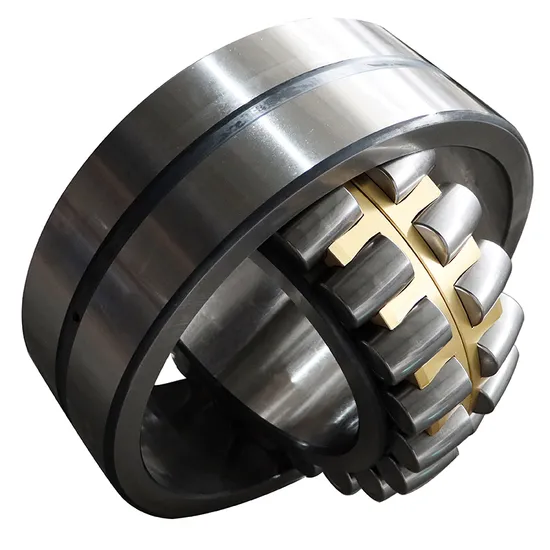
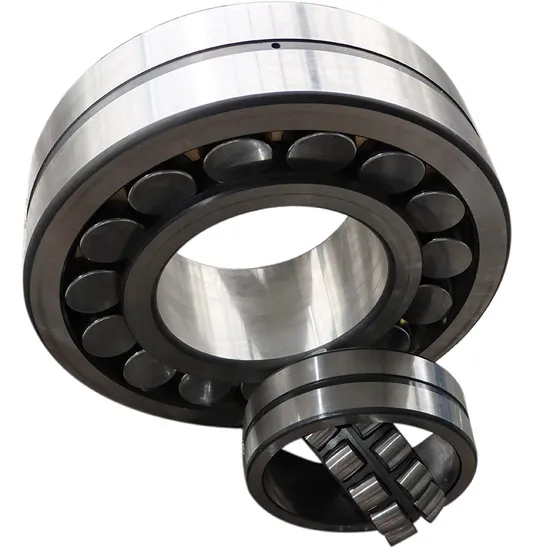
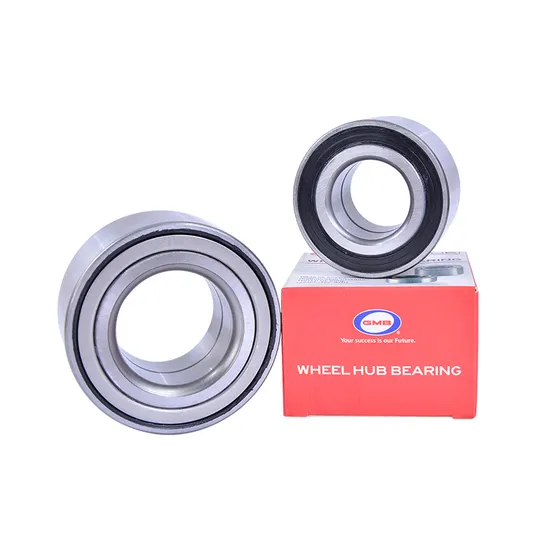
Angular Contact Ball Bearing Split Shipment for Global Buyers
Splitting a container of mixed-model angular contact ball bearings is often cheaper than shipping it whole.
To avoid total cargo detention in strict customs jurisdictions, you must issue separate Bills of Lading for urgent maintenance stock and bulk inventory. This ensures that critical MRO parts clear customs immediately while slower-moving items follow standard processing timelines, preventing the entire shipment from being held hostage by administrative bottlenecks.
I learned this the hard way at Santos Port in Brazil. A client ordered a mix of 7210 and 7308 series angular contact ball bearings. The 7210s were needed urgently to repair a failed pump in a steel mill, while the 7308s were slow-moving backup stock. We consolidated them into one container to save on freight. When the vessel arrived, the Brazilian customs authority refused partial clearance because the Bill of Lading was indivisible. The entire container sat on the dock. Daily demurrage fees accumulated rapidly, costing several times the original freight savings. The urgent bearings were stuck behind the non-urgent ones. Since then, I evaluate every mixed-model order through the lens of regulatory risk rather than just logistics cost. [NEED_CITE: Brazilian customs regulations on partial clearance of consolidated cargo]
This approach is not about increasing paperwork for the sake of complexity. It is about aligning your logistics with the reality of global trade compliance. When you source mixed-brand, mixed-model bearing packages, the default assumption of "one container, one invoice" can be a fatal error in regions with rigid import controls.
Why Do Standard Consolidated Shipments Fail in Strict Customs Jurisdictions?
The primary failure point is the concept of "indivisible cargo." In many efficient trading hubs, customs authorities allow importers to clear specific line items from a single Bill of Lading. However, in jurisdictions with high bureaucratic friction or strict protectionist policies, the customs system treats the container as a single legal entity. If one item in the manifest triggers an audit, requires a specific license, or has a classification dispute, the entire container is frozen.
For angular contact ball bearings, this risk is amplified by the diversity of HS codes. Precision-grade bearings used in machine tools may fall under different subheadings than standard industrial bearings used in general manufacturing. [NEED_CITE: World Customs Organization guidelines on HS code classification for precision bearings] When these are mixed in a single consolidation, a discrepancy in the description of one SKU can halt the release of all SKUs.
Consider a scenario involving a Middle East construction project. An OEM needed phased delivery of bearings for assembly lines. We consolidated early-phase critical path bearings with later-phase bulk stock. The local customs broker could not process the partial release because the commercial invoice and Bill of Lading were linked as a single transaction. The delay meant the assembly line stopped waiting for a few hundred dollars worth of bearings, while millions of dollars in machinery sat idle. The cost of the delay dwarfed the freight premium of splitting the shipment.
The root cause is often a mismatch between commercial convenience and regulatory rigidity. Freight forwarders prefer consolidation to maximize container utilization. Customs authorities prefer clarity and complete documentation for each entry. When you combine mixed-model angular contact ball bearings into one shipment without considering the destination’s specific clearance rules, you create a single point of failure. [NEED_CITE: International Chamber of Commerce Incoterms rules regarding delivery obligations and risk transfer]
When Should You Split Shipments for Angular Contact Ball Bearings?
Deciding whether to split a shipment requires a decision matrix based on urgency, regulatory environment, and value density. It is not a binary choice but a strategic assessment of risk versus cost.
You should split shipments when the destination country has a history of port congestion, strict partial clearance bans, or when the order contains a mix of urgent MRO parts and non-urgent bulk stock.
The following factors determine the necessity of a split strategy:
| Factor | High Risk (Split Recommended) | Low Risk (Consolidate Acceptable) |
|---|---|---|
| Customs Rigidity | Strict no-partial-clearance zones (e.g., certain Latin American, African ports) | Flexible clearance hubs (e.g., Rotterdam, Singapore, Dubai Jebel Ali) |
| Urgency Level | Mixed urgent MRO spares and slow-moving inventory | Homogeneous batch for long-term stocking |
| HS Code Complexity | Mixed precision grades requiring different certifications | Single type/grade with uniform classification |
| Value Density | High-value precision bearings mixed with low-value standard units | Uniform value distribution across SKUs |
A European wind farm operator once faced this dilemma. They needed replacement bearings for a turbine gearbox urgently due to unexpected vibration issues, alongside a routine restock of standard generator bearings. Shipping them together meant waiting for the full customs inspection of the routine stock before accessing the critical spares. By splitting the shipment, the urgent angular contact ball bearings cleared via air freight or expedited LCL, while the bulk stock followed standard sea freight timelines. The downtime avoided was substantial.
The key is to recognize that "freight savings" are illusory if they result in inventory stagnation. In high-turnover environments, the cost of capital tied up in detained cargo often exceeds the freight differential. [NEED_CITE: Supply chain cost analysis models comparing demurrage vs freight premiums]
What Are the Hidden Costs of Not Splitting?
Most buyers calculate logistics costs based on freight rates alone. They overlook the hidden costs of port detention, storage, and opportunity loss. These costs are qualitative but impactful.
The hidden costs include exponential demurrage fees, storage charges that accrue daily, and the operational loss from delayed maintenance or production stoppages.
Demurrage fees are not linear. They often start low and increase significantly after the first free days. In some ports, the daily rate can double after the first week. For a container stuck due to a minor documentation issue on one SKU, these fees can quickly reach a mid-six-figure loss equivalent when converted to operational impact.
Storage costs are another factor. Ports charge for the space occupied by the container. If the container cannot be moved to a bonded warehouse because it is not cleared, these charges accumulate. In congested ports, space is scarce, and penalties for overstaying are severe.
Opportunity cost is the most significant but hardest to quantify. If a factory waits for a specific angular contact ball bearing to restart a production line, the lost revenue per hour can be massive. This is particularly true for MRO scenarios where equipment downtime is measured in thousands of dollars per hour. A US buyer once reported that the cost of a two-day delay in clearing a mixed container exceeded the total freight cost of the shipment. The delay was caused by a missing certificate for one minor bearing type in the consolidation.
These hidden costs transform a "cost-saving" consolidation into a financial liability. The decision to split must account for these potential exposures. [NEED_CITE: Case studies on port detention costs in major global trade hubs]
How to Execute Compliant Split Shipments?
Executing a compliant split shipment requires precise coordination between the supplier, freight forwarder, and customs broker. It is not merely about issuing two invoices.
Start by separating the packing lists and ensuring distinct Bill of Lading instructions for each split portion. Pre-validate HS codes for each angular contact series to prevent classification disputes.
Follow these steps to ensure compliance:
- Segment the Order: Identify which SKUs are urgent and which are bulk. Group them by HS code compatibility. If possible, keep high-precision bearings separate from standard industrial units to simplify certification requirements.
- Issue Separate Documentation: Generate distinct commercial invoices and packing lists for each split. Ensure the description of goods matches the HS code exactly. Avoid vague terms like "bearings" without specifying type and application. [NEED_CITE: Best practices for commercial invoice preparation for customs clearance]
- Coordinate with the Forwarder: Instruct the freight forwarder to issue separate Bills of Lading. Confirm that the carrier allows split B/L issuance for the same vessel voyage. Some carriers charge a fee for this, but it is negligible compared to detention risks.
- Pre-Validate HS Codes: Work with your local customs broker to verify the HS codes for each split before shipment. This prevents surprises at the port of discharge. For angular contact ball bearings, ensure that precision grades are correctly distinguished from standard grades if local regulations require it.
- Labeling and Marking: Ensure that physical markings on the crates or boxes match the documentation for each split. Mislabeling can lead to inspections that delay the entire shipment.
A common mistake is assuming that one commercial invoice suffices for mixed goods. In reality, separate HS code classifications for precision versus standard bearings may require distinct documentation to prevent audit delays. [NEED_CITE: Local customs authority regulations on documentation requirements for mixed consignments]
By following this structured approach, you transform split shipment from a logistical hassle into a compliance safeguard. It ensures that your urgent angular contact ball bearings arrive when needed, keeping your operations running smoothly.
Conclusion
Split shipments are a strategic tool for risk management, not just a logistical option.
They protect your supply chain from the cascading failures of strict customs jurisdictions. By separating urgent MRO parts from bulk stock, you ensure continuity of operations and avoid costly detention fees. Proper documentation and proactive coordination are the keys to success.