Contamination Control for KOYO and SKF Bearings on Machine Tools
Most machine tool bearing failures are not caused by fatigue — they are caused by dirt.
Effective contamination control for KOYO and SKF bearings on machine tools requires a systematic approach covering seal selection, lubrication management, and proactive maintenance routines. The right seal type, paired with clean grease and disciplined handling, can extend bearing service life dramatically — while the wrong choices can destroy a bearing within weeks.
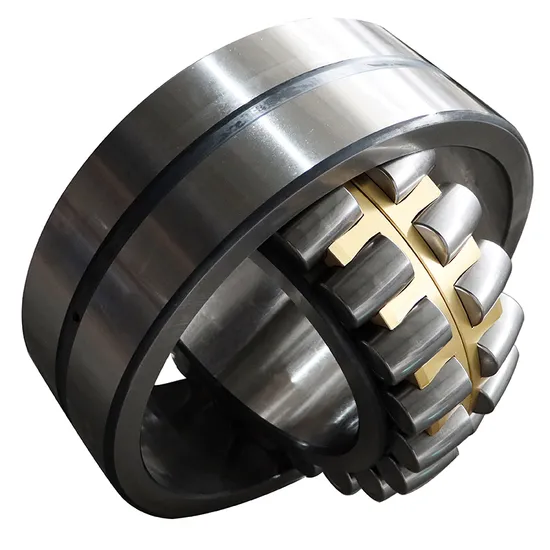
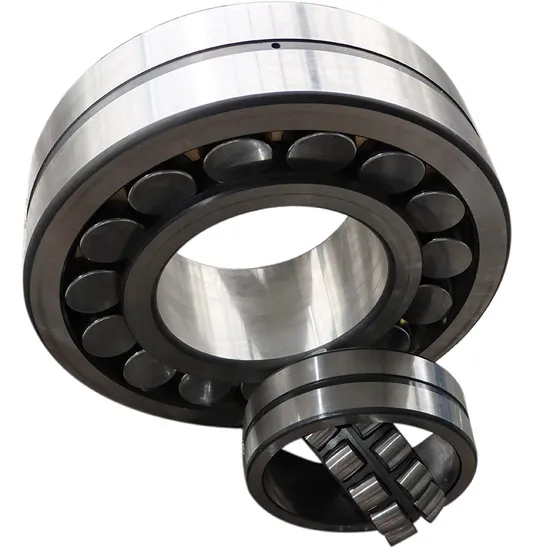
I still remember the call I got from a cement plant manager in Saudi Arabia. He had just installed a batch of KOYO spherical roller bearings on a heavy-duty crusher, and within a few months, the machines were screaming. When we pulled the bearings apart, the raceways were packed with black sludge — a thick paste of degraded grease and fine silica dust. The seals had been specified for clean indoor use. The plant environment was anything but clean. That single oversight cost the client a mid-six-figure sum in downtime and replacement parts. Since then, contamination control has been the very first question I ask when specifying any bearing for a machine tool or heavy industrial application.
[NEED_CITE: ISO 15243 identifies contamination as one of the leading root causes of rolling bearing damage]
Understanding how contamination enters a bearing, how it accelerates failure, and how to prevent it is the foundation of reliable machine tool operation. Let me walk you through the key areas where contamination control makes or breaks your bearing performance.
What Contamination Types Cause the Most Machine Tool Bearing Damage?
Contamination in machine tool bearings falls into three main categories: solid particles, moisture, and chemical incompatibility — each attacking the bearing through a different mechanism.
Solid particle contamination is the most common and the most destructive. In machine tool environments, these particles typically include cast iron swarf, aluminum chips, grinding dust, and ambient silica. When these hard particles enter the load zone between rolling elements and raceways, they create micro-indentations on the contact surfaces. Over time, these indentations act as stress concentrators, triggering early fatigue spalling. [NEED_CITE: particle size relative to lubricant film thickness determines whether surface distress or subsurface fatigue dominates]
Moisture contamination is equally insidious but harder to detect. Water ingress — whether from coolant splash, humid air, or washdown operations — degrades the lubricant film and promotes corrosion on rolling surfaces. Even trace amounts of water in the grease can reduce bearing fatigue life significantly. [NEED_CITE: water content above a threshold level in lubricant accelerates surface-originated fatigue]
Chemical contamination occurs when incompatible greases are mixed during relubrication, or when process chemicals such as cutting fluids penetrate the bearing cavity. I have seen cases where a maintenance team topped up a KOYO bearing with a different grease base — polyurea over lithium complex — and the resulting thickener incompatibility caused the grease to soften and bleed out, leaving the bearing essentially dry within days.
| Contamination Type | Typical Source | Damage Mechanism | Seal Response Required |
|---|---|---|---|
| Solid particles | Chips, dust, swarf | Surface indentation, abrasive wear | Contact seals or labyrinth |
| Moisture | Coolant, humidity, washdown | Corrosion, lubricant film breakdown | Sealed or shielded with drainage |
| Chemical | Mixed grease, cutting fluid | Greener degradation, film collapse | Chemical-resistant seal material |
The takeaway here is simple: you cannot design a contamination control strategy without first identifying what is trying to get in.
How Do You Choose the Right Seal Type for KOYO and SKF Bearings?
Seal selection is the single most impactful decision in contamination control for KOYO and SKF bearings on machine tools — and most buyers get it wrong because they default to the cheapest option.
Both KOYO and SKF offer a range of seal configurations across their bearing lines. The choice depends on operating speed, temperature, exposure severity, and relubrication strategy. Here is how the main options compare:
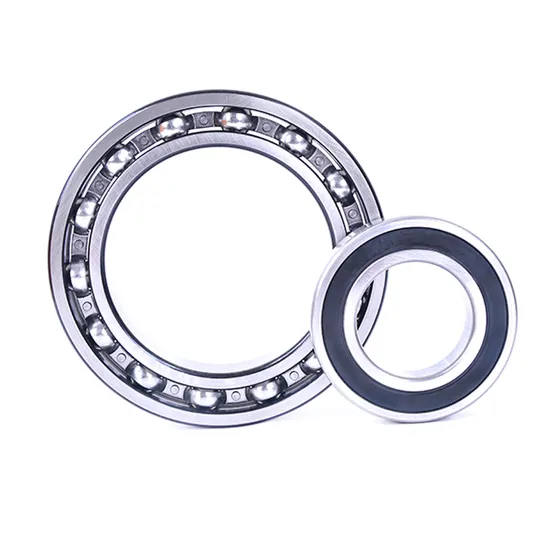
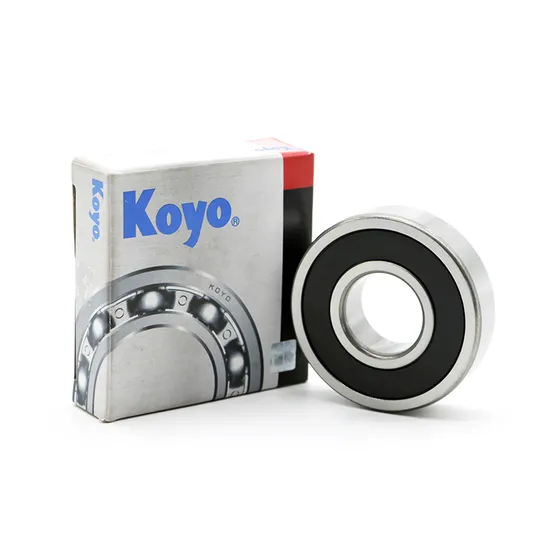
Contact seals (rubber lip seals) provide the highest level of exclusion against fine dust and moisture. SKF designates these with the 2RSH suffix, while KOYO uses DD or 2DU. The rubber lip maintains constant contact with the inner ring shoulder, forming a physical barrier. The trade-off is friction — contact seals generate heat and limit maximum operating speed. They are ideal for low-to-medium speed machine tool spindles and feed screw supports where contamination risk is high.
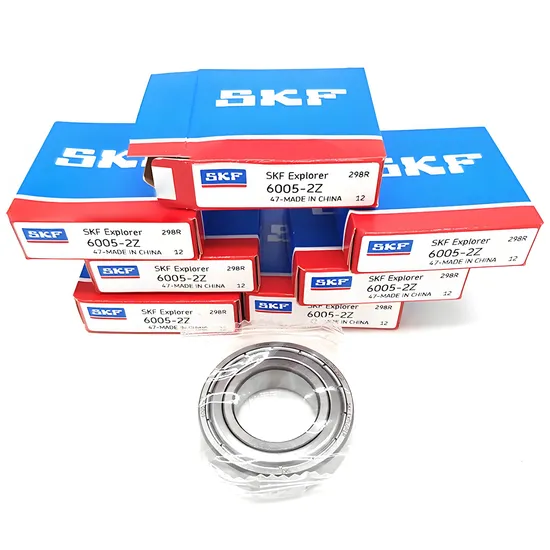
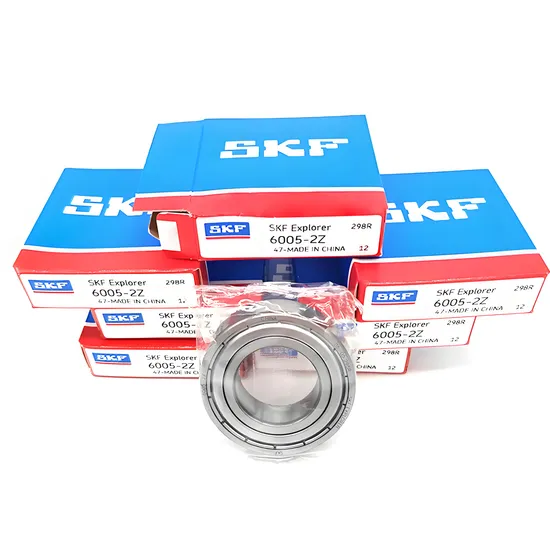
Non-contact shields (metal deflectors) offer lower friction and higher speed capability but only exclude large particles. SKF uses the 2Z suffix, KOYO uses 2ZZ. These are suitable for high-speed spindle applications where the primary threat is chip splash rather than fine airborne dust.
Labyrinth seals and multi-lip configurations sit between contact seals and open bearings. They are common in larger spherical roller bearings and tapered roller bearings used in heavy machine tool tables and rotary axes. KOYO offers specialized seal variants for their spherical roller bearing range, and SKF provides Sealing solutions such as the SF seal for demanding applications. [NEED_CITE: seal effectiveness ranking across bearing types per manufacturer application guides]
| Seal Type | Exclusion Level | Speed Limit | Relubrication | Best Application |
|---|---|---|---|---|
| Contact seal (2RSH/DD) | Robust | Noticeably limited | Generally not possible | Low-speed, high-dust |
| Non-contact shield (2Z/ZZ) | Basic | Unrestricted | Possible | High-speed, chip splash |
| Labyrinth / multi-lip | Standard | Moderate | Required periodically | Heavy-duty, coarse contamination |
| Open bearing | None | Maximum | Mandatory | Clean enclosed housing only |
A European woodworking machinery builder once specified open bearings in a CNC router spindle because the OEM housing had its own external seal. The external seal failed after extended service, and wood dust — fine and abrasive — poured directly into the bearing. The replacement cost was several times what a sealed bearing would have added to the original bill. Now they spec SKF 2RSH across that entire product line.
The rule I follow: if the environment is dirty, spec the seal that keeps it out — even if it costs more upfront. A sealed KOYO or SKF bearing is always cheaper than a failed open bearing.
What Lubrication Practices Prevent Contamination-Related Bearing Failure?
Lubrication is not just about reducing friction — it is the last line of defense against contamination, and poor lubrication practices can undo even the best seal selection.
The first principle is grease cleanliness. When I inspect a bearing relubrication station at a customer site, the first thing I check is whether the grease gun nozzle is capped when not in use. I have seen maintenance carts where the grease gun sat uncovered next to a grinding wheel — the nozzle was packed with metallic dust. Every time someone pumped grease into a bearing, they were injecting contamination directly into the cavity.
The second principle is correct fill volume. Over-greasing is a surprisingly common mistake in machine tool applications. Excess grease churns inside the bearing cavity, generates heat, degrades faster, and eventually breaks down — creating a soft, contaminated mass that offers no meaningful protection. For most sealed bearings, the factory fill is sufficient for the designed service life. For relubricatable bearings, the fill quantity must follow the manufacturer’s recommendation based on speed and operating temperature. [NEED_CITE: over-greasing effects on bearing temperature and grease life per manufacturer technical documentation]
The third principle is grease compatibility. I covered this briefly above, but it deserves emphasis. Mixing greases with incompatible thickeners causes structural collapse. Before any relubrication, the existing grease must be identified, and the replacement grease must be verified as compatible. If compatibility is uncertain, the bearing should be purged and refilled — or the old grease fully flushed during a scheduled overhaul.
Practical steps for lubrication contamination control:
- Store grease containers sealed and indoors, away from dust and temperature swings.
- Use dedicated, labeled grease guns for each grease type — never share a gun between different products.
- Clean the grease fitting and gun nozzle with a lint-free wipe before every connection.
- Follow the manufacturer’s relubrication interval and quantity — do not guess.
- During bearing installation, ensure the housing cavity is clean and free of machining debris before the bearing is seated.
A textile machinery manufacturer in Turkey experienced repeated spindle bearing failures on their weaving machines. The bearings were KOYO deep groove ball types, running at moderate speed in a fiber-laden environment. After investigation, we found that the maintenance team was using a grease with a NLGI grade too soft for the application — the grease was migrating out of the bearing cavity, leaving the raceways starved while fiber dust filled the void. Switching to a higher-consistency grease and adding a relubrication schedule eliminated the failures within one production quarter.
How Should Machine Tool Bearings Be Handled and Stored to Avoid Pre-Installation Contamination?
Contamination control begins long before the bearing reaches the machine — it starts in the warehouse, during handling, and at the installation bench.
I have walked into workshops where bearings were stored on open shelves next to a cutting area, wrapped in nothing but the original cardboard box. By the time the bearing was pressed onto a shaft, it had already absorbed moisture from the air and collected fine metallic particles from the surrounding environment. The seal — no matter how well specified — was being asked to fight a battle that was already lost.
Storage conditions matter. KOYO and SKF bearings are packaged with corrosion protection and, in many cases, with sealed inner bags. These protective layers should remain intact until the moment of installation. Bearings should be stored in a clean, dry, temperature-stable environment — ideally indoors with controlled humidity. Horizontal storage is preferred for larger bearings to prevent deformation of the cage or raceway under their own weight. [NEED_CITE: bearing storage requirements per manufacturer handling guidelines]
Handling discipline is equally critical. Bare hands transfer moisture and salts to bearing surfaces. I always recommend wearing clean lint-free gloves when handling bearings — especially for machine tool applications where precision and surface integrity are paramount. The bearing should never be unwrapped until the housing and shaft have been cleaned and inspected.
Installation cleanliness is the final gate. Before pressing a bearing into position, the shaft, housing, and all adjacent components must be free of burrs, chips, and residue. I have seen machinists press a bearing into a housing that still had cutting fluid pooled in the bottom — the fluid migrated into the bearing cavity during press-fit, contaminating the grease before the machine even started.
Key pre-installation contamination control checklist:
- Verify bearing packaging is intact and undamaged upon receipt.
- Store bearings indoors, away from dust, coolant mist, and temperature extremes.
- Do not remove protective wrapping until immediately before installation.
- Clean shaft and housing with solvent, then dry thoroughly — no residue left behind.
- Use clean, lint-free gloves during handling.
- Inspect the bearing visually for any signs of transit damage or contamination before mounting.
What Maintenance Indicators Signal Contamination-Related Bearing Degradation?
Early detection of contamination damage is the difference between a scheduled replacement and an unplanned machine tool shutdown.
Contamination-related bearing damage does not announce itself suddenly — it builds progressively. The first signs are often subtle: a slight increase in running noise, a small rise in operating temperature, or a faint vibration signature that shifts over time. By the time the bearing is screaming, the damage is usually severe and irreversible.
Vibration analysis is the most effective condition monitoring tool for detecting early-stage contamination damage. Solid particle ingress creates characteristic high-frequency impacts that appear in the vibration spectrum before they become audible. [NEED_CITE: vibration signature patterns for contamination-induced bearing damage per ISO 10816 or equivalent]
Temperature monitoring provides a secondary indicator. A bearing running hotter than its historical baseline — even by a small margin — may indicate lubricant degradation caused by contamination or over-greasing.
Grease inspection during relubrication is a low-tech but highly effective diagnostic. When old grease is purged from a bearing, its color, consistency, and texture tell a story. Fresh grease should be uniform in color and smooth in texture. Dark, gritty, or watery grease signals contamination. Black sludge indicates a mix of degraded lubricant and fine particulate — exactly what I found in that Saudi cement plant.
Maintenance response protocol:
- Establish baseline vibration and temperature readings at commissioning.
- Monitor trends — not just absolute values — during routine operation.
- Inspect purged grease at every relubrication interval for color, texture, and foreign material.
- If contamination indicators appear, increase monitoring frequency and investigate seal integrity immediately.
- Schedule bearing replacement before catastrophic failure — the cost of a planned swap is a fraction of an emergency teardown.
A steel mill in the Middle East ran a continuous casting line with KOYO cylindrical roller bearings on the guide rolls. The environment was brutal — scale, water, and heat. By implementing a simple grease sampling routine at each relubrication, their maintenance team caught a water ingress problem in the seal arrangement before any bearing reached failure. They adjusted the seal specification and added a purge port, and the bearing life extended substantially compared to the previous reactive replacement cycle.
Conclusion
Contamination is the silent killer of machine tool bearings — but it is entirely manageable with the right approach.
From seal selection and lubrication discipline to storage hygiene and condition monitoring, contamination control for KOYO and SKF bearings on machine tools is a system, not a single action. Every layer of defense — the seal, the grease, the handling practice, the monitoring routine — adds to the bearing’s ability to survive in a dirty world. Get the system right, and your bearings will deliver their full designed life. Get it wrong, and no bearing brand on earth will save you.